

RECYCLING ON SITU - TECHNICAL AND ENVIRONMENTAL BENEFITS
Cold recycling in situ is a road rehabilitation technique with which a new base layer is achieved, of remarkable structural capacity, taking advantage of the existing road as a quarry or source of supply of aggregates. It consists of disaggregating the existing material in the required depth, mixing it with some type [...]

Module 3 - Webinar Surface Treatments
This was the third and last module of the Webinars cycle. In this instance, the theme of Irrigation with gravel was developed: the most efficient option for conservation. The role of surface treatments in pavement management was studied in depth. We have the presence of Jorge Prozzi, Professor at the University of [...]

Module 2 - High Performance Surface Treatments Webinar
Este es el segundo módulo del ciclo "Tratamientos superficiales de alto desempeño". Compartiremos con ustedes el conocimiento y la experiencia que hemos recolectado nacional e internacionalmente sobre estas técnicas, complementando lo que describe nuestro manual con el mismo nombre. En este módulo vamos a hacer foco en la transformación que ha tenido la evaluación de [...]

Module 1 - Webinar High Performance Surface Treatments
In this module we discuss the fundamental stones to be successful in gravel irrigation: the materials, the selection of the appropriate treatment, the design and the construction to make the intervention safer, more reliable and sustainable. We share with you the knowledge and experience that we have collected nationally and internationally on these techniques, [...]

WITH THE ENTRY OF SPRING, SURFACE TREATMENTS ARE BACK
The closure ends on September 1 and surface treatments begin to be seen again in the works. The use of emulsions, which in winter involves special care, becomes common from September with various work fronts that will use the technology both on the road and on shoulders. We reinforce in the following [...]

HIGHLY MODIFIED ASPHALTS (HIMA)
One of the questions that arises from the use of modified asphalts is to what extent it is possible to increase the level of polymer of the formula or degree of modification, to further increase the advantages that the modified ones present compared to the conventional ones. In standard modified asphalts, the increase in the [...]

USE OF THE RHEOMETER TO EVALUATE FOOTPRINT AND FISSURES
We reviewed some agile tests to estimate performance of asphalt mixes with the DSR. New paving technologies require modern equipment to evaluate the behavior of asphalt. The Dynamic Cut Rheometer (DSR) has positioned itself as the international reference equipment for measuring the viscoelastic properties of asphalt. In addition to amazing precision [...]

ASPHALT RHEOLOGY
Rheology is the science that studies the internal response of materials when they are deformed as a result of an applied stress. To learn about the rheological properties of any material, one must measure the strain resulting from an applied stress or the force required to produce a given strain (1). 1 dynamic shear rheometer [...]

ASPHALT
Asphalt can be defined as a mixture of hydrocarbons and other components whose physical state is dependent on temperature, appearing apparently solid at room temperature and as a viscous fluid at higher temperatures. It has a characteristic dark brown color and can appear naturally or be produced from the refining of [...]

MOST COMMON FAILURES IN THE REGION'S FLOORS
The surface deterioration of the pavement provides a measure of the damage caused by traffic, environmental conditions and aging of the materials that make up the tread layer. The type and cost of maintenance operations required by a stretch of highway is significantly influenced by the type, extent and severity of the defects present [...]
BASIC CONCEPTS ON FLEXIBLE FLOORING
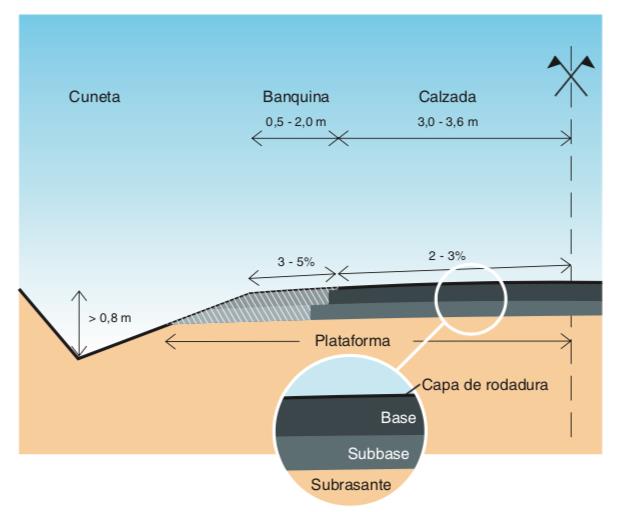
Flexible pavements The pavement is the set of layers of material that provide support and a bearing surface for traffic loads. It must be able to distribute the loads on the surface during its design period, in such a way that the admissible stresses and deformations are not exceeded, both in the foundation soil [...]

Emulsions for high demands (65 IRRIGATION BITAFLEX P40)
Since 2011, BITAFAL ASFALTOS ESPECIALES has expanded its line of emulsions, seeking to adapt to the climatic, use and traffic conditions to which the different technologies are subjected. The specification used in our country for modified emulsions is the IRAM 6698 standard: Modified cationic asphalt emulsions. In the same, […]

TIBIAN BLENDS: 50 ° C less in mixing and compaction
Continuing on the path of introducing new technologies in the country's road construction, Grupo BITAFAL carried out a successful stretch of lukewarm mixes together with Techint SACI on Route 9. This time a double innovation was used on the CAC S12 mix planned for the stretch. that a modified binder was used with […]

SUCCESS STORIES IN WINTER GRAVILLADOS
The use of the TDT (Double Locked Treatment) technique in various recently carried out gravel works demonstrate that it is possible to use emulsions during the winter successfully without the risk of detachment and with significant material savings. Such is the case of the work done by COLIER on Ruta 19, [...]

New equipment for slip resistance CITEVI
Premiere of the TRRL Pendulum (British Friction Pendulum) to determine the coefficient of slip resistance on Route 102. Following the AUC Road Evaluation course, the measurement of slip resistance was carried out on the Route 102 asphalt binder , recently built by the CVC company with the Pendulum [...]

BITAFAL enters the world of rheometry
New Rheometer Anton Paar Smartpave 102 at CITEVI will allow to take a big step in the performance of asphalt products in Uruguay. As we had announced in a previous edition of our newsletter, a Dynamic Cut Rheometer (DSR) was installed this month. This sophisticated equipment allows to know [...]
Evaluation of penetration of the aggregate in the bases for surface treatments
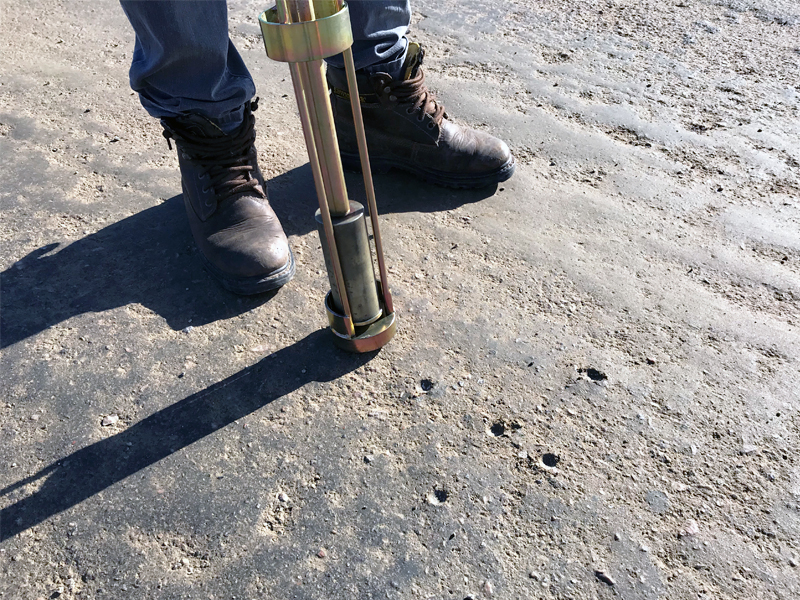
Use of the ball penetrometer as a quality control element for treatment bases. In the path that is being traced nationwide to standardize design criteria for surface treatments, we believe that the inclusion of the ball penetrometer test is of utmost importance. It determines if the base is in good condition [...]

PRINT 50 AN ALLY FOR THE ENVIRONMENT
Since the introduction of the IMPRIMA 50 emulsion in Uruguay, the way of priming bases has changed considerably due to the technical and economic advantages. . The diluted contains 30% [...]
VEDA IN Surface treatments
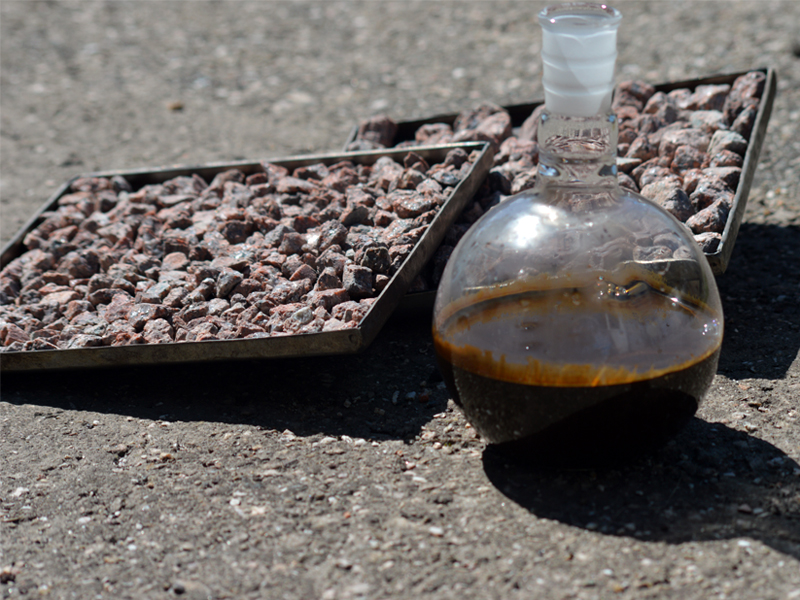
With the imminent arrival of autumn, we must take the necessary precautions in the execution of surface treatments. The closure begins in a few days and the most suitable emulsions for our summer climate begin to generate low yields due to the cold and the few hours of sunlight that we are already experiencing. The [...]
What are the treatments Multiple Trabados®?
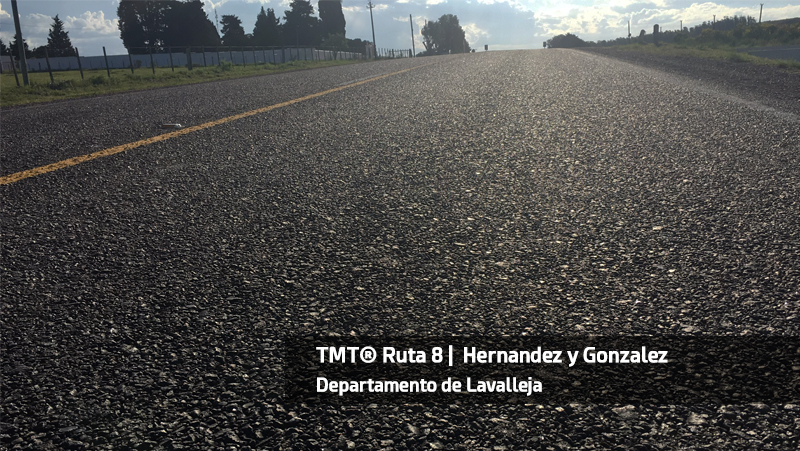
TMT®s are an innovative way of executing single and double treatments, which improves the mechanical bonding of aggregates and minimizes the risks of detachment. Its development is linked to the use of emulsions that allows a total coverage of the aggregates and that differs from conventional procedures due to its way of application. [...]
