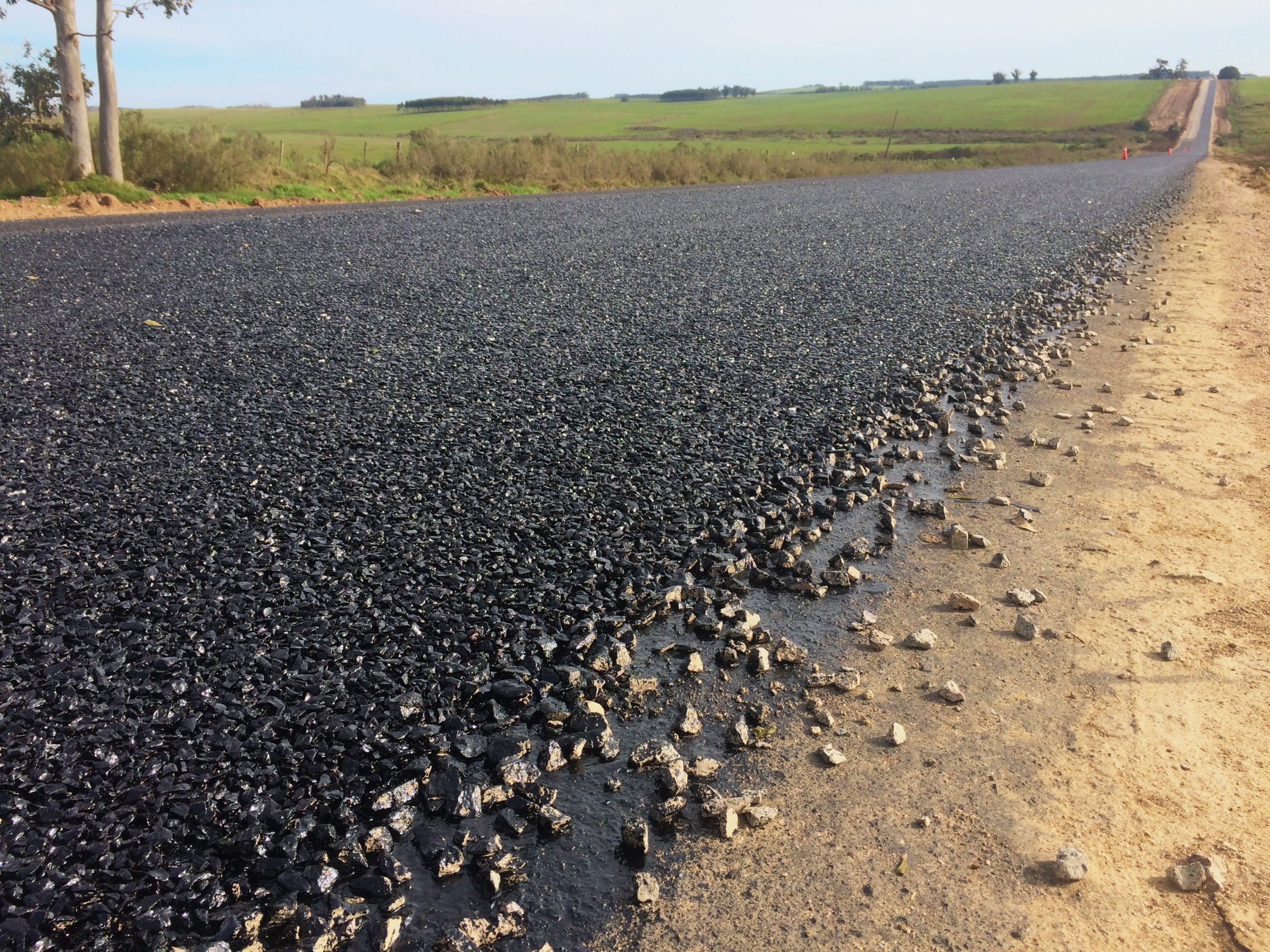
WITH THE ENTRY OF SPRING, SURFACE TREATMENTS ARE BACK

WITH THE ENTRY OF SPRING, SURFACE TREATMENTS ARE BACK

The closure ends on September 1 and surface treatments begin to be seen again in the works.

The use of emulsions, which in winter involves special care, becomes common from September with various work fronts that will use the technology both on the road and on shoulders. In the following note we reinforce the main concepts to avoid premature defects in surface treatments with emulsions, especially when the first summer heats come.

An adequate application of the surface treatment implies a combination of factors to ensure success, as indicated in the Figure below the book "High Performance Surface Treatments"

https://bitafal.com.uy/libro-tratamientos-superficiales/

From this extensive list, we can highlight some points and make recommendations for a good execution in the months to come.

  • Weather condition in the application: The days are longer and the temperatures are starting to rise but we may still find ourselves in the months to come with wet and cold weeks. Special attention must be paid to days with maximum temperatures of 10°C and days with high relative humidity and little wind even in mild temperatures. The water of the emulsion must evaporate to achieve the total cohesion of the binder and if not, premature detachment of aggregates will occur, with the risk of having to re-execute and over-dosage. Another problem with cold is the formation of skin in the applied emulsion that retains the emulsion between the treatment and the base. This effect can seriously affect the treatment in the first days of heat, since the vapor pressure of the retained water pierces the membrane and begins to come to the surface, causing punctual exudations that can affect the rest of the treatment. To avoid these problems, see in the Book the "7.4.10 Execution in winter" that are used for those complicated days as well.

  • Aggregate penetration potential: The driving of the stone in a granular base can seriously affect the necessary voids of the system leading to exudation mainly in the tracks where the tires make an extra compaction effort. It is first necessary to evaluate this effect by means of the Ball Penetration Test (Annex D of the Book) and then take measures such as reprofiling and compacting or stabilizing with cement.

  • Component dosage: An excess of residual binder in the system is not perceived in the winter but as temperatures increase and its viscosity decreases, the voids are reduced both by expansion of the asphalt and by the accommodation of the aggregate that the binder allows. Here the variables to control are several, such as the theoretical design itself regarding what is found in the field, the calibration and periodic maintenance of the used equipment, the use of binders suitable for traffic and climate. For each of these variables you can find a detail in the Book of good practices.

  • Execution method: For double irrigations, it is necessary to evaluate if it is possible to do both irrigations on the same day and thus ensure that all the aggregate used is locked prior to the release of traffic. When irrigation A is carried out and much later B, it happens that the initial simple treatment settles down and becomes clogged, reducing its macrotexture as well as losing some aggregate and therefore the potential for exudation increases. When B is executed, the dosage should be adjusted to the new existing macrotexture, which does not happen, ending in exudations. The use of TMT technology allows double irrigations to be carried out on the same day, ensuring the success of the treatment. We have technology transfer licenses that include
    know-how and technical assistance through a training course. For more information enter Licenses. https://bitafal.com.uy/licencias/

  • Used materials: Aggregates of the same size generate interlocked surfaces that better distribute traffic efforts, are more resistant to detachment and have less potential for exudate, for this reason we must adjust the sizes to consecutive sieves. Using 5-14 mm aggregates for example implies that physically first the 5 mm falls and then the 14 mm, leaving the latter not adhered to the surface and changing the aggregate / asphalt balance.

On the other hand, the emulsions must have an adequate residual binder, with sufficient viscoelasticity to prevent bleeding in the summer. In addition, it must be of the appropriate degree of modification for the traffic and climate of each particular work. line emulsions On the other hand, the emulsions must have an adequate residual binder, with sufficient viscoelasticity to prevent bleeding in the summer. In addition, it must be of the appropriate degree of modification for the traffic and climate of each particular work. line emulsions On the other hand, the emulsions must have an adequate residual binder, with sufficient viscoelasticity to prevent bleeding in the summer. In addition, it must be of the appropriate degree of modification for the traffic and climate of each particular work. line emulsions

SEPTEMBER 9 #INTERCILA 2020

SEPTEMBER 9 #INTERCILA 2020

There are only a few days left for the #interCILA, a digital event that will have news and surprises, and where we will be inviting you to the next XXI CILA in Punta del Este.

The #interCILA 2020 will be held on 9th September and a new hybrid form of participation will be put to the test, where the digital and virtual worlds will share space for the first time in our sector.

Grupo BITAFAL will be present with a virtual stand that can be visited in addition to having personalized avatars to interact with participants from all over the world in this new modality.

10 months ago we said goodbye to the extraordinary XX CILA congress in Guadalajara. Since that date the world has changed unexpectedly and our lives have changed too. Among so many other learnings, we have had to deal more than ever with technology, learning to work remotely, helping children with their online classes, etc. Adapted to this new normality, and faithful to its style, Itafec challenges us to take another step in the digital world, inviting us to the first virtual conference in our sector.

In this #interCILA 2020, participants will be able to register electronically from the itafec-enabled web platform and will be able to make their own personalized avatar to navigate the congress, talk with colleagues and visit the virtual stands of the sponsors! Itafec will also broadcast the event as it normally does, through streaming.

www.intercila.com

An opportunity to relive the best moments of the last CILA in Mexico and a new opportunity to present what awaits us at the XXI CILA Punta del Este in 2021. We invite you to see the complete program: https://intercila.com/programa/

Don't miss this #interCILA 2020, which will be more innovative than ever!
BITAFAL GROUP WEBINAR CYCLE

BITAFAL GROUP WEBINAR CYCLE

Delving into various topics of interest, we begin with a new challenge to share our knowledge

This coming September we will begin to issue the first cycle of conferences that complement and deepen what has been published in our manual on "High Performance Surface Treatments".

True to our word, we have listened to your comments and concerns that you sent us from the June survey, where we asked the topics that most interest you for a Webinar. 1 out of 5 voted to delve into the topic "Life Cycle Analysis with surface treatments", and for this reason we decided to make a first Cycle called "High Performance Surface Treatments", which encompasses this topic and others that also appear in our manual. . We will have top-level guests, such as Ing. Jorge Prozzi from the University of Texas.

This Cycle consists of three modules:

MODULE 1: How to guarantee the success of gravel irrigation: materials, selection, design and good construction practices.

MODULE 2: Surface treatments: Performance tests.

MODULE 3: Life cycle analysis of surface treatments: the most efficient option for conservation.

Our goal is to extend our knowledge and share the national and international experience of surface treatments, so that they achieve maximum performance. This implies interventions where special care is taken in the evaluation of the existing surface, the materials, the selection of the appropriate treatment, the design and the construction so that our path is SAFE, RELIABLE and SUSTAINABLE.

SAFE: The type of treatment, the resistance to polishing of the aggregate, the appropriate binder, the correct dosage of materials, careful construction, etc. These are aspects that affect the final safety of the road but must be considered individually. The objective is to guarantee traffic and safety conditions, minimizing circumstances that could generate costs for users and accidents.

TRUSTWORTHY: With this approach, surface treatments are first-order interventions that require the same care and detailed study as asphalt mixtures. In these situations, it is expected that the treatments comply with higher stresses and demands and for this it is essential to evaluate the structural and surface conditions through inspections and auscultation, define specific design methods for the provision of aggregates and binder, ensure the calibration of the equipment and document best construction practices. The objective is to provide tools for those responsible to make decisions based on scientific and methodological criteria, which allow predicting what the useful life of the treatment will be and, consequently, it can be a reliable instrument within the conservation strategy.

SUSTAINABLE: It consists of doing more and better, with less. High performance treatments play an essential role in the preventive maintenance of the pavement and are the answer to a technical, economic and environmental analysis. These interventions are optimized for the traffic and climatic conditions that are expected, use materials and processes that generate a smaller environmental footprint and seek to reduce the total cost of the pavement's life cycle. The goal is to put the right treatment on the right track at the right time.

We will be sharing news about the webinars on our networks.

We use own and third party cookies to help us optimize your visit to our website and also to improve service delivery and thus adapt to their most relevant and useful to better their experience needs. When you click OK to continue with navigation and thus confirm that you have read the information and accept the activation of cookies.

You can allow or reject use at any time can change the Configuration Options Privacy - Cookies Policy -

Privacy settings

When you visit a website, you can store or retrieve information in your browser, mainly in the form of cookies. Check your personal services cookies here.


We track anonymous user information to improve our website.
.
  • _ga
  • _gid
  • _gat

Decline all Services
Accept all Services