RECYCLING ON SITU - TECHNICAL AND ENVIRONMENTAL BENEFITS

RECYCLING ON SITU - TECHNICAL AND ENVIRONMENTAL BENEFITS

Technical Articles Archives - Grupo Bitafal

Technical Articles Archives - Grupo Bitafal

This technique entered Uruguay with the arrival of the first equipment in 2013. Given that the number of roads requiring structural rehabilitation is increasing in our country, the future of the on-site recycling technique looked very promising.

This technique entered Uruguay with the arrival of the first equipment in 2013. Given that the number of roads requiring structural rehabilitation is increasing in our country, the future of the on-site recycling technique looked very promising.

From the Center for Research in Road Technologies (CITEVI) a follow-up of the first executed sections was carried out both in the knowledge of recycled materials, in the studies for the determination of its working formula, in the project methods, in its prescriptions techniques and in the follow-up of the executed sections. The good results obtained in most of the projects helped to clear up doubts of many administrations, seeing the savings that it represents compared to reinforcement or reconstruction alternatives, and they began to include this technique in the specifications.

INTRODUCTION

From the Center for Research in Road Technologies (CITEVI) a follow-up of the first executed sections was carried out both in the knowledge of recycled materials, in the studies for the determination of its working formula, in the project methods, in its prescriptions techniques and in the follow-up of the executed sections. The good results obtained in most of the projects helped to clear up doubts of many administrations, seeing the savings that it represents compared to reinforcement or reconstruction alternatives, and they began to include this technique in the specifications.

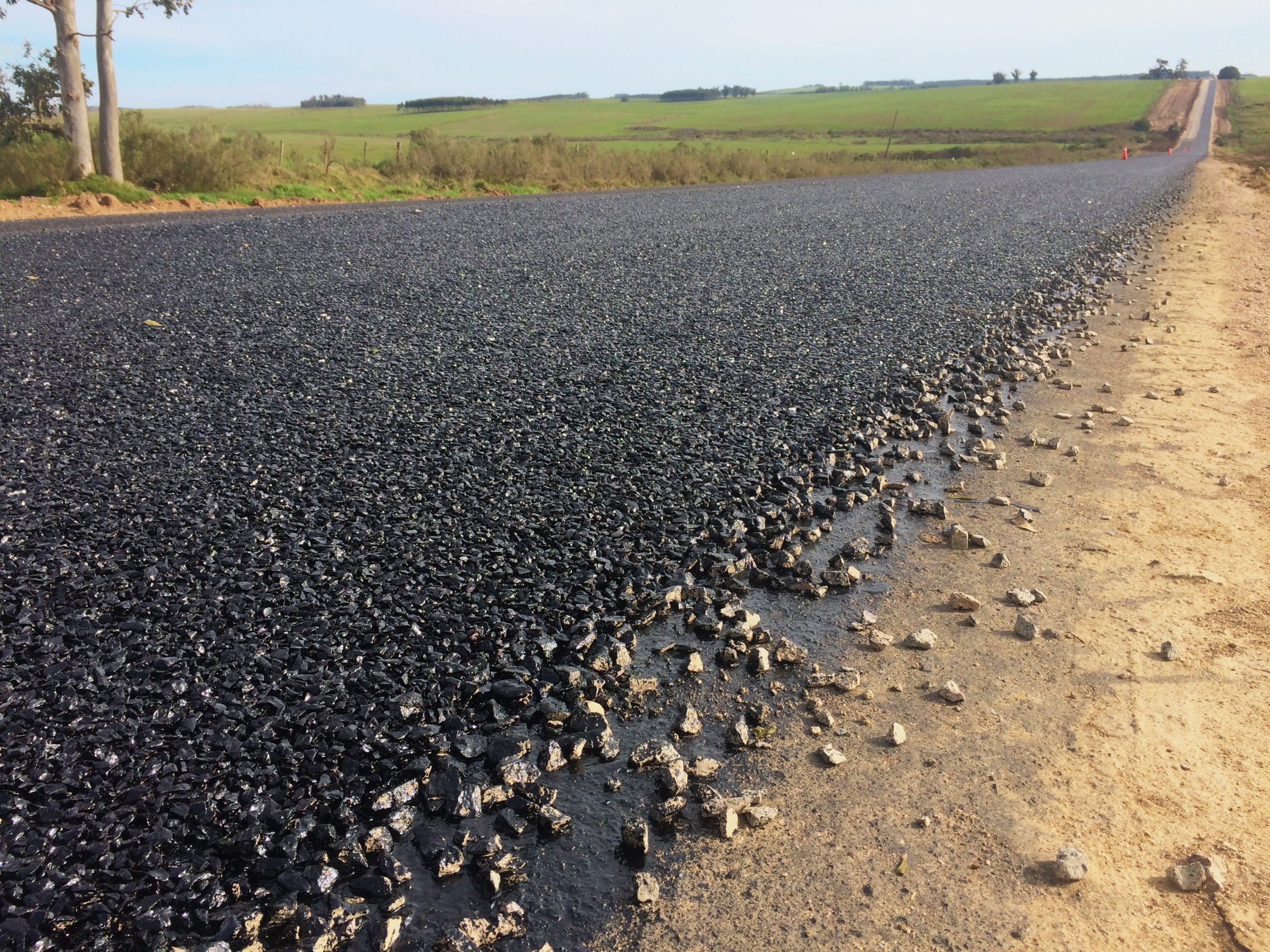
In-situ cold recycling with cement is a road rehabilitation technique with which a new base layer of notable structural capacity is achieved, taking advantage of the existing road as a quarry or a source of aggregate supply.

In-situ cold recycling with cement is a road rehabilitation technique with which a new base layer of notable structural capacity is achieved, taking advantage of the existing road as a quarry or a source of aggregate supply.

Compared to other rehabilitation solutions, recycling with cement allows the use of these deteriorated layers, managing to recover and even increase their support capacity, and provides the material obtained after recycling with physical-mechanical characteristics in accordance with an adequate level of service. the infrastructure. A much more durable overall surface is achieved, with less susceptibility to water and greater resistance to erosion. The field of application is very wide since it covers all types of roads and paved surfaces.

It is a technique closely linked to the concept of sustainability and in addition to presenting various environmental advantages, important technical and economic benefits are added.

Properties of materials recycled with cement

It is a technique closely linked to the concept of sustainability and in addition to presenting various environmental advantages, important technical and economic benefits are added.

Regarding the fatigue behavior of recycled materials with cement, a series of tests carried out show that it is similar to that of vibrated concrete or rough-cement, that is, they are mixtures with a fatigue curve presenting a very low slope. Consequently, a slight decrease in the stresses in the recycled layer translates into a large increase in its service life. The methodology of the study consists of establishing the variation of the parameters to be determined as a function of the cement dosage, the variation of the water content and the density of the specimens. In Uruguay, the first sections have been carried out looking for a seven-day compressive strength of 15 kg/cm2.

Work execution

Before recycling, it is necessary to:

  • Verify the feasibility of recycling
  • Define the type of recycling
  • Before recycling, it is necessary to:

Before recycling, it is necessary to:

  1. Cement spread
  2. Scarification of the pavement in the required depth
  3. Material wetting
  4. Mixed
  5. Initial compaction
  6. Eventual surface refinement
  7. Final compaction

Before recycling, it is necessary to:

With regard to scarifying to the required depth, wetting and mixing the disaggregated material with cement and water, (that is, the equipment to carry out the actual recycling), an on-site recycler is used. In it, the fundamental component is a rotor equipped with spades, which performs the disintegration of the pavement and mixes the elements with the cement and water.

With regard to scarifying to the required depth, wetting and mixing the disaggregated material with cement and water, (that is, the equipment to carry out the actual recycling), an on-site recycler is used. In it, the fundamental component is a rotor equipped with spades, which performs the disintegration of the pavement and mixes the elements with the cement and water.

Environmental benefits

  • The reuse of materials in situ contributes to not having to open new quarries or reduce the reserves of existing ones. This saving in aggregates can be estimated at about 2000 ton/km compared to the aggregate required for a new pavement with a similar structural capacity.
  • The reuse of materials in situ contributes to not having to open new quarries or reduce the reserves of existing ones. This saving in aggregates can be estimated at about 2000 ton/km compared to the aggregate required for a new pavement with a similar structural capacity.
  • The reuse of materials in situ contributes to not having to open new quarries or reduce the reserves of existing ones. This saving in aggregates can be estimated at about 2000 ton/km compared to the aggregate required for a new pavement with a similar structural capacity.
  • The reuse of materials in situ contributes to not having to open new quarries or reduce the reserves of existing ones. This saving in aggregates can be estimated at about 2000 ton/km compared to the aggregate required for a new pavement with a similar structural capacity.

Technical benefits

  • It allows to rehabilitate fatigued and deformed roads, transforming them into more homogeneous treated layers with important mechanical characteristics and much greater bearing capacity.
  • The tensions that reach the sub-base are reduced
  • It allows to rehabilitate fatigued and deformed roads, transforming them into more homogeneous treated layers with important mechanical characteristics and much greater bearing capacity.
  • It allows to rehabilitate fatigued and deformed roads, transforming them into more homogeneous treated layers with important mechanical characteristics and much greater bearing capacity.
  • It can be combined with the execution of an extension, using for the latter the same equipment used in recycling. This does not require a minimum widening width and the construction of narrow wedges that often cause difficulties can be avoided.
  • It can be combined with the execution of an extension, using for the latter the same equipment used in recycling. This does not require a minimum widening width and the construction of narrow wedges that often cause difficulties can be avoided.
  • It can be combined with the execution of an extension, using for the latter the same equipment used in recycling. This does not require a minimum widening width and the construction of narrow wedges that often cause difficulties can be avoided.
  • The initial level is practically maintained.
  • The initial level is practically maintained.

Economic benefits

  • The initial level is practically maintained.
  • The initial level is practically maintained.
  • The initial level is practically maintained.

For inquiries or more information, you can write to us at bitafal@bitafal.com.uy

Qco. Santiago Kröger - Technical Director of Bitafal Group

Module 3 - Webinar Surface Treatments

Module 3 - Webinar Surface Treatments

This was the third and last module of the Webinars cycle. In this instance, the theme of Irrigation with gravel was developed: the most efficient option for conservation.

The role of surface treatments in pavement management was studied in depth.
We had the presence of Jorge Prozzi, Professor at the University of Texas at Austin, who told us, among other things, about his research in this area.

Here is the recording and presentation in pdf:

Module 2 - High Performance Surface Treatments Webinar

Module 2 - High Performance Surface Treatments Webinar

This is the second module of the cycle "High performance surface treatments". We will share with you the knowledge and experience that we have collected nationally and internationally on these techniques, complementing what our manual with the same name describes.

In this module we are going to focus on the transformation that the evaluation of surface treatments has had, highlighting the difference between traditional tests and new performance tests. We will talk about laboratory and construction tests that improve the final quality of treatments and new ways to evaluate their long-term behavior.

INDEX:

  1. Performance of a surface treatment
  2. Loss of stone, loss of texture and cracks
  3. Testing of materials, in design and construction
  4. New Zealand experience
  5. Final reflection
  6. Closing

You can access the recording below as well as download the presentation.

Module 1 - Webinar High Performance Surface Treatments

Module 1 - Webinar High Performance Surface Treatments

In this module we discuss the fundamental stones to be successful in gravel irrigation: the materials, the selection of the appropriate treatment, the design and the construction to make the intervention safer, more reliable and sustainable.

We share with you the knowledge and experience that we have collected nationally and internationally on these techniques, complementing what our manual with the same name describes.

SYLLABUS:

  1. Introduction: performance of a surface treatment
  2. Main faults: loss of stone, loss of texture and cracks
  3. What factors can we control? Testing of materials, in design and construction
  4. Excellence as a goal: New Zealand experience
  5. Final reflection
  6. Closing

You can access the recording below and also download the presentation in pdf

WITH THE ENTRY OF SPRING, SURFACE TREATMENTS ARE BACK

WITH THE ENTRY OF SPRING, SURFACE TREATMENTS ARE BACK

The closure ends on September 1 and surface treatments begin to be seen again in the works.

The use of emulsions, which in winter involves special care, becomes common from September with various work fronts that will use the technology both on the road and on shoulders. In the following note we reinforce the main concepts to avoid premature defects in surface treatments with emulsions, especially when the first summer heats come.

An adequate application of the surface treatment implies a combination of factors to ensure success, as indicated in the Figure below the book "High Performance Surface Treatments"

https://bitafal.com.uy/libro-tratamientos-superficiales/

From this extensive list, we can highlight some points and make recommendations for a good execution in the months to come.

  • Weather condition in the application: The days are longer and the temperatures are starting to rise but we may still find ourselves in the months to come with wet and cold weeks. Special attention must be paid to days with maximum temperatures of 10°C and days with high relative humidity and little wind even in mild temperatures. The water of the emulsion must evaporate to achieve the total cohesion of the binder and if not, premature detachment of aggregates will occur, with the risk of having to re-execute and over-dosage. Another problem with cold is the formation of skin in the applied emulsion that retains the emulsion between the treatment and the base. This effect can seriously affect the treatment in the first days of heat, since the vapor pressure of the retained water pierces the membrane and begins to come to the surface, causing punctual exudations that can affect the rest of the treatment. To avoid these problems, see in the Book the "7.4.10 Execution in winter" that are used for those complicated days as well.

  • Aggregate penetration potential: The driving of the stone in a granular base can seriously affect the necessary voids of the system leading to exudation mainly in the tracks where the tires make an extra compaction effort. It is first necessary to evaluate this effect by means of the Ball Penetration Test (Annex D of the Book) and then take measures such as reprofiling and compacting or stabilizing with cement.

  • Component dosage: An excess of residual binder in the system is not perceived in the winter but as temperatures increase and its viscosity decreases, the voids are reduced both by expansion of the asphalt and by the accommodation of the aggregate that the binder allows. Here the variables to control are several, such as the theoretical design itself regarding what is found in the field, the calibration and periodic maintenance of the used equipment, the use of binders suitable for traffic and climate. For each of these variables you can find a detail in the Book of good practices.

  • Execution method: For double irrigations, it is necessary to evaluate if it is possible to do both irrigations on the same day and thus ensure that all the aggregate used is locked prior to the release of traffic. When irrigation A is carried out and much later B, it happens that the initial simple treatment settles down and becomes clogged, reducing its macrotexture as well as losing some aggregate and therefore the potential for exudation increases. When B is executed, the dosage should be adjusted to the new existing macrotexture, which does not happen, ending in exudations. The use of TMT technology allows double irrigations to be carried out on the same day, ensuring the success of the treatment. We have technology transfer licenses that include
    know-how and technical assistance through a training course. For more information enter Licenses. https://bitafal.com.uy/licencias/

  • Used materials: Aggregates of the same size generate interlocked surfaces that better distribute traffic efforts, are more resistant to detachment and have less potential for exudate, for this reason we must adjust the sizes to consecutive sieves. Using 5-14 mm aggregates for example implies that physically first the 5 mm falls and then the 14 mm, leaving the latter not adhered to the surface and changing the aggregate / asphalt balance.

On the other hand, the emulsions must have an adequate residual binder, with sufficient viscoelasticity to prevent bleeding in the summer. In addition, it must be of the appropriate degree of modification for the traffic and climate of each particular work. line emulsions On the other hand, the emulsions must have an adequate residual binder, with sufficient viscoelasticity to prevent bleeding in the summer. In addition, it must be of the appropriate degree of modification for the traffic and climate of each particular work. line emulsions On the other hand, the emulsions must have an adequate residual binder, with sufficient viscoelasticity to prevent bleeding in the summer. In addition, it must be of the appropriate degree of modification for the traffic and climate of each particular work. line emulsions

HIGHLY MODIFIED ASPHALTS (HIMA)

HIGHLY MODIFIED ASPHALTS (HIMA)

One of the questions that arises from the use of modified asphalts is to what extent it is possible to increase the level of polymer in the formula or degree of modification, to further increase the advantages that the modified ones present over the conventional ones.

In standard modified asphalts, the increase in the amount of polymer in the solution leads to an increase in the viscosity of the asphalt. The high viscosities make its handling in the industry impractical, since the asphalt must be heated to high temperatures so that it can be pumped and adhered to the stone aggregates when manufacturing asphalt mix. In a context where the price of fossil fuels and environmental responsibility are increasing, this does not seem to be a viable option.

There are SBS polymers with a high vinyl content (1) that have better compatibility with asphalt. This is due to the fact that it is made up of shorter chains compared to those of the SBS polymers present in the standard modified ones, which also translates into a lower viscosity of the solution (1). Short chains also make the reaction rate faster, further increasing compatibility. All this makes it possible to increase the amount of modifying agent in the asphalt binder without the aforementioned problems occurring. Also, the manufacturing methods are essentially the same with some additions that we will see in this section.

Intermolecular structure

Highly modified asphalts have some key differences that set them apart from standard asphalts, such as the aforementioned amount of polymer. Highly Modified Asphalt, HiMA, is made with 7.5% polymer by weight. From this value, a change in the intermolecular structure of the ligand is observed, which is essential to classify it as highly modified. The continuous matrix becomes formed by the SBS chains and the asphalt molecules become the dispersed phase, creating colloidal groups, as shown in Figure 1. This means that the mechanical properties of the binder are largely determined by the polymeric network, being able to show improvements with respect to standard modified asphalts, as shown by various studies (1,2). The continuous matrix change phenomenon is due to the strong interaction of the SBS polymers with the asphalt, which allows them to increase up to ten times their own volume when associated with maltenes.

Figure 1. Scheme of the transformation of the molecular structure of the binders with the increase of a modifying agent. Adapted from Field and Laboratory Study of High-Polymer Mixtures at the NCAT Test Track (2).

Bibliography

  1. Scholten, Erik J., Vonk, Willem y Korenstra, Jan. Towards green pavements with novel class of SBS polymers for enhanced effectiveness in bitumen and pavement performance . Varsovia : 2nd International Conference on Environmentally Friendly Roads, 2009.
  2. Timm, David H., and others. Field and Laboratory Study of High-Polymer Mixtures at the NCAT Test Track. Auburn : National Center for Asphalt Technology, 2012.
USE OF THE RHEOMETER TO EVALUATE FOOTPRINT AND FISSURES

USE OF THE RHEOMETER TO EVALUATE FOOTPRINT AND FISSURES

We reviewed some agile tests to estimate performance of asphalt mixes with the DSR.

New paving technologies require modern equipment to evaluate the behavior of asphalt. The Dynamic Cut Rheometer (DSR) has positioned itself as the international reference equipment for measuring the viscoelastic properties of asphalt. In addition to amazing measurement accuracy, one of its biggest advantages is optimizing time in the laboratory.

We invite you to read the note where we summarize some of the results of the research presented at the XX CILA where we study the behavior of asphalt against rutting and cracking through agile tests in the DSR.

In 2018, one of the country's first dynamic cutting rheometers (DSR) was acquired to study the rheological behavior of asphalt. https://bitafal.com.uy/novedades/bitafal-entra-al-mundo-de-la-reologia/.

Using transient (creep, stress / strain at constant rate) and dynamic (oscillatory) methods, the team determines the viscoelastic properties of asphalts in very short times.

Globally, road researchers have made numerous efforts to correlate the behavior of the asphalt binder in the laboratory with its performance in the field, mainly to identify the causes of the most common pavement failures, such as fatigue cracking and rutting.

In recent years, the test called Multiple Stress Creep and Recovery (MSCR) has become popular, which allows evaluating the behavior of the binder against rutting. The test is carried out in a few minutes and its result, through the non-recoverable "creep compliance" parameter (Jnr), can be correlated with its resistance to permanent deformation in a rolling test. As a general rule, the lower Jnr, the better its behavior against rutting.

On the other hand, to address the problem of fatigue cracking, a variation to the LAS (Linear Amplitude Sweep) test has very recently been proposed to determine fatigue laws of binders in reduced times, which could be correlated with prolonged fatigue tests at asphalt mixtures, such as the four-point beam, to determine the influence of the binder on this behavior.

At CITEVI we use this test to compare a conventional AC-30 asphalt, an asphalt modified with 3.5% SBS and a highly modified asphalt (HIMA) with 7.5% SBS. The results were correlated with Wheel Tracking tests (EN 12697-22) and four-point beam fatigue (EN 12697-24). If the results of each of the tests are compared, it can be seen that there is a clear tendency towards greater resistance to permanent deformation for lower Jnr values. There is an acceptable correlation between the Jnr parameter and rutting depth (R=0.85) as stated by several authors At CITEVI we use this test to compare a conventional AC-30 asphalt, an asphalt modified with 3.5% SBS and a highly modified asphalt (HIMA) with 7.5% SBS. The results were correlated with Wheel Tracking tests (EN 12697-22) and four-point beam fatigue (EN 12697-24). If the results of each of the tests are compared, it can be seen that there is a clear tendency towards greater resistance to permanent deformation for lower Jnr values. There is an acceptable correlation between the Jnr parameter and rutting depth (R=0.85) as stated by several authors. However, the highest correlation was found between the rutting slope and the Jnr at 0.1kPa, as can be seen in Figure 1.

. However, the highest correlation was found between the rutting slope and the Jnr at 0.1kPa, as can be seen in Figure 1.

. However, the highest correlation was found between the rutting slope and the Jnr at 0.1kPa, as can be seen in Figure 1.

. However, the highest correlation was found between the rutting slope and the Jnr at 0.1kPa, as can be seen in Figure 1.

ASPHALT RHEOLOGY

ASPHALT RHEOLOGY

Rheology is the science that studies the internal response of materials when they deform as a result of an applied stress. To learn about the rheological properties of any material, one must measure the deformation resulting from an applied stress or the force required to produce a given deformation (1).

1 Dynamic Cutoff Rheometer (DSR)

Dynamic shear rheometers are used to study the rheological behavior of various materials, including asphalt. The two most common methods used by the team to determine the viscoelastic properties of asphalts are transient (constant rate stress/strain) and dynamic (oscillatory) methods (2). The typical configuration of these equipments consists of a fixed lower plate and a mobile upper plate, between which an asphalt sample is placed, to which a shear stress is applied.

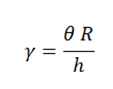
Dynamic or oscillatory tests cover a wide range of stresses in relatively short times, offering very valuable results (3). The operation of the equipment can be by controlled tension or by controlled deformation. In a tension controlled arrangement, a fixed torque is applied to the top plate to generate the oscillating motion. Because the applied stress level is fixed, the distance the plate moves in its oscillatory path can vary between cycles. When the strain-controlled test is defined, the upper platen is accurately moved between the amplitude extremities at the specified frequency and the torque required to maintain oscillation is measured. Since the DSR only takes three measurements; torque, angular rotation and time, all results are calculated from these variables. The following equations are used to calculate the strain () and stress () in the equipment:

( 1 )

Where:

g is the deformation of the sample, dimensionless or expressed in%.

q is the angular rotation, in radians (rad).

R is the radius of the plate, in millimeters (mm).

h is the space between the plates, in mm.

( 2 )

Where:

t is the shear stress, in Pa.

T is the recorded torque, in Newton meter (Nm).

From these definitions the absolute complex cut modulus is derived, whose expression is the following:

( 3 )

Where:

G * (ω) is the complex shear modulus, expressed in Pa.

ω is the angular frequency, in radians per second (rad / s).

Note: in this work the angular velocity will be referred to as angular frequency or simply frequency, therefore the frequency variable may present units of rad/s or Hertz (Hz). Both are related as .

Note: in this work the angular velocity will be referred to as angular frequency or simply frequency, therefore the frequency variable may present units of rad/s or Hertz (Hz). Both are related as .

For viscoelastic materials such as asphalt, the shear modulus is composed of a loss modulus (viscous component, G'') and a storage modulus (elastic component, G'), the relative magnitude of which determines how the material responds to loads. applied. The two components are linked to the complex modulus by the phase angle in a vector sum as shown in Figure 1. Therefore, the different components can be related using equation 4:

For viscoelastic materials such as asphalt, the shear modulus is composed of a loss modulus (viscous component, G'') and a storage modulus (elastic component, G'), the relative magnitude of which determines how the material responds to loads. applied. The two components are linked to the complex modulus by the phase angle in a vector sum as shown in Figure 1. Therefore, the different components can be related using equation 4:

Where:

For viscoelastic materials such as asphalt, the shear modulus is composed of a loss modulus (viscous component, G'') and a storage modulus (elastic component, G'), the relative magnitude of which determines how the material responds to loads. applied. The two components are linked to the complex modulus by the phase angle in a vector sum as shown in Figure 1. Therefore, the different components can be related using equation 4:

G ’’ (ω) is the loss modulus, in Pa.

CITEVI has an Anton Para DSR SmartPave 102 shown in Figure 2. Due to the high stiffness of asphalt cements at room temperature, high shear stresses are required to reach a certain level of deformation, which can be limited by the minimum torque recordable by the equipment (2). To overcome this, the 8 mm diameter geometry is used to perform tests at temperatures below 35 °C and the 25 mm diameter geometry is used for tests where the temperature is equal to or greater than 35 °C. To maintain the specified temperature for each test, the equipment has a Peltier temperature control device and a water circulator to cool the pieces. In addition, an air compressor is used to help the rotation of the frictionless geometry in what is called an air bearing, allowing for high levels of precision. The operation of the rheometer and temperature control unit, along with data acquisition and analysis, are controlled by a computer.

Figure 2. SmartPave 102 dynamic shear rheometer. Taken from Anton Paar's website (4)

2 Linear viscoelastic region

The relationship between stress and strain in asphalt can be approximated as linear to small strains. Within this region, the relationship between stress and strain is influenced only by temperature and load time (frequency) and not by the magnitude of stress or strain. By increasing the amplitude of the stresses, the relationship is no longer linear and a decrease in the modulus of rigidity is caused (2).

There are three important reasons why the linear viscoelastic region of asphalt should be defined. First of all, it is advisable to limit the characterization of asphalt to its linear viscoelastic response to simplify the mathematical modeling of the material, since the nonlinear response, particularly for viscoelastic materials, is extremely difficult to characterize and model in the laboratory. Second, the rheological measurements and analysis methods are defined under the linear viscoelastic region. Finally, in the field of pavement design, it is necessary to study the asphalt and the asphalt mixture in the same domain in order to define the applicability limits of the linear viscoelastic theory (2).

ASPHALT

ASPHALT

Continue read: ASFALTO

Among its main characteristics, it stands out that it is a non-volatile material at room temperature and atmospheric pressure, it is an excellent waterproofing and adhesive, and it has a relatively stable chemical structure. All these factors, added to its low cost, have positioned it as the material par excellence for road construction (2).

1 History of asphalt

Asphalt, or bitumen, is well known and used since ancient times. The extensive deposits of crude oil in the Middle East have been seeping to the surface in the form of "natural" bitumen for thousands of years. The ancient inhabitants of these parts quickly appreciated the excellent waterproofing, adhesive and preservative properties of the material and quickly made it available to them (2).

The first recorded use was by the Sumerians whose empire existed from around 3500 BC. until about 2000 BC, and they used to use it in ship building (2). Later, the Babylonians used it as a binder in the construction of castles, such as the Tower of Babel. Asphalt was also used by the Egyptians both to mummify corpses and to waterproof reservoirs of water (3).

The Greek word asphaltos it was used during Homeric times to mean stable or solid substance. Later, it was adopted by the Romans who used the material to waterproof their baths, reservoirs and aqueducts (3).

The earliest uses of asphalt as a road construction material date back to around 615 BC. in Babylon, in the reign of King Nabopolassar. It is believed that this character was a skilled exponent of the use of bitumen because there is evidence that he used the product to waterproof the masonry of his palace and as a grout for stone paths. This record is inscribed on a brick, where it is detailed that the paving of the street that linked the palace to the north wall of the city had been made "with asphalt and burnt brick" (4).

2 Obtaining and production

Natural asphalt is extracted from the ground and can be associated with other mineral matter (sand, clay, rocks). The most common way to find natural asphalt is in surface deposits or lakes, mainly in Venezuela (Lake Bermúdez) and in Trinidad and Tobago (Lake La Brea or Trinidad) (1).

Asphalt can also be found naturally in the form of asphaltite or gilsonite (its correct name is uintaite) in deposits that are mainly found in the United States, Cuba and Argentina. Additionally, asphalt can be found naturally, impregnated in concentrations of up to 12%, within limestone or sandstone rocks that are extracted from mines or quarries depending on the deposit (1).

On the other hand, asphalt is obtained artificially from the distillation of petroleum. There are mainly four oil extraction areas in the world: North America, the Caribbean, Russia and the Middle East. According to these zones, the physical and chemical characteristics of the crude vary considerably. Of the 1,500 types of crude produced in the world, only a few are suitable for the production of asphalt.

In refineries, the crude oil is heated to 350 °C and enters distillation towers. Distillation is a physical separation process, based on the difference in boiling points between components in the same liquid mixture. As the boiling points of hydrocarbons increase with their molecular masses, the first vaporization of volatile compounds and then the fractional distillation of the rest of the components becomes possible (5). The lighter fractions (propane, butane, naphtha, kerosene, gas oil) are extracted and the residue, also called "tower bottom", passes to a vacuum distillation tower that separates the asphalt from the other distillates still present in the crude. (6).

3 Conventional asphalt

3 Conventional asphalt

3 Conventional asphalt

The chemical composition of asphalt varies according to the crude oil and its refining process. However, broadly speaking, the content can be separated into two groups called asphaltenes and maltenes, which in turn are subdivided into saturates, aromatics and resins. These four groups are not strictly defined and there is some overlap between them. The structure of asphalt is considered as a colloidal system made up of micelles of high molecular weight asphaltenes dispersed or dissolved in an oily medium (maltenes) of low molecular weight (2).

3.2 Viscoelastic behavior

Viscoelastic materials are those that exhibit elastic and viscous behavior simultaneously (7). Several factors affect the behavior of viscoelastic materials, with temperature being the most critical parameter. The mechanical response of asphalt varies from that of an elastic solid to that of a Newtonian fluid in the temperature range from −20 to 150 °C. In the working temperature range of the pavement, knowing the exact nature of the response is essential, since it has a significant influence on the magnitude of the damage due to permanent deformation and fatigue (8).

The other parameter that has a marked effect on viscoelastic materials is the loading time or loading speed (frequency). Asphalt behaves as an elastic solid at high load speeds, exhibiting high stiffness and eventually brittleness; while it behaves like a viscous liquid in prolonged loading times, presenting high ductility and low rigidity (9).

Figure 7 shows the response of an asphalt sample in the creep test or creep. The stress resulting from the applied load shows an instantaneous elastic response followed by a gradual increase in stress over time until the load is removed. The change in stress over time is caused by the viscous behavior of the material. When the load is removed, the elastic stress recovers instantly and additional recovery occurs over time, known as "delayed elasticity." Ultimately, a permanent residual deformation remains, which is irrecoverable and is caused directly by the viscous behavior (2).

Figure 1. Asphalt response in the creep test. Adapted from The Shell Bitumen Handbook (2)

The modulus of stiffness of asphalt, by analogy with the modulus (E) of elastic solids, is the relationship between stress (σ) and strain (ε). However, the modulus of rigidity of a viscoelastic material depends on the loading time (t) and the temperature (T) (3). Therefore, the modulus of stiffness of asphalt can be determined by Equation 1:

( 1 )

Where:

is the asphalt's modulus of stiffness at a given temperature and with a given load application time (frequency), in Pascals (Pa).

σ is the applied stress or load, in Pa.

is the deformation relative to the original dimensions due to the application of the load, for a given temperature and time (frequency). It is usually measured in percentage (%).

It is difficult to experimentally demarcate a viscoelastic solid from a viscoelastic fluid at a defined temperature, since the precise nature of the response depends on the loading rate (8). For very short load application times, the modulus of rigidity is practically constant and asymptotic towards 3 × 10⁹ Pa, regardless of temperature. In these cases the asphalt behaves as an elastic solid. On the contrary, when the load application time is high or the temperature increases, the stiffness modulus decreases considerably, reflecting the viscous behavior of the asphalt. At the usual pavement service temperatures and under the usual traffic loads, the behavior can be generalized as viscoelastic (2).

The fact that a material exhibits viscoelastic fluid behavior at a given temperature and frequency, and simultaneously that same sample can exhibit viscoelastic solid behavior at the same temperature and at a much higher frequency is known as the principle of time-temperature superposition. and it is a fundamental property of viscoelastic materials. This rule is very useful because it allows us to study the nature of asphalt at frequencies that cannot be experimentally achievable and will be explored in greater depth later.

The fact that a material exhibits viscoelastic fluid behavior at a given temperature and frequency, and simultaneously that same sample can exhibit viscoelastic solid behavior at the same temperature and at a much higher frequency is known as the principle of time-temperature superposition. and it is a fundamental property of viscoelastic materials. This rule is very useful because it allows us to study the nature of asphalt at frequencies that cannot be experimentally achievable and will be explored in greater depth later.

Viscosity is a fundamental characteristic property of asphalt as it determines how it will behave at a specific temperature or range of temperatures. Viscosity is defined as a measure of the resistance to flow (shear or tensile stresses) due to internal friction between molecules (10). In asphalt, viscosity is affected inversely to temperature; the higher the temperature, the lower the viscosity.

In the fundamental way of measuring viscosity, the space between two planes movable relative to each other (straight as in parallel plates or curved as in concentric cylinders) is filled with asphalt. The force that opposes the movement of one of the planes due to the applied shear stress is developed solely due to the presence of the material. This force is proportional to the area and the relative speed of movement from one plane to another and inversely proportional to the distance between the plates. The constant that relates the variables is the viscosity, as shown in equation 2.

( 2 )

Where:

FIn the fundamental way of measuring viscosity, the space between two planes movable relative to each other (straight as in parallel plates or curved as in concentric cylinders) is filled with asphalt. The force that opposes the movement of one of the planes due to the applied shear stress is developed solely due to the presence of the material. This force is proportional to the area and the relative speed of movement from one plane to another and inversely proportional to the distance between the plates. The constant that relates the variables is the viscosity, as shown in equation 2. In the fundamental way of measuring viscosity, the space between two planes movable relative to each other (straight as in parallel plates or curved as in concentric cylinders) is filled with asphalt. The force that opposes the movement of one of the planes due to the applied shear stress is developed solely due to the presence of the material. This force is proportional to the area and the relative speed of movement from one plane to another and inversely proportional to the distance between the plates. The constant that relates the variables is the viscosity, as shown in equation 2.

A is the surface between both planes that contains the fluid, in square meters (m2).

A is the surface between both planes that contains the fluid, in square meters (mA is the surface between both planes that contains the fluid, in square meters (mA is the surface between both planes that contains the fluid, in square meters (m

A is the surface between both planes that contains the fluid, in square meters (mA is the surface between both planes that contains the fluid, in square meters (m

A is the surface between both planes that contains the fluid, in square meters (m

( 3 )

Where:

A is the surface between both planes that contains the fluid, in square meters (m

A is the surface between both planes that contains the fluid, in square meters (m

For viscoelastic materials such as asphalt, the shear modulus is composed of a loss modulus (viscous component, G'') and a storage modulus (elastic component, G'), the relative magnitude of which determines how the material responds to loads. applied. The two components are linked to the complex modulus by the phase angle in a vector sum as shown in Figure 1. Therefore, the different components can be related using equation 4:

Bibliography

  1. A is the surface between both planes that contains the fluid, in square meters (m A is the surface between both planes that contains the fluid, in square meters (m A is the surface between both planes that contains the fluid, in square meters (m
  2. Read, John y Whiteoak, David. Read, John y Whiteoak, David. Read, John y Whiteoak, David.
  3. Nikolaides, Athanassios. Highway Engineering: Pavements, Materials and Control of Quality. EUA : Taylor & Francis Group, 2015.
  4. Read, John y Whiteoak, David. Read, John y Whiteoak, David. Read, John y Whiteoak, David.
  5. Read, John y Whiteoak, David. Read, John y Whiteoak, David. Read, John y Whiteoak, David.
  6. Read, John y Whiteoak, David. Read, John y Whiteoak, David.
  7. Read, John y Whiteoak, David. Read, John y Whiteoak, David. Read, John y Whiteoak, David.
  8. Read, John y Whiteoak, David. Read, John y Whiteoak, David. s.l. : INTERNATIONAL JOURNAL OF PAVEMENT ENGINEERING, 2018, International Journal of Pavement Engineering.
  9. s.l. : INTERNATIONAL JOURNAL OF PAVEMENT ENGINEERING, 2018, International Journal of Pavement Engineering. s.l. : INTERNATIONAL JOURNAL OF PAVEMENT ENGINEERING, 2018, International Journal of Pavement Engineering. s.l. : INTERNATIONAL JOURNAL OF PAVEMENT ENGINEERING, 2018, International Journal of Pavement Engineering.
  10. s.l. : INTERNATIONAL JOURNAL OF PAVEMENT ENGINEERING, 2018, International Journal of Pavement Engineering. s.l. : INTERNATIONAL JOURNAL OF PAVEMENT ENGINEERING, 2018, International Journal of Pavement Engineering. s.l. : INTERNATIONAL JOURNAL OF PAVEMENT ENGINEERING, 2018, International Journal of Pavement Engineering.
  11. s.l. : INTERNATIONAL JOURNAL OF PAVEMENT ENGINEERING, 2018, International Journal of Pavement Engineering. s.l. : INTERNATIONAL JOURNAL OF PAVEMENT ENGINEERING, 2018, International Journal of Pavement Engineering. s.l. : INTERNATIONAL JOURNAL OF PAVEMENT ENGINEERING, 2018, International Journal of Pavement Engineering.
  12. s.l. : INTERNATIONAL JOURNAL OF PAVEMENT ENGINEERING, 2018, International Journal of Pavement Engineering. s.l. : INTERNATIONAL JOURNAL OF PAVEMENT ENGINEERING, 2018, International Journal of Pavement Engineering. s.l. : INTERNATIONAL JOURNAL OF PAVEMENT ENGINEERING, 2018, International Journal of Pavement Engineering.
  13. s.l. : INTERNATIONAL JOURNAL OF PAVEMENT ENGINEERING, 2018, International Journal of Pavement Engineering. s.l. : INTERNATIONAL JOURNAL OF PAVEMENT ENGINEERING, 2018, International Journal of Pavement Engineering.
MOST COMMON FAILURES IN THE REGION'S FLOORS

MOST COMMON FAILURES IN THE REGION'S FLOORS

The surface deterioration of the pavement provides a measure of the damage caused by traffic, environmental conditions and aging of the materials that constitute the wearing course. The type and cost of maintenance operations required for a road section is significantly influenced by the type, extent and severity of the defects present in the pavement (1). It is recognized that in reality, the set of indicators that characterize the state of the surface does not evolve in isolation, but through an interaction between them, other elements and the previous state of the set. It has been shown that the progress of cracking and rutting are related: at the beginning of the service life, an initial rutting occurs, the growth rate of which decreases with the increase in the number of cycles. Once cracking begins to be evident, the modulus of the asphalt layers falls, which causes an increase in the stresses that accelerate the rutting process, together with the possible entry of water into the structure depending on the maintenance tasks (2 ). Figure 1 outlines the deterioration behavior of the pavement considering both evolutionary periods.

Figure 1. Evolution of the deterioration of a pavement structure. Taken from Rational Design Models: Failure Criteria (2)

In today's pavements, the action of repeated loads is the most notable cause of deterioration. As previously mentioned, the growth in the volumes of cargo transported and the increase in the allowable weight per axle increase the probability that the pavement will experience fatigue and cumulative deformation failures (3).

1 Fatigue cracks

The National Highway Directorate of Uruguay defines fatigue cracks as failure lines mainly caused by stresses and / or lack of bearing capacity of the pavement (1).

The triggering of fatigue cracks is mainly attributed to tensile stresses in the lower part of the asphalt layer due to the bending of said layer due to the repeated passage of vehicles. This cracking starts and progresses through the asphalt phase and/or at the asphalt-aggregate interface and gradually propagates to the surface (bottom-up cracks) (4). They begin to show up as small longitudinal fissures in the tracks branching out, to later form a closed mesh (colloquially called crocodile skin). At that point, the failure is declared severe, eventually causing material detachment (1).

The fatigue process affects the asphalt layers, progressively reducing their effective work modules, which causes a redistribution of the induced stresses throughout the structure. This stress variation is dependent on the contribution of these asphalt layers to the overall stiffness of the structure. It may then happen that structures that have greater relative rigidity of the asphalt layers with respect to the structure as a whole, result in a decrease in useful life (2).

The fatigue failure criterion relates the allowable number of load repetitions to the tensile strain, until the condition of the pavement is considered sufficiently deteriorated to establish the end of its life. Fatigue laws are generally elaborated from laboratory tests and calibrated in the field (5).

Folder fatigue failures have historically been combated in two ways. On the one hand, an attempt has been made to give the folder such a thickness that the stress applied by traffic generates small deformations that do not produce the possibility of cracking or cumulative deformation. A greater thickness reduces the magnitude of the tensile stresses in the lower fiber of the asphalt layer and makes it more difficult for cracks to propagate, since they have to travel a longer distance to reach the surface (6). This approach is the most intuitive and simple to solve, but also the most expensive (7). On the other hand, the tensions in the asphalt layer can be reduced by supporting the folder on other layers that are sufficiently resistant and not very deformable. In these cases, it is important to compare the cost of each of the reinforcement options and study that the behavior of these layers does not affect the performance of the folder. For example, a cemented base will substantially improve its resistance capacity but will eventually generate shrinkage cracks that will be transmitted to the asphalt layer.

2 Permanent deformation

By permanent deformation phenomenon, also known as rutting, it is understood the alteration of the level of the tread layer due to subsidence along the treads (1) that brings about a lack of safety and comfort of the users who walk on the pavement.

Permanent deformations in asphalt mix layers are caused in a specific way or in combination by a set of factors. In the first place, the exposure of the pavement to high temperatures directly affects the viscoelastic properties of the asphalt present in the asphalt mixture causing it to flow under lower loads and it is generally evident early, even during the first months of summer. Other climatic factors such as thermal gradient and reflectivity of the pavement affect the severity of rutting to a greater or lesser extent (8).

On the other hand, traffic gives rise to cyclical loads, where in each cycle some work is done to deform the pavement surface as a combination of densification and shear deformation. Densification implies a decrease in the volume of the material, while shear deformation involves a plastic flow of the material with or without changes in volume (8). The factors that intervene in this behavior are the magnitude of the load, the inflation pressure of the tires and the speed of movement of the vehicles (9).

There are also other factors that directly contribute to rutting related to the composition of the asphalt mix, such as the low void content, high percentage of asphalt content, the use of an inappropriate asphalt and the use of uncrushed aggregates (10). Finally, there are factors related to the geometric characteristics of the route such as the width of the lane, which influences the transversal distribution of the vehicles, and the longitudinal slope that affects the distribution of the load transmitted by the tires to the pavement (9).

Bibliography

  1. DNV. Pavement evaluation instructions. Montevideo : s.n., 2000.
  2. Giovanon, Oscar. Rational design models: Failure criteria. Rosario : s.n., 2001.
  3. Rico Rodríguez, Alfonso, Téllez Gutiérrez, Rodolfo and Garnica Anguas, Paul. Flexible pavements: Problems, design methodologies and trends. Querétaro: Mexican Institute of Transportation, 1998.
  4. Safaei, Farinaz, Castorena, Cassie and Kim, Richard. Linking asphalt binder fatigue to asphalt mixture fatigue performance using viscoelastic continuum damage modeling. North Carolina : Mechanics of Time-Dependent Materials, 2016. Vol. 20.
  5. Monteros, Carlos Javier Vasquez. Damage equivalence factors in flexible pavements: analysis for typical conditions in Argentina. Buenos Aires: s.n., 2016.
  6. Ogundipe, Olumbide. Mechanical Behaviour of Stress Absorbing Membrane Interlayers. United Kingdom: University of Nottingham, 2012.
  7. Gaspar, Matheus, and others. Highly Modified Asphalt Binder for Asphalt Crack Relief Mix. 2017, Transportation Research Record: Journal of the Transportation Research Board, págs. 110–117.
  8. Morea, Francisco. Analysis of the rutting behavior of different mixtures in loaded wheel tests according to BS 598-110 and CEN 12697-22. Antigua Guatemala: XVII Ibero-Latin American Asphalt Congress, 2013.
  9. Martucci, José Luis and Pastorini, Magdalena. Rehabilitation of rutted pavements. Montevideo: VII Congress of the Uruguayan Highway, 2009.
  10. Nikolaides, Athanassios. Highway Engineering: Pavements, Materials and Control of Quality. EUA : Taylor & Francis Group, 2015.

We use own and third party cookies to help us optimize your visit to our website and also to improve service delivery and thus adapt to their most relevant and useful to better their experience needs. When you click OK to continue with navigation and thus confirm that you have read the information and accept the activation of cookies.

You can allow or reject use at any time can change the Configuration Options Privacy - Cookies Policy -

Privacy settings

When you visit a website, you can store or retrieve information in your browser, mainly in the form of cookies. Check your personal services cookies here.


We track anonymous user information to improve our website.
.
  • _ga
  • _gid
  • _gat

Decline all Services
Accept all Services