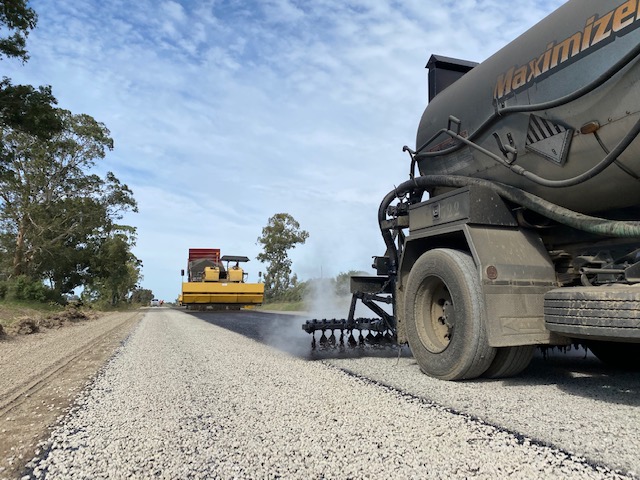
DOUBLE TREATMENT LOCKED IN CIRCUIT 1 PPP
Traxpalco and Hernández and González perform at a very good pace with BITAFLEX RIEGO 65 P40 emulsion
LEARNING ABOUT CONSERVATION
Is our network gaining or losing value?
This is one of the questions of the ROADVOCATE course taught by the Pavement Preservation and Recycling Alliance (PPRA), which we attend virtually and where we update our knowledge about preservation and conservation treatments.
April ends and with it goes another of the editions of the fantastic PPRA ROADVOCATE course. With the presence of more than 60 people, from various American transit agencies, construction companies and material suppliers, we learned from experts how to use various tools for better pavement conservation, including various calculators and technical material to get the most out of it. of our resources, especially in this pandemic context.
The ROADVOCATE course is a knowledge update course that imparts the pre to teach public transportation agencies, contractors, and the general public the fundamentals of making data-driven decisions, how to optimize budgets by spending wisely, and the importance of conservation.
The platform where the magic happens is on the PPRA website www.roadresource.org and it is where all the activities of the course are carried out. Among other things it contains:
- A guide to select the most suitable treatment for a road, based on its condition or from a photographic comparison.
- A complete treatment toolbox, fully explained from its materials to its execution and good practices.
- Comparative calculators of equivalent annual costs, life cycle cost, remaining life and cost benefit between different treatments.
- Sustainable calculators to assess green projects.
- Manuals and technical information on all pavement recycling and conservation techniques.
The conservation of highways is becoming more and more relevant these days, when budgets are somewhat limited and when we must protect the road network, one of the most important assets of nations. It is interesting to note that the views of Americans regarding conservation are familiar to what happens in our South American countries: lack of budget, lack of long-term planning, political pressure, complaints from neighbors, etc.
Fortunately, slowly but surely, several agencies are reversing the trend from reactive to proactive maintenance. In this way, the wasteful thought of "let's intervene the roads in the worst condition" is left behind, which exhausts the resources of the administration, due to an attitude of "Let's keep good roads in good condition" Fortunately, slowly but surely, several agencies are reversing the trend from reactive to proactive maintenance. In this way, the wasteful thought of "let's intervene the roads in the worst condition" is left behind, which exhausts the resources of the administration, due to an attitude of
Grupo Bitafal, as a member of the PPRA and a participant in its international committee and marketing committee, is taking steps to bring this valuable knowledge closer to local and regional government administrations, so that in the future we can receive this type of courses in our countries and in Spanish.
We leave some of the screenshots of the virtual course, with more relevant information. Finally, we invite you to browse the web www.roadresource.org and learn more about conservation.
Until next time!