LEARNING ABOUT CONSERVATION

LEARNING ABOUT CONSERVATION

Is our network gaining or losing value?

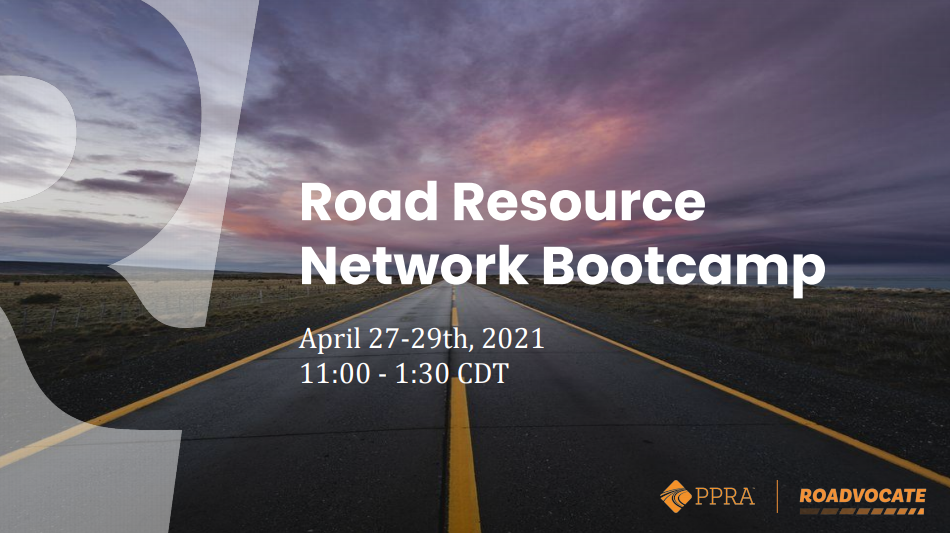
This is one of the questions of the ROADVOCATE course taught by the Pavement Preservation and Recycling Alliance (PPRA), which we attend virtually and where we update our knowledge about preservation and conservation treatments.

April ends and with it goes another of the editions of the fantastic PPRA ROADVOCATE course. With the presence of more than 60 people, from various American transit agencies, construction companies and material suppliers, we learned from experts how to use various tools for better pavement conservation, including various calculators and technical material to get the most out of it. of our resources, especially in this pandemic context.

The ROADVOCATE course is a knowledge update course that imparts the pre to teach public transportation agencies, contractors, and the general public the fundamentals of making data-driven decisions, how to optimize budgets by spending wisely, and the importance of conservation.

The platform where the magic happens is on the PPRA website www.roadresource.org and it is where all the activities of the course are carried out. Among other things it contains:

  • A guide to select the most suitable treatment for a road, based on its condition or from a photographic comparison.
  • A complete treatment toolbox, fully explained from its materials to its execution and good practices.
  • Comparative calculators of equivalent annual costs, life cycle cost, remaining life and cost benefit between different treatments.
  • Sustainable calculators to assess green projects.
  • Manuals and technical information on all pavement recycling and conservation techniques.

The conservation of highways is becoming more and more relevant these days, when budgets are somewhat limited and when we must protect the road network, one of the most important assets of nations. It is interesting to note that the views of Americans regarding conservation are familiar to what happens in our South American countries: lack of budget, lack of long-term planning, political pressure, complaints from neighbors, etc.

Fortunately, slowly but surely, several agencies are reversing the trend from reactive to proactive maintenance. In this way, the wasteful thought of "let's intervene the roads in the worst condition" is left behind, which exhausts the resources of the administration, due to an attitude of "Let's keep good roads in good condition" Fortunately, slowly but surely, several agencies are reversing the trend from reactive to proactive maintenance. In this way, the wasteful thought of "let's intervene the roads in the worst condition" is left behind, which exhausts the resources of the administration, due to an attitude of

Grupo Bitafal, as a member of the PPRA and a participant in its international committee and marketing committee, is taking steps to bring this valuable knowledge closer to local and regional government administrations, so that in the future we can receive this type of courses in our countries and in Spanish.

We leave some of the screenshots of the virtual course, with more relevant information. Finally, we invite you to browse the web www.roadresource.org and learn more about conservation.

Until next time!

PERIODIC ROAD CONSERVATION TECHNIQUES COURSE

PERIODIC ROAD CONSERVATION TECHNIQUES COURSE

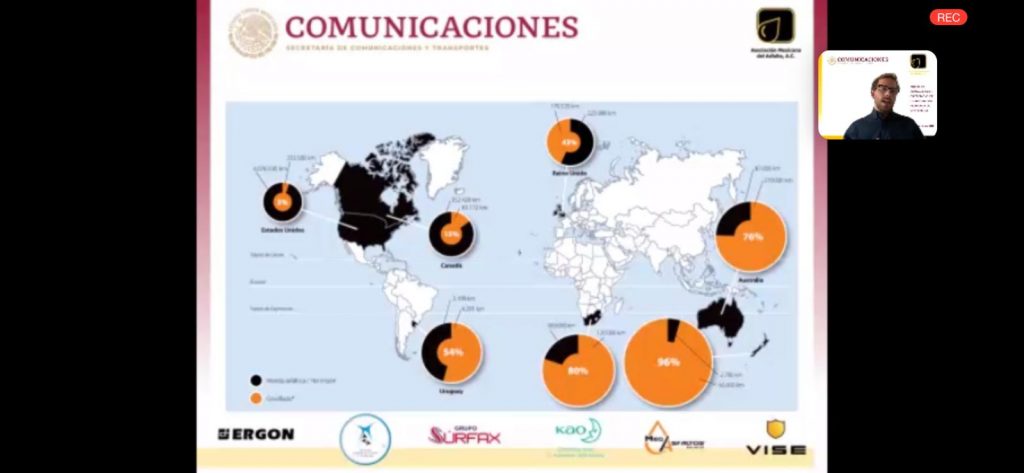
Bitafal was a keynote speaker in the virtual course of the Ministry of Communications and Transportation (SCT) of Mexico and the Mexican Asphalt Association (AMAAC).

Grupo Bitafal held the inaugural conference of the "Refresher Course in Periodic Road Maintenance Techniques", a Mexican event with more than 500 participants. Below we delve into the content of the course and a free tool for the selection of surface treatments.

Organized by the SCT of Mexico and AMAAC, the course on conservation techniques aimed to update the knowledge of Mexican administration professionals. The event took place over three days, each covering a particular theme. The first day the theme was "Periodic Conservation Techniques" and Bitafal gave the first lecture by Ing. Ignacio Kröger, who dealt with the detection of opportunities and limitations in the evaluation of pavements as well as the correct selection of surface treatments. The first day was completed by important exhibitors, such as Eng. Salvador Fernández Ayala, General Director of Highway Conservation of the SCT and Dr. Adriana Vargas, researcher of the North American National Center for Asphalt Technology (NCAT).

The session on the second day dealt with the theme of "Good practices in conservation treatments" with presentations on gravel, microagglomerates, sealing and caulking of cracks. The presentation by Ing. Jorge Alarcón on his experience in the reuse of milled material (RAP), the different recovery techniques and the configurations of asphalt plants for a greater incorporation of RAP was highlighted on that day.

On the third day, “Asphalt mixes as conservation techniques” were studied in depth, commenting on the good practices of milling, patching and discontinuous mixes. Eng. Francisco Ramos commented on the guide on "Road Conservation Procedures and Techniques" developed by the SCT and detailed the highly recommended "Conservation Treatment Selection Tool" available for free at .

We thank the SCT and AMAAC for the invitation and for having the initiative to share crucial issues for the sustainable development of Latin American roads. Follow us on social networks to find out when the videos of the course are published.

Linkedin: https://www.linkedin.com/company/grupo-bitafal/
Twitter: https://twitter.com/BITAFAL

BITAFAL GROUP AT IRMD 2020

BITAFAL GROUP AT IRMD 2020

Each first Thursday of April the International Road Maintenance Day (“International Road Maintenance Day” - IRMD) is celebrated, a proposal that this year was showcased by a huge digital presence.

With a presentation on some "Tips to improve the quality of surface treatments", Ing. Ignacio Kröger was part of the 19 speakers from 10 countries: Germany, Slovenia, United States, Uruguay, Chile, Costa Rica, Guatemala, Colombia, Mexico and Spain than the past April 2 They discussed the importance of road maintenance, the influence of the state of the pavement on CO2 emissions, the need to incorporate innovation into road maintenance objectives and the social importance of road infrastructure.
The conference was broadcast through the platform Itafec and had more than 1,400 users from all over the world who, through Twitter and the hashtag #IRMD2020, reached nearly 8,000 messages, becoming a trend in Spain, Mexico, and Guatemala, surpassing an estimated audience of 2,000,000 users. We invite you to see the presentation of Grupo Bitafal and what was discussed during the day.
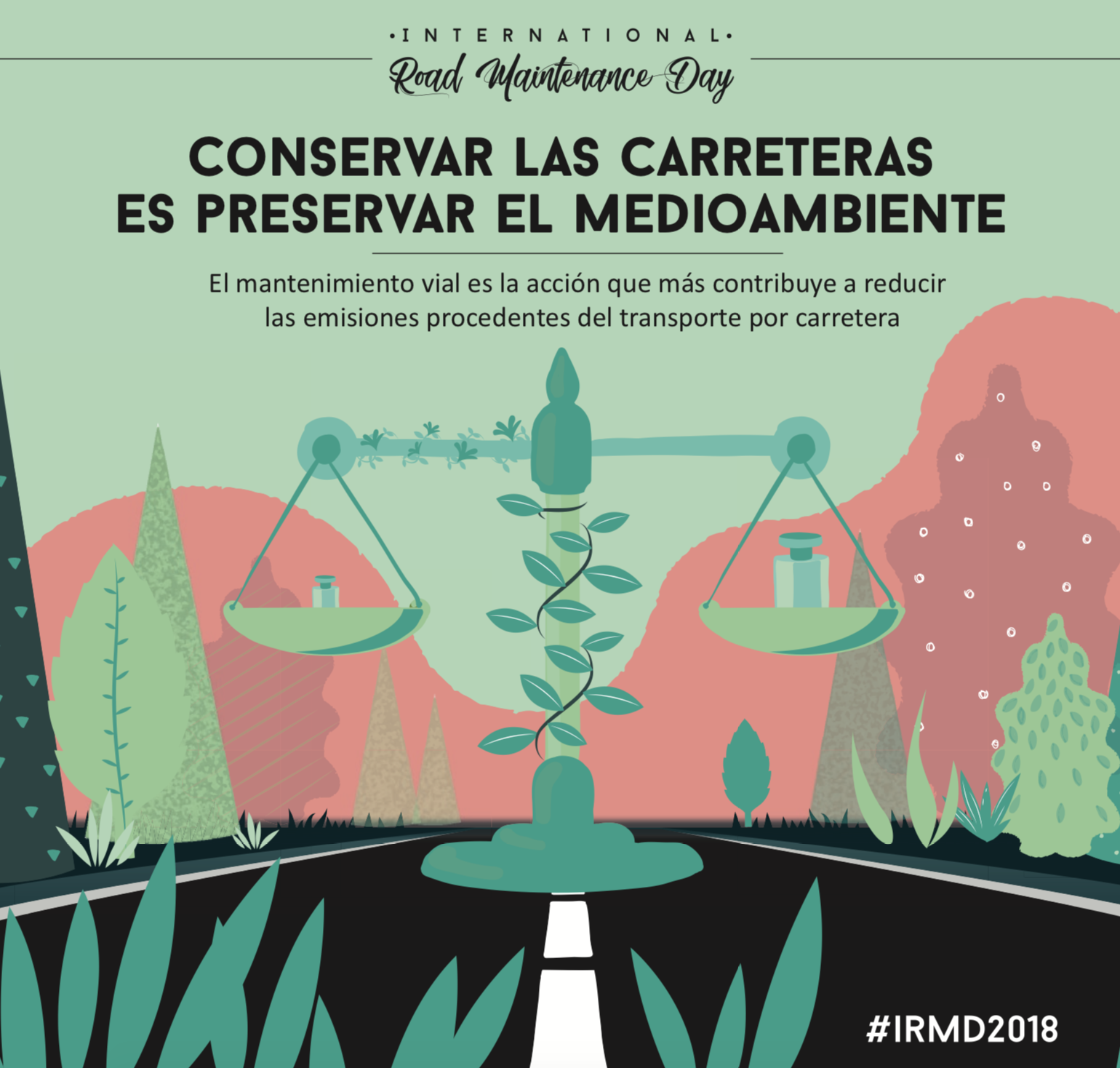
Taking up the motto "preserving roads is preserving the environment", the main topics discussed during the day were how greenhouse gas emissions can be significantly reduced both with a good condition of the pavement as well as in the use of reuse and recycling techniques. . Some of the most relevant papers highlighted that "the reuse of a pavement using dry aggregates and biomass can reduce emissions from the entire manufacturing process by up to 38%".
Likewise, it was highlighted that the carbon footprint associated with the vehicles that circulate on the highway is much greater than that related to the process of construction and maintenance of the infrastructure, especially in the use of asphalt pavements. For its part, the Spanish Road Association (AEC) presented a report that explains the relationship between the state of conservation of the pavement, fuel consumption and vehicle emissions. “The tests, carried out on a 46-kilometre-long section, confirm that, in the case of light vehicles, CO2 emissions decrease by an average of 3.5% when driving on well-preserved asphalt, reaching 4% of reduction for the heavy vehicle”, they explain from the AEC.
On the other hand, topics of interest were discussed, such as the life cycle of asphalt pavements, the use of new maintenance technologies and their environmental impact both in the use of cold techniques, such as surface treatments, as well as in the recycling of materials. .
The presentation of Grupo Bitafal can be seen below the note.
To learn about International Road Maintenance Day: http://roadmaintenanceday.org
International Day for the Preservation of the Road

International Day for the Preservation of the Road

The next 5th of April it will celebrate the first International Day of Road Maintenance (International Road Maintenance Day, IRMD) the IRMD 2018

It proposed an excellent initiative from Asefma (Spanish Association of Manufacturers of Asphalt Mixture) and adds up consciences over the globe, such as ZAS (Slovenia) Routes de France (former USIRF France), ERF (European Road Federation) and Eurobitume, Mexico, Ecuador, Chile and BITAFAL from Uruguay, among others.

The reason for the celebration of this day is to show that the world as we know it today is only possible by roads and must properly preserve them. Institutionalizing the idea is to be held every first Thursday of April.

In the 2018 edition of IRMD, under the slogan "It protects the roads conserving the environment"It aims to draw attention to the influence of the condition of roads in emissions from vehicles on them.

He program of the day next Thursday April 5 in Madrid-Spain, will be from 9 to 12 (local time) and will feature two panel discussions:

1- The opinions of road users

2- The position makers

To access the free online transmission can be registered through the platform ITAFEC on the following link: https://www.itafec.com/event/detail/id/277

LINKS TO LEARN MORE:

Mas info: https://www.ptcarretera.es/wp-content/uploads/2018/03/IRMD-2018-Spain.pdf

Blog Juan José Potti (President of ASEFMA) https://blogdejjpotti.wordpress.com/2018/03/07/irmd2018-un-dia-internacional-sobre-la-conservacion-de-carreteras/

Manifesto IRMD_ https://www.asefma.es/wp-content/uploads/2018/04/manifiesto_IRMD2018.pdf

Official page # IRMD2018 https://roadmaintenanceday.org/es/inicio/

We use own and third party cookies to help us optimize your visit to our website and also to improve service delivery and thus adapt to their most relevant and useful to better their experience needs. When you click OK to continue with navigation and thus confirm that you have read the information and accept the activation of cookies.

You can allow or reject use at any time can change the Configuration Options Privacy - Cookies Policy -

Privacy settings

When you visit a website, you can store or retrieve information in your browser, mainly in the form of cookies. Check your personal services cookies here.


We track anonymous user information to improve our website.
.
  • _ga
  • _gid
  • _gat

Decline all Services
Accept all Services