ROUTE 5 DUPLICATION: INVESTMENT RECORD FIGURE

ROUTE 5 DUPLICATION: INVESTMENT RECORD FIGURE

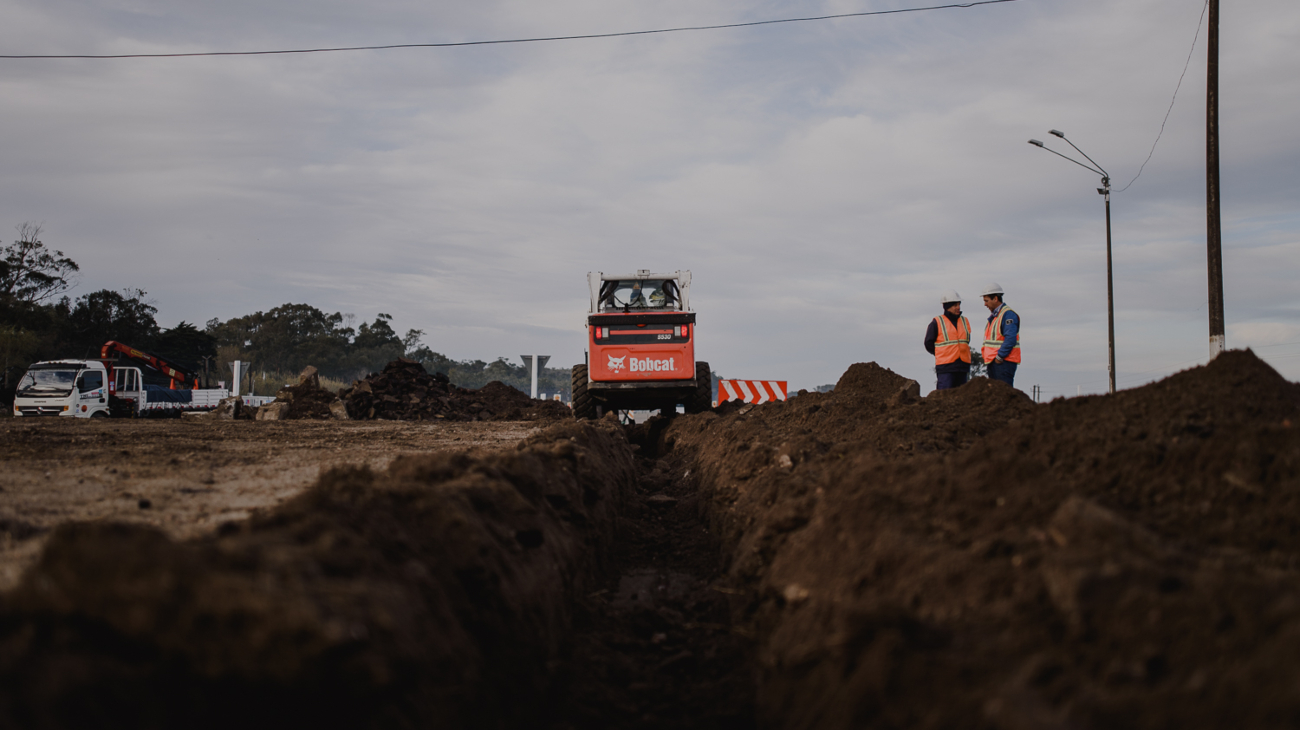
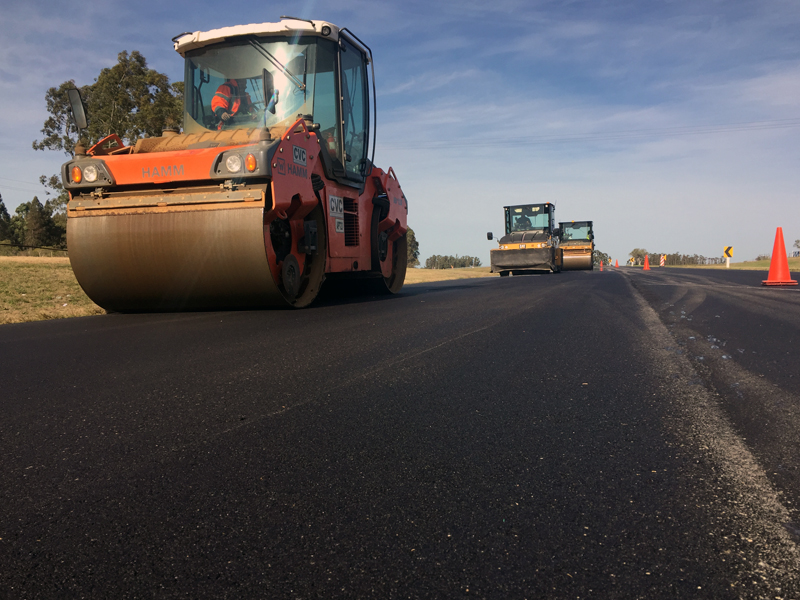
The extension of the double track from Canelones to Durazno will improve traffic conditions and provide safety to users

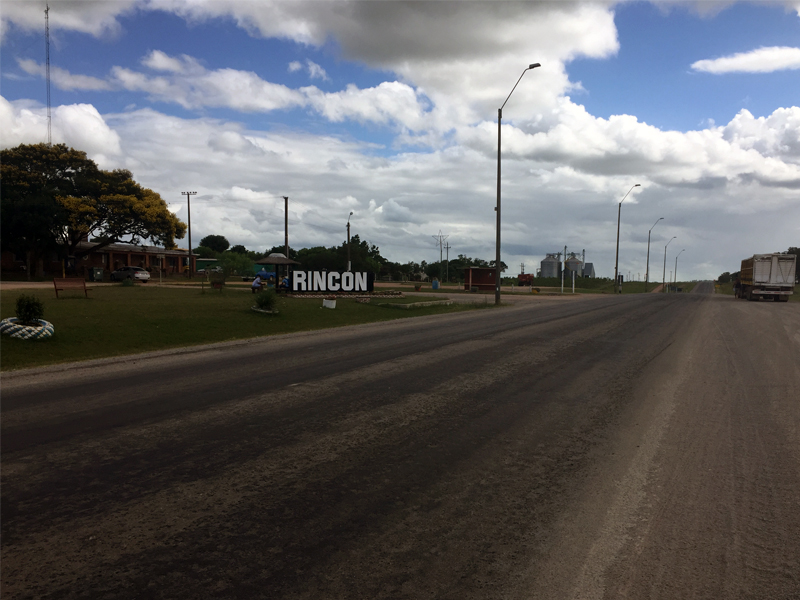
Currently the double track runs from Montevideo to Canelones. Its extension will be executed in four sections:

The first one goes from Canelones (at the junction with Route 11) to the town of Mendoza.

The second goes from Mendoza to Florida.

The third from Florida to Sarandí Grande.

And the last one from Sarandí Grande to Durazno.

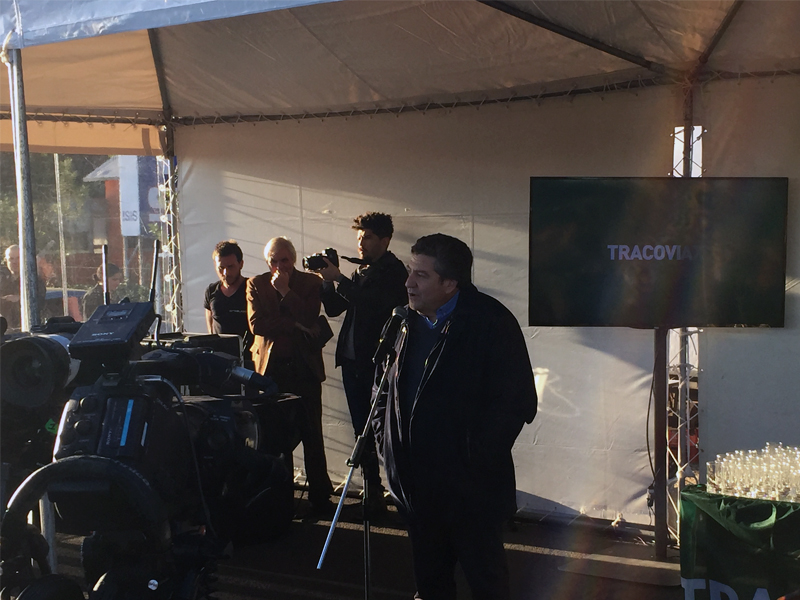
The work is part of the road works plan prepared by the current administration for the five-year period in view of the intense traffic flow that exists today today and that will increase notably in the coming years, with the important investments that are carried out in the central area of ​​the country. The plan foresees an investment of approximately 2.5 billion dollars, a record figure in the country's history.

THE ROLE OF ASPHALT IN ROAD SAFETY

THE ROLE OF ASPHALT IN ROAD SAFETY

We all know that the surface condition of the road affects the accident rate: exudations, pits and rutting increase stopping distances and promote abrupt maneuvers, especially in wet conditions. At Grupo Bitafal we are working on techniques and products to reverse this problem.

As Voltaire said, “There is no such thing as an accident. What we call this name is the effect of some cause that we do not see ”. In general, the incidence of the human factor is the main cause of claims, although the causes are really multiple and some are not very controllable. However, from our perspective and our commitment to Road Safety, the surface condition of the road is a controllable factor and we are working on various techniques and products that substantially improve this situation.

Traffic accidents are one of the most deadly evils in our country. From January 1 to November 30, 2020, a total of 19,721 people were injured by traffic accidents, of whom 347 died and 2606 were seriously injured, according to official figures from UNASEV. Although the rate decreased compared to the previous year (figures strongly influenced by the voluntary mobility restrictions of the pandemic), they continue to represent a problem to which we must pay careful attention.

We detail below some of the main causes and possible solutions:

Hydroplaning and “Spray” effect:

For example, if the asphalt does not drain the water well or due to defects in the road an accumulation occurs, the famous problem of aquaplanning or hydroplaning occurs. At the same time, in closed mixtures, the “Spray” effect occurs on rainy days that make visibility difficult. Beyond the profile of the road that must ensure drainage as well as have a low rut to avoid accumulation, there are solutions that are capable of improving this drainage.

One of the solutions that has been applied experimentally in Uruguay is an F10 mixture with modified asphalt BITAFLEX AM3 in which a higher macrotexture (above 1.0 mm in the sand patch) was achieved than in usual semi-dense mixtures and allows to reduce the "Spray" effect mainly. Even so, it is necessary to see alternatives that drain more water, so we are working to carry out a overcoated with a drainage-type mix with modified asphalt BITAFLEX AM3, asphalt rubber AMC 50 the highly modified asphalt HiMA. The high viscosity of these binders allows the mixture to be applied while maintaining its high percentage of voids and its excellent performance against permanent deformation, preventing the formation of rutting and water accumulation as well as eliminating the “Spray” effect.

The greater the voids on the surface, the safer the rolling, so there are alternatives with surface treatments that allow improving sections that have these problems. For example we have applied in Uruguay type surface treatments Chipping" O cold microagglomerates to solve the rutting problem in such a way as to restore the transversal profile of the road and allow the normal drainage of water towards the sides. On the other hand the application of multiple locked treatments (TMT) It allows to generate voids but with a more comfortable and less noisy rolling.

Lack of texture and friction:

A problem related to the previous one but which is approached in a different way is the issue of the lack of friction of the road due to exudations or loss of texture of the stone aggregates. This can normally occur in heavily requested areas such as intersections, traffic lights, access to roundabouts, roundabouts, etc. In these cases, loss of vehicle control, increased stopping distance and skidding can cause serious accidents. To improve friction we are also working with high friction Seal Coat treatments, composed of high performance binders and excellent resistance aggregates. These treatments have the additional possibility of generating a red, blue or green color surface, which improves the visibility of the road and the driver's attention.

Wells:

Finally, the problem with wells is that they usually generate abrupt maneuvers at high speeds that can end in a collision or loss of control of the vehicle. For this, at Grupo Bitafal we work to promote preventive treatment, with the use of a battery of surface treatment techniques that allow, with the same money as with a milling and replacement scheme, to maintain a high standard of the pavement, ensuring the absence of wells.

In secondary and urban roads we have been working with departmental municipalities for several years supplying the family of emulsions MIX 55 to make cold mixes for patching.

In short, these are the latest developments in materials and techniques that improve road safety. We want to invite anyone interested to see our facilities and see these innovations first-hand.

PERIODIC ROAD CONSERVATION TECHNIQUES COURSE

PERIODIC ROAD CONSERVATION TECHNIQUES COURSE

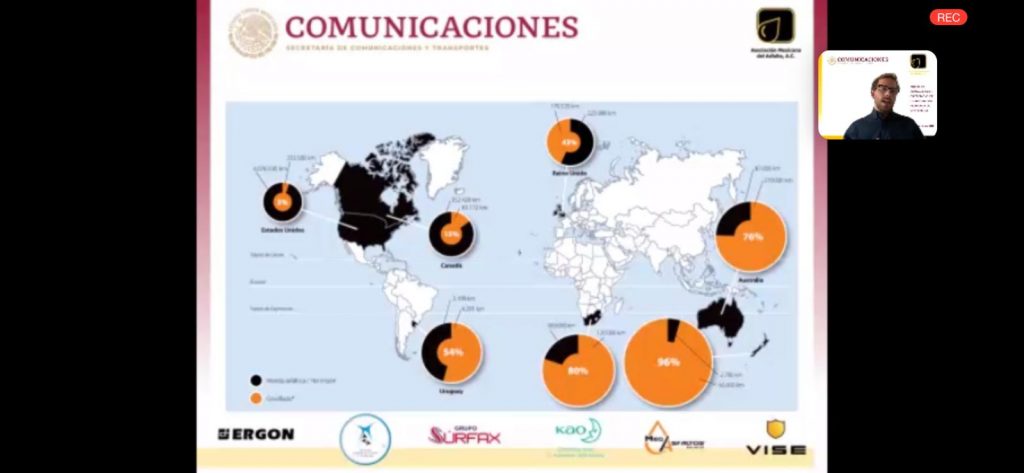
Bitafal was a keynote speaker in the virtual course of the Ministry of Communications and Transportation (SCT) of Mexico and the Mexican Asphalt Association (AMAAC).

Grupo Bitafal held the inaugural conference of the "Refresher Course in Periodic Road Maintenance Techniques", a Mexican event with more than 500 participants. Below we delve into the content of the course and a free tool for the selection of surface treatments.

Organized by the SCT of Mexico and AMAAC, the course on conservation techniques aimed to update the knowledge of Mexican administration professionals. The event took place over three days, each covering a particular theme. The first day the theme was "Periodic Conservation Techniques" and Bitafal gave the first lecture by Ing. Ignacio Kröger, who dealt with the detection of opportunities and limitations in the evaluation of pavements as well as the correct selection of surface treatments. The first day was completed by important exhibitors, such as Eng. Salvador Fernández Ayala, General Director of Highway Conservation of the SCT and Dr. Adriana Vargas, researcher of the North American National Center for Asphalt Technology (NCAT).

The session on the second day dealt with the theme of "Good practices in conservation treatments" with presentations on gravel, microagglomerates, sealing and caulking of cracks. The presentation by Ing. Jorge Alarcón on his experience in the reuse of milled material (RAP), the different recovery techniques and the configurations of asphalt plants for a greater incorporation of RAP was highlighted on that day.

On the third day, “Asphalt mixes as conservation techniques” were studied in depth, commenting on the good practices of milling, patching and discontinuous mixes. Eng. Francisco Ramos commented on the guide on "Road Conservation Procedures and Techniques" developed by the SCT and detailed the highly recommended "Conservation Treatment Selection Tool" available for free at .

We thank the SCT and AMAAC for the invitation and for having the initiative to share crucial issues for the sustainable development of Latin American roads. Follow us on social networks to find out when the videos of the course are published.

Linkedin: https://www.linkedin.com/company/grupo-bitafal/
Twitter: https://twitter.com/BITAFAL

BITAFAL GROUP AT IRMD 2020

BITAFAL GROUP AT IRMD 2020

Each first Thursday of April the International Road Maintenance Day (“International Road Maintenance Day” - IRMD) is celebrated, a proposal that this year was showcased by a huge digital presence.

With a presentation on some "Tips to improve the quality of surface treatments", Ing. Ignacio Kröger was part of the 19 speakers from 10 countries: Germany, Slovenia, United States, Uruguay, Chile, Costa Rica, Guatemala, Colombia, Mexico and Spain than the past April 2 They discussed the importance of road maintenance, the influence of the state of the pavement on CO2 emissions, the need to incorporate innovation into road maintenance objectives and the social importance of road infrastructure.
The conference was broadcast through the platform Itafec and had more than 1,400 users from all over the world who, through Twitter and the hashtag #IRMD2020, reached nearly 8,000 messages, becoming a trend in Spain, Mexico, and Guatemala, surpassing an estimated audience of 2,000,000 users. We invite you to see the presentation of Grupo Bitafal and what was discussed during the day.
Taking up the motto "preserving roads is preserving the environment", the main topics discussed during the day were how greenhouse gas emissions can be significantly reduced both with a good condition of the pavement as well as in the use of reuse and recycling techniques. . Some of the most relevant papers highlighted that "the reuse of a pavement using dry aggregates and biomass can reduce emissions from the entire manufacturing process by up to 38%".
Likewise, it was highlighted that the carbon footprint associated with the vehicles that circulate on the highway is much greater than that related to the process of construction and maintenance of the infrastructure, especially in the use of asphalt pavements. For its part, the Spanish Road Association (AEC) presented a report that explains the relationship between the state of conservation of the pavement, fuel consumption and vehicle emissions. “The tests, carried out on a 46-kilometre-long section, confirm that, in the case of light vehicles, CO2 emissions decrease by an average of 3.5% when driving on well-preserved asphalt, reaching 4% of reduction for the heavy vehicle”, they explain from the AEC.
On the other hand, topics of interest were discussed, such as the life cycle of asphalt pavements, the use of new maintenance technologies and their environmental impact both in the use of cold techniques, such as surface treatments, as well as in the recycling of materials. .
The presentation of Grupo Bitafal can be seen below the note.
To learn about International Road Maintenance Day: http://roadmaintenanceday.org
Crossed by Route 7

Crossed by Route 7

The general state of the route is good and has done good work that will have long life.

In recent years, a great effort has been made on Route 7 to improve its structural capacity and bring it to a primary route standard. To this end, a widening of the road has been carried out in almost its entire extension to reach a total width of 11 m and double bituminous treatments have been carried out on the 7.2 m road and simple treatments on the shoulders. Cement has been recycled over more than 100 km and granulometric stabilized sections have been carried out to increase the bearing capacity of the pavement.
Structural results speak for themselves, there are no potholes or sinkholes despite the tremendous growth that had heavy route, but we still have way to go to achieve double bituminous treatment resistant and durable from day one.
Exudation treatments presented in several sections of the works recently opened but have been remedied by the construction companies time and no risk for rising or severe bleeding now. It is clear that the sections carried out during the winter are most affected but there are still sections executed in good time they had exudation.
On the other hand those made from October 2019 to date show a very good performance and have not submitted exudates and has been achieved adequate dosing and has been made in good time.
Irrigations A are always in very good condition and this is because the appropriate proportions of aggregate and asphalt are used (because if there are landslides, the base is visible and it is necessary to redo the section), which allows having the necessary voids in the system to prevent exudation. On the other hand, when there are landslides in aggregate B, not much attention is paid to it, since aggregate A “hides” the problem, but that is where the necessary voids are lost, since the asphalt of both irrigations is there, but only to adhere the aggregate. A. This is verifiable in the field since the most compromised sections have a cushion of aggregate B in the ditch and the sections in better condition do not.
In this regard we insist on the following points to prevent premature exudates:
1) Respect the ban
2) Incorporating ball penetration test for the ramming potential at the base arid
3) Make dosing based on rational method Austroads where in addition to the characteristics of the aggregates are incorporated concepts based and traffic
4) In the selection of aggregates, narrow strips search granulometric aridos for irrigation A and B that do not overlap in their belts or are contiguous
5) Executing processing B should be next to or immediately after the A cure system for simultaneously minimizing loss arid B as proposed in multiple treatments locked
6) Use highly modified emulsions (P40 or P60) for those sections which have a high traffic and are in thermal Mediterranean area
7) Making only the risks A
We need to rethink the usefulness of double treatments as new work. Today Today we are making almost all stabilized bases, so a simple treatment that provides impermeability and an adequate macrotexture is more than enough. Irrigation A already cured and in service have a very good mechanical resistance and are capable of withstanding high traffic without problems, there are plenty of examples in Uruguay and in the world. In New Zealand and Australia, only simple irrigation is done in new construction and they are maintained frequently to maintain the necessary safety and functionality characteristics.
January 2020 - Bitafal Group
PG 70-28 asphalt NEW

PG 70-28 asphalt NEW

Bitafal Special Asfaltos incorporates a new high-quality modified bitumen called PG 70-28.

The new surface has excellent results in laboratory, achieving resistance to permanent deformation and the like fatigue one asphalt AM3. If you are perform traditional tests it can be classified as an asphalt AM2 (almost AM3) of the IRAM 6596 standard but is a performance grade asphalt PG 70-28 E (for extremely heavy traffic).

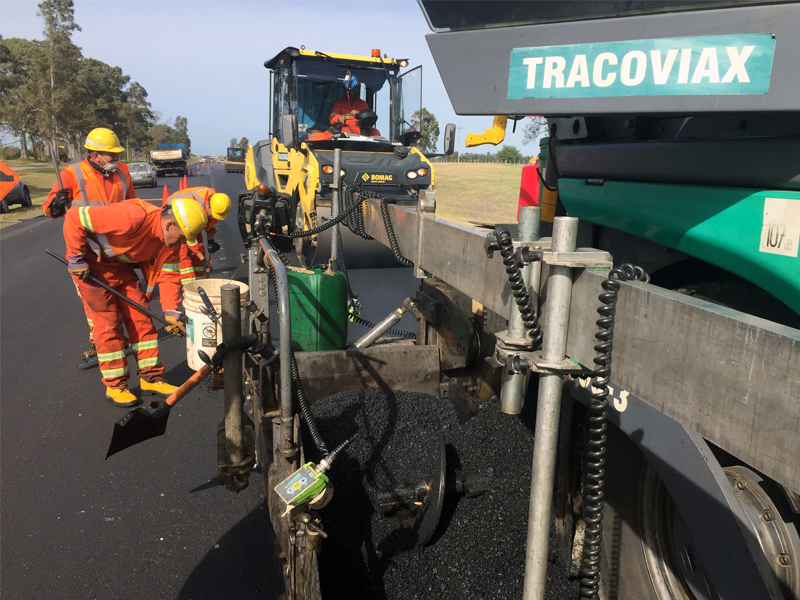
And there are several works that are using this new alternative modified asphalt on the one hand is being used in the retreading on concrete Route 8 by Tracoviax and CVC and another is beginning to be used in the reconstruction of Route 14 you have to perform the PPP Circuit Vial 3 by the Espina-Copasa consortium.

At 12th Congress of the Road Uruguaya the benefits of this new modified asphalt and comparative studies with other asphalt cements were presented at the square.

On Route 8, it is conducting a retreading over the existing concrete section of Mataojo Solis - Minas. First a base layer of 5 cm and then a 4cm surface, both prepared with the asphalt PG 70-28 (AM2).

The mixing temperature is in the range of 160 ° C, maintaining the characteristics of a conventional asphalt work and high performance work to achieve good workability in the vicinity of 150 ° C.

Both companies are making a very good job in both manufacturing and laying and compaction of asphalt mixture which is reflected in surface quality, both macrotexture and IRI. We emphasize safety equipment used as mobile radars and donkey backs of much needed in a high traffic route. Moreover, for the roughness of the section are being used skates 6 m with sensors coupled to the terminating and results feel gait.

We thank the companies and the MTOP the offered confidence.

INAUGURATION recoating EN ROUTE 1

INAUGURATION recoating EN ROUTE 1

novel recoating It opened to prevent reflection of concrete joints Route 1 and the new roundabout Playa Pascual.

On June 3 took place in the vicinity of the Playa Pascual new roundabout Route 1 in the opening of the section by Tracoviax between the km 67. Access and attended the same Minister Victor Rossi, the Director of Highways, Leonardo Cola, senior officials of the Municipality of San José, the staff involved in the project and as friends and colleagues at DNV and other construction companies.

The new roundabout built is the largest in the country, with circulation dual carriageway and various security features. In addition to both sides of the road sidewalks for pedestrians, accessibility ramps and bus stops were built. Furthermore, both vertical and horizontal signaling, being provided in the near future replacement of existing lighting redesigned.

As for the retreading of concrete pavement it stands IRI achieved which is below 1.2 m / km. This was achieved by a skate composed of a 6 m long and 3 sonic sensors leveling sensor (BIG-MULTIPLEX-SKY), coupled to the paver and a multilayer system, at various stages retreading as reported in the Bulletin # 94 June 2018. First a sand asphalt SAMI 2, 5 cm, then a leveling layer CAD-12 4 cm type, and finally the surface layer with an open mixture F-10 3cm. modified asphalt was used in all these layers BITAFLEX AM3. We thank the company provided confidence in providing it.

As for the retreading, to improve the IRI on the stretch of Route intervened and asphalt layer to achieve high durability, safety and user comfort slab repair work and potholes then apply three asphalt layers were made:

1) A layer of sand asphalt as stress relieving membrane (SAMI) modified asphalt made with BITAFLEX AM3.

2) A regularization layer on the gauge with a CAD-12 type modified asphalt mixture made with BITAFLEX AM3.

3) A surface layer with an open mixture F-10.

A detail of the work done can be found at the following link: https://bitafal.com.uy/arena-asfalto-con-am3-en-ruta-1/

Cover photo courtesy of SILVER CITY PORTAL

RECYCLED CEMENT AND TMT ROUTE 15

RECYCLED CEMENT AND TMT ROUTE 15

Molinsur trust GROUP BITAFAL for the implementation of technical TMT on recycled with cement made in Route 15.

Adjusted dosing and construction conditions, has been developed excellently recycled TMD on cement. The combination of these two techniques provide a unique opportunity to build synergy routes in our country.

Recycling Portland cement is carried out very rapidly on which an emulsion is applied IRRIGATION BITAFLEX 65 P25 with sand as curing irrigation. TMD is then applied with 14 to 19 mm and gravillín stone 2-6 mm with posterior irrigation fog, all run on the same day and with the same emulsion BITAFLEX IRRIGATION 65 P25.

The surface quality of TMT shows great cohesion of the whole package, without loss of aggregates and large voids content serve several functions. For one drain water towards the shoulders reducing the "Spray" effect and leaving a proportion of feasible to be filled by binder and thus prevent any errors dose or overlap that can result in air exudates.

The results are already more than validated on Route 15 in other sections own previously executed. It is expected durability of these jobs that we hope will be adopted by more manufacturers in the short term.

NEW TECHNIQUE FOR CEMENT CRACKING CONTROL

NEW TECHNIQUE FOR CEMENT CRACKING CONTROL

Serviam has developed an interesting team to prefisurado recycled with cement.

Drawbacks consabidos generating shrinkage cracks of cemented materials are subject to attack because they can reduce the life of the pavement by water ingress. Usually in our country it has incorporated the technique with a heavy microcracking to mitigate these effects but there are other alternatives globally with specific equipment Compactor.

Serviam company developed a computer adapted to perform a Bobcat injecting the emulsion prefisurado IRRIGATION BITAFAL 65 at a depth of 20 cm each 4 m crosswise.

After initial compaction of the recycled material prefisurado this is done then continue working, leveling and final compaction. Of note is the use of technology to achieve grade project controlled by RF motoniveladora.

Subsequently curing the same emulsion BITAFAL IRRIGATION 65 is performed with quarry dust is released and traffic. By far the results are very good and it shows on the go using technology to control IRI. In the next few weeks they will be starting tasks paving asphalt hot mix in 5 cm surface layer.

We will see the behavior of this technique prefisurado in the future. For now, in every induced cracking and the asphalt it is necessary to prevent water ingress so hopefully a lifetime of work done.

The equipment developed by Serviam has a storage tank emulsion, a positive displacement pump, a wedge (shark fin type) of 25 cm which leaves a pipe 20 cm and a solenoid valve for controlling the dosage from Bobcat.

The fin makes a wedge about 2 cm wide in advancing the equipment is filled with emulsion BITAFAL IRRIGATION 65. Then the material of the side itself closes the wedge and leveling and compaction are performed normally. It can be seen watering cured, made with 1L / m2 of IRRIGATION 65 and 6 L / m2 of dust, marks prefisurado every 4 m in the photos below.

RECYCLING AND CAPESEAL ROUTE 60

RECYCLING AND CAPESEAL ROUTE 60

The works mentioned in previous bulletins (Bulletin # 98 NOTE: Capeseal on Route 60) Have come to an end and the result is really very good.

The recycling works Portland cement and the Capeseal provided as wearing course have culminated in this work quality that carried out Serviam. Aesthetic and functional completion of the section is excellent and we recommend those not familiar with the technique of Capeseal visit the section from Sugarloaf to the city of Minas.

It is for the group BITAFAL proud to have been involved in the whole process, from the dissemination of the aforementioned techniques in lectures, conferences and in our book "High Performance Surface treatments"To see it come true with the quality achieved. Thank provided Serviam confidence in our products and services in each of the construction phases of the stretch.

We use own and third party cookies to help us optimize your visit to our website and also to improve service delivery and thus adapt to their most relevant and useful to better their experience needs. When you click OK to continue with navigation and thus confirm that you have read the information and accept the activation of cookies.

You can allow or reject use at any time can change the Configuration Options Privacy - Cookies Policy -

Privacy settings

When you visit a website, you can store or retrieve information in your browser, mainly in the form of cookies. Check your personal services cookies here.


We track anonymous user information to improve our website.
.
  • _ga
  • _gid
  • _gat

Decline all Services
Accept all Services