ROUTE 3 DUPLICATION IS A REALITY

ROUTE 3 DUPLICATION IS A REALITY

The works of Circuit 7 being carried out by Serviam and CVC are progressing at a very good pace

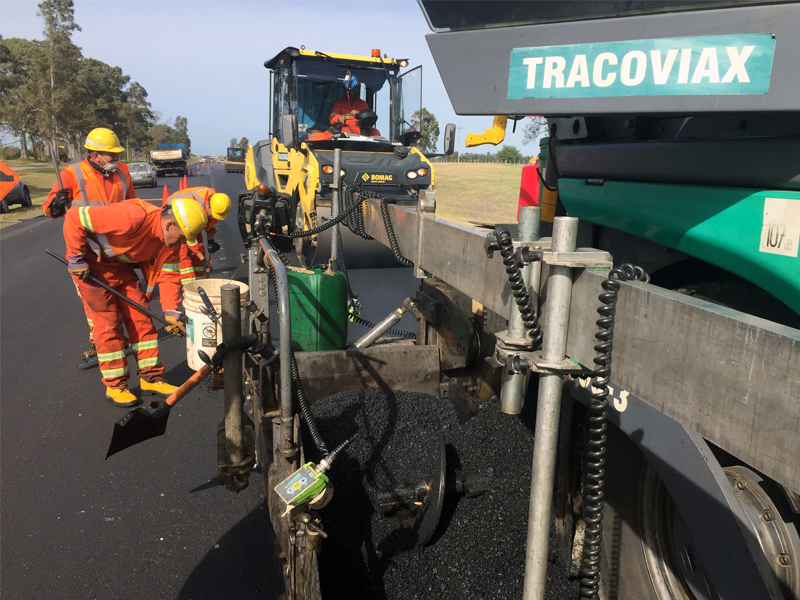
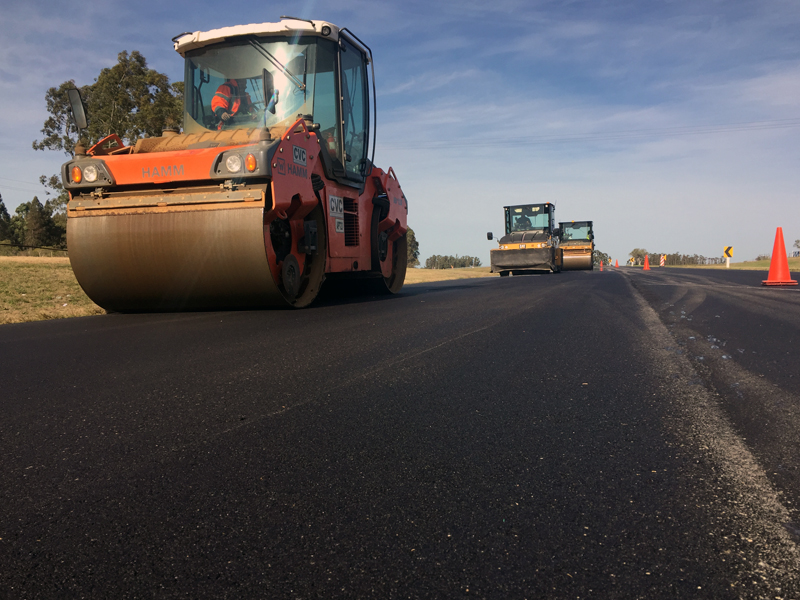
The project includes the duplication of roads in route 3, between routes 1 and 11, a bypass through the south of the city of San José de Mayo and a new bridge over the San José river. The section to be duplicated has an extension of 25 kilometers and about 8 km are close to being enabled just a few months after the start of the works.
The asphalt mix project is carried out entirely with modified asphalt supplied by Grupo Bitafal and the shoulders were made with a Cape Seal with modified BITAFLEX emulsions.
We thank the companies for the confidence they have given in supplying such an important input for their work.

The sections that are ready to be inaugurated are from Route 1 to km 73 executed by Serviam and the section from km 87 to the departmental capital together with the concrete pavement and roundabouts of the city of San José executed by the CVC company.
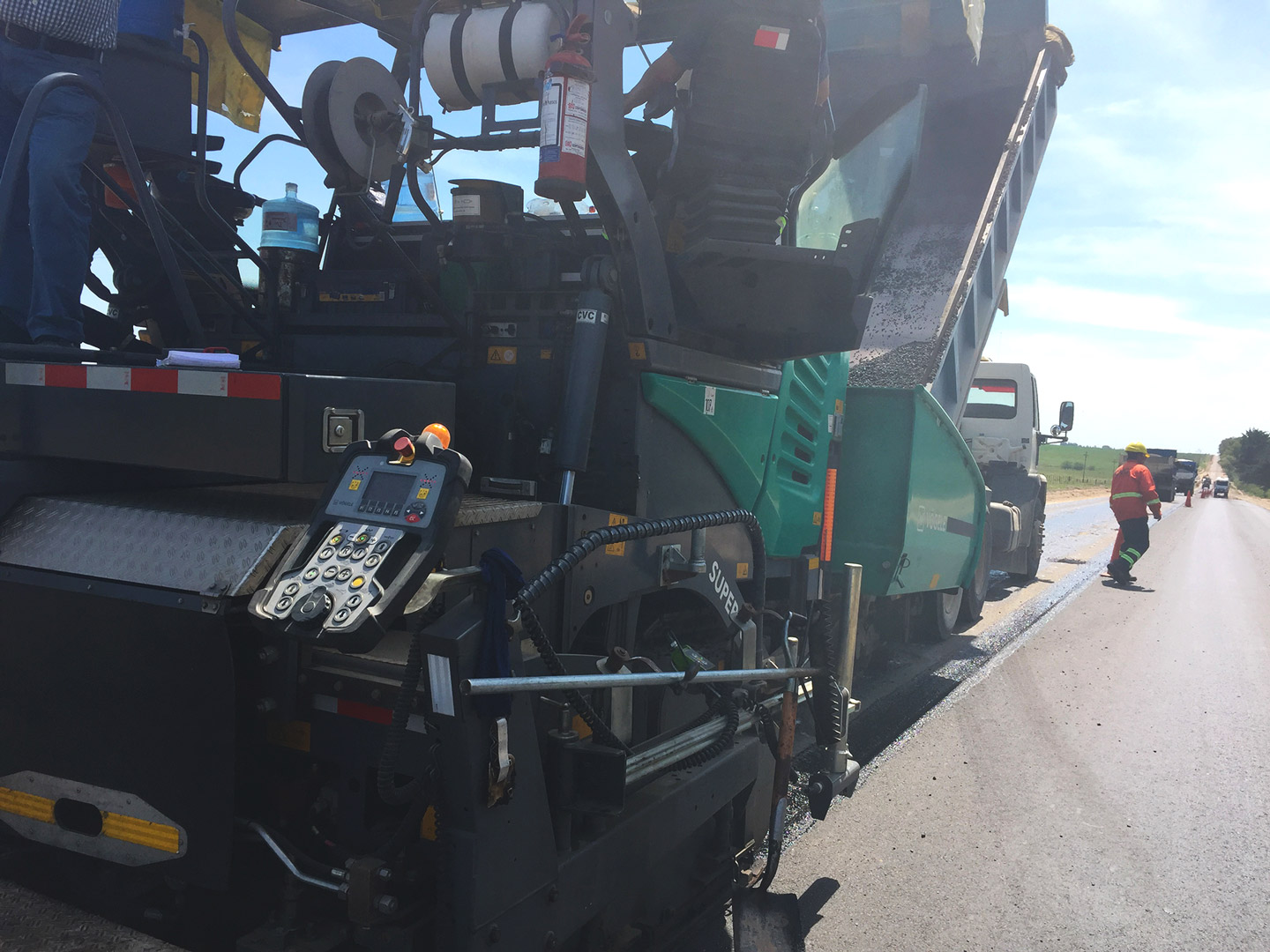
In both sections there were various challenges to overcome such as the transplantation of dozens of palm trees, the use of new equipment and technologies such as the transfer that Serviam incorporated (HC #130) for the execution of the asphalt layer.

The use of the transfer allows an excellent homogeneity of the laid mixture as well as a surface regularity (IRI) below 1 that is noticeable when walking on the pavement. Congratulations to the entire Serviam technical team for the excellent work done.

Regarding the concrete section of CVC, it is worth highlighting the solution to the drainage as well as the interaction of the route with the shops and the incorporation of two large roundabouts in an area of ​​high, heavy and slow traffic such as the pass of Route 3 by the city of San José. As for the cemented base, it was made on the project dimension and then trimeated with the 3D milling machine to achieve an excellent support IRI. The concrete pavement was made between July 16 and August 25, in just 40 days, there were 44,000 m2 with curbs with heavy traffic and short days. We congratulate the efforts of the company for such an achievement.

TRIBUTE TO ENG. HORACIO GARCIA PASTORI

TRIBUTE TO ENG. HORACIO GARCIA PASTORI

We share with our readers the tribute paid by his family and the CVC company.

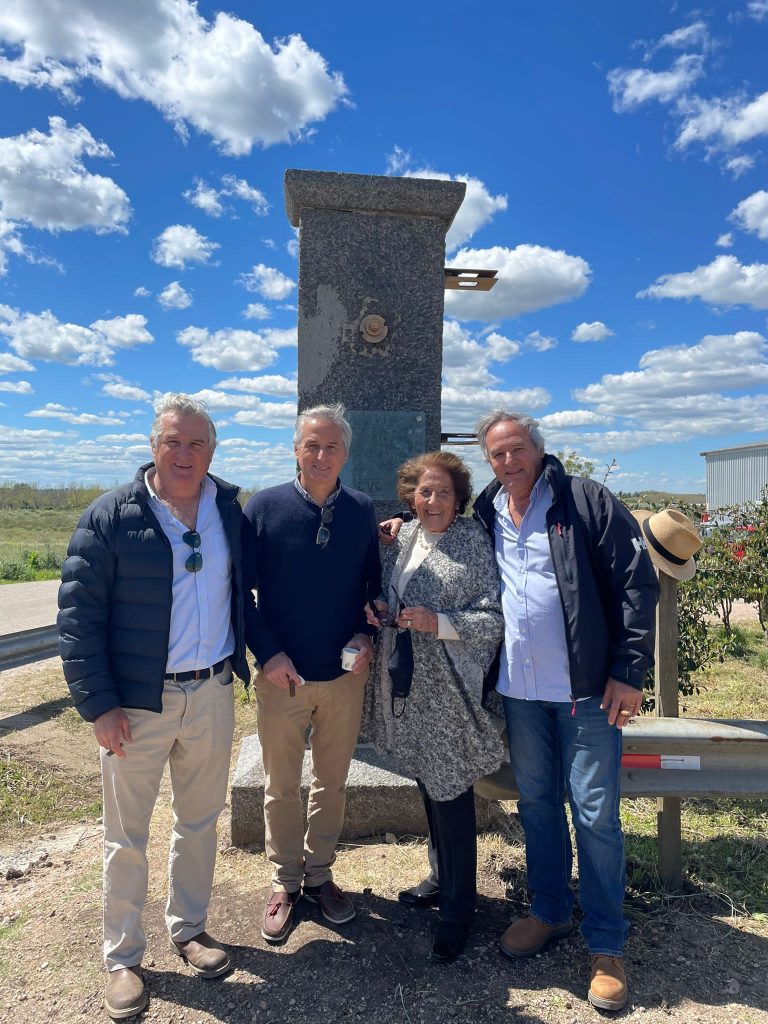
Last 4th of October 90 years have passed since the birth of Engineer Horacio García Pastori, founder of CVC.
For this reason, together with the employees and family, a monument was inaugurated with the following commemorative plaque.
We want to share this event with the road family who had the pleasure of meeting the Engineer.
THREE SECTIONS OF ROUTE 14 INAUGURATED

THREE SECTIONS OF ROUTE 14 INAUGURATED

The PPP of Circuit 3 is fulfilling its objectives and already has three sections of Route 14 in service.

As we have been reporting in previous editions of our newsletter, Road Circuit 3 by the Espina-Copasa consortium, is in charge of the Route 14 Public-Private Participation contract.
There are about 300 km of road rehabilitation using cold recycling technology with Portland cement and a subsequent 4 cm tread with the new modified asphalt BITAFLEX PG 70-28 provided by Grupo Bitafal.
The last friday May 22nd the Minister of Transport and Public Works, Luis Alberto Heber inaugurated the first three sections between the Maciel stream, on the border between Flores and Durazno, and Route 100 (sections 10 and 11) and from kilometer 259 to Sarandí del Yí (section 14).
The sections in question were carried out within the deadlines stipulated by both the Díaz Alvarez company and the CVC company with great care and dedication, which translates into a work of very good quality.
The works carried out were widening and recharging of granular material, then cold recycling with Portland cement in 20 cm thick, then an irrigation of curing with emulsion IRRIGATION BITAFAL 65 and gravel and finally a 4 cm thick asphalt mix with modified asphalt BITAFLEX PG 70-28. For more information about the work carried out, you can enter "ADVANCES IN ROUTE 14"O en"ASPHALT PG70-28 ROUTE 14“.
The inauguration was also attended by the Minister, the National Director of Roads, Eng. Rodolfo Long, the Mayor of Durazno, Carmelo Vidalín, and the Mayor of Sarandí del Yí, Mario Pereyra, among other departmental authorities, staff from the MTOP, the consortium and of construction companies.
BITAFLEX PG AIRPORT RUNWAY 70-28

BITAFLEX PG AIRPORT RUNWAY 70-28

Works are currently suspended until after Tourism Week.

The CVC company is carrying out the renovation of the main runway of the Laguna del Sauce Airport in Maldonado. For this they are applying high technology for leveling surfaces using a 2m milling machine with control by 3D robotic station to have a base according to the project requirements, correcting imperfections, subsidence and dimensions. Then apply a layer of 7 cm thick asphalt mix with modified asphalt BITAFLEX PG 70-28 applied by two terminating “high compaction” that work simultaneously. We thank CVC and Corporación América for their trust in supplying the modified asphalt cement.

The milling of the track is carried out in sections between 500 and 600 m long continuously, corroborating in each of the passes that the project requirements are being met. The removed material is being used for the construction of the airport's auxiliary roads, which did not exist. After milling, it is necessary to thoroughly clean it to ensure the adherence of the asphalt layer to be applied. For this, good logistical work is first necessary to minimize traffic on loose material, then a good sweep, blowing and scraping in case if necessary.

For irrigation asphalt layer adhesion is performed with emulsion IRRIGATION BITAFAL 65 and then the laying and compaction of the asphalt mix in 7 cm thickness with modified asphalt BITAFLEX PG 70-28 using two pavers in parallel. One of them equipped with a multiplex ruler with 3 sensors on one side and a laser sensor (or copying skid) or electronic pendulum on the other; the other paver has automatic leveling through laser copier sensors on both sides or pendulum and sensor that copies what was done by the first one and extends outwards until completing the programmed width. The recoat width is between 9.26 – 10.26 m per shift to minimize cold joints on a runway that is 45 m wide. It begins with a central strip of 4 m mounted on the slope break of the runway axis (with broken plate in the middle regulated at 1.5% cross slope) and an adjoining one towards one of the sides of 5.26 m (second regulated finisher at 5.40 m to mount about 10-14 cm on the hot joint); this completes the 9.26 m. Then it follows with widths of 5.00 m for the paver equipped with multiplex (corrects small deviations in the longitudinal profile) and 5.26 m in the second paver (5.40 m to absorb the assembly in the hot joint). Towards one of the sides, the total width of 45 m is completed with a single paver regulated at 5.00 m wide.

In addition to these works, repairs are being made to the concrete and asphalt pavements of the aircraft parking platforms, improvements to runway accesses and runway intersections – level transitions, replacement of edge lighting systems and runway thresholds. – AGL (Airfield Ground Lighting) as well as the adaptation of the ALS (Approach Lighting Systems) for runway 08-26 and other visual aids. The areas of the runway Resas are also being readjusted to the latest ICAO requirements in terms of extension and levels, to fulfill this task some 30,000 m3 of soil movement are estimated. The deadline to complete all the works is 4 months, with completion estimated for the month of June.

* We thank Engineer Horacio García Terra from CVC for the collaboration provided for this note

ASPHALT PG70-28 ROUTE 14

ASPHALT PG70-28 ROUTE 14

Making good progress rebuilding Route 14 through the PPP mechanism by the Consortium Espina-Copasa

The consortium has six work fronts are doing widening platform, recycling with cement existing pavement 20 cm and placing an asphalt mixture with modified bitumen 4 cm.

Asphalt selected by the Consortium is a modified asphalt type PG70-28E supplied Bitafal. It is a AM2 according to IRAM 6596 standard but very close to a AM3. We invite you to know details of progress.

The excellent quality of the cement asphalt type PG70-28E it has been shown in a recent study of different mixtures were made in the 12th Congress of the Road Uruguaya. The same improvement was obtained 3 times in both the resistance to permanent deformation as compared to fatigue over conventional asphalt type AC-30. This classified as asphalt for heavy traffic (Extremely Heavy) AASHTO T350.

We had the opportunity to visit the front CVC work of the company, where they could see the different stages of the reconstruction of Route. A first cleaning stage and widening strip, then the recycling train with portland cement to which was followed by a curing irrigation Emulsion Bitafal Riego 65 and finally applying the front paving asphalt mixture with PG70-28E.

In the other sections we visited this time we see the company Frivial focused on clearing embankments to improve longitudinal profile of the route but turn has a front cleaning, widening and recycling and the company Emilio Diaz Alvarez preparations to start recycling and near the intersection with Route 5. the front paving of this company is doing the stretch peach-Trinidad at a good pace.

We want to highlight the incorporation of technology from different companies, 4 m rules for Pavers, automatic motor grader control systems, oscillating roller compactors, among others, as well as safety and tidiness of the works.

We thank the Consortium and contractors the confidence provided for supplying important input as is the modified asphalt and emulsions both common or modified. We are already preparing to visit the remaining work fronts from the city of Trinidad to Mercedes so keep you posted shortly.

INAUGURACION ROUTE 8 melo-Aceguá

INAUGURACION ROUTE 8 melo-Aceguá

the section built by the company CVC on Route 8 connecting Melo with the Brazilian border was opened.

On 10 September the ribbon cutting took place in the village Isidoro Noblía found in the newly renovated section. The ceremony was attended by Minister Victor Rossi, the Mayor of Cerro Largo, Pablo Duarte, representatives of the company, DNV and other national and local authorities as well as colleagues and friends.

The section was recycled in 9 m and then a road of 7.2 m was conducted in double bituminous treatment with fog. In some sites existing sewers widened and conditioned with asphalt some sections as traversing Noblía.

Recycling cement was performed in 25 cm depth giving a great bearing capacity to stretch. irrigation curing is then performed with

Recycling cement was performed in 25 cm depth giving a great bearing capacity to stretch. irrigation curing is then performed with Emulsion IRRIGATION 65 which allowed the release to traffic during last winter without problems. Bituminous simple treatment was performed on the 9 m wide while the fog twice using only road always Emulsion IRRIGATION 65 P25.

Exudation problems that appeared last year were already controlled in January and hopefully a good pavement performance this season and next summer following. The sealed surface texture was evenly across the entire width making resemblance to a asphalt.

We commend the company for having completed all the sections in very good condition and high quality. It is expected durability and enjoyment for users who can circulate in a safe and comfortable route.

Presidency note: https://www.presidencia.gub.uy/sala-de-medios/videos/ministerio+de+transporte++ruta+8++inaugura+tramo+entre+melo+y+acegua

PG 70-28 asphalt NEW

PG 70-28 asphalt NEW

Bitafal Special Asfaltos incorporates a new high-quality modified bitumen called PG 70-28.

The new surface has excellent results in laboratory, achieving resistance to permanent deformation and the like fatigue one asphalt AM3. If you are perform traditional tests it can be classified as an asphalt AM2 (almost AM3) of the IRAM 6596 standard but is a performance grade asphalt PG 70-28 E (for extremely heavy traffic).

And there are several works that are using this new alternative modified asphalt on the one hand is being used in the retreading on concrete Route 8 by Tracoviax and CVC and another is beginning to be used in the reconstruction of Route 14 you have to perform the PPP Circuit Vial 3 by the Espina-Copasa consortium.

At 12th Congress of the Road Uruguaya the benefits of this new modified asphalt and comparative studies with other asphalt cements were presented at the square.

On Route 8, it is conducting a retreading over the existing concrete section of Mataojo Solis - Minas. First a base layer of 5 cm and then a 4cm surface, both prepared with the asphalt PG 70-28 (AM2).

The mixing temperature is in the range of 160 ° C, maintaining the characteristics of a conventional asphalt work and high performance work to achieve good workability in the vicinity of 150 ° C.

Both companies are making a very good job in both manufacturing and laying and compaction of asphalt mixture which is reflected in surface quality, both macrotexture and IRI. We emphasize safety equipment used as mobile radars and donkey backs of much needed in a high traffic route. Moreover, for the roughness of the section are being used skates 6 m with sensors coupled to the terminating and results feel gait.

We thank the companies and the MTOP the offered confidence.

Evaluation of penetration of the aggregate in the bases for surface treatments

Evaluation of penetration of the aggregate in the bases for surface treatments

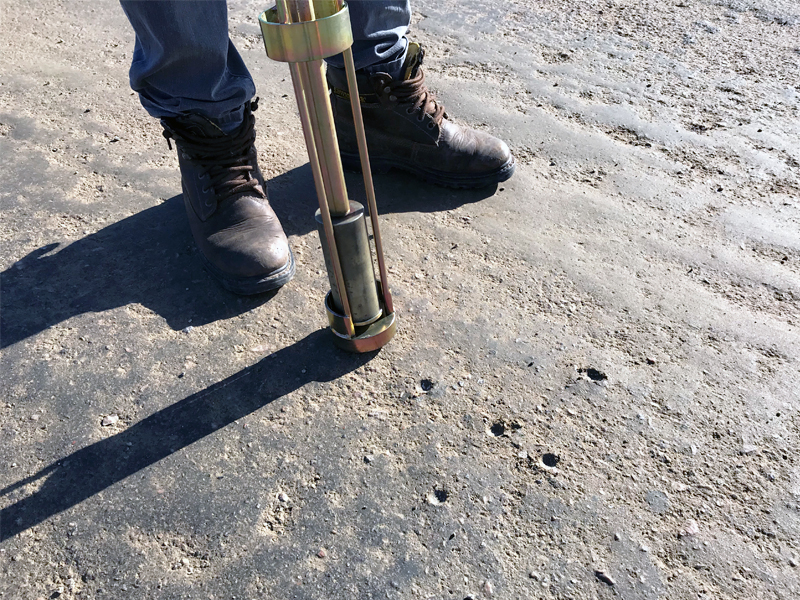
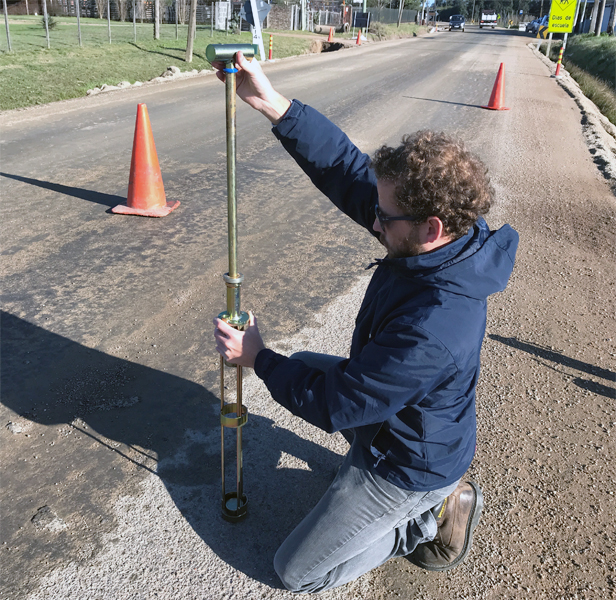
Using the penetrometer ball as quality control element base treatment.

In the path that is being traced at the national level to standardize design criteria for surface treatments, we believe the inclusion of the ball penetrometer test is of utmost importance. It determines if the base is in proper condition to receive initial treatment, or if it requires additional work. It is also an indicator of the degree of compaction that has been achieved and the moisture contained in the base. The test was originally developed by South Africans and is also used in Australia and New Zealand to quantitatively measure the penetration potential of aggregate into the base.

En este frío mes de Agosto, junto con Lucio Borelli de CVC, pusimos a prueba este equipo de medición en diversas superficies: bases granulares no ligadas, bases estabilizadas con ligantes (cemento Portland y asfalto espumado) y mezclas asfálticas. A continuación se ilustran algunas de las conclusiones, acompañadas de fotos de la experiencia.

In the initial treatments (surface treatments on bases), the subsidence of the aggregate on the surface always occurs, to a greater or lesser extent. The degree of penetration will depend on the base material, its humidity, compaction and the traffic to which it will be subjected. Not taking these parameters into account results in exudate in the short term, becoming particularly evident in the tracks. The explanation for this phenomenon is intuitive: the tire pressure sinks the stone into a base that allows it and the voids that correspond to the asphalt and the air (to achieve the macrotexture of the wearing course) are occupied by the material of base, causing the asphalt to surface through the stone, which results in exudation in the tracks.

El ensayo que se propone es muy sencillo y de fácil aplicación: consiste en la penetración de una bola de 19 mm de diámetro que es golpeada por un martillo normalizado lanzado de una altura conocida (Australian Standards: AG-PT/T251 – Ball Penetration Test). El valor de penetración queda registrado en el aparato, ya sea en un indicador electrónico o en una regla graduada (que viene incorporada).

Los resultados de este ensayo se utilizan para ajustar la cantidad de ligante a regar o para seleccionar un tratamiento correctivo previo al definitivo. Su uso más importante es quizá el de establecer el límite en el que no se pueden realizar gravillados sin antes recompactar o estabilizar la base, dado que su riesgo de falla es muy elevado.

La primera y más importante de las conclusiones es que la preparación de la base es un factor determinante en los resultados. Un problema común es que las bases presentan un exceso de finos en la parte superior que genera que la bola penetre con facilidad. Aunque parecen estar lisas y homogéneas inicialmente, tan pronto como se barren, una gran cantidad de este material fino se dispersa, dejando una superficie áspera e inconsistente que es problemática para ejecutar un tratamiento.

Another issue to consider is the humidity at the time of the test: if the surface is visibly wet, the penetration gives higher values. We could corroborate this by testing the same surface early in the morning and close to noon. In some cases, the conditions of the base at the time of the test are good, but when a primer is applied, due to capillarity and temperature differences, humidity begins to increase in the first 5 cm, affecting the penetration result.

Developing

Course Assessment Roadways

Course Assessment Roadways

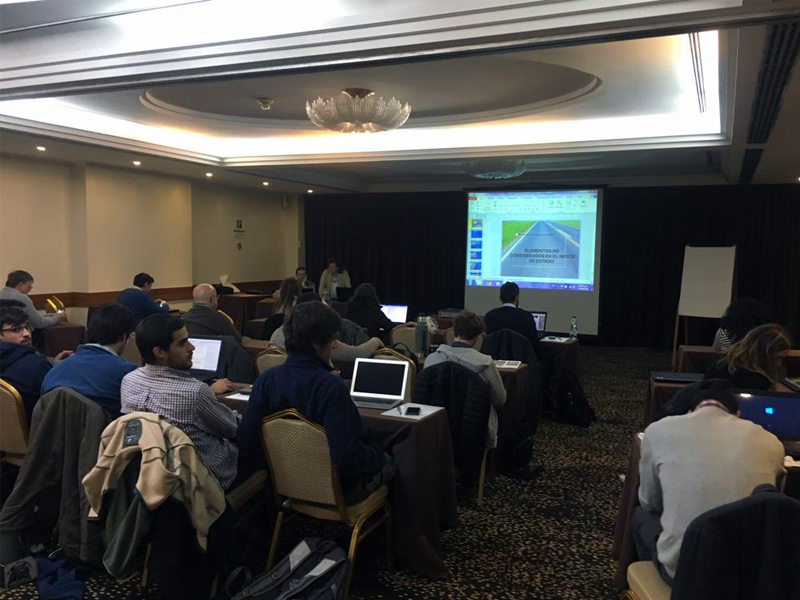
Bitafal said this in the course of UNR graduate of Argentina organized by the AUC in Uruguay.

In the last month, from 26 to 29 June, the Evaluation Course Walkways was performed by professors Marta and Oscar Giovanon Pagola, Institute of Applied Mechanics and Structures (lower) At the University of Rosario.

The course starts demonstrates the commitment that exists in the national road on these issues and attended by representatives from Grinor, CIEMSA, Serviam, CVC and MTOP officials, OPP and IM, in days of intense participation.

Among the topics discussed it is highlighted:

  • The objective of auscultation of pavements.
  • Analysis of the different parameters of pavement evaluation: longitudinal deformation (IRI), transversal deformation (rutting, sinking), cracking, bumps and surface defects (exudation polishing aggregates).
  • Review of the most commonly used for evaluation of these parameters equipment. Exposure of the most modern methods.
  • combined deterioration indexes: Index state Serviciability Present Index (PSI), Pavement Condition Index (PCI).
  • Importance of tire adhesion road (Macrotexture and coefficient of friction).
  • structural monitoring of roads (Benkelman, Lacroix, FWD, LWD).

In conclusion, the importance of assessing roadway stands, both structurally and superficially, to determine the prioritization of improvement projects and efficient maintenance of our roads.

WORKS IN PROGRESS Route 8

The company CVC S.A. It is carrying out a large deployment of technologies in the two sections of work which has awarded Route 8 between Treinta y Tres and Melo.

We were able to visit the workshop and see more of the work fronts that are operating simultaneously. A coarse cement laying part 20 cm thick and on the other hand the recoating with asphalt. In the workroom have a rough cement plant of 400 ton / h, large stocks of Portland cement, crushers, sorters and asphalt plant 120 ton / h.

He Bitafal group is proud to collaborate with the company in logistics both asphalt cement and Portland cement with new hoppers which our carrier Transportes Ergont.

All of the photos ON HERE

We use own and third party cookies to help us optimize your visit to our website and also to improve service delivery and thus adapt to their most relevant and useful to better their experience needs. When you click OK to continue with navigation and thus confirm that you have read the information and accept the activation of cookies.

You can allow or reject use at any time can change the Configuration Options Privacy - Cookies Policy -

Privacy settings

When you visit a website, you can store or retrieve information in your browser, mainly in the form of cookies. Check your personal services cookies here.


We track anonymous user information to improve our website.
.
  • _ga
  • _gid
  • _gat

Decline all Services
Accept all Services