ADVANCES IN ROUTE 14
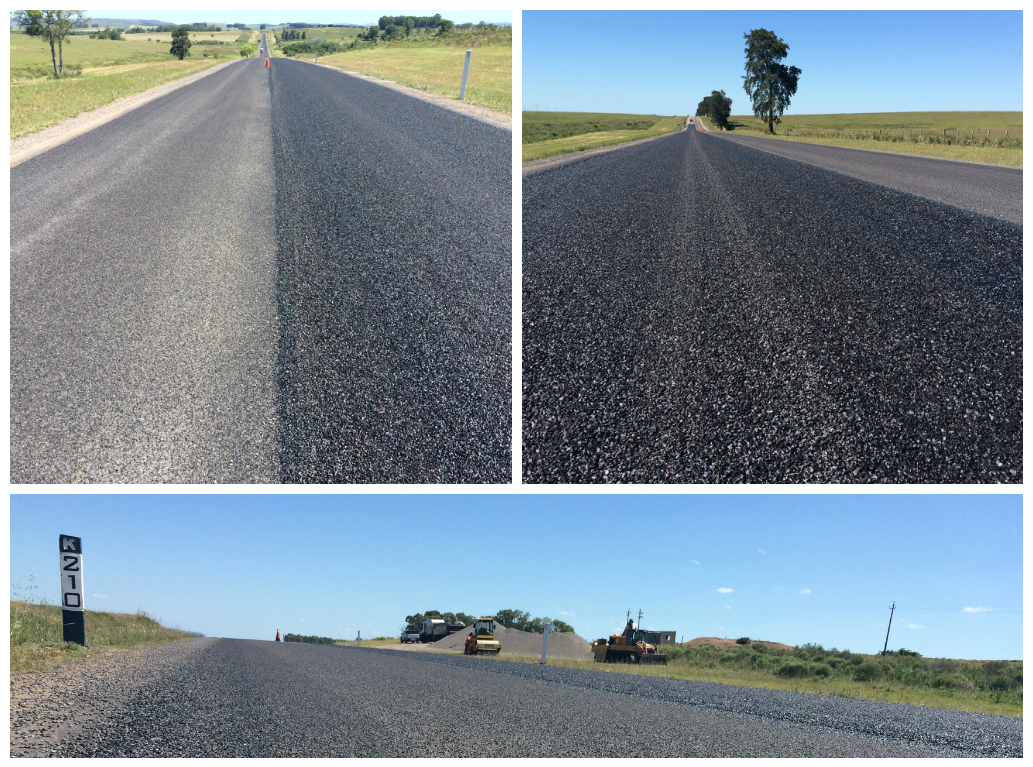
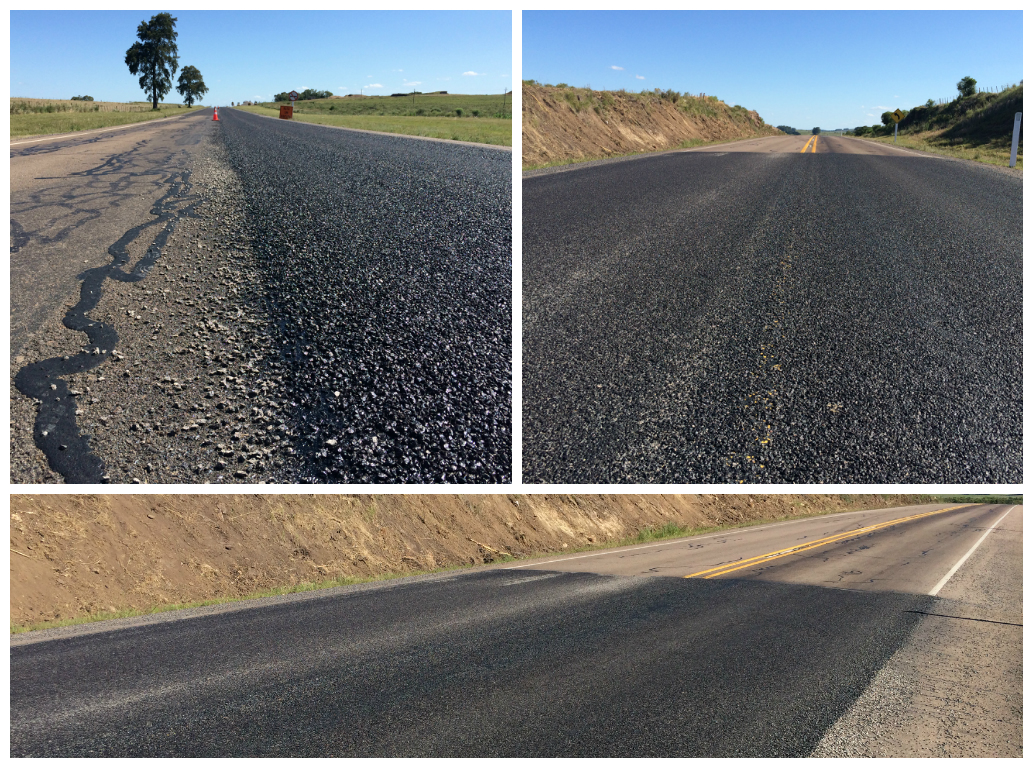
Road Circuit 3 advances according to the schedule foreseen in the rehabilitation of Route 14.
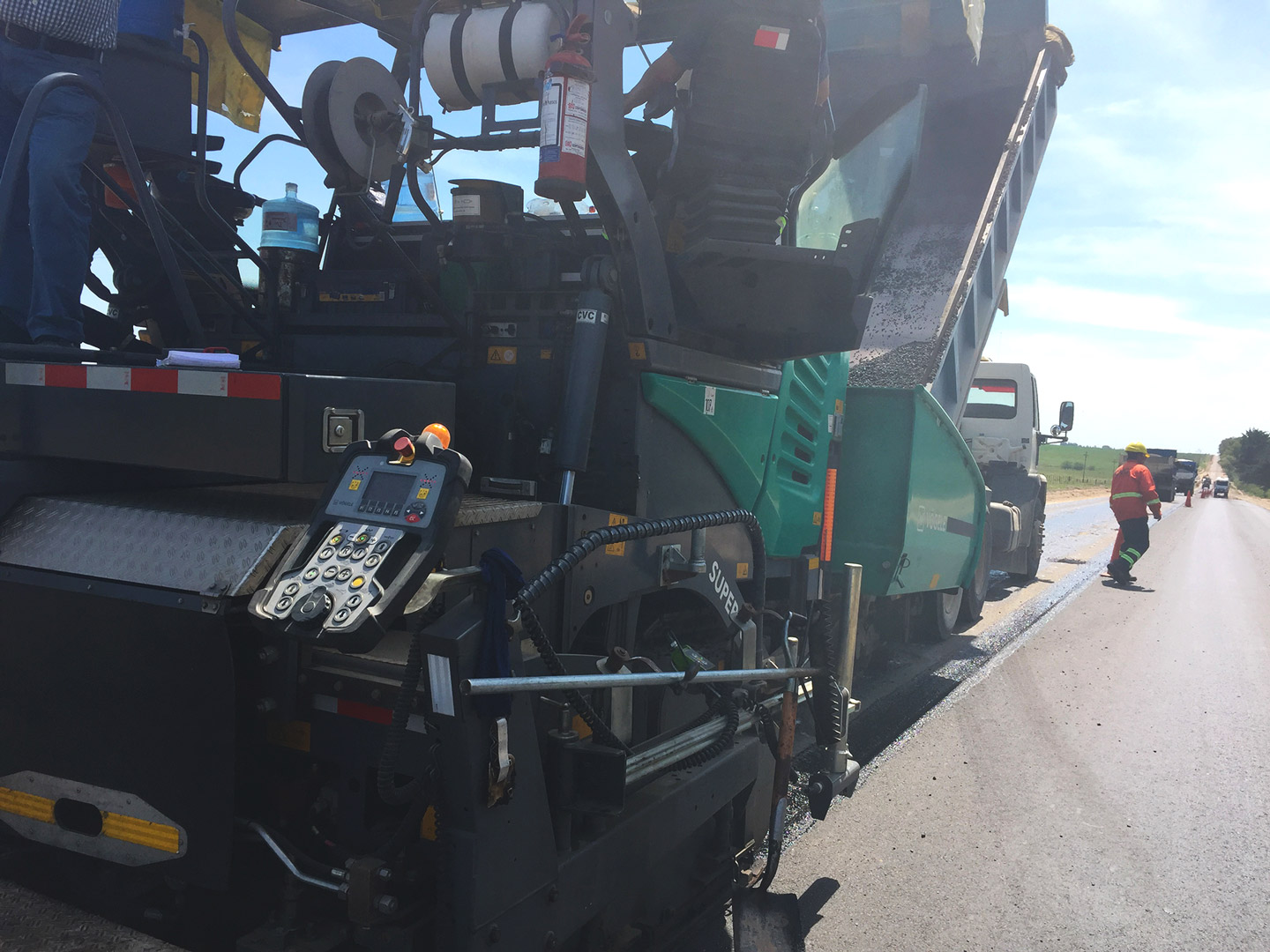
The consortium has six work fronts are doing widening platform, recycling with cement existing pavement 20 cm and placing an asphalt mixture with modified bitumen 4 cm.
Asphalt selected by the Consortium is a modified asphalt type PG70-28E supplied Bitafal. It is a AM2 according to IRAM 6596 standard but very close to a AM3. We invite you to know details of progress.
The excellent quality of the cement asphalt type PG70-28E it has been shown in a recent study of different mixtures were made in the 12th Congress of the Road Uruguaya. The same improvement was obtained 3 times in both the resistance to permanent deformation as compared to fatigue over conventional asphalt type AC-30. This classified as asphalt for heavy traffic (Extremely Heavy) AASHTO T350.
We had the opportunity to visit the front CVC work of the company, where they could see the different stages of the reconstruction of Route. A first cleaning stage and widening strip, then the recycling train with portland cement to which was followed by a curing irrigation Emulsion Bitafal Riego 65 and finally applying the front paving asphalt mixture with PG70-28E.
In the other sections we visited this time we see the company Frivial focused on clearing embankments to improve longitudinal profile of the route but turn has a front cleaning, widening and recycling and the company Emilio Diaz Alvarez preparations to start recycling and near the intersection with Route 5. the front paving of this company is doing the stretch peach-Trinidad at a good pace.
We want to highlight the incorporation of technology from different companies, 4 m rules for Pavers, automatic motor grader control systems, oscillating roller compactors, among others, as well as safety and tidiness of the works.
We thank the Consortium and contractors the confidence provided for supplying important input as is the modified asphalt and emulsions both common or modified. We are already preparing to visit the remaining work fronts from the city of Trinidad to Mercedes so keep you posted shortly.
Tracoviax, Meliter and Colier were in charge of the rehabilitation and widening of carriageway to reach a total width of 11 meters. where recycling was performed with cement to increase the bearing capacity. As for the surface layer double bituminous treatment was conducted with watering fog in the driveway of 7.2 meters. and then banquinas simple bituminous treatment. Contractors trusted BITAFAL supplying the modified emulsions BITAFLEX P25 and P40 IRRIGATION 65.
In addition to work on the route they were made extensions and reinforcements of bridges over streams and Mansavillagra El Potrero and a layout correction in Reboledo making a bypass to such people.
The opening last September 19 was held and attended by Transport Minister Victor Rossi, the Director of Roads Leonardo Cola, elected officials and representatives of the Municipality of Florida and Lavalleja and several colleagues from other road companies of the MTOP and suppliers.
It was carried out in 4 stages: First in Cerro Colorado (Alejandro Gallinal) the Tracoviax company made the ribbon cutting of its section, then a toast was made at the San Pedro del Timote farm, then the opening of the Meliter section was held along with the inauguration of the two bridges mentioned above. Finally, late in the afternoon, the inauguration of the Colier section was held, with the presence of the Mayor of Lavalleja, Adriana Peña.
The work done in this particular stretch, which involved an investment of 530 million pesos, in addition to the sections already opened in Fraile Muerto (along with a new bridge) and between Casupá and Reboledo few years ago. On the other hand these same companies are working in two tranches more to the north of the newly opened. It is estimated that by the end of this year Route 7 will find 80% in very good condition.
We invite you to know details of the work done on the link below: https://www.presidencia.gub.uy/sala-de-medios/videos/ruta-7-mtop-victor-rossi-rehabilitacion-530-millones-pesos-invertidos
Capeseal technology takes hold in Uruguay with the first project awarded in this mode by the MTOP.
The company Emilio Alvarez Diaz S.A. it's found rehabbing a stretch of 32 km of Routes 108 and 12 in the Department of Canelones. The work consists of a charge in some areas and then performing a site recycling in 20 cm depth with 3% Portland cement and subsequent Capeseal treatment involving the execution of a simple treatment and bituminous cold microsurfacing above.
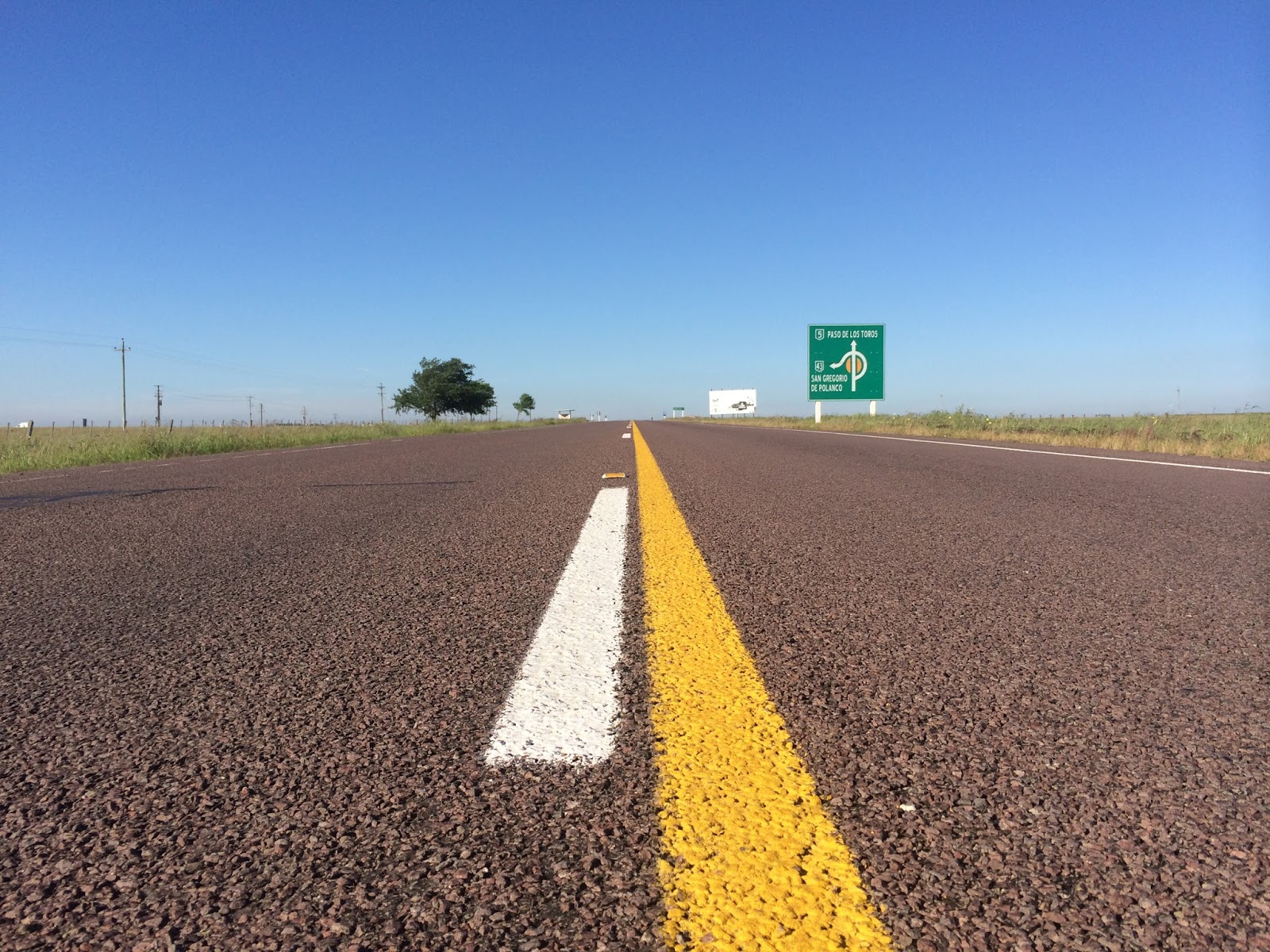
In this case the application of simple treatment is performed with emulsion IRRIGATION BITAFAL 65 at between 1.2 and 1.4 L / m2 and a gravel 14-20 mm applied between 13 and 15 L / m2. Once cured, the treatment is swept and the company R & K Engineers applies a cold emulsion microsurfacing BITAFLEX MICRO 62 P25 at a rate of about 14 kg / m2. The aesthetic completion of the work resembles an asphalt binder and provides an excellent Macrotexture giving greater security to the pavement.
There are several sections already implemented this technology as Route 55 or Route 69 successfully suggesting that the development of the same in the coming years will grow. So soon in the coming months the company Served S.A. You will be running a section of Route 60 Route 12 and in the Minas with Capeseal.
We believe that it is essential to make a good stable base for the Capeseal will play as a surface treatment lasting many years both in function and waterproofing in adherence with the tire without losing the aesthetic quality.
The use of modified emulsions for both simple treatment as for microsurfacing use should be binding as the adhesion achieved with much higher aggregate in respect to unmodified emusiones. In turn the selection of aggregates for both treatments should be carefully performed for an appropriate duration.
We hope to inform them about future works Capeseal in the coming months and leave you with some pictures of the work done.
Since 2011, SPECIAL BITAFAL ASFALTOS, It has expanded its line emulsions seeking to adapt to climatic conditions, use and traffic which are undergoing different technologies.
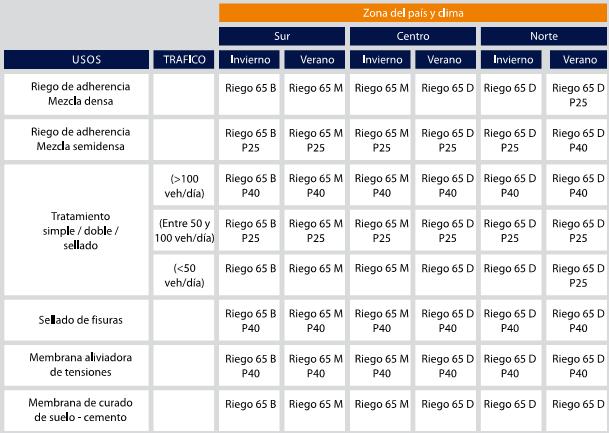
The specification used in our country for modified emulsions is the IRAM 6698 standard: Modified cationic asphalt emulsions. In it, to determine the degree of modification, the minimum requirement for elastic torsional recovery is 12%, a value that we consider extremely low since a conventional asphalt cement has about 8%. That is why we have specified two ranges of elasticity for all types of modified emulsions manufactured, one with a minimum of 25% and another with 40% elastic torsional recovery and three types of asphalt penetration ranges depending on the application and thermal gradient in the area to execute the work.
Then we attach an indicative table for selection of emulsions Irrigation
The emulsion designed for the highest demands was the emulsion BITAFLEX RIEGO 65 P40 D, Which is manufactured with an asphalt hard penetration of 50 to 80 dmm (and a viscosity above 2000 cP as determined in a study of sections required not presented exudates) and add a high amount of polymer achieve greater torsional elastic recovery 40%.
For inquiries please write to bitafal@bitafal.com.uy or visit our website www.bitafal.com.uy
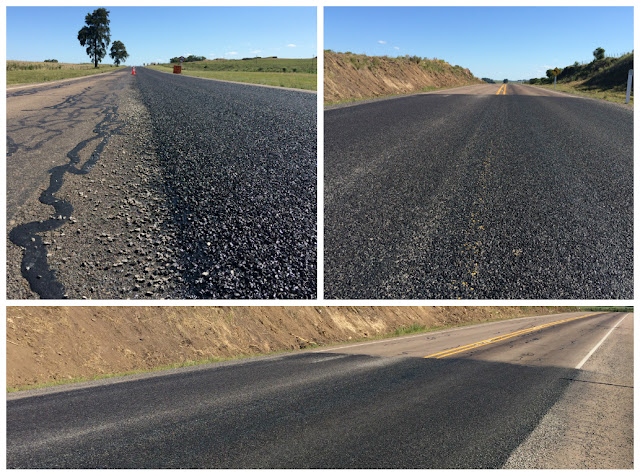
The company has relied on Serviam Bitafal Rentals to assist in the maintenance of Route 8 between Pirarajá and Aramendía through technology Chiping.
ROADS :: :: MAKING
Bulletin No. 26 (23.11.2010)
Bulletin No. 54 (06.21.2013)
See all photos ON HERE