INAUGURATION OF ROUTE 104 AND ROUTE 10

INAUGURATION OF ROUTE 104 AND ROUTE 10

The synergy between recycled cement and surface treatments show that a route can be rehabilitated at low cost with high performance and quality

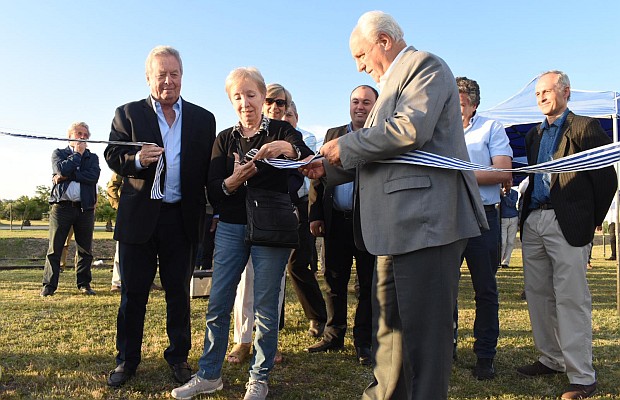
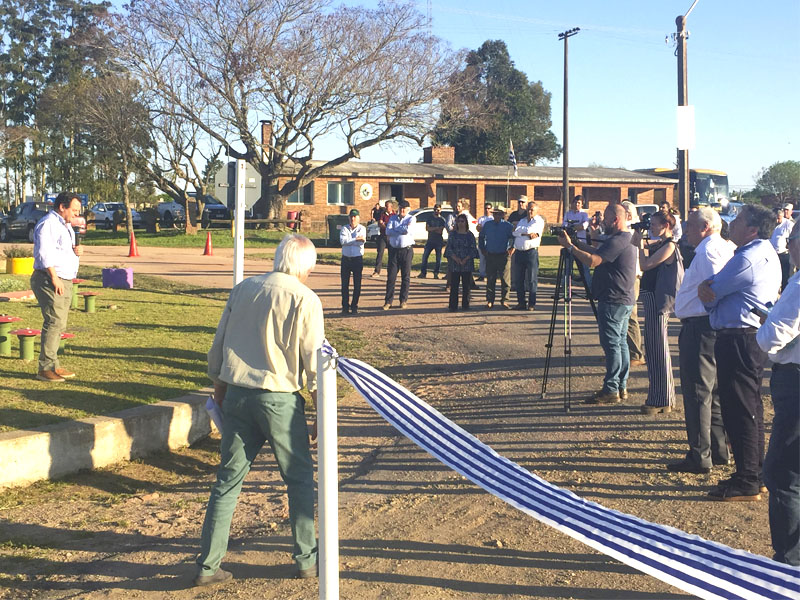
Last January 28 The official inauguration of the works took place at the intersection of both routes, in front of Manantiales beach. The Minister of Transportation and Public Works, Luis Alberto Heber, the Mayor of Maldonado, Enrique Antía, the Director of Roads, Hernán Ciganda and the Directors of the company participated in the meeting.

There are several accolades that the Serviam company has received for the Capeseal that was carried out in more than 33 km of route that were rehabilitated in just 3 months. Not only for the quality of the finished work but also for the speed of execution as well as for the aesthetic and functional improvement of one of the main tourist corridors in Punta del Este.

As we discussed in the Bulletin # 118, the works on Route 104 consisted of cleaning the strip and deepening the gutters as well as the surcharge of between 15 and 20 cm of roughness that was recycled with cement along with the old existing bituminous treatment.

To control cracking, transverse cuts were made with emulsion IRRIGATION BITAFAL 65 with a team specially designed for it. The curing irrigation was carried out with Emulsion IRRIGATION BITAFAL 65 and crushing sand providing excellent adherence and a very good performance as protection of the stabilized base.
Finally, the Capeseal type paving was carried out with a simple bituminous treatment with emulsion. IRRIGATION BITAFLEX 65 P40 and a cold micro-agglomerate with emulsion BITAFLEX MICRO 62 P25
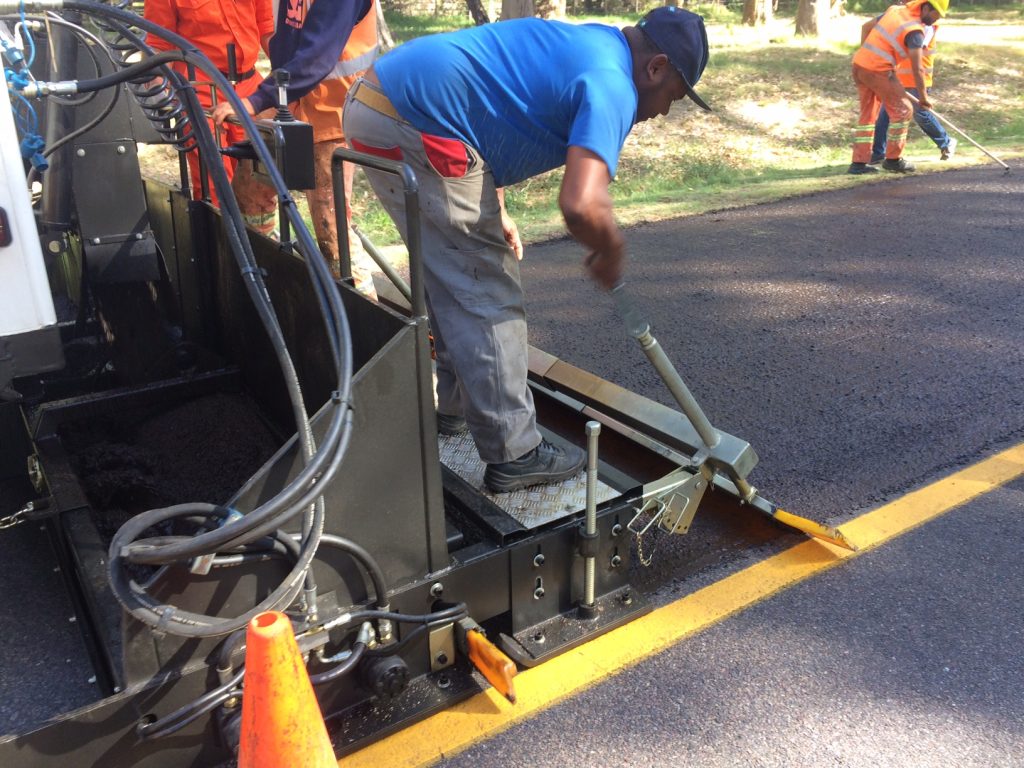
A roundabout was made at a black point on the route and all the signage was renewed by applying highly durable thermoplastic paint, studs and highly reflective signage.
The section of Route 10 from 104 to the entrance to José Ignacio was recycled in 15 cm with Portland cement and then Capeseal as a tread layer.
Both routes achieved an improvement in roughness and slip resistance, as well as a finish similar to asphalt pavement with great contrast to the signage, which translates into improvements in road safety. In addition, an important structural improvement was made that will allow a high durability of the rehabilitated sections.
ROUTE 104 REHABILITATION

ROUTE 104 REHABILITATION

Serviam began the rehabilitation works that will culminate before the tourist season

The route that connects Routes 9 and 10 at Manantiales is being rebuilt along its 15 km length through recycling with Portland cement and a Capeseal as wearing course, similar to what was done on Route 60.
It is an ideal solution due to the aesthetic and functional quality of the combination of treatments for a route that has high light traffic in the summer season.
The works began with a strip cleaning and ditch deepening as well as the surcharge of between 15 and 20 cm of coarse that is being stabilized with cement together with the existing old bituminous treatment.
As in the rehabilitation of Route 18 (Making Paths Newsletter #102), a series of transverse cuts with emulsion is made to control cracking. IRRIGATION BITAFAL 65 with equipment specially designed for it. A radiofrequency motor grader guidance system is also being used that allows a great improvement in the roughness of the section that will later receive a surface treatment.
Irrigation Curing with Emulsion IRRIGATION BITAFAL 65 and grinding sand has excellent adhesion and performs very well as a stabilized base protection.
In the next few days, the Capeseal type paving works will begin with a simple bituminous treatment with emulsion IRRIGATION BITAFLEX 65 P40 and cold microagglomerate with emulsion BITAFLEX MICRO 62 P25.
We will keep you informed of the development of the work in future editions of our newsletter.
OPENING OF ROUTE 50

OPENING OF ROUTE 50

Serviam inaugurated the section linking Route 1 with Tarariras

The rehabilitation of 22 kilometers of Route 50 in the department of Colonia was attended by Minister of Transport and Public Works, Victor Rossi, the Mayor of Cologne, Carlos Moreira and other national, departmental and local.
bacheo and one double bituminous treatment was performed in almost the entire length of the path executed emulsion IRRIGATION BITAFLEX 65 P25 and a double Spreader SECMAIR CHIPSEALER 41. In turn, between Route 1 and the locality El Semillero, a micro computer was placed in cold emulsion BITAFLEX MICRO 62 P25 that markedly improved the surface finish of treatment.
The works also included improvements in various sections such as the urban area of ​​El Semillero and Tarariras where asphalt was laid and the correction of the layout of some curves and the construction of eight culverts. The works demanded an investment of three million dollars.
Serviam thank the provided confidence in the supply of products and services.
ROUTE OPENING 18

ROUTE OPENING 18

Last October 10th Serviam inaugurated the work carried out on Route 18.

Route 18 Archives - Grupo Bitafal

Addition was performed on the sections still had good structural condition but any sign of surface damage, a micro cold emulsion BITAFLEX MICRO P25 62 with excellent quality implementation. We commend the company for work performed and the confidence provided.

The inauguration took place in Pueblo Rincón in the presence of the Minister of Transport, Victor Rossi, the Director of Roads Leonardo Cola and other members of the MTOP. In turn participated the mayor of Vergara, representatives of the Treinta y Tres, colleagues and friends.

A detail of execution and the new control technique mentioned cracking may be found at: https://bitafal.com.uy/nueva-tecnica-de-control-de-fisuracion-para-cementados/

Capeseal on Route 60

Capeseal on Route 60

Making good progress with the implementation Serviam Micro cold on the simple treatment performed on Route 60.

As reported in bulletin # 92 and # 97, the Capeseal on Route 60 resumed its march after the winter closure. Work began from Sugarloaf with high execution performance and excellent surface quality.

Serviam commend the work done and the application of a set of technologies that we believe are the future of our roads.

Serviam commend the work done and the application of a set of technologies that we believe are the future of our roads.

Micro cold in Route 10

Micro cold in Route 10

With the advent of spring various surface treatments works resume

By adjusting the conditions of implementation for Capeseal Route 60, Serviam has made several test sections Route 10, where the equipment for micro-agglomerates cold, Romanelli UHR 900 E-FLOW, has a very good performance and high performance in work.

Tests were conducted near the oil Boya, on the old pavement of Route 10 and on a simple treatment of stabilized done before winter.

Quality results are obvious, the mixture homogeneity achieved, excellent surface texture and rejuvenation of old pavements for the next summer season.

Although conditions were pretty wet day without sun, Micro emulsion 62 P25 BITAFLEX He performed well, achieving full coverage of the aggregate mixture fluency and cutting within a reasonable traffic for release at the end of the day time.

We leave you some pictures of the experience.

Capeseal technology tendered by MTOP on routes 12 and 108.

Capeseal technology tendered by MTOP on routes 12 and 108.

Capeseal technology takes hold in Uruguay with the first project awarded in this mode by the MTOP.

The company Emilio Alvarez Diaz S.A. it's found rehabbing a stretch of 32 km of Routes 108 and 12 in the Department of Canelones. The work consists of a charge in some areas and then performing a site recycling in 20 cm depth with 3% Portland cement and subsequent Capeseal treatment involving the execution of a simple treatment and bituminous cold microsurfacing above.

In this case the application of simple treatment is performed with emulsion IRRIGATION BITAFAL 65 at between 1.2 and 1.4 L / m2 and a gravel 14-20 mm applied between 13 and 15 L / m2. Once cured, the treatment is swept and the company R & K Engineers applies a cold emulsion microsurfacing BITAFLEX MICRO 62 P25 at a rate of about 14 kg / m2. The aesthetic completion of the work resembles an asphalt binder and provides an excellent Macrotexture giving greater security to the pavement.

There are several sections already implemented this technology as Route 55 or Route 69 successfully suggesting that the development of the same in the coming years will grow. So soon in the coming months the company Served S.A. You will be running a section of Route 60 Route 12 and in the Minas with Capeseal.

We believe that it is essential to make a good stable base for the Capeseal will play as a surface treatment lasting many years both in function and waterproofing in adherence with the tire without losing the aesthetic quality.

The use of modified emulsions for both simple treatment as for microsurfacing use should be binding as the adhesion achieved with much higher aggregate in respect to unmodified emusiones. In turn the selection of aggregates for both treatments should be carefully performed for an appropriate duration.

We hope to inform them about future works Capeseal in the coming months and leave you with some pictures of the work done.

New equipment cold micro agglomerates in Uruguay

New equipment cold micro agglomerates in Uruguay

Serviam continues to incorporate technology for road maintenance and has incorporated a new team Romanelli UHR 900 E-FLOW for the execution of cold set micro.

In a big bet for the local market, served It includes equipment, capacity and engineering for the development of new technologies paving in our country. The micro-agglomerates involve knowing other dimensions cold asphalt mixtures, emulsions and executing treatments. This development has incorporated new procedures both laboratory and field to try to control as many variables as possible and ensure the quality of work performed.

Our company is proud to have participated in it, trying to solve in the best way the problems that always arise in the application of new technology. We appreciate the confidence provided for the design and supply of the emulsion again BITAFLEX MICRO 62 P25 with which the designs of the micros and subsequent pilot test were performed.

Then we bring some photos of the first tranche executed, about two km long on Route 104, Maldonado. In the same well calibrated equipment, know the best enforcement practices from experts in the matter from Brazil, two types of Micro (one thicker than the other) were tested for their performance in the coming months. We hope to approach them progress of the work done with this technology on Route 60 near the spring.

EXPERIMENTAL SECTION: DIFFERENT BASES ON CEMENTED taxiways.

EXPERIMENTAL SECTION: DIFFERENT BASES ON CEMENTED taxiways.

An experiment carried out 18 months ago shows how the use of bituminous treatments reduce the reflection surface cracks.

C.V.C held in Route 69 in Montevideo in early 2016 an interesting experimental section of Portland cement stabilized base which they were applied different layers of rolling to see its evolution:

1. Hot asphalt layer of asphalt AC20 3cm

2.- Bituminous treatment Simple -TBS- fog irrigation (14-20mm arid emulsion IRRIGATION BITAFAL 65 )

3. Cape seal (TBS with aggregate and emulsion 14-20mm IRRIGATION BITAFAL 65 + Micro Type II TMN 5mm emulsion BITAFLEX MICRO 62 P25)

4.- microsurfacing Type III (TMN 10mm emulsion BITAFLEX MICRO 62 P25)

After 18 months in service you can determine that all taxiways are used in very good condition overall and are alternatives to consider when protecting a stabilized with cement.

As reflection of shrinkage cracks in the cemented basis substantial differences exist between each of the layers used that detail below.

STABILIZED BASE:

The cement stabilized performed looking for a simple compressive strength of between 15 and 20 Kg / cm2. He was executed in place with a cold recycler and no crazing was performed. Irrigation curing was performed with emulsion IRRIGATION BITAFAL 65 and gravillín.

Wearing courses:

After 18 months of service shows that:

1. Hot asphalt layer of asphalt AC20 3cm. The cracks in this case are transverse to the roadway between 3 and 5 m. Also it is shown in much of the length of the longitudinal crack in the shaft which corresponds to the overlapping of the execution of the cement base.

2. Treatment Bituminous Simple irrigation fog (14-20mm arid emulsion IRRIGATION BITAFAL 65 ). Fissures surface but are difficult to identify the observed are between 9 and 18 m and no longitudinal crack is identified. In some identified fissure could be seen a slight loosening of aggregate.

3. Cape seal (TBS with aggregate and emulsion 14-20mm IRRIGATION BITAFAL 65 + Micro Type II TMN 5mm emulsion BITAFLEX MICRO 62 P25). In this case the cracks are clearly visible because the smooth surface which achieves the Micro Type II. They are transverse between 5 and 12 m apart. Nor longitudinal fissure of the overlap of the base shown.

4.- microsurfacing Type III (TMN 10mm emulsion BITAFLEX MICRO 62 P25). In this section transverse cracks between 2 and 3 m apart and longitudinal cracks of overlap almost the whole section are identified.

PRIMARY CONCLUSIONS (First 18 months)

• Bituminous simple treatment is the wearing at the time shows better performance in the reflection of cracking, not so much so in the comfort of the user (and neighbors) because it is quite noisy. (Patch initial sand: 3.75 mm). Something that could easily be solved with a finer stone or a sealing treatment.

• Then follow the Cape Seal with a very good performance against the reflection of cracks which obviously is contributed by the Bituminous simple treatment. In this case the sealed surface gives quiet and safe running. (Patch initial arena: 0.95 mm)

• The folder has a good asphalt performance but still has more Cracking the Cape Seal for security and is thinner than the rest of the taxiways (Patch initial arena: 0.45 mm) Macrotexture. In turn it would have to make an economic comparison against the cold techniques, but at the same cost would be reasonable to use treatments or Cape Seal.

• The Micro Type III had the worst performance against reflection even crack your Macrotexture is suitable (Patch initial arena: 1.10 mm)

For future tranches of these features we suggest:

Perform 1_ TBS with modified emulsion BITAFLEX P25 or P40 65 IRRIGATION to further reduce the reflection of cracks and have more cohesion in the asphalt to prevent premature detachment.

2_ Test with TBS with a little fine stone (10 to 14 mm) and made in Australia and New Zealand, to have good resistance to cracks without neglecting the noise generated.

3_ Perform a double treatment Trabado (TDT) with modified emulsion BITAFLEX P25 or P40 65 IRRIGATION to contemplate the above as well as high yields of work and minimal waste of materials.

SUCCESS STORIES IN WINTER GRAVILLADOS

SUCCESS STORIES IN WINTER GRAVILLADOS

The use of the technique TDT (Double Treatment Trabado) graveled in various works that have recently implemented show that emulsions may be used during the winter successfully without risk of landslides and significant material savings.

Such is the case of the work done by NECKLACE Ruta 19, executed by the banquinas BITAFAL RENTALS for SERVIAM in Route 5 and TECHINT in Route 9 and Route 16.

All these works were done with modified emulsions Bitaflex P40 or P25 Riego 65 using the technique TDT (Note: "Innovative technologies for surface treatments in winter") Without any detachment.

This is due to the combination of good materials and implementing ways appropriate to the era. The key is to run two risks in the day achieving total mechanical interlock and to even make irrigation fog on the same day to ensure adherence of the entire stone and a superior aesthetic finish. Moreover it is essential dosing intelligently materials to have the optimal amounts in each irrigation and save on the materials used.

We invite you to know the procedure used in our blog:INNOVATIVE SURFACE TREATMENT TECHNOLOGIES IN WINTER

Strength studies ductility performed on the binders for surface treatments show that the modified emulsions Bitaflex Riego 65 P25 and P40 have a cohesive energy far superior to any common emulsion and not to mention the asphalt diluted, which contributes to the durability of the matrix achieved in the implementation of DTT.

As the images of the enclosed work COLIER in Route 19 can be seen that achieved is homogeneous matrix, containing suitable gaps for expansion of the bitumen in summer and very little excess stone in the shoulders.

We invite you to contact if considered necessary to deepen the dosage form and implementation of a TDT or the selection of suitable materials: bitafal@bitafal.com.uy

We use own and third party cookies to help us optimize your visit to our website and also to improve service delivery and thus adapt to their most relevant and useful to better their experience needs. When you click OK to continue with navigation and thus confirm that you have read the information and accept the activation of cookies.

You can allow or reject use at any time can change the Configuration Options Privacy - Cookies Policy -

Privacy settings

When you visit a website, you can store or retrieve information in your browser, mainly in the form of cookies. Check your personal services cookies here.


We track anonymous user information to improve our website.
.
  • _ga
  • _gid
  • _gat

Decline all Services
Accept all Services