RIVERA TRACK REJUVENATION

RIVERA TRACK REJUVENATION

Much of the track has been rejuvenated with the Bitaseal product

The Municipality of Rivera has validated the use of the BITASEAL on the largest motorsport track in the north of the country, andl Autódromo Internacional Eduardo P. Cabrera. The first tests were carried out last year with very good performance, so it was decided to rejuvenate an important sector of the track such as the main straight, as well as several curves.

It has a total extension of 3,080 m and a short version of 2,100 m with a 7 cm asphalt layer dating from 2012 and which presents a high level of loosening of aggregates, which are a major problem in the safety of the racetrack.

Bitaseal prevents the loosening of aggregates, seals the surface and provides a macrotexture suitable for a high-demand track. Furthermore, its homogeneous black color improves the aesthetics of the court and achieves an excellent contrast with the horizontal demarcation.

The track is a pole of attraction not only for Uruguayan races, but also as a location for international championships, and several dates in Brazil are even run on said racetrack.

We thank the Municipality of Rivera for the trust placed in our products.

CILA XXI NEWS

CILA XXI NEWS

We meet from November 21 to 25, 2022 at the Hotel Enjoy Punta del Este

The first cut of subsidized registrations closed on June 29 with a great call. The new registration period runs until September 29 and you can do it HERE.

The authors have up to on July 15 to present the complete work. The commercial exhibition is a success, with nearly 80% of the spaces occupied by important companies in the sector and with several commercial technical symposiums also confirmed.

We invite you to visit the renewed congress website where you will find more details about the Congress and the venue: www.cilaxxi.uy

Organizing a congress is a great challenge that in this case we are experiencing with great enthusiasm and very well accompanied by friends, colleagues, and a great team of professionals. We hope you can witness this great event.

See you.

FIRST RECYCLING OF PAVEMENTS MADE IN PLANT WITH FOAMED ASPHALT

FIRST RECYCLING OF PAVEMENTS MADE IN PLANT WITH FOAMED ASPHALT

The new technology is being implemented by the company CVC in the PPP Circuit 6 project

The designed structural package includes a stabilized base with foamed asphalt and an asphalt road surface with modified asphalt type PG 70-28 in different thicknesses as required by each section of the project. The particularity of this work is that a material stabilized with foam asphalt is used, produced in a WIRTGEN KMA 220 fixed plant with material extracted from the Route itself and with the addition of virgin material to comply with the specification of a BSM 1 according to the TG specification. -2 from South Africa.

Once the material is mixed at the plant, it is transferred to the construction site and laid by means of a sequence of two pavers and compactors to achieve the project thicknesses and adequate design densities. Between each paver a padfoot compactor enters and after the last layer a pair of tandem and pneumatic compactors give the appropriate density and surface finish.
Subsequently, a protective irrigation with emulsion is applied IRRIGATION BITAFAL 65 which remains open to traffic until the execution of a semi-dense mix made with asphalt modified with polymers of the type PG 70-28.
Stabilized with foamed asphalt has the particularity that it is a semi-bound granular material, so the failure method is rutting and not fatigue. Therefore, once the pavement reaches a rut of 10mm, the existing mixture is milled and the same thickness is replaced and it is ready to continue supporting loads.
The Circuit 6 project involves the rehabilitation of 78 km of National Route No. 6 and includes the duplication of roads in several sections, the widening and rehabilitation of the existing pavement structures, which must be maintained for 20 years by the concessionaire company. Big Blade Consortium. Several sections are made with the aforementioned technology and other sections are made by in situ recycling with foamed asphalt.
We are grateful to the company for the trust provided for the supply of emulsions and modified asphalts for your project.
We hope that this new technology will have an exponential development in our country.
CAPE SEAL ON ROUTE 27

CAPE SEAL ON ROUTE 27

A new rehabilitation of a route of our road network with pavement recycling and Cape Seal

The GRINOR company began the rehabilitation works of 48 km on Route 27, Mr. Mario Heber, in the Department of Rivera. They started with a base surcharge, recycled in 20 cm with Portland cement and then a Cape Seal as a rolling layer. The progress at the moment is almost the entire recharged section, and about 6 km with the surface treatment on the recycled material where the company has been able to demonstrate the surface quality both in rolling comfort as well as in the resistant structure achieved.

The surcharge made is 15 cm, after which it is remixed in 20 cm together with the old existing surface treatment on the road. The refining works after recycling with cement are carried out by means of a motor grader with automatic control, then a curing irrigation with emulsion is carried out. IRRIGATION BITAFAL 65 along with sand to provide a suitable provisional rolling and maintain the humidity of the cemented material, until the execution of the micro-surfacing.

Simple bituminous treatment is being carried out with emulsion BITAFLEX IRRIGATION 65 P12 with 15-19 mm aggregate to then complete the Cape Seal using a cold microagglomerate made with emulsion BITAFLEX MICRO 62 P40. This last emulsion was formulated specifically for this work, adjusting the cutting times and increasing the polymer content since it is the emulsion exposed to traffic and weather.
The execution activities of the Cape Seal will be suspended during the winter closure, and it is planned to continue and finish them next spring.

GRINOR incorporated a new truck-mounted Romanelli UHR 700 unit with a capacity of 7 m3 of aggregates and 2,600 liters of emulsion for the execution of these works, which is producing an impeccable quality of cold microagglomerate.

The synergy between the recycling of pavements and the Cape Seal is increasingly convincing since the first sections carried out are still in excellent condition and without inconveniences of exudations or detachments that have often led to doubts about surface treatments such as wearing courses.
We hope that the successes of this technology will continue throughout our country.

CONFERENCE ON SURFACE TREATMENTS AT THE QUIMIKAO CONGRESS (MEXICO)

CONFERENCE ON SURFACE TREATMENTS AT THE QUIMIKAO CONGRESS (MEXICO)

We tell you about our participation in the 12th International QuimiKao Seminar in Los Cabos.

From May 17 to 20, 2022, we participated in the biannual event developed by the QuimiKao company, on this occasion as exhibitors, where we emphasized the transformation process that our country is experiencing at the level of road infrastructure. The magnificent synergy experienced by stabilized bases and surface treatments was commented on, where one needs the other for a greater extension of the useful life of the road.

They commented on the great growth experienced by recycling and on-site stabilization teams in Uruguay, where we went from 0 to more than 30 teams in just 8 years, improving the quality of more than 2,500 kilometers of highways. This fact has marked a milestone at the national and regional level, which today allows us to apply surface treatments with a higher degree of certainty in terms of life expectancy. We also commented on the change process that Grupo Bitafal began towards emulsion performance specifications (EPG), which allow us to choose the level of polymerization of the emulsion for a given traffic and climate.

The seminar also had its deserved share of relaxation and integration, where we shared a morning soccer game and a day of walking around Cabo San Lucas. We thank the entire QuimiKao team for their generosity, their hospitality and for giving us the opportunity to spread the innumerable advantages that surface treatments present; and finally congratulate you for the successful completion of the seminar. We hope to see each other in future editions to continue learning together.

US$ 1.9 BILLION INVESTMENT IN ROAD WORKS BETWEEN 2022 and 2023

US$ 1.9 BILLION INVESTMENT IN ROAD WORKS BETWEEN 2022 and 2023

Minister Falero: "Our goal is to increase public works to the extent that UPM reduces"

For this year, the government plans to invest almost US$900 million in road works throughout the country, while by the end of 2023 it is expected to reach US$1,000 million. In addition, the Ministry of Transport and Public Works will put out a tender to install 100 radars on national routes at those points identified as the most dangerous in terms of road safety.

“We have sought to consolidate a strong investment. In the construction issue there will be a logical reduction for the UPM plant. Our goal is to increase public works to the extent that UPM reduces. The idea is to keep the 50 thousand workers. We are gradually making calls for bids that allow us to award the first section of route 5 this week and the second section next week. The 8 and 9 will be in May. We are hoping to be running in the second half of this year. Today we are at 55 thousand jobs in Construction. Our goal is not to be below 50 in the entire period” said the Minister in an interview with Informal Breakfasts.

Regarding the CREMA system, the Minister clarified that “it is similar to public-private participation but not the same. They have a different feature. PPPs are valid but very expensive to finance. It is obliged to execute the work in two years and the payment in up to seven. That reduces financing costs, which are very high. The competition in the call for bids is validated with what has been the offer in bids. There is expectation and there is eagerness to build new routes that will change the map of the country's road network."

PROGRESS WORKS ON THE PORT VIADUCT

PROGRESS WORKS ON THE PORT VIADUCT

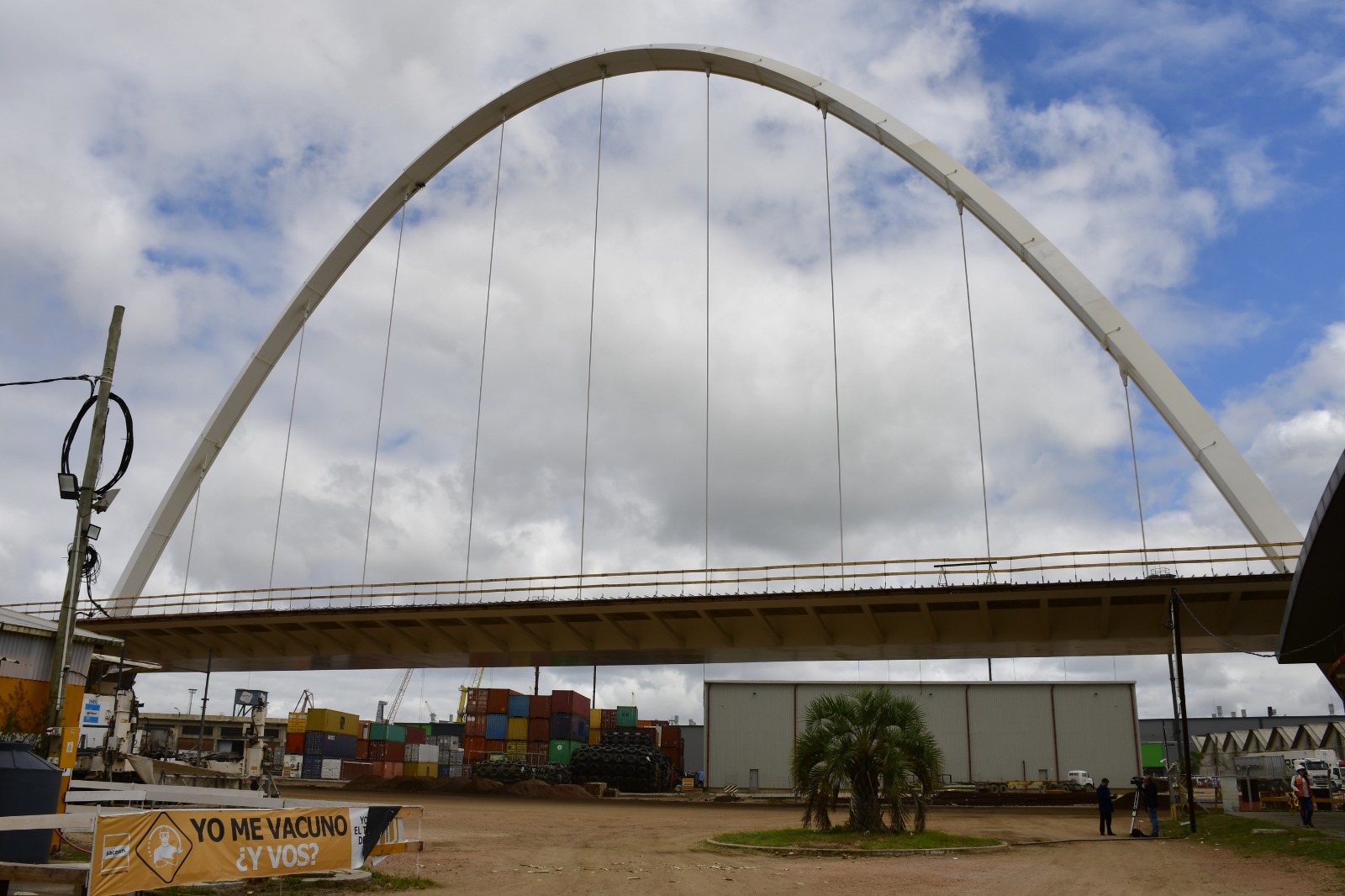
The works required an investment of more than 140 million dollars and employed some 500 workers.

The construction of the viaduct began at the beginning of 2020. "It comes at a rate that allows us to think that by the middle of the year we can have the viaduct finished," Falero reported at a press conference. In addition, a set of complementary works are being carried out within the port area, which will improve the capacities of the country's main port.

The work not only orders road traffic, but also railway traffic. The structure allows the Central Railway line to enter the port below the viaduct. "It can serve to generate internal transport in the port through the railway", said the Minister.

The works required an investment of more than 140 million dollars. They have also allowed the creation of many sources of work. In its most intense stage, it employed some 500 workers. At the current stage there are about 250. "Without a doubt, it has been important in the workplace," said the hierarch.

The Undersecretary Juan José Olaizola also participated in the tour; the President of the National Administration of Ports, Juan Curbelo; the Director of the Office of Planning and Budget, Isaac Alfie; the President of Fonplata –the body that finances part of the work–, Juan Notaro; and authorities of the company Saceem, in charge of carrying out the works.

XXI CILA – SUBSIDIZED REGISTRATION!

XXI CILA – SUBSIDIZED REGISTRATION!

There is time until June 29 to register with a special discount

The organization of the XXI CILA and the 13th Uruguayan Road Congress continues at an excellent pace, on April 18 the deadline for the delivery of abstracts ended, and the final number of papers presented is 353, with very good participation from Brazil, Mexico, Argentina, Chile, Spain and Uruguay as data to highlight. For the 13th CVU, 40 technical works were presented on transportation, road safety and bridges, among other topics.

Regarding the stands, 70% has already been confirmed and reserved by important companies in the sector, so we are more than satisfied with the great interest that we notice and the participants that we will be counting on.

Another great novelty is that we already have several keynote speakers confirmed. We tell you a little about them below:

Steve Patrick: Engineer at the Australian Road Research Board (ARRB) 10 years ago. He has a master's degree in pavement technology. He has been involved in bituminous hazard research and author of the 2018 edition of “Austroads Guide to Pavement Technology Part 4k: Bituminous Hazards” which is used as a design and selection guide throughout Australia.

Jim Jenkins: South African civil engineer. Research professor at SANRAL in pavement engineering and professor at the University of Stellenbosch. He has published more than 150 publications between books, magazines and articles. He is a specialist in road rehabilitation with a focus on cold recycling including stabilization with foamed bitumen or emulsion.

This is just a little of what is coming in November. Do not miss the opportunity to participate in the most important asphalt congress in the world, discounted registrations until June 29 can be made through: https://cilaxxi.uy/inscriptions-xxicila/

We will tell you more in the next newsletter. Until next time!

1st IBERO-AMERICAN MEETING OF NFU IN ASPHALT MIXTURES

1st IBERO-AMERICAN MEETING OF NFU IN ASPHALT MIXTURES

BITAFAL Group participated telling about the experiences carried out in Uruguay

On March 16, this online event organized by the Lemac of the University of La Plata was held, which was attended by almost 600 participants from all over Latin America. The nearly 6-hour event was attended by leading technicians and specialists and discussed topics ranging from end-of-life tire management systems to the rheology of asphalt modified with this shredded material.

In addition to the vast experience in the field that Spain and Portugal have, speakers from Mexico, Brazil, Colombia and Chile were added, who are at the forefront in Latin America. From Grupo BITAFAL we contribute the experiences carried out on Route 9 in 2016 as well as the evolution of the Management Systems that work in our country as well as the favorable perspectives that we see in the implementation of this technology in the near future. We attach the program discussed at the Meeting and we hope to be able to share the recorded conferences as soon as possible.

m2 applied in

m2 applied in

The importance of waterproofing structures is gaining strength in Uruguay

There are already several bridges that have been waterproofed to ensure their durability. Two works have recently been carried out with the BITAFILL bridge deck waterproofing, one through SACEEM, which was applied at the overpass in Ruta Interbalnearia and Camino de los Arrayanes, and the other through Espina on the new bridge over the Marincho stream. on Route 14. The latter is added to the more than 14,000 m2 applied to 12 new bridges made in the PPP 3 Project on Route 14 that have used this product to protect structures.

After all the applications, a 4 cm thick asphalt layer was applied with modified asphalt as the wearing course with excellent adherence.
We invite you to see some photos of recent executions.

We use own and third party cookies to help us optimize your visit to our website and also to improve service delivery and thus adapt to their most relevant and useful to better their experience needs. When you click OK to continue with navigation and thus confirm that you have read the information and accept the activation of cookies.

You can allow or reject use at any time can change the Configuration Options Privacy - Cookies Policy -

Privacy settings

When you visit a website, you can store or retrieve information in your browser, mainly in the form of cookies. Check your personal services cookies here.


We track anonymous user information to improve our website.
.
  • _ga
  • _gid
  • _gat

Decline all Services
Accept all Services