BITAFAL PARTICIPATED IN THE ACTION Holidays #Entretodosparatodos

BITAFAL PARTICIPATED IN THE ACTION Holidays #Entretodosparatodos

Last weekend, those of us who are part of Grupo BItafal were able to enjoy as a family the on-line theater performances of the "Vacations #entretodosparatodos" project.

This initiative aims to collaborate with five major cases in our country: Peluffo Giguens Foundation, Kangaroo Foundation, Children's Villages, Coranzoncitos Foundation, and Liceo Francisco.

We were able to choose between 5 performances that included “Opa Payasos” “Mago Daniel K” “Tía Libi's show” “Clap Clap Circo” and “Ruperto Rocanrol”.

It was an excellent opportunity to enjoy in this format that this new reality in which we are living offers us, to disseminate wonderful artists from our country, and at the same time collaborate with organizations that have been affected by the situation we are going through.

We thank the entire organization and we hope that initiatives like these will be replicated.

WEBINARS: THE NEW WAY TO LEARN

WEBINARS: THE NEW WAY TO LEARN

Every month new educational proposals are added from different organizations, companies and independent professionals.

The COVID-19 crisis forces us to seek new ways of relating and learning. We are in the digital age and luckily enough technology exists to be able to participate in different instances of learning from home or office.
In this note we bring you a summary of the platforms to attend events and courses in an online format worldwide.

Argentine Highway Association:

The AAC has been conducting a series of webinars on various topics of road interest since May. The AAC-PIARC webinar cycle had 7 paving, road safety, transport, mobility, operation and planning of road infrastructure seminars. To see the presentations we recommend entering http://www.aacarreteras.org.ar/webinars-aac-piarc.php
Another 7 free seminars will be held in June. For reports and registrations: http://www.aacarreteras.org.ar/webinars.php
  • TUESDAY JUNE 2ND. Design and construction of joints in Concrete Pavements. Speaker: Ing. Diego Calo
  • THURSDAY JUNE 4. Asphalt paving in Argentina: two decades of progress and development. Speaker: Ing. Mario Jair
  • TUESDAY JUNE 16. Concrete pavements. Design of intersections and transitions. Speaker: Ing. Diego Calo
  • THURSDAY JUNE 18. The use of asphalt emulsions in Argentina: topicality and pending issues. Speaker: Ing. Mario Jair
  • TUESDAY JUNE 23. The Road Safety Challenge facing the 2021-2030 decade - Part 1. Speaker: Ing. Graciela Berardo
  • THURSDAY JUNE 25TH. Rural Roads: Surface solutions and stabilizations.
  • TUESDAY JUNE 30TH. The Road Safety Challenge facing the 2021-2030 decade - Part 2. Speaker: Ing. Adriana Garrido

Uruguayan Road Association:

The AUC informs its associates of various online activities of other organizations and is organizing some of its own activities such as the "9th Asphalt Technical Conference" and a course on Design and Construction of Concrete Pavements.
  • END OF JUNE. 9th Technical Conference on Asphalt. With the participation of the Permanent Asphalt Commission (CPA) and a talk on highly modified asphalts (HiMA) by Kraton technicians. The conference will be held on the AAC platform.
We recommend entering the AUC website for more information: https://www.auc.com.uy/actividades-2020/

Itafec Platform: https://www.itafec.com/

Itafec has been holding various online events such as the "X TRIAL DAY FOR BITUMINOUS MIXTURES", the "IRMD 2020", the "INTERNATIONAL SEMINAR OF FOAMED ASPHALT" among others. For the coming months, it has several events, many of them free, so we recommend subscribing to the platform and following its news on social networks.

Plataforma Eventbrite: https://www.eventbrite.com/

The platform has a wide variety of online courses and seminars. They can be searched by keywords in both English and Spanish.

Asphalt Institute: http://www.asphaltinstitute.org/training/webinars/

The Asphalt Institute has a wide variety of courses in English on its platform. The courses are live although there is a section on recorded webinars. Some are paid and others free.
  • TUESDAY JUNE 2ND. Best Practices for Specifying and Constructing Longitudinal Joints
  • THURSDAY JUNE 4. Understanding Pavement Distress
  • TUESDAY JUNE 9. Tack Coats Part I: Purposes, Research, Materials, and Specifications
  • THURSDAY 11TH OF JUNE. Tack Coats Part II: Best Practices for Preparation and Application, Bond Strength Testing, and Quality Control/Quality Assurance
  • THURSDAY JUNE 18. Causes and Cures of Segregation

NAPA: https://www.asphaltpavement.org/Webinars

NAPA also has a platform for conducting courses in English. Some are open and others exclusively for members. The courses below are free and free.
  • THURSDAY JUNE 4. Benefits of Rehabilitating Concrete Pavements with Slab Fracturing and Asphalt Overlays.
  • TUESDAY JUNE 16. How to Evaluate Pavement Alternatives Using LCCA
They also have a large library of recorded webinars to explore: https://store.asphaltpavement.org/index.php?categoryID=121

Others:

Several companies and independent professionals frequently organize online seminars and courses via zoom or gotomeet. We recommend following BITAFAL's social networks to be aware of these developments.
GROUP BITAFAL will participate this month in an International Seminar on: "Asphalt mixtures and their relevance in the durability of pavements" with a presentation on the importance of primer and bonding irrigation by the Qco. Santiago Kröger. It is a 3-hour free event with the participation of Eng. Nestor Huamán from Peru and Adrián Nosetti from Argentina.
  • THURSDAY 11TH OF JUNE. 19 hours (URU-ARG). Registrations: informes@nestorhuaman.pe
VIRTUAL COURSE “Surface treatments and asphalt primer”

VIRTUAL COURSE “Surface treatments and asphalt primer”

On Thursday, May 20 and Friday, May 21, we had the pleasure of attending the virtual course on "Surface treatments and asphalt primer" organized by the Bolivian company Quimitec Asfaltos. The webinar, by Prof. Edson Andrade and Ing. Daniel Zenteno, discussed important aspects on the execution of asphalt primer and surface treatments, developing the concepts and manufacturing procedures for emulsions and construction procedures for these techniques.

On Friday, Ing. Ignacio Kröger spoke about the importance of a good penetration in the primer. For this, the porosity and humidity conditions of the base, and the viscosity and strength of the binder were detailed. Likewise, the need to progressively eliminate the use of asphalt dilutes in paving in general and in priming specifically was discussed.

To summarize, the four main disadvantages presented by the dilutes are detailed below:

1) Contains volatile gases that are toxic to workers.

2) Impact on the greenhouse effect and reduction of the ozone layer.

3) It requires energy for heating, which in addition to being expensive, requires valuable time. It can also create a risk of overheating and explosion of tanks, like the two accidents we had in our country last year.

4) After 72 hours of applying a dilute type MC1, it still has between 55 and 85% of the solvent. Risk of softening binder of future treatment and oozing in summer.

The IMPRIMA 50 emulsion for its part is a mixture of asphalt and water, and this brings great technical and environmental advantages:
1) Quick release to traffic, without the need to prime with sand. This allows paving tasks to be carried out in the following 12 and 24 hours.

2) Low viscosity at room temperature (at 25 degrees it has the same fluidity as at 60 of the diluted). Quick loading of a sprinkler truck and without the need for heating.

3) Releases water to the environment instead of volatile organic compounds (less dangerous for workers and the environment).

4) It is compatible with other emulsions, therefore it does not generate inconveniences in its manipulation.

For more information about the performance comparison between the emulsion and the diluted primer, you can consult the technical work presented by Quim. Santiago Kröger at the IX Uruguayan Road Congress "Primer with emulsions: technical and environmental improvements."

https://bitafal.com.uy/wp-content/uploads/2017/10/9%c2%ba-CVU-Trabajo-Imprimaci%c3%b3n-con-emulsiones-mejoras-t%c3%a9cnicas-y-ambientales.pdf

We thank Quimitec Asfaltos for the invitation, and hopefully it will be the first of several collaborations between the two companies.

ASPHALT RHEOLOGY

ASPHALT RHEOLOGY

Rheology is the science that studies the internal response of materials when they deform as a result of an applied stress. To learn about the rheological properties of any material, one must measure the deformation resulting from an applied stress or the force required to produce a given deformation (1).

1 Dynamic Cutoff Rheometer (DSR)

Dynamic shear rheometers are used to study the rheological behavior of various materials, including asphalt. The two most common methods used by the team to determine the viscoelastic properties of asphalts are transient (constant rate stress/strain) and dynamic (oscillatory) methods (2). The typical configuration of these equipments consists of a fixed lower plate and a mobile upper plate, between which an asphalt sample is placed, to which a shear stress is applied.

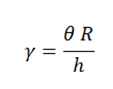
Dynamic or oscillatory tests cover a wide range of stresses in relatively short times, offering very valuable results (3). The operation of the equipment can be by controlled tension or by controlled deformation. In a tension controlled arrangement, a fixed torque is applied to the top plate to generate the oscillating motion. Because the applied stress level is fixed, the distance the plate moves in its oscillatory path can vary between cycles. When the strain-controlled test is defined, the upper platen is accurately moved between the amplitude extremities at the specified frequency and the torque required to maintain oscillation is measured. Since the DSR only takes three measurements; torque, angular rotation and time, all results are calculated from these variables. The following equations are used to calculate the strain () and stress () in the equipment:

( 1 )

Where:

g is the deformation of the sample, dimensionless or expressed in%.

q is the angular rotation, in radians (rad).

R is the radius of the plate, in millimeters (mm).

h is the space between the plates, in mm.

( 2 )

Where:

t is the shear stress, in Pa.

T is the recorded torque, in Newton meter (Nm).

From these definitions the absolute complex cut modulus is derived, whose expression is the following:

( 3 )

Where:

G * (ω) is the complex shear modulus, expressed in Pa.

ω is the angular frequency, in radians per second (rad / s).

Note: in this work the angular velocity will be referred to as angular frequency or simply frequency, therefore the frequency variable may present units of rad/s or Hertz (Hz). Both are related as .

Note: in this work the angular velocity will be referred to as angular frequency or simply frequency, therefore the frequency variable may present units of rad/s or Hertz (Hz). Both are related as .

For viscoelastic materials such as asphalt, the shear modulus is composed of a loss modulus (viscous component, G'') and a storage modulus (elastic component, G'), the relative magnitude of which determines how the material responds to loads. applied. The two components are linked to the complex modulus by the phase angle in a vector sum as shown in Figure 1. Therefore, the different components can be related using equation 4:

For viscoelastic materials such as asphalt, the shear modulus is composed of a loss modulus (viscous component, G'') and a storage modulus (elastic component, G'), the relative magnitude of which determines how the material responds to loads. applied. The two components are linked to the complex modulus by the phase angle in a vector sum as shown in Figure 1. Therefore, the different components can be related using equation 4:

Where:

For viscoelastic materials such as asphalt, the shear modulus is composed of a loss modulus (viscous component, G'') and a storage modulus (elastic component, G'), the relative magnitude of which determines how the material responds to loads. applied. The two components are linked to the complex modulus by the phase angle in a vector sum as shown in Figure 1. Therefore, the different components can be related using equation 4:

G ’’ (ω) is the loss modulus, in Pa.

CITEVI has an Anton Para DSR SmartPave 102 shown in Figure 2. Due to the high stiffness of asphalt cements at room temperature, high shear stresses are required to reach a certain level of deformation, which can be limited by the minimum torque recordable by the equipment (2). To overcome this, the 8 mm diameter geometry is used to perform tests at temperatures below 35 °C and the 25 mm diameter geometry is used for tests where the temperature is equal to or greater than 35 °C. To maintain the specified temperature for each test, the equipment has a Peltier temperature control device and a water circulator to cool the pieces. In addition, an air compressor is used to help the rotation of the frictionless geometry in what is called an air bearing, allowing for high levels of precision. The operation of the rheometer and temperature control unit, along with data acquisition and analysis, are controlled by a computer.

Figure 2. SmartPave 102 dynamic shear rheometer. Taken from Anton Paar's website (4)

2 Linear viscoelastic region

The relationship between stress and strain in asphalt can be approximated as linear to small strains. Within this region, the relationship between stress and strain is influenced only by temperature and load time (frequency) and not by the magnitude of stress or strain. By increasing the amplitude of the stresses, the relationship is no longer linear and a decrease in the modulus of rigidity is caused (2).

There are three important reasons why the linear viscoelastic region of asphalt should be defined. First of all, it is advisable to limit the characterization of asphalt to its linear viscoelastic response to simplify the mathematical modeling of the material, since the nonlinear response, particularly for viscoelastic materials, is extremely difficult to characterize and model in the laboratory. Second, the rheological measurements and analysis methods are defined under the linear viscoelastic region. Finally, in the field of pavement design, it is necessary to study the asphalt and the asphalt mixture in the same domain in order to define the applicability limits of the linear viscoelastic theory (2).

ASPHALT

ASPHALT

Continue read: ASFALTO

Among its main characteristics, it stands out that it is a non-volatile material at room temperature and atmospheric pressure, it is an excellent waterproofing and adhesive, and it has a relatively stable chemical structure. All these factors, added to its low cost, have positioned it as the material par excellence for road construction (2).

1 History of asphalt

Asphalt, or bitumen, is well known and used since ancient times. The extensive deposits of crude oil in the Middle East have been seeping to the surface in the form of "natural" bitumen for thousands of years. The ancient inhabitants of these parts quickly appreciated the excellent waterproofing, adhesive and preservative properties of the material and quickly made it available to them (2).

The first recorded use was by the Sumerians whose empire existed from around 3500 BC. until about 2000 BC, and they used to use it in ship building (2). Later, the Babylonians used it as a binder in the construction of castles, such as the Tower of Babel. Asphalt was also used by the Egyptians both to mummify corpses and to waterproof reservoirs of water (3).

The Greek word asphaltos it was used during Homeric times to mean stable or solid substance. Later, it was adopted by the Romans who used the material to waterproof their baths, reservoirs and aqueducts (3).

The earliest uses of asphalt as a road construction material date back to around 615 BC. in Babylon, in the reign of King Nabopolassar. It is believed that this character was a skilled exponent of the use of bitumen because there is evidence that he used the product to waterproof the masonry of his palace and as a grout for stone paths. This record is inscribed on a brick, where it is detailed that the paving of the street that linked the palace to the north wall of the city had been made "with asphalt and burnt brick" (4).

2 Obtaining and production

Natural asphalt is extracted from the ground and can be associated with other mineral matter (sand, clay, rocks). The most common way to find natural asphalt is in surface deposits or lakes, mainly in Venezuela (Lake Bermúdez) and in Trinidad and Tobago (Lake La Brea or Trinidad) (1).

Asphalt can also be found naturally in the form of asphaltite or gilsonite (its correct name is uintaite) in deposits that are mainly found in the United States, Cuba and Argentina. Additionally, asphalt can be found naturally, impregnated in concentrations of up to 12%, within limestone or sandstone rocks that are extracted from mines or quarries depending on the deposit (1).

On the other hand, asphalt is obtained artificially from the distillation of petroleum. There are mainly four oil extraction areas in the world: North America, the Caribbean, Russia and the Middle East. According to these zones, the physical and chemical characteristics of the crude vary considerably. Of the 1,500 types of crude produced in the world, only a few are suitable for the production of asphalt.

In refineries, the crude oil is heated to 350 °C and enters distillation towers. Distillation is a physical separation process, based on the difference in boiling points between components in the same liquid mixture. As the boiling points of hydrocarbons increase with their molecular masses, the first vaporization of volatile compounds and then the fractional distillation of the rest of the components becomes possible (5). The lighter fractions (propane, butane, naphtha, kerosene, gas oil) are extracted and the residue, also called "tower bottom", passes to a vacuum distillation tower that separates the asphalt from the other distillates still present in the crude. (6).

3 Conventional asphalt

3 Conventional asphalt

3 Conventional asphalt

The chemical composition of asphalt varies according to the crude oil and its refining process. However, broadly speaking, the content can be separated into two groups called asphaltenes and maltenes, which in turn are subdivided into saturates, aromatics and resins. These four groups are not strictly defined and there is some overlap between them. The structure of asphalt is considered as a colloidal system made up of micelles of high molecular weight asphaltenes dispersed or dissolved in an oily medium (maltenes) of low molecular weight (2).

3.2 Viscoelastic behavior

Viscoelastic materials are those that exhibit elastic and viscous behavior simultaneously (7). Several factors affect the behavior of viscoelastic materials, with temperature being the most critical parameter. The mechanical response of asphalt varies from that of an elastic solid to that of a Newtonian fluid in the temperature range from −20 to 150 °C. In the working temperature range of the pavement, knowing the exact nature of the response is essential, since it has a significant influence on the magnitude of the damage due to permanent deformation and fatigue (8).

The other parameter that has a marked effect on viscoelastic materials is the loading time or loading speed (frequency). Asphalt behaves as an elastic solid at high load speeds, exhibiting high stiffness and eventually brittleness; while it behaves like a viscous liquid in prolonged loading times, presenting high ductility and low rigidity (9).

Figure 7 shows the response of an asphalt sample in the creep test or creep. The stress resulting from the applied load shows an instantaneous elastic response followed by a gradual increase in stress over time until the load is removed. The change in stress over time is caused by the viscous behavior of the material. When the load is removed, the elastic stress recovers instantly and additional recovery occurs over time, known as "delayed elasticity." Ultimately, a permanent residual deformation remains, which is irrecoverable and is caused directly by the viscous behavior (2).

Figure 1. Asphalt response in the creep test. Adapted from The Shell Bitumen Handbook (2)

The modulus of stiffness of asphalt, by analogy with the modulus (E) of elastic solids, is the relationship between stress (σ) and strain (ε). However, the modulus of rigidity of a viscoelastic material depends on the loading time (t) and the temperature (T) (3). Therefore, the modulus of stiffness of asphalt can be determined by Equation 1:

( 1 )

Where:

is the asphalt's modulus of stiffness at a given temperature and with a given load application time (frequency), in Pascals (Pa).

σ is the applied stress or load, in Pa.

is the deformation relative to the original dimensions due to the application of the load, for a given temperature and time (frequency). It is usually measured in percentage (%).

It is difficult to experimentally demarcate a viscoelastic solid from a viscoelastic fluid at a defined temperature, since the precise nature of the response depends on the loading rate (8). For very short load application times, the modulus of rigidity is practically constant and asymptotic towards 3 × 10⁹ Pa, regardless of temperature. In these cases the asphalt behaves as an elastic solid. On the contrary, when the load application time is high or the temperature increases, the stiffness modulus decreases considerably, reflecting the viscous behavior of the asphalt. At the usual pavement service temperatures and under the usual traffic loads, the behavior can be generalized as viscoelastic (2).

The fact that a material exhibits viscoelastic fluid behavior at a given temperature and frequency, and simultaneously that same sample can exhibit viscoelastic solid behavior at the same temperature and at a much higher frequency is known as the principle of time-temperature superposition. and it is a fundamental property of viscoelastic materials. This rule is very useful because it allows us to study the nature of asphalt at frequencies that cannot be experimentally achievable and will be explored in greater depth later.

The fact that a material exhibits viscoelastic fluid behavior at a given temperature and frequency, and simultaneously that same sample can exhibit viscoelastic solid behavior at the same temperature and at a much higher frequency is known as the principle of time-temperature superposition. and it is a fundamental property of viscoelastic materials. This rule is very useful because it allows us to study the nature of asphalt at frequencies that cannot be experimentally achievable and will be explored in greater depth later.

Viscosity is a fundamental characteristic property of asphalt as it determines how it will behave at a specific temperature or range of temperatures. Viscosity is defined as a measure of the resistance to flow (shear or tensile stresses) due to internal friction between molecules (10). In asphalt, viscosity is affected inversely to temperature; the higher the temperature, the lower the viscosity.

In the fundamental way of measuring viscosity, the space between two planes movable relative to each other (straight as in parallel plates or curved as in concentric cylinders) is filled with asphalt. The force that opposes the movement of one of the planes due to the applied shear stress is developed solely due to the presence of the material. This force is proportional to the area and the relative speed of movement from one plane to another and inversely proportional to the distance between the plates. The constant that relates the variables is the viscosity, as shown in equation 2.

( 2 )

Where:

FIn the fundamental way of measuring viscosity, the space between two planes movable relative to each other (straight as in parallel plates or curved as in concentric cylinders) is filled with asphalt. The force that opposes the movement of one of the planes due to the applied shear stress is developed solely due to the presence of the material. This force is proportional to the area and the relative speed of movement from one plane to another and inversely proportional to the distance between the plates. The constant that relates the variables is the viscosity, as shown in equation 2. In the fundamental way of measuring viscosity, the space between two planes movable relative to each other (straight as in parallel plates or curved as in concentric cylinders) is filled with asphalt. The force that opposes the movement of one of the planes due to the applied shear stress is developed solely due to the presence of the material. This force is proportional to the area and the relative speed of movement from one plane to another and inversely proportional to the distance between the plates. The constant that relates the variables is the viscosity, as shown in equation 2.

A is the surface between both planes that contains the fluid, in square meters (m2).

A is the surface between both planes that contains the fluid, in square meters (mA is the surface between both planes that contains the fluid, in square meters (mA is the surface between both planes that contains the fluid, in square meters (m

A is the surface between both planes that contains the fluid, in square meters (mA is the surface between both planes that contains the fluid, in square meters (m

A is the surface between both planes that contains the fluid, in square meters (m

( 3 )

Where:

A is the surface between both planes that contains the fluid, in square meters (m

A is the surface between both planes that contains the fluid, in square meters (m

For viscoelastic materials such as asphalt, the shear modulus is composed of a loss modulus (viscous component, G'') and a storage modulus (elastic component, G'), the relative magnitude of which determines how the material responds to loads. applied. The two components are linked to the complex modulus by the phase angle in a vector sum as shown in Figure 1. Therefore, the different components can be related using equation 4:

Bibliography

  1. A is the surface between both planes that contains the fluid, in square meters (m A is the surface between both planes that contains the fluid, in square meters (m A is the surface between both planes that contains the fluid, in square meters (m
  2. Read, John y Whiteoak, David. Read, John y Whiteoak, David. Read, John y Whiteoak, David.
  3. Nikolaides, Athanassios. Highway Engineering: Pavements, Materials and Control of Quality. EUA : Taylor & Francis Group, 2015.
  4. Read, John y Whiteoak, David. Read, John y Whiteoak, David. Read, John y Whiteoak, David.
  5. Read, John y Whiteoak, David. Read, John y Whiteoak, David. Read, John y Whiteoak, David.
  6. Read, John y Whiteoak, David. Read, John y Whiteoak, David.
  7. Read, John y Whiteoak, David. Read, John y Whiteoak, David. Read, John y Whiteoak, David.
  8. Read, John y Whiteoak, David. Read, John y Whiteoak, David. s.l. : INTERNATIONAL JOURNAL OF PAVEMENT ENGINEERING, 2018, International Journal of Pavement Engineering.
  9. s.l. : INTERNATIONAL JOURNAL OF PAVEMENT ENGINEERING, 2018, International Journal of Pavement Engineering. s.l. : INTERNATIONAL JOURNAL OF PAVEMENT ENGINEERING, 2018, International Journal of Pavement Engineering. s.l. : INTERNATIONAL JOURNAL OF PAVEMENT ENGINEERING, 2018, International Journal of Pavement Engineering.
  10. s.l. : INTERNATIONAL JOURNAL OF PAVEMENT ENGINEERING, 2018, International Journal of Pavement Engineering. s.l. : INTERNATIONAL JOURNAL OF PAVEMENT ENGINEERING, 2018, International Journal of Pavement Engineering. s.l. : INTERNATIONAL JOURNAL OF PAVEMENT ENGINEERING, 2018, International Journal of Pavement Engineering.
  11. s.l. : INTERNATIONAL JOURNAL OF PAVEMENT ENGINEERING, 2018, International Journal of Pavement Engineering. s.l. : INTERNATIONAL JOURNAL OF PAVEMENT ENGINEERING, 2018, International Journal of Pavement Engineering. s.l. : INTERNATIONAL JOURNAL OF PAVEMENT ENGINEERING, 2018, International Journal of Pavement Engineering.
  12. s.l. : INTERNATIONAL JOURNAL OF PAVEMENT ENGINEERING, 2018, International Journal of Pavement Engineering. s.l. : INTERNATIONAL JOURNAL OF PAVEMENT ENGINEERING, 2018, International Journal of Pavement Engineering. s.l. : INTERNATIONAL JOURNAL OF PAVEMENT ENGINEERING, 2018, International Journal of Pavement Engineering.
  13. s.l. : INTERNATIONAL JOURNAL OF PAVEMENT ENGINEERING, 2018, International Journal of Pavement Engineering. s.l. : INTERNATIONAL JOURNAL OF PAVEMENT ENGINEERING, 2018, International Journal of Pavement Engineering.
MOST COMMON FAILURES IN THE REGION'S FLOORS

MOST COMMON FAILURES IN THE REGION'S FLOORS

The surface deterioration of the pavement provides a measure of the damage caused by traffic, environmental conditions and aging of the materials that constitute the wearing course. The type and cost of maintenance operations required for a road section is significantly influenced by the type, extent and severity of the defects present in the pavement (1). It is recognized that in reality, the set of indicators that characterize the state of the surface does not evolve in isolation, but through an interaction between them, other elements and the previous state of the set. It has been shown that the progress of cracking and rutting are related: at the beginning of the service life, an initial rutting occurs, the growth rate of which decreases with the increase in the number of cycles. Once cracking begins to be evident, the modulus of the asphalt layers falls, which causes an increase in the stresses that accelerate the rutting process, together with the possible entry of water into the structure depending on the maintenance tasks (2 ). Figure 1 outlines the deterioration behavior of the pavement considering both evolutionary periods.

Figure 1. Evolution of the deterioration of a pavement structure. Taken from Rational Design Models: Failure Criteria (2)

In today's pavements, the action of repeated loads is the most notable cause of deterioration. As previously mentioned, the growth in the volumes of cargo transported and the increase in the allowable weight per axle increase the probability that the pavement will experience fatigue and cumulative deformation failures (3).

1 Fatigue cracks

The National Highway Directorate of Uruguay defines fatigue cracks as failure lines mainly caused by stresses and / or lack of bearing capacity of the pavement (1).

The triggering of fatigue cracks is mainly attributed to tensile stresses in the lower part of the asphalt layer due to the bending of said layer due to the repeated passage of vehicles. This cracking starts and progresses through the asphalt phase and/or at the asphalt-aggregate interface and gradually propagates to the surface (bottom-up cracks) (4). They begin to show up as small longitudinal fissures in the tracks branching out, to later form a closed mesh (colloquially called crocodile skin). At that point, the failure is declared severe, eventually causing material detachment (1).

The fatigue process affects the asphalt layers, progressively reducing their effective work modules, which causes a redistribution of the induced stresses throughout the structure. This stress variation is dependent on the contribution of these asphalt layers to the overall stiffness of the structure. It may then happen that structures that have greater relative rigidity of the asphalt layers with respect to the structure as a whole, result in a decrease in useful life (2).

The fatigue failure criterion relates the allowable number of load repetitions to the tensile strain, until the condition of the pavement is considered sufficiently deteriorated to establish the end of its life. Fatigue laws are generally elaborated from laboratory tests and calibrated in the field (5).

Folder fatigue failures have historically been combated in two ways. On the one hand, an attempt has been made to give the folder such a thickness that the stress applied by traffic generates small deformations that do not produce the possibility of cracking or cumulative deformation. A greater thickness reduces the magnitude of the tensile stresses in the lower fiber of the asphalt layer and makes it more difficult for cracks to propagate, since they have to travel a longer distance to reach the surface (6). This approach is the most intuitive and simple to solve, but also the most expensive (7). On the other hand, the tensions in the asphalt layer can be reduced by supporting the folder on other layers that are sufficiently resistant and not very deformable. In these cases, it is important to compare the cost of each of the reinforcement options and study that the behavior of these layers does not affect the performance of the folder. For example, a cemented base will substantially improve its resistance capacity but will eventually generate shrinkage cracks that will be transmitted to the asphalt layer.

2 Permanent deformation

By permanent deformation phenomenon, also known as rutting, it is understood the alteration of the level of the tread layer due to subsidence along the treads (1) that brings about a lack of safety and comfort of the users who walk on the pavement.

Permanent deformations in asphalt mix layers are caused in a specific way or in combination by a set of factors. In the first place, the exposure of the pavement to high temperatures directly affects the viscoelastic properties of the asphalt present in the asphalt mixture causing it to flow under lower loads and it is generally evident early, even during the first months of summer. Other climatic factors such as thermal gradient and reflectivity of the pavement affect the severity of rutting to a greater or lesser extent (8).

On the other hand, traffic gives rise to cyclical loads, where in each cycle some work is done to deform the pavement surface as a combination of densification and shear deformation. Densification implies a decrease in the volume of the material, while shear deformation involves a plastic flow of the material with or without changes in volume (8). The factors that intervene in this behavior are the magnitude of the load, the inflation pressure of the tires and the speed of movement of the vehicles (9).

There are also other factors that directly contribute to rutting related to the composition of the asphalt mix, such as the low void content, high percentage of asphalt content, the use of an inappropriate asphalt and the use of uncrushed aggregates (10). Finally, there are factors related to the geometric characteristics of the route such as the width of the lane, which influences the transversal distribution of the vehicles, and the longitudinal slope that affects the distribution of the load transmitted by the tires to the pavement (9).

Bibliography

  1. DNV. Pavement evaluation instructions. Montevideo : s.n., 2000.
  2. Giovanon, Oscar. Rational design models: Failure criteria. Rosario : s.n., 2001.
  3. Rico Rodríguez, Alfonso, Téllez Gutiérrez, Rodolfo and Garnica Anguas, Paul. Flexible pavements: Problems, design methodologies and trends. Querétaro: Mexican Institute of Transportation, 1998.
  4. Safaei, Farinaz, Castorena, Cassie and Kim, Richard. Linking asphalt binder fatigue to asphalt mixture fatigue performance using viscoelastic continuum damage modeling. North Carolina : Mechanics of Time-Dependent Materials, 2016. Vol. 20.
  5. Monteros, Carlos Javier Vasquez. Damage equivalence factors in flexible pavements: analysis for typical conditions in Argentina. Buenos Aires: s.n., 2016.
  6. Ogundipe, Olumbide. Mechanical Behaviour of Stress Absorbing Membrane Interlayers. United Kingdom: University of Nottingham, 2012.
  7. Gaspar, Matheus, and others. Highly Modified Asphalt Binder for Asphalt Crack Relief Mix. 2017, Transportation Research Record: Journal of the Transportation Research Board, págs. 110–117.
  8. Morea, Francisco. Analysis of the rutting behavior of different mixtures in loaded wheel tests according to BS 598-110 and CEN 12697-22. Antigua Guatemala: XVII Ibero-Latin American Asphalt Congress, 2013.
  9. Martucci, José Luis and Pastorini, Magdalena. Rehabilitation of rutted pavements. Montevideo: VII Congress of the Uruguayan Highway, 2009.
  10. Nikolaides, Athanassios. Highway Engineering: Pavements, Materials and Control of Quality. EUA : Taylor & Francis Group, 2015.
BASIC CONCEPTS ON FLEXIBLE FLOORING

BASIC CONCEPTS ON FLEXIBLE FLOORING

Flexible flooring

The pavement is the set of layers of material that provide support and a bearing surface for traffic loads. It must be capable of distributing surface loads during its design period, in such a way that the allowable stresses and deformations are not exceeded, both in the foundation soil and in each of the layers. In addition, the upper layer of the structure must be impermeable to water, non-slip, and resistant to the abrasive action of tires (1). The behavior of a pavement can be defined as the measurable structural or functional capacity throughout its design period. The user public assigns subjective values ​​to it according to its ride quality, safety and appearance (2).

In particular, flexible pavements are called those that in their constituent layers have low or zero values ​​of resistance to flexo-traction. The distribution of the stresses is carried out through the contact between the aggregates of the structure, in the form of a stress bulb, where the stresses decrease with depth from the surface (3). In this way, the load is distributed to the natural terrain by means of layers whose resistance decreases as we move away from the pavement surface (4).

1 - Structure

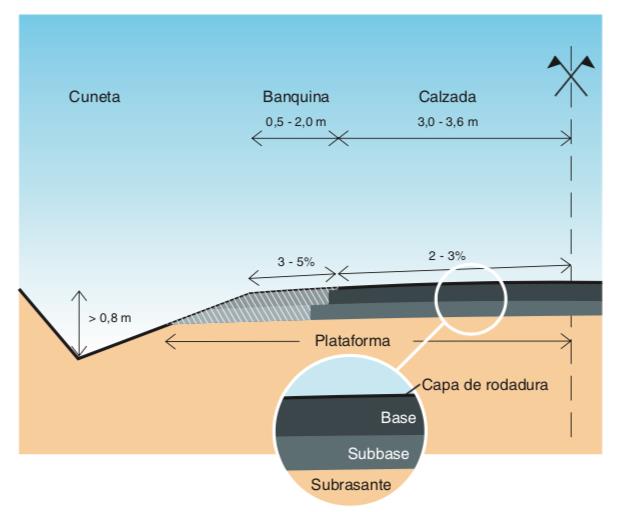
In general terms, flexible pavements consist of a sequence of layers as indicated in Figure 1.

Pavement layers

1.1 Rolling layer

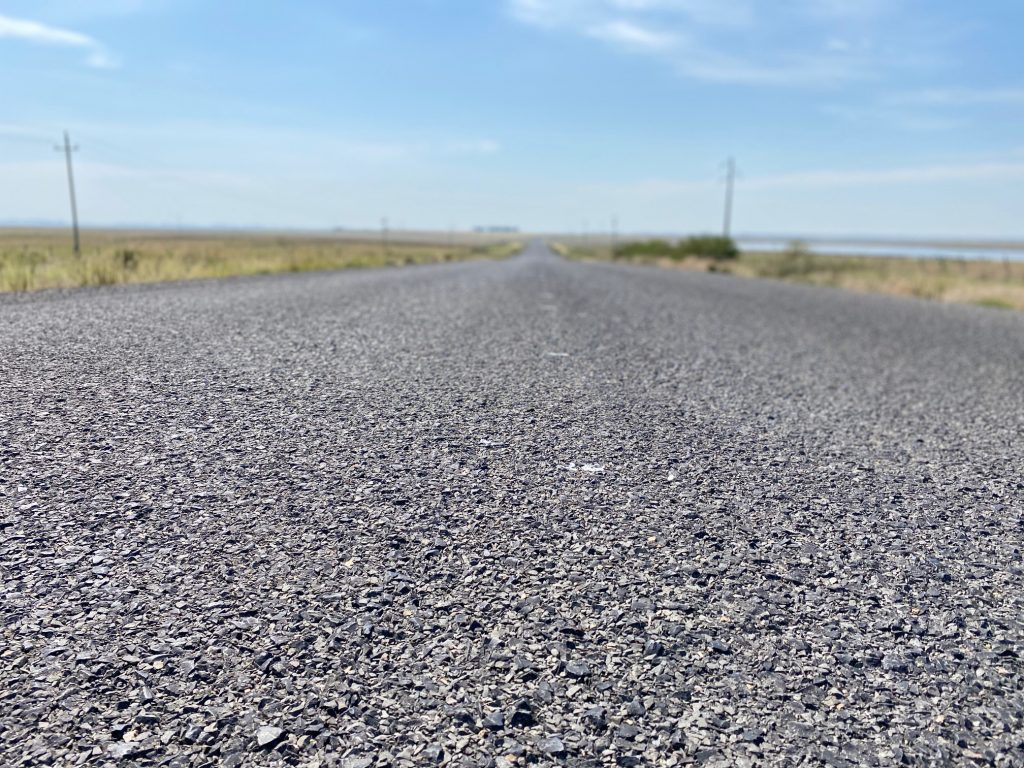
As a layer exposed to traffic, it is designed to resist the wear caused by tires, withstanding traction and shear stresses, in addition to climatic effects such as precipitation. It must provide the greatest comfort and safety to vehicle traffic in the most economical way possible. There are basically three systems in which the wearing course can be presented in flexible pavements: the most elementary, simply with granular materials such as coarse; surface bituminous treatments for slightly busier roads and lastly, the asphalt mixture layers.

The use of any of the described systems involves technical and economic considerations. Technical in that all of them satisfactorily solve the transfer of the loads induced by traffic to the following layers and economic in that it defines the optimal use of suitable materials according to the needs of the project and that are also easily obtained in a certain area. (4).

The use of any of the described systems involves technical and economic considerations. Technical in that all of them satisfactorily solve the transfer of the loads induced by traffic to the following layers and economic in that it defines the optimal use of suitable materials according to the needs of the project and that are also easily obtained in a certain area. (4).

It is the structural layer that receives a large part of the stresses and where the tread layer will rest. The underlayment helps provide the full thickness to the pavement necessary to ensure it can withstand projected traffic for the life of the project (6). It is generally constructed of selected granular material in a mixture of fine and coarse aggregates, although what is known as 'black bases' are also used, which are layers of asphalt mixture that are laid below the tread in order to to increase the useful life of the structural package (1).

1.3 Subbase

It fulfills a structural function and of adding thickness to the pavement, hindering the ascent of water by capillarity and offering a stable and resistant work platform. It can be composed of granular material, generally larger than the base material but of a lower quality material.

2 - Design

The objective of pavement design is to produce a structure that distributes traffic loads efficiently and minimizes the lifetime cost of the pavement. The term "useful life" refers to the estimated duration that a structure can have, fulfilling the function for which it has been created. The costs incurred in this period include: works costs (construction, maintenance and residual value) and user costs (traffic delays, accidents, fuel consumption, tire wear, etc.). Pavement design is essentially a structural evaluation process, necessary to ensure that traffic loads are distributed in such a way that the stresses developed in each layer are within the allowable for that material. It also involves the selection of materials for the different layers, the calculation of the required thickness and the determination of its stiffness. Consequently, the mechanical properties of the materials that constitute each of the layers in a pavement are important to design the structure (7).

A pavement is then a complex structure that must fulfill several different functions. In general, the flexible pavement structure consists of two characteristic sets of layers with different mechanical properties: the “loose” aggregate layers sitting on the subgrade and the “asphalt-bound” layers sitting on top of the former. This separation of the structure is based on the different mechanical behavior of each layer and constitutes the basis for the development of any flexible pavement design methodology (1).

One of the first empirical methodologies consisted of an immense field test, carried out from 1958 to 1962, by AASHO (American Association of State Highway Officials) in the state of Illinois called the “AASHO Road Test”. The results were used to develop a pavement design guide, first issued in 1961 as the "AASHO Interim Guide for the Design of Rigid and Flexible Pavements," with major updates published in 1972, 1986, and 1993. In the latter , AASHTO (transportation officials are added to the nomenclature) takes the data that the test produced and posits a series of empirical structural behavior equations that remain the basis for pavement design procedures today. Although the investigation was limited to one set of soil and climatic conditions, the test results are usually extrapolated to fit other design conditions (8). The method proposes that the serviceability drop function (a measure of driving quality) with the number of reiterations of reference axes depends on a combination of thicknesses and qualities of the materials that make up the structure. The quality is defined by means of the structural contribution coefficient “ai”, by using the rigidity modulus together with the type of layer (2).

The AASHTO 93 'method has been used in Uruguay in the past, although currently the National Highway Administration uses mechanistic empirical methods, where it not only focuses on serviceability, but also on the prediction of the most common pavement deterioration. The mechanistic part calculates the pavement responses (stresses, deformations and deflections) and the damage that the pavement will accumulate over time, while the empirical section relates the damage over time with typical pavement deteriorations (9).

2.1 Performance prediction models

The traditional approach to asphalt pavement performance prediction is divided into two stages: pavement response prediction and pavement performance prediction. In this approach, the responses of an undamaged pavement (for example, tensile stress at the bottom of the asphalt layer) are estimated from a structural model (for example, multilayer elastic theory) using initial properties of the layer materials. Asphalt mix performance models are developed using laboratory test results and relate the initial response of asphalt mix specimens to their useful life. The responses estimated from the structural model are then input to the performance model to determine the useful life of the pavement. This approach is the method used in current practice that is adopted in most mechanistic-empirical design methods, including the Mechanistic-Empirical Pavement Design Guide (MEPDG) developed under the NCHRP project 1- 37A (10). However, there are several weaknesses in this traditional approach. First, the evolution of damage in complex and material-modified structures may not be accurately captured. Furthermore, most of the performance models used in the traditional approach depend on the mode of loading, which are performed in controlled stress or strain mode. This implies that the way in which the pavement will be requested must be guessed, which results in unreliable predictions. Finally, the limitation of selected conditions for laboratory tests means that, to predict pavement performance in a wide range of conditions, an undesirably large number of tests is required (10). The weaknesses of the traditional approach can be overcome using a mechanistic approach that combines the asphalt mixture models and the pavement response model. In this approach, the material model describes the stress-strain behavior of the material for a Representative Volume Element (RVE). An EVR is defined as the smallest volume element that can represent the effective properties of a larger scale compound. The material model is then implemented in the pavement response model where the boundary conditions of the pavement structure in question are applied. This approach allows a more accurate evaluation of the effects of the change in the stiffness of each layer due to the increase in damage on the performance of the pavement (10).

Bibliography

  1. Nikolaides, Athanassios. Highway Engineering: Pavements, Materials and Control of Quality. EUA : Taylor & Francis Group, 2015.
  2. Cordo, Oscar V. Cordo, Oscar V. Cordo, Oscar V.
  3. Cordo, Oscar V. Cordo, Oscar V. Cordo, Oscar V.
  4. Cordo, Oscar V. Cordo, Oscar V. Cordo, Oscar V.
  5. Cordo, Oscar V. Cordo, Oscar V. Cordo, Oscar V.
  6. Cordo, Oscar V. Cordo, Oscar V. Washington D.C : The National Academies Press, 2010.
  7. Read, John y Whiteoak, David. Read, John y Whiteoak, David. Read, John y Whiteoak, David.
  8. Washington D.C : The National Academies Press, 2010. Washington D.C : The National Academies Press, 2010. Washington D.C : The National Academies Press, 2010.
  9. Washington D.C : The National Academies Press, 2010. Washington D.C : The National Academies Press, 2010. Washington D.C : The National Academies Press, 2010.
  10. Washington D.C : The National Academies Press, 2010. Washington D.C : The National Academies Press, 2010. Washington D.C : The National Academies Press, 2010.
HIGH PERFORMANCE SURFACE TREATMENTS - NEW EDITION IN DIGITAL VERSION

HIGH PERFORMANCE SURFACE TREATMENTS - NEW EDITION IN DIGITAL VERSION

The book edited by Grupo Bitafal has already been distributed to almost 2000 technicians around the world

Since its launch in November 2018 in Uruguay, nearly 500 copies have been delivered in our country, then in the second edition held in Mexico, almost 600 books were delivered to professionals throughout Latin America, Europe and the US.
With the recent revision and edition of the digital version of the book, almost 800 professionals from 22 countries have already downloaded it.

We recommend that all those who have the paper editions, enter the on our website where will find the history of the revisions and changes we make in each edition. There You can download the latest Edition 2.1 in PDF format.

At the same time we want to ask our readers that if they have contributions and comments about the book, send us an email to bitafal@bitafal.com.uy to continue improving and updating the manual.
OVERHAUL HISTORIC ROUTE 30

OVERHAUL HISTORIC ROUTE 30

The route is finishing being reconstructed in its section between Artigas and Bella Unión.

With the completion of this section, more than 250 km of intervened route from Route 5 to Route 3 in Bella Unión are completed. The recent works leave excellent connectivity for the city of Artigas, both due to the rehabilitation of the pavements and the 5 new bridges that were built in the section between Artigas and Tomás Gomensoro. The Traxpalco company is doing a great job in the widening and surcharge of the route as well as in the double interlocked treatment (DTT) with emulsion IRRIGATION BITAFLEX 65 P40.

Traxpalco is carrying out a granulometric stabilization by means of a 20 cm thick basalt surcharge and taking the width of the route to 11 m with 7.2 m of carriageway and 1.5 m of shoulder. The stabilized material is sealed with fine material and waterproofed with diluted MC1 awaiting double bituminous treatment.
The treatment is performed with emulsion IRRIGATION BITAFLEX 65 P40 and 12-19 mm gravel of very good quality in irrigation A and with 6-12 mm in irrigation B. The two irrigations are carried out in the same day ensuring the interlocking of the system applying the right dose and using a tandem roller to achieve the searched matrix.
The company has carried out great logistics to obtain granular material and stone aggregates, they have three mobile crushers and one fixed to achieve the necessary daily volumes of material.

With sufficient equipment and materials, together with adequate logistics on site, they are managing to execute close to 20,000 m2 of double finished treatment per day. Grupo BITAFAL is committed to the work ensuring the supply of two daily trips of emulsion to almost 700 km from our plant. The high daily yields with this system and the quality of the finished treatment demonstrate the advantages of this type of execution.

At the end of last year, 5 bridges were inaugurated in the section under reconstruction, with an estimated investment of USD 22 million. In this way the connectivity between Bella Unión and Artigas is assured.
The works are completed with a section of Branch Route 3 between Tomás Gomensoro and Bella Unión by the company DÍaz Alvarez. In that case there is also a surcharge of crushed material and then a double bituminous treatment carried out with emulsion IRRIGATION BITAFLEX 65 P25. In the area Diaz Alvarez has also carried out a resurfacing with BITAFLEX AM3 on Route 3 in the accesses to Bella Unión.
In this way, the Department of Artigas has received the largest injection of works in history, leaving a good quality infrastructure for the development of the area with the realization of investments that boost production activity.

* We thank Engineer Emilio Aitcin of the Traxpalco company for the collaboration provided for this note

BITAFAL GROUP SAYS PRESENT AT THE 2020 SLURRY SYSTEMS WORKSHOP (# 2020SSWS)

BITAFAL GROUP SAYS PRESENT AT THE 2020 SLURRY SYSTEMS WORKSHOP (# 2020SSWS)

From January 20 to 23, 2020, the largest annual grout and micro-pavement workshop in the United States was held in Las Vegas, organized by the International Slurry Surfacing Association (ISSA). More than 450 professionals and experts from the road sector discussed the importance of surface treatments, their laboratory design, and the best practices for execution and control of works.

Surface treatments in the United States represent only 5% of its road network, but that small number in a country of enormous dimensions allows it to become one of the world leaders in this technology. The # 2020SSWS delves into the use of gravel, micro agglomerates, grouts, crack sealing, Capeseals, ultra fine mixes, etc. and the combination of these to extend the life cycle of the pavements.

The workshop presents the technical knowledge of experts who comment on the details that must be taken into account in the laboratory and on site, with tips for correctly applying the guidelines developed by ISSA (A105 and A143). Among the topics discussed could be highlighted:

- Care and controls in the laboratory to improve the design of micro-agglomerates.

- The physical and chemical foundations of the breaking and curing of special micro emulsions.

- The importance of fissure sealing to extend future treatments.

- Best construction practices for high-quality grouts and micro-agglomerates.

- Use of RAP in preservation techniques, among others.

In addition, the practical application of these foundations was carried out, carrying out small material testing sessions to determine the optimal mixing time in the laboratory and later real test sections with machines and complete work equipment.

Finally the online tool was presented to www.roadresource.org for the correct selection of the type of treatment with calculators to determine life cycle costs, annualized equivalent costs, remaining life and cost benefit. The goal of ISSA with this excellent website is to promote the selection of the right treatment, on the right path, at the right time ("The Right Treatment on the Right Road at the Right Time").

We use own and third party cookies to help us optimize your visit to our website and also to improve service delivery and thus adapt to their most relevant and useful to better their experience needs. When you click OK to continue with navigation and thus confirm that you have read the information and accept the activation of cookies.

You can allow or reject use at any time can change the Configuration Options Privacy - Cookies Policy -

Privacy settings

When you visit a website, you can store or retrieve information in your browser, mainly in the form of cookies. Check your personal services cookies here.


We track anonymous user information to improve our website.
.
  • _ga
  • _gid
  • _gat

Decline all Services
Accept all Services