EMULSIONES BITAFAL IN WORK

EMULSIONES BITAFAL IN WORK

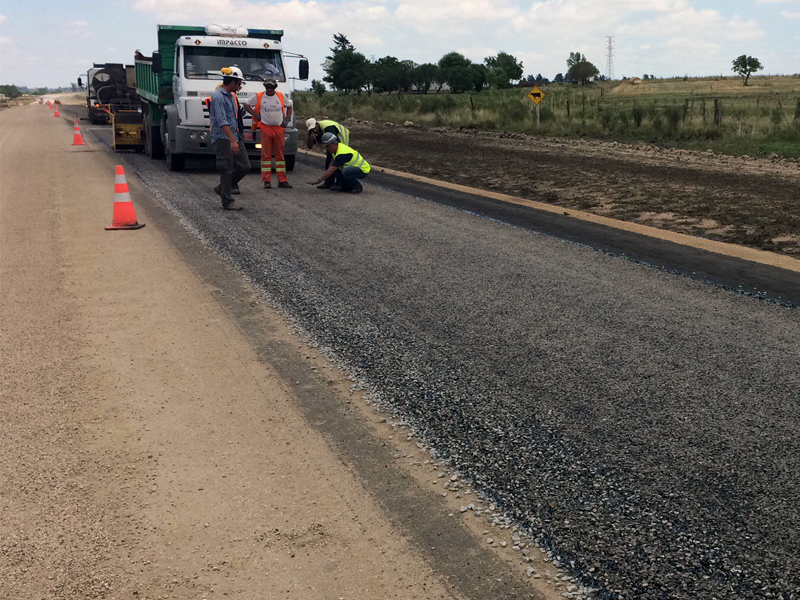
emulsions IRRIGATION BITAFLEX 65 polymer modified P12, P25 and P40 and the 50 PRINT BITAFAL They are having a great performance in all works of surface treatment that is using the different areas in the country both in their application and end use.

They have good viscosity to prevent runoff and once in contact with the aggregate achieve high cohesion within minutes. The asphalt binder, adjusted penetration according to the time of year when we are working and the area of ​​the country where the work is executed, is further modified with elastomeric polymers that provide excellent resistance to traffic and weather.

The hundreds of km of works in major routes as 10, 13, 15, 19, 20, 23, 26, 45, 57, among others, are witness to the above and shown BITAFAL engagement with Uruguay road.

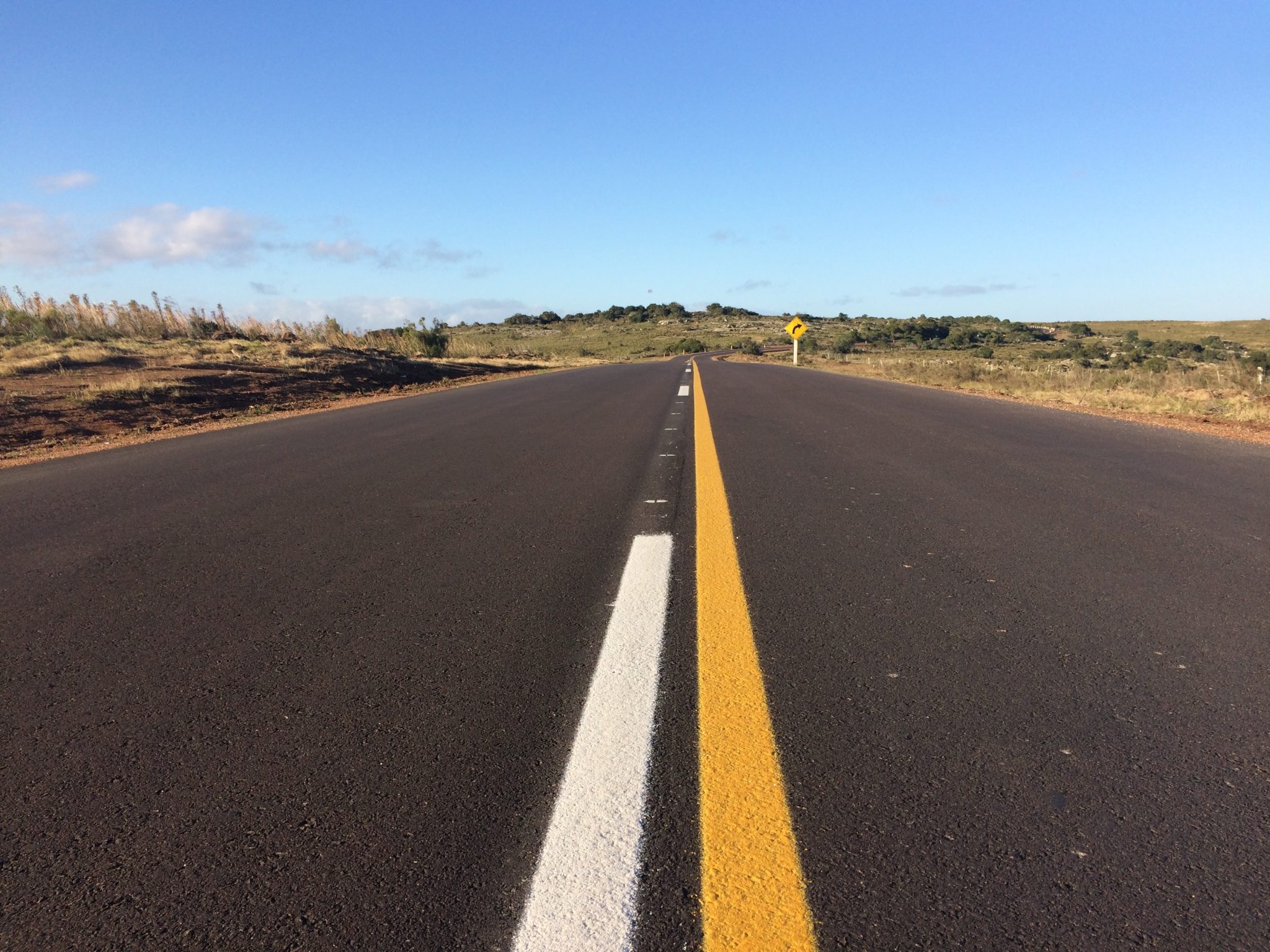
We invite you to view images of some of the newly built surface treatments.

EXPERIMENTAL SECTION: DIFFERENT BASES ON CEMENTED taxiways.

EXPERIMENTAL SECTION: DIFFERENT BASES ON CEMENTED taxiways.

An experiment carried out 18 months ago shows how the use of bituminous treatments reduce the reflection surface cracks.

C.V.C held in Route 69 in Montevideo in early 2016 an interesting experimental section of Portland cement stabilized base which they were applied different layers of rolling to see its evolution:

1. Hot asphalt layer of asphalt AC20 3cm

2.- Bituminous treatment Simple -TBS- fog irrigation (14-20mm arid emulsion IRRIGATION BITAFAL 65 )

3. Cape seal (TBS with aggregate and emulsion 14-20mm IRRIGATION BITAFAL 65 + Micro Type II TMN 5mm emulsion BITAFLEX MICRO 62 P25)

4.- microsurfacing Type III (TMN 10mm emulsion BITAFLEX MICRO 62 P25)

After 18 months in service you can determine that all taxiways are used in very good condition overall and are alternatives to consider when protecting a stabilized with cement.

As reflection of shrinkage cracks in the cemented basis substantial differences exist between each of the layers used that detail below.

STABILIZED BASE:

The cement stabilized performed looking for a simple compressive strength of between 15 and 20 Kg / cm2. He was executed in place with a cold recycler and no crazing was performed. Irrigation curing was performed with emulsion IRRIGATION BITAFAL 65 and gravillín.

Wearing courses:

After 18 months of service shows that:

1. Hot asphalt layer of asphalt AC20 3cm. The cracks in this case are transverse to the roadway between 3 and 5 m. Also it is shown in much of the length of the longitudinal crack in the shaft which corresponds to the overlapping of the execution of the cement base.

2. Treatment Bituminous Simple irrigation fog (14-20mm arid emulsion IRRIGATION BITAFAL 65 ). Fissures surface but are difficult to identify the observed are between 9 and 18 m and no longitudinal crack is identified. In some identified fissure could be seen a slight loosening of aggregate.

3. Cape seal (TBS with aggregate and emulsion 14-20mm IRRIGATION BITAFAL 65 + Micro Type II TMN 5mm emulsion BITAFLEX MICRO 62 P25). In this case the cracks are clearly visible because the smooth surface which achieves the Micro Type II. They are transverse between 5 and 12 m apart. Nor longitudinal fissure of the overlap of the base shown.

4.- microsurfacing Type III (TMN 10mm emulsion BITAFLEX MICRO 62 P25). In this section transverse cracks between 2 and 3 m apart and longitudinal cracks of overlap almost the whole section are identified.

PRIMARY CONCLUSIONS (First 18 months)

• Bituminous simple treatment is the wearing at the time shows better performance in the reflection of cracking, not so much so in the comfort of the user (and neighbors) because it is quite noisy. (Patch initial sand: 3.75 mm). Something that could easily be solved with a finer stone or a sealing treatment.

• Then follow the Cape Seal with a very good performance against the reflection of cracks which obviously is contributed by the Bituminous simple treatment. In this case the sealed surface gives quiet and safe running. (Patch initial arena: 0.95 mm)

• The folder has a good asphalt performance but still has more Cracking the Cape Seal for security and is thinner than the rest of the taxiways (Patch initial arena: 0.45 mm) Macrotexture. In turn it would have to make an economic comparison against the cold techniques, but at the same cost would be reasonable to use treatments or Cape Seal.

• The Micro Type III had the worst performance against reflection even crack your Macrotexture is suitable (Patch initial arena: 1.10 mm)

For future tranches of these features we suggest:

Perform 1_ TBS with modified emulsion BITAFLEX P25 or P40 65 IRRIGATION to further reduce the reflection of cracks and have more cohesion in the asphalt to prevent premature detachment.

2_ Test with TBS with a little fine stone (10 to 14 mm) and made in Australia and New Zealand, to have good resistance to cracks without neglecting the noise generated.

3_ Perform a double treatment Trabado (TDT) with modified emulsion BITAFLEX P25 or P40 65 IRRIGATION to contemplate the above as well as high yields of work and minimal waste of materials.

SUCCESS STORIES IN WINTER GRAVILLADOS

SUCCESS STORIES IN WINTER GRAVILLADOS

The use of the technique TDT (Double Treatment Trabado) graveled in various works that have recently implemented show that emulsions may be used during the winter successfully without risk of landslides and significant material savings.

Such is the case of the work done by NECKLACE Ruta 19, executed by the banquinas BITAFAL RENTALS for SERVIAM in Route 5 and TECHINT in Route 9 and Route 16.

All these works were done with modified emulsions Bitaflex P40 or P25 Riego 65 using the technique TDT (Note: "Innovative technologies for surface treatments in winter") Without any detachment.

This is due to the combination of good materials and implementing ways appropriate to the era. The key is to run two risks in the day achieving total mechanical interlock and to even make irrigation fog on the same day to ensure adherence of the entire stone and a superior aesthetic finish. Moreover it is essential dosing intelligently materials to have the optimal amounts in each irrigation and save on the materials used.

We invite you to know the procedure used in our blog:INNOVATIVE SURFACE TREATMENT TECHNOLOGIES IN WINTER

Strength studies ductility performed on the binders for surface treatments show that the modified emulsions Bitaflex Riego 65 P25 and P40 have a cohesive energy far superior to any common emulsion and not to mention the asphalt diluted, which contributes to the durability of the matrix achieved in the implementation of DTT.

As the images of the enclosed work COLIER in Route 19 can be seen that achieved is homogeneous matrix, containing suitable gaps for expansion of the bitumen in summer and very little excess stone in the shoulders.

We invite you to contact if considered necessary to deepen the dosage form and implementation of a TDT or the selection of suitable materials: bitafal@bitafal.com.uy

MEMBRANA SAMI Ruta 9

MEMBRANA SAMI Ruta 9

Like 7 years ago, during rehabilitation of Route 18, the company Techint returns to trust the GROUP BITAFAL for running a stress relieving membrane (SAMI) on Route 9. This time it was run with emulsion IRRIGATION BITAFLEX 65 P40 high elasticity and classified and washed over the old asphalt area Toll Garzon gravel.

They guarding the execution conditions are able to obtain good yields of up to 6,500 m2 in the day in a difficult time of year to run Bituminous treatments (and even those running on a hard, smooth surface like asphalt)

We describe the considerations taken for the implementation of the SAMI:

  1. Prior to the execution of the SAMI membrane, the necessary patching and sealing fissures were made.
  2. The membrane is beginning to run early in the morning with the emulsion BITAFLEX IRRIGATION P40 65 to 80 ° C watered with stone washed leaving a semi-open matrix.
  3. Immediately after compaction tire is performed to prevent fracture of the stone.
  4. In the first run the evaporation conditions were evaluated the day, determining the expected performance for the day.
  5. The automatic double spreaders allow a good implementation rate reaching 2 km in length in one morning with good evaporation conditions.
  6. Just after midday watering higher lying fog over the entire section is executed.
  7. It remained closed to traffic until late.
  8. an asphalt AC20 asphalt with up smoothly laying and compaction standing.

Observations:

  • With these performance conditions, a very good performance despite low temperatures in May and June was achieved.
  • The SAMI membrane behaved very well against the traffic while the asphalt was not confirming the great cohesion that provides the emulsion BITAFLEX IRRIGATION 65 P40.
  • Adherence to asphalt binders was very good as observed in controls.
  • The double spreaders allow high yields in these working conditions (high dosages of emulsion at elevated temperatures irrigation smooth surfaces).

We hope that the time show the effectiveness of using this technology for stress relief.

Techint thank you for trusting our products.

ADVANCES IN SITU RECYCLING ROUTE 39

ADVANCES IN SITU RECYCLING ROUTE 39

Good progress in situ Portland cement Route 39 between San Carlos and recycling Route 8

H & G takes up nearly 50% of in situ cold recycling with Portland cement Route 39 technology being used in many recent projects in the country and with great projection.

Cure for irrigation is being used emulsion diluted BITAFAL IRRIGATION 65 with excellent performance against traffic. The same is exposed for several weeks before the asphalt layer is provided as store tread layer.

The placement of the surface layer is also quite advanced and it is expected that the route is completely renovated in a few months.

RUBERSAM STEP IN BRIDGE OVER THE BOAT - TACUAREMBO

RUBERSAM STEP IN BRIDGE OVER THE BOAT - TACUAREMBO

Bitafal Rentals He has ventured into a novel technique for the country in the waterproofing of bridge decks.

The SACEEM and José Cujo S.A. companies They relied on the Bitafal group for performing the first waterproofing membrane type and relieving stress RUBERSAM on national bridges.

It consists in applying an emulsion Bitaflex Riego 65 P40 with hard asphalt residue washed and classified with stone. With this waterproof membrane is achieved in all the boards of the bridges and is a suitable surface for adhesion of the asphalt intended as overweight.

The work consists of two new bridges and rehabilitation of existing ones on Paso del Bote, in the city of Tacuarembó. The same is in final stages of construction and is expected inaugurarlos before year-end.
The application process of the RUBERSAM membrane was performed as follows:
* Clean the surface of the board by, sweeper, blower and pressure washer.

* Application synchronized by double automatic spreaders an emulsion layer Bitaflex Irrigation 65 P40 with hard asphalt residue washed with stone and classified.
* Trabado stone matrix generated by light Compactor tandem.
* Application irrigation fog with the same emulsion Bitaflex Riego 65 P40
The total dosages envisaged emulsion was 2.5 L / m2 and washed with 14-19 mm sized stone at 12 L / m2.

All of the photos ON HERE

We use own and third party cookies to help us optimize your visit to our website and also to improve service delivery and thus adapt to their most relevant and useful to better their experience needs. When you click OK to continue with navigation and thus confirm that you have read the information and accept the activation of cookies.

You can allow or reject use at any time can change the Configuration Options Privacy - Cookies Policy -

Privacy settings

When you visit a website, you can store or retrieve information in your browser, mainly in the form of cookies. Check your personal services cookies here.


We track anonymous user information to improve our website.
.
  • _ga
  • _gid
  • _gat

Decline all Services
Accept all Services