EFFECTS OF STABILIZED RESTRICTION ON LOSS OF FINES BY PUMPING

EFFECTS OF STABILIZED RESTRICTION ON LOSS OF FINES BY PUMPING

Granular basis of any type whatsoever in quality, texture or homogeneity suffer unavoidable variations in the presence of water and is the big problem with road engineering if that happens.

For this is that it gives great importance to the drainage systems in the design of routes, waterproofing the foundations built with asphaltic materials in most of the time and then expected during routine maintenance look that water does not Enter the bases.

We know that there is not a virgin granular material that is not affected by water, hinchándolo in some cases or acting as a lubricant when traffic acts, pumping it from its original location causing potholes.

Stabilizing Portland cement solves the problem of pumping fine and 100% mitigates generating bumps or wells.

Vials know the virtues of Portland cement as a major stabilizer of granular materials for over 50 years, but the actual practical results were very heterogeneous, complex to implement and low yields due to such a long time between perfect mixing cement ( in concentrations as low as 3 to 4%), wetting and final compacting.

It is for this reason that the Germans begin in the 70s to design anti-roll bars atomizing water where the time between the cement is mixed with aggregates and required additional moisture occurs in less than one hour period.

Why less than an hour? ... what happens is that the cement setting begins in contact with moisture and applied in less than an hour to achieve optimum compaction density for that project.

The setting is not another chemical process and crystallization those crystals are attached form a IRREVERSIBLE network equipment and logistics execution adequate to achieve the required times are needed.

We entered 2 very important concepts such as the Crystallization and irreversibility.

This network of crystals irreversible link system while pumpable particles move or change their structure preventing premature deterioration of the pavement.

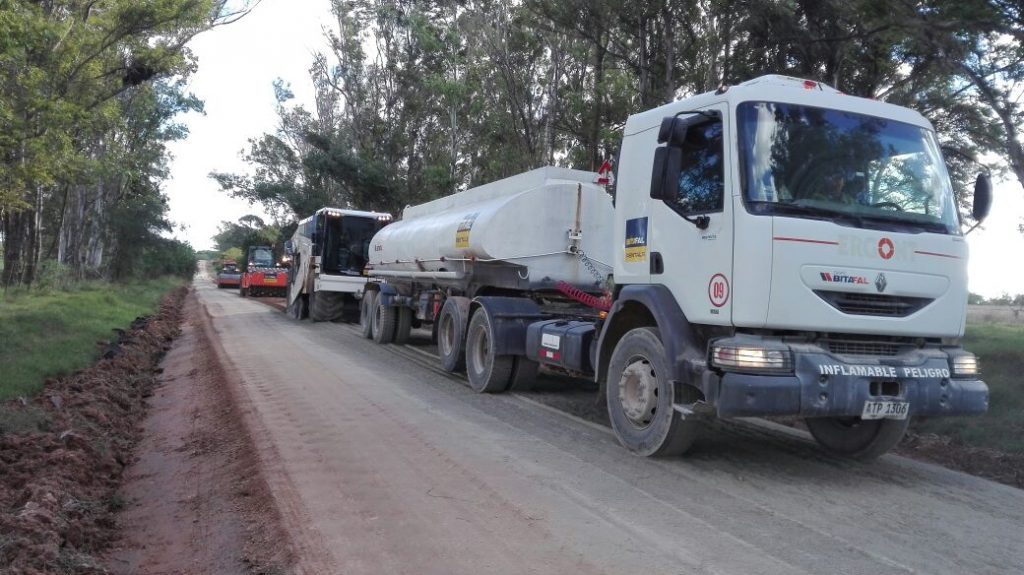
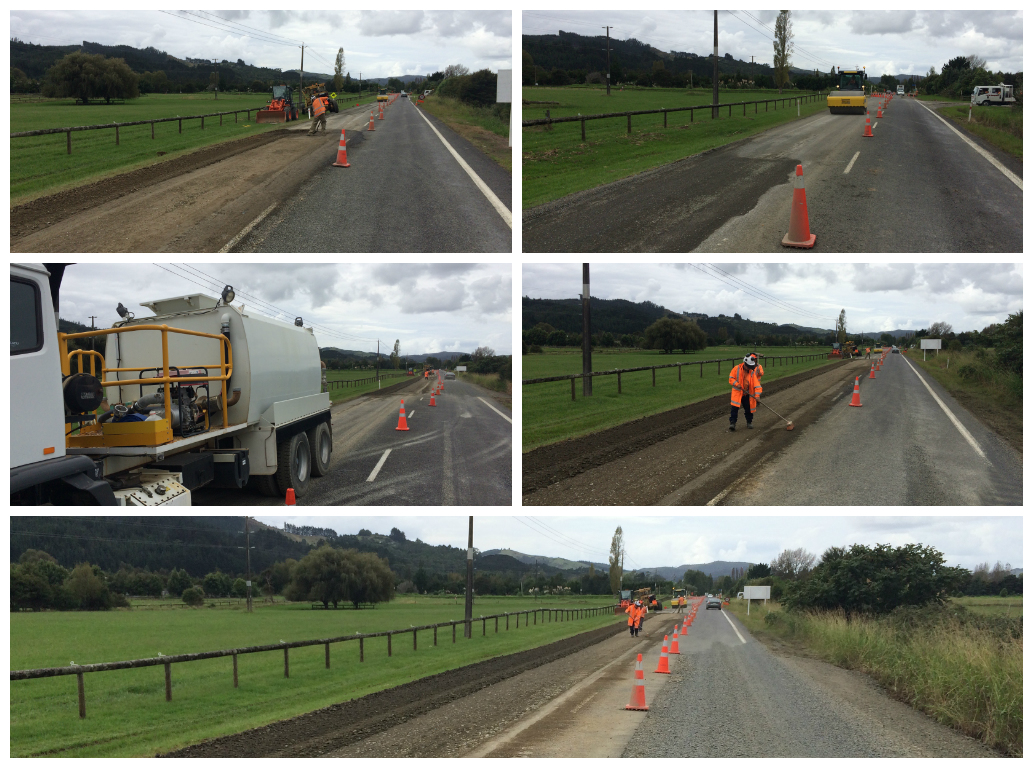
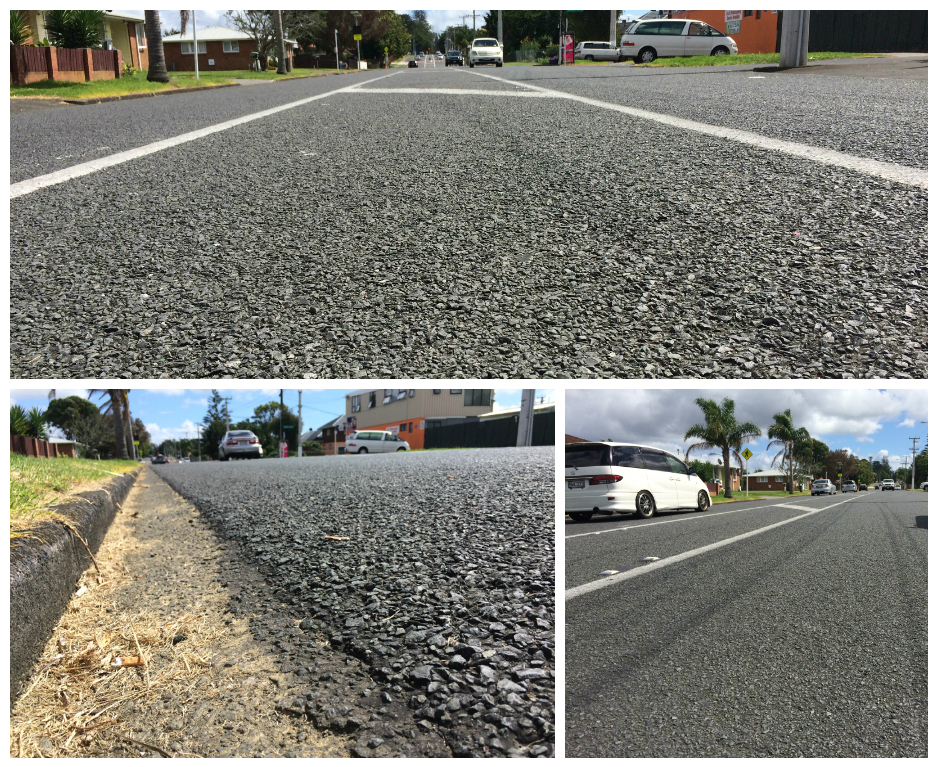
In the photograph we can observe in sections stabilized where mixing and compaction was conducted, granular materials suffer displacement action of water and traffic.

For these observations we can say that after having done a good project stabilized and have used the best equipment available, but good logistics is achieved in the implementation, we will have surface defects which the user will be perceived and which probably made the first maintenance operations.

THE IMPORTANCE OF PORTLAND CEMENT STABILIZED.

THE IMPORTANCE OF PORTLAND CEMENT STABILIZED.

Our company in 2013 introduced the first Uruguay Wirtgen WR2000 stabilizer knowing that coming times of change in our industry due to increasingly tight budgets to meet a growing demand for road maintenance.

Moreover, the provisions of Dinama and Dinamige for quarrying are increasingly restrictive implying that these technologies, reuse of existing materials, are here to stay.

The more than 14 machines that are operating in our place to prove it. more economic and lasting foundations are achieved using existing materials and also with yields never imagined execution.

This technology allows us to think of other alternatives for pavement design, especially in the surface layers, which are not disseminated by the lean life they had in defective granular bases.

It's not new, but We are convinced that the foundations of our roads are the foundation and the life of asphalt which we place on them.

It is our vocation known surface treatments, very successful experience in new binders and search for new alternatives of implementing them prove it.

It is a technology that fits perfectly with the costs that Uruguay can pay for your roads and excellent cost / benefit based on traffic routes we have in our relationship.

We are studying sion All manual published in the roads of Australia, New Zealand and South Africa where more than 90% of the kilometers are executed surface treatments and where they used the stabilized with cement massively.

This work is being developed thoroughly and bringing it closer to the realities of this side of the southern hemisphere to transmit knowledge to the sector being adquiriendo.Prontamente be informing them about the progress of this work.

COMPARISON OF STABILIZATION OF ROADS TECHNOLOGIES

COMPARISON OF STABILIZATION OF ROADS TECHNOLOGIES

GROUP BITAFAL was invited by the OPP to participate in a comparative experimental section of stabilizing products in the Constancia in Paysandu, seeking to know which of them could ensure durability in rural roads.

Of the 11 kilometers of road thousand meters were left at each end as witnesses, which is not an application is made, while the remaining 9 kilometers are divided into 6 sections and each of them will be a specific application (SEE: LINK SITIO PAYSANDU.GUB.UY)

BITAFAL group It will implement the technology introduced in Uruguay in 2013, stabilization on site with Portland cement in a length of 1500 m by 6 m wide. The other stabilizers are applied based on polymer, of ionic and sulfur.

It's an interesting experience to evaluate the performance of a large portion of existing stabilizers on the market, where quality, durability, the manner of execution and of course the actual cost of each in similar conditions will be.

En una reciente entrevista en El Telégrafo, Rodrigo de Souza, de la Dirección de Vialidad de la Intendencia de Paysandú destacó la “importancia clave de la prueba, hace años que se viene considerando la posibilidad y ahora la OPP ha decidido impulsar un cambio en la manera de mantener los caminos rurales. No hay dudas que el tránsito ha variado sustancialmente y que entonces es de orden que hay que promover el uso de mejores productos”.

Moreover, the Director of Works of the Administration, David de Lima said "This is a beginning, an experimental pose, but clearly we intend to carry on using these products, those that give better results in our soils. Within rural road recovery plans will be much more expensive at first but cheaper in the end. "

The project will have several controls. On the one hand, of the companies that sell the products, they expect to be applied in optimal conditions. Then the quartermaster. Third, the OPP. And besides, the Faculty of Engineering, which will closely monitor the work.

Scientific support will be key, because control of such stabilizers involves systematic chemical and physical-mechanical tests (SEE: NOTE THE TELEGRAPH September 2016)

Exchange table with departmental governments


On July 26 colleagues Quartermaster Cologne approached salons CITEVI shared-time exchange with a focus on current needs and challenges that present themselves to technical and economic level for the municipalities and their jobs from construction vial.

an interesting talk, where they were addressed among others the following topics generated:

* The current problems of rural roads and how to address it in a sustainable manner;
* Final technical solutions as stabilized soil cement;
* Benefits of primer emulsions;

* Surface treatments and the experience in New Zealand;

* New modified asphalts and their applications.
Hoping it will be of interest to other municipalities, we extend the invitation to participate, you can write to lucia@bitafal.com.uy to coordinate day and number of participants. If you wish to address a subject that is not in the proposal, we are open to inclusion and thus answer questions.
Reflections on state of emergency of national roads

Reflections on state of emergency of national roads

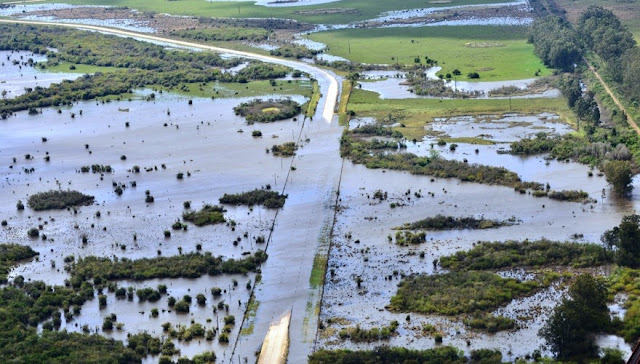
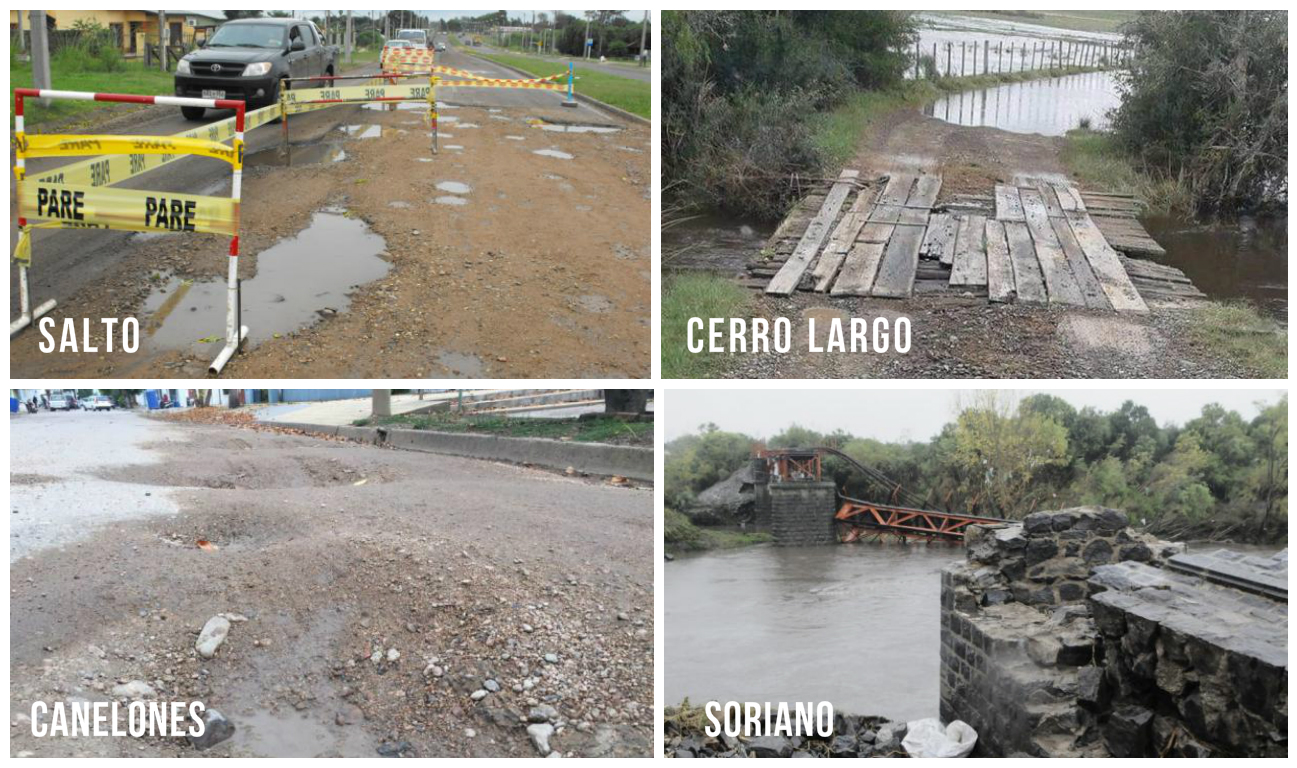
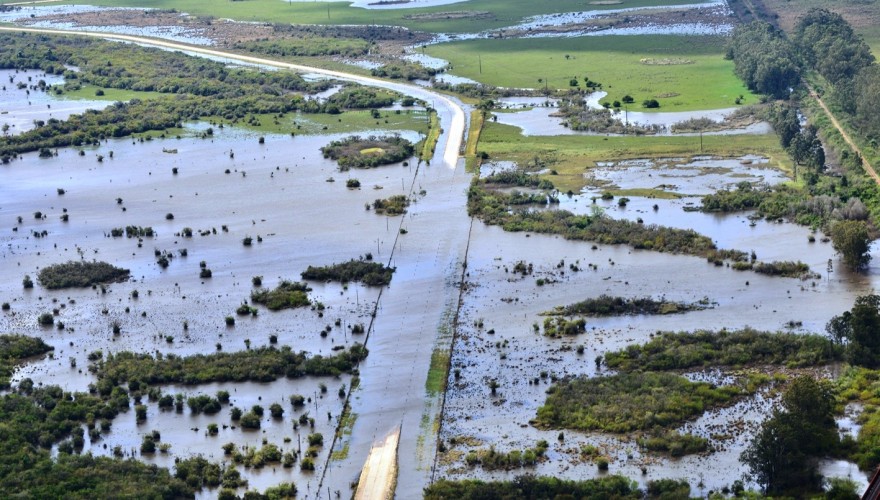
Severe weather in recent months are to be felt in the national roads, from the primary network to rural roads(Source: El País, 04/19/16)

So much so that in several departments requested that the "emergency road" is declared, as indicated in Canelones (Source: El País, 10/04/16)and Salto (Source: El País, 13/04/16) as well as on the coast of the country (Source: El País, 04/20/16) And in the west in Cerro Largo (Source: El País, 05/09/16)

Images: The country
Image: El Observador

It has been announced by the government a battery of proposals from an extra small party for the Intendencias to cope with the deteriorating state of their ways to the extension of the scheme of PPP (Public Private Partnerships) to rural roads (Source: El Observador, 05/15/16)


He also spoke of a Strategic Plan for Rural Caminería (El País, 05/04/16) But without going into more detail than that is going to make a "Analysis of the needs of each department and introduction of new technologies for road construction".

PROPOSALS

In this aspect, from the Bitafal Group to continue innovating bet in real technical solutions for the durability of rural roads.

1) As We introduced in 2013 technology Soil Stabilization and Pavement Recycling siteToday we remain committed to expanding its use with new binders and execution techniques. We have Foamed asphalts as BITAFLEX AME which can extend the working range during cold periods and give improved performance of mixtures.

2) As ferrous Surface treatments advocates we are, we are developing new asphalts, emulsions and execution techniques to achieve higher durabilities at lower costs. Also looking to expand the range of work during cold seasons.

3) We continue spreading the use of both techniques together. Road engineering worldwide considers that the implementation of these two technologies is the ultimate solution for rural roads and not to mention, because of our scale, which for much of our crumbling road network. What we have learned we must communicate why We participate in conferences and seminars at national and regional level.

4) We continue to learn to apply in UruguayAs we reported in the last edition of "Making Roads" we learn from the Kiwis who have already worked hard to seek durable and economical solutions. One of our technicians will participate in a course Surface Treatment in New Zealand and now we plan to bring South African technicians to continue the dissemination of successful experiences in the world.

5) We continue warning the political actors about the risks of "new" soil stabilization techniques with chemical or biological products. El using these experimental technologies must be done in a progressive manner, and supported on objective, technically sound and consistent, which in one way or another, justify its use. For this test we participate in conjunction with experimental technologies, using the universal recognized technology stabilization Portland cement on a stretch of road in Artigas.
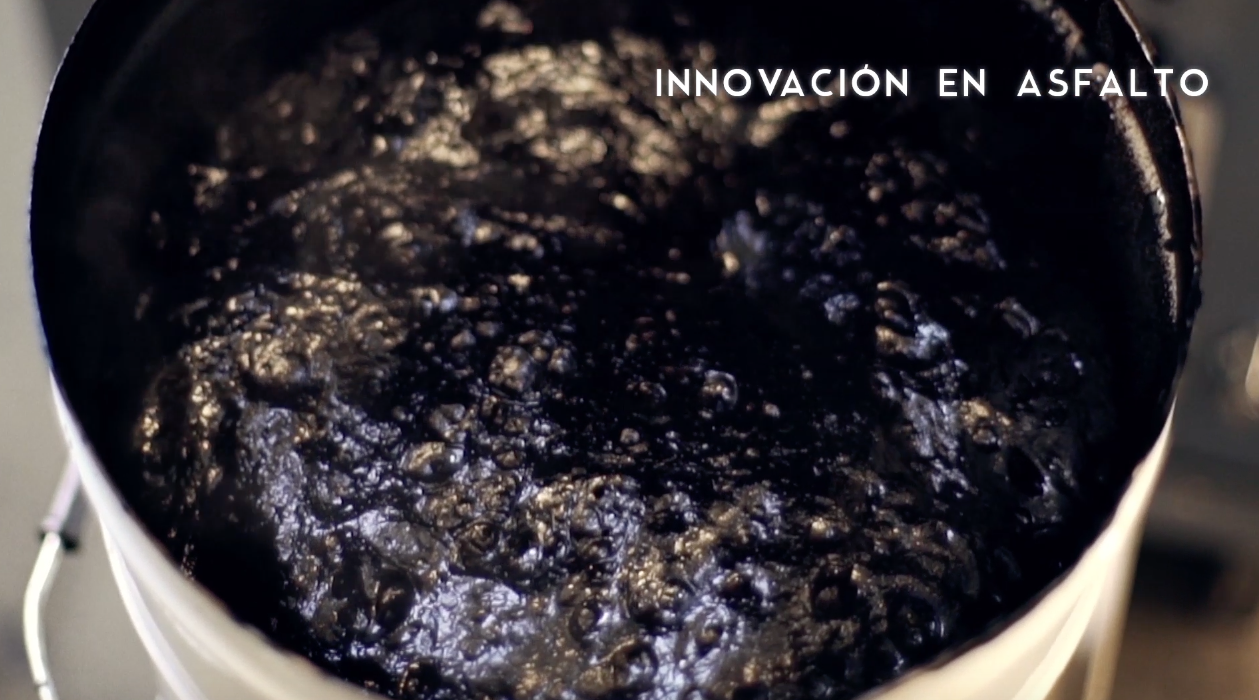
Image: Treinta y Tres


Ways of the world: Impressions of New Zealand trip

Ways of the world: Impressions of New Zealand trip

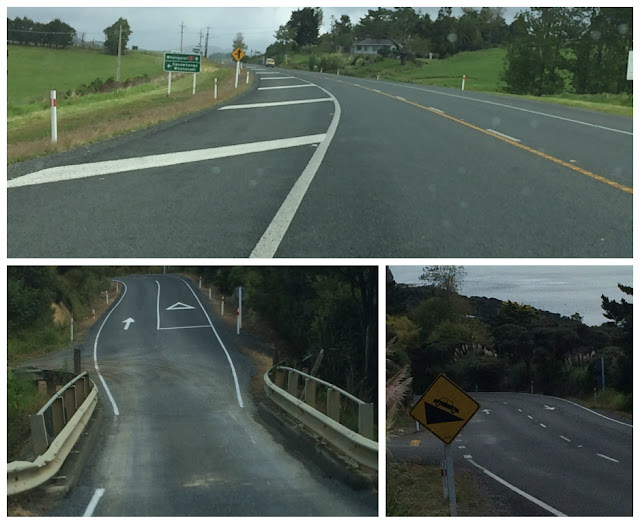
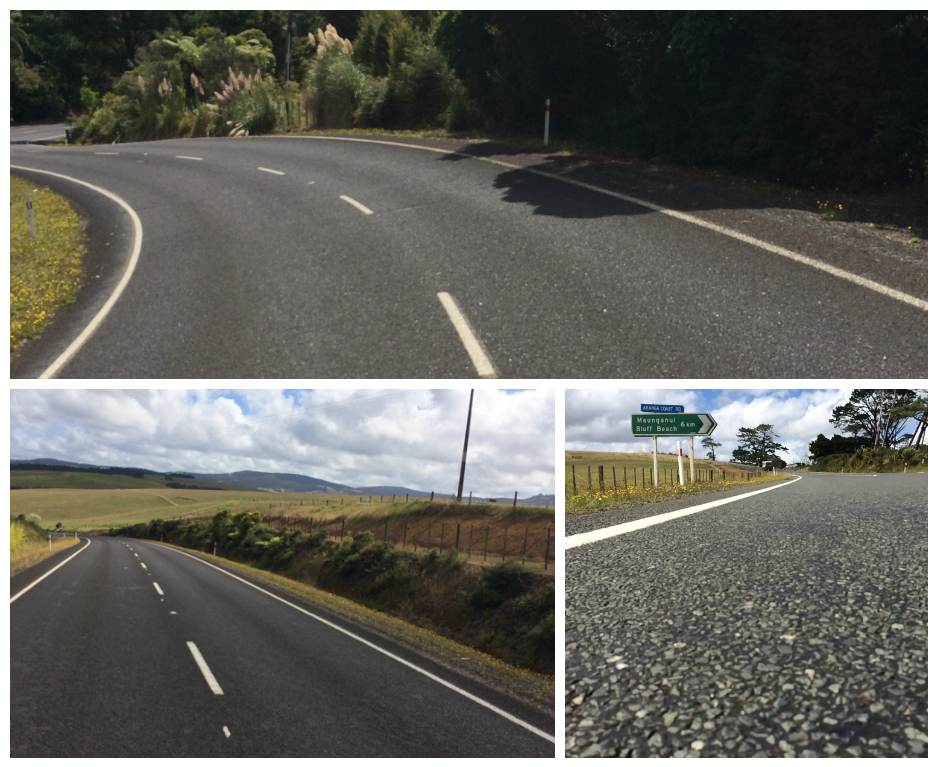
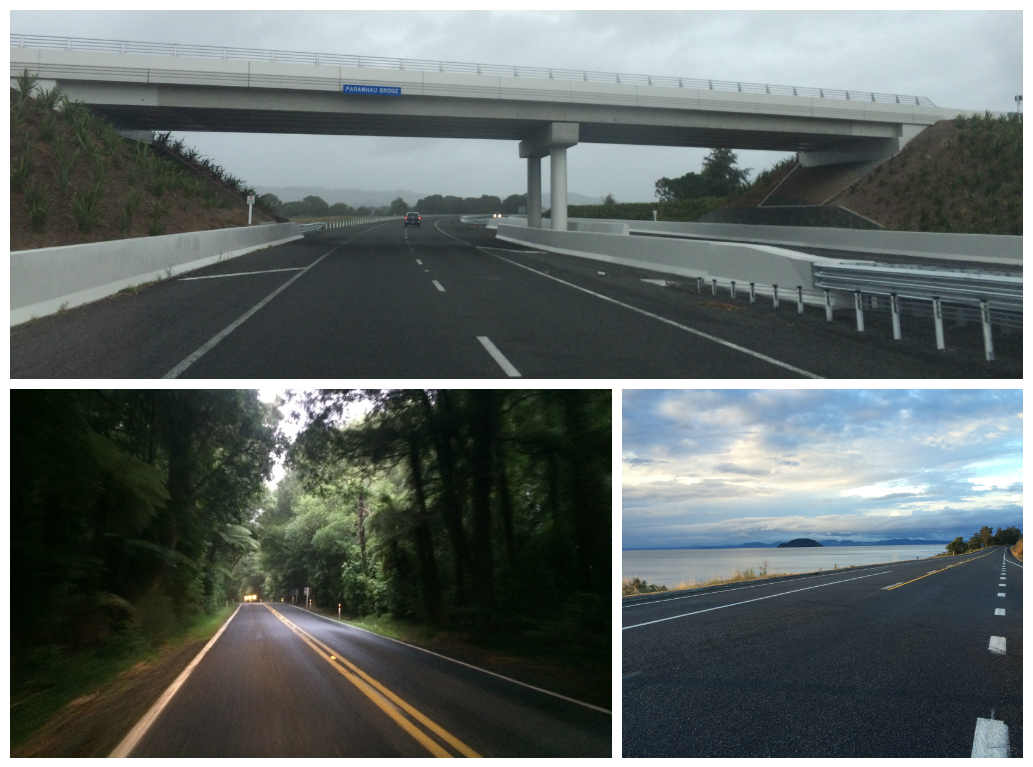
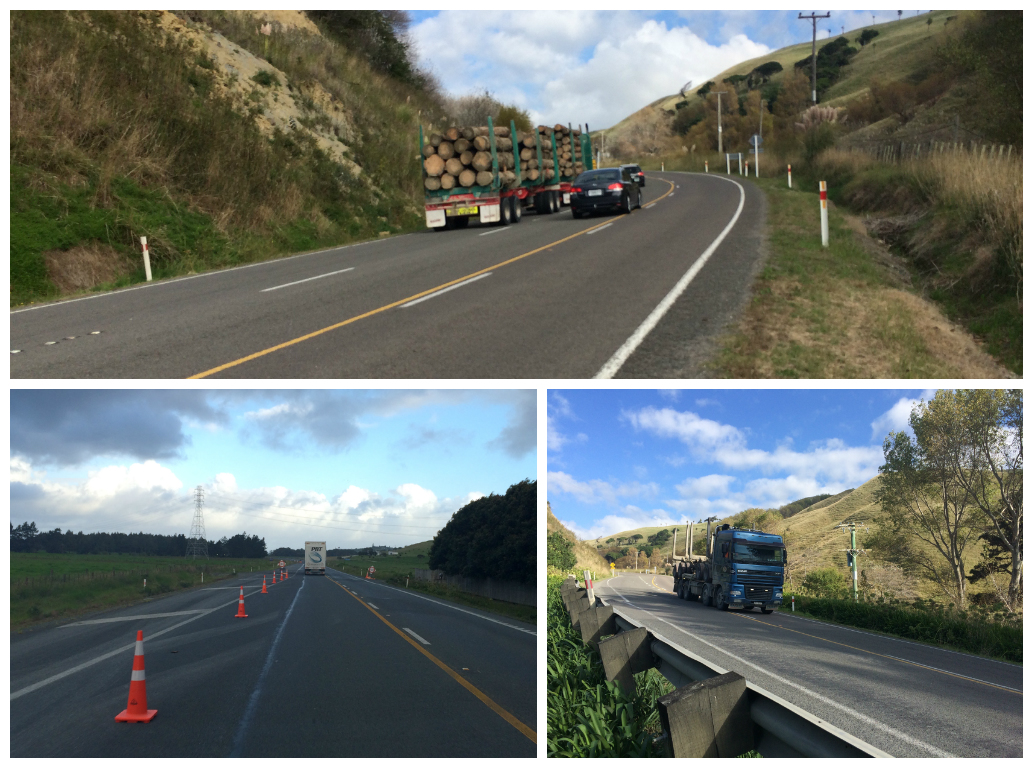
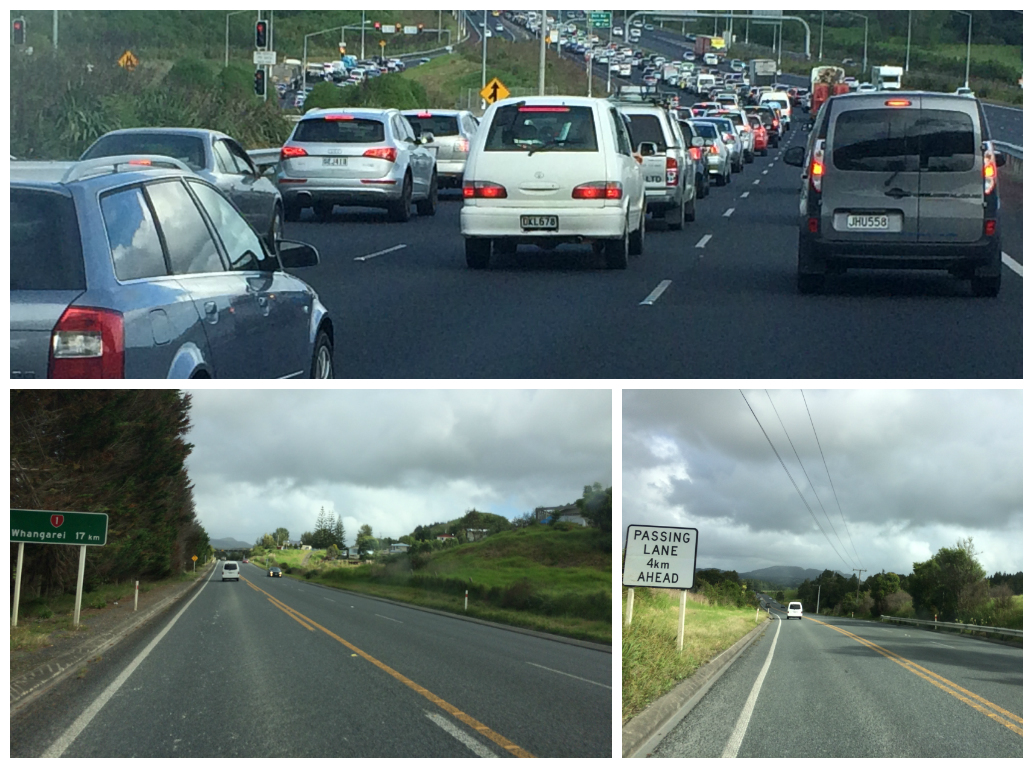
We had the pleasant opportunity to visit for 20 days, covering 2735 km of roads NEW ZEALAND and returned extremely surprised by the quality of roads in the country.

New Zealand has been successful in how to combine technologies way to get a paved road network of high quality. Let's start with comparative data with our country:
-New Zealand has 270,000 square km, 50% more than Uruguay.
-have 95,000 km of highways and roads (0.35 km / km2) of which 63,000 km are paved, 66% of the total.
-Uruguay 78,000 km road (0.44 km / km2) of which have 8000 pavings, only 10% of the total.
In other words, we have a higher density of roads per km2, but far we have long paved network as theirs.
It is that in New Zealand stabilization in situ with cement, lime or asphalt, is present decades, using as surface treatments surface layer and leaving only places high demands on the use of asphalt.

As we all know, the quality of the bases is essential, but if surface treatments are used as rolling. Conversing with them consulted engineers work, how they do it, and his answer was blunt: "It puts on a carpet and hard floor will last a lifetime, if you put on the clay have to throw very soon".
Transportation Agency's own New Zealand indicated on your website: "The surface treatment is the most common type of rolling road in New Zealand. Economic, flexible and resilient, it provides an adaptable, safe and cost efficient surface for road users. We have a regular all surfaces to ensure they will perform at maximum follow.High traffic roads resealed usually need about every seven years, while roads that carry less traffic can last 15 to 20 years before resurfacing is required. " (Source:NZ Transport Agency)

We share then as discussed with technicians work procedures used for construction of a typical road in New Zealand.
CONSTRUCTIVE PROCEDURE
The kickoff is performing test base materials, the effects deeply know what material is counted. The development laboratory formulates a stabilization project based on cement, lime or asphalt and if you have enough good granular material in the area is considered the particle size stabilization with a maximum size of 65mm and the addition of 2% of cement.

The bases are treated perfectly with suitable materials, with the necessary granulometry compacted and cleaned before waterproofing.
By having a very good base are limited to be as tread layer surface treatment with dry monogranular 6-12 mm and with the passage of time, when the treatment loses or shows a signal texture permeability, apply a second treatment with fraction 2-6 mm improving rolling and waterproofing structure again.
Then repeat the cycle with a large fine gravel 6/12 on and so on, always taking a road in perfect condition applying preventive maintenance at the optimum time.

Asphaltic used folders in the inner city, joints roads, highways exit of cities and in very short stretches of mountain roads when the slopes and angles are too demanding for a surface treatment.
The guide Transportation Agency New Zealand on the selection of the suitable tread layer is in the following link: Selection Guide surface layer

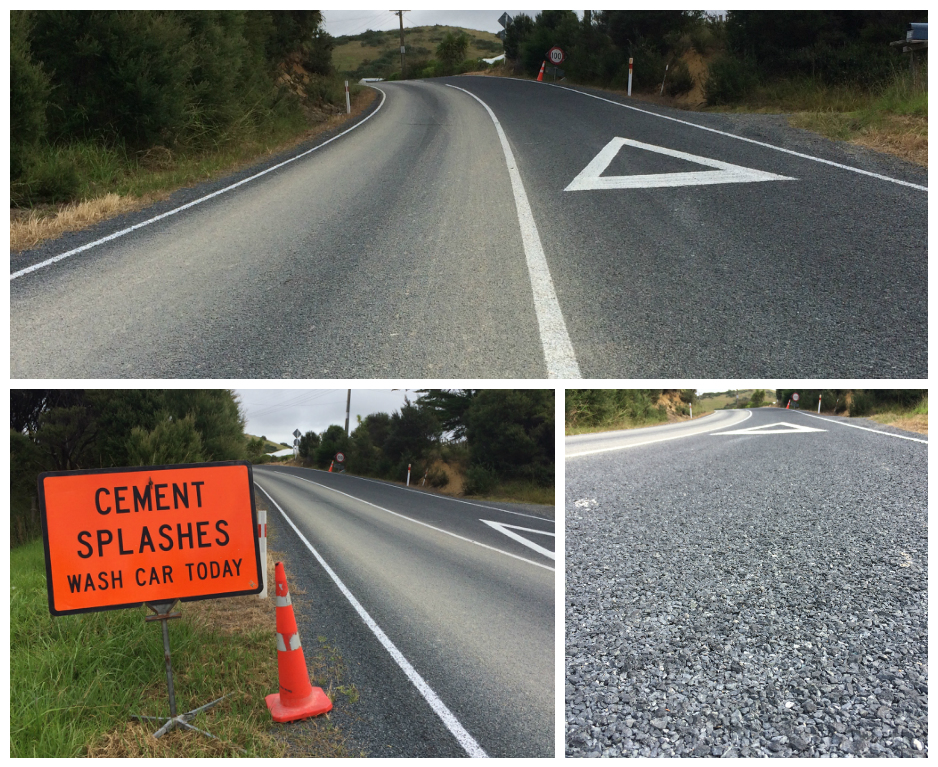
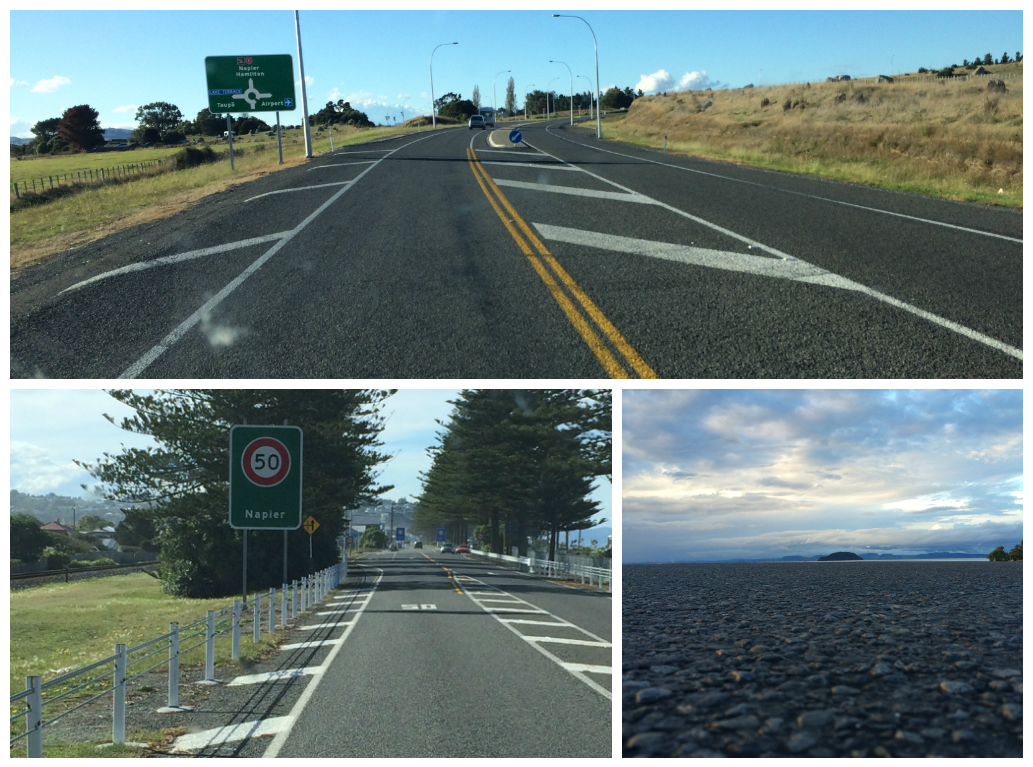
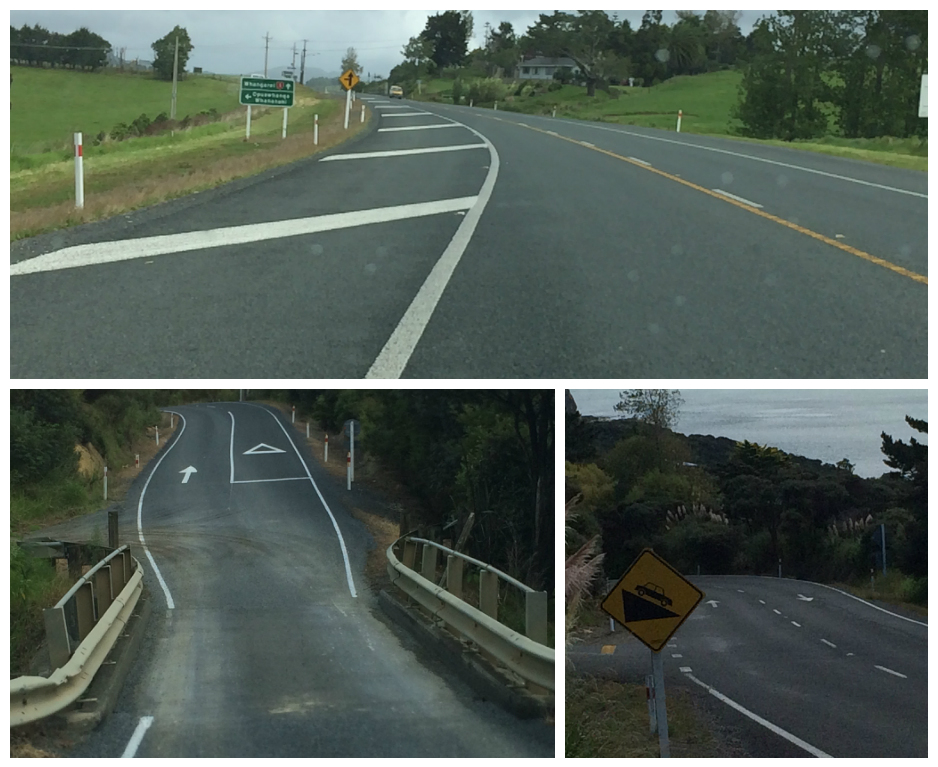
The use of surface treatments monogranular or Chiping, reaches places such as a neighborhood of the city of Auckland, and most important port in the country and the North Island as seen in the photos below city.

Our trip was not only on this visit in the month of May Bitafal group You will be participating in a two-day course on technologies Chiping in the city of Christchurch in the South Island. In addition we already have a publication of more than 500 pages of the Manual on Chipsealing in New Zealand. Interesting document available on: Chipsealing in New Zealand
To keep growing and researching, we have a long way to go.
We leave more photos in the following link

Modified Asphalt foam (BITAFLEX AME) for recycling cold spot | New product

Modified Asphalt foam (BITAFLEX AME) for recycling cold spot | New product

SPECIAL BITAFAL ASFALTOS It has recently added to its product line Asphalt Modified Foam (BITAFLEX AME) Seeking to improve and standardize the quality of asphalt used in cold recycling technology in situ and also to use it in cold weather increasing work performance.

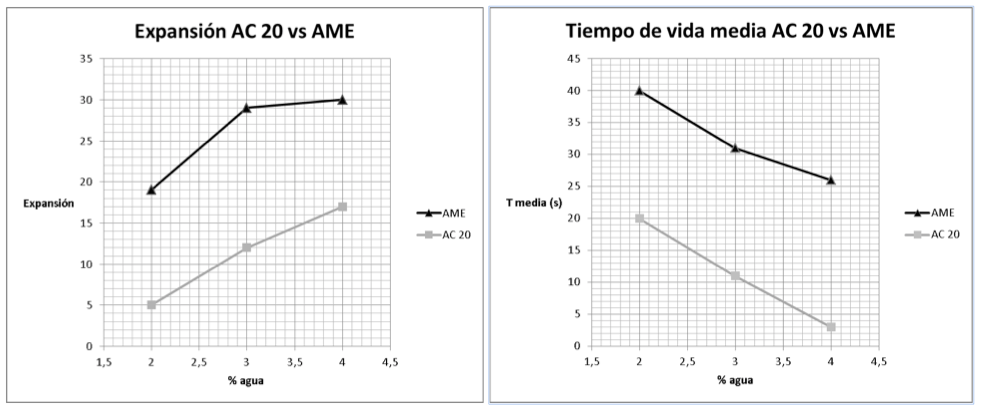
These properties are verified by foaming curves, which consist of measuring the maximum occupied by the asphaltic foam volume and time required for that volume is reduced to half. These curves characteristic parameters expansion and half-life are obtained.

In the graphs below a comparative behavior expansion and half-life shown 160C for national versus AC 20 bit FLEX AME.

AME BITAFLEX components provide a better quality foam specific surface area and duration, with a half life time expansion and more than double than conventional asphalt refinery. They ensure a decrease in surface tension with the consequent reduction in viscosity at the time of foaming.

These factors allow provide the following advantages:
* A better dispersion of the foam on aggregates favoring adhesion of the binder with the stone.
* Lower foaming temperature, saving on heating and facilitating logistics work.
* The possibility of recycling in cold weather.
* Improved mechanical properties of the processed mixtures.

We invite you to learn more about this product on our website.

We use own and third party cookies to help us optimize your visit to our website and also to improve service delivery and thus adapt to their most relevant and useful to better their experience needs. When you click OK to continue with navigation and thus confirm that you have read the information and accept the activation of cookies.

You can allow or reject use at any time can change the Configuration Options Privacy - Cookies Policy -

Privacy settings

When you visit a website, you can store or retrieve information in your browser, mainly in the form of cookies. Check your personal services cookies here.


We track anonymous user information to improve our website.
.
  • _ga
  • _gid
  • _gat

Decline all Services
Accept all Services