CITEVI gives a great step incorporates a Rheometer (DSR)

CITEVI gives a great step incorporates a Rheometer (DSR)

We are pleased to inform our readers that we are adding to our Research Center (CITEVI) Court Dynamic Rheometer (DSR for its acronym in English).

In a natural evolution of a company committed to the development of national road company, it's time to incorporate a computer that involves a before and after in the knowledge of the binders we handle.

This sophisticated equipment allows to know the performance of asphalts much of its viscoelastic range. Mainly we are concerned in these latitudes, that is at medium and high temperatures.

The team selected after several months of visits to research centers in the region and the US, is a Anton Paar SmartPave 102 with all accessories to perform the usual tests standardized by AASHTO and other agencies both America and Europe.

It is expected to be operational by August so we'll have more news on this in future editions of this Newsletter.

VISIT TO THE UNIVERSITY OF MONTEVIDEO CITEVI

VISIT TO THE UNIVERSITY OF MONTEVIDEO CITEVI

Students Career Civil Engineering at the University of Montevideo participate annually in a lab course Civil Laboratory III on aggregates, binders and asphalt mixtures in our facilities.

It is the fourth year that this laboratory is provided in the sionWhere an approach to building materials pavement comprising an asphalt mixture, testing quality control thereof, the design criteria of the mix, an evaluation of its mechanical properties and details of it gives the laboratory practical activity in respect of which represent its future activity, such as road builders.

The activity is focused on the design of an asphalt mixture according to the Marshall method, carrying out a theoretical review of the method as well as the national regulations. Subsequently, asphalt mixtures with different asphalt contents are made in the laboratory and test methods are evaluated to determine the characteristics of the mixture and the aggregates used. Once the capabilities of each of the systems have been determined, students process the information and interpret the results. In addition to carrying out classic tests, such as Los Angeles attrition or the dosage of mixtures by the Marshall method, it is intended to bring students closer to new testing technologies such as Microdeval and to comment on other existing dosage methodologies.

We thank the Quím. Paula Morales for the time given for the realization of this practice as well as the UM for the trust given to CITEVI industry as a technical reference.

EMULSION BITAFAL PRINT 50 SPACE STILL WINNING

EMULSION BITAFAL PRINT 50 SPACE STILL WINNING

Technical, economic and environmental advantages of the emulsion 50 PRINT BITAFAL They are positioning it against diluted MC1.

More and more works in Uruguay who are using the emulsion PRINT 50 as a protective layer of granular and stabilized bases. It has a very good ability to penetrate most bases used. Furthermore the rate of penetration and curing is significantly better compared to MC1, not to mention that all that is released into the atmosphere and the soil is water and not solvents.

We emphasize the importance of surface moisture of the base does not exceed 1% for the performance thereof is optimal. If the base is wet, means that the pores are filled with water and despite the PRINT 50 is water based, it will not be able to penetrate and surface.

Any questions or concerns about using it please consult the 0800 8425 or bitafal@bitafal.com.uy.

THE IMPORTANCE OF PORTLAND CEMENT STABILIZED.

THE IMPORTANCE OF PORTLAND CEMENT STABILIZED.

Our company in 2013 introduced the first Uruguay Wirtgen WR2000 stabilizer knowing that coming times of change in our industry due to increasingly tight budgets to meet a growing demand for road maintenance.

Moreover, the provisions of Dinama and Dinamige for quarrying are increasingly restrictive implying that these technologies, reuse of existing materials, are here to stay.

The more than 14 machines that are operating in our place to prove it. more economic and lasting foundations are achieved using existing materials and also with yields never imagined execution.

This technology allows us to think of other alternatives for pavement design, especially in the surface layers, which are not disseminated by the lean life they had in defective granular bases.

It's not new, but We are convinced that the foundations of our roads are the foundation and the life of asphalt which we place on them.

It is our vocation known surface treatments, very successful experience in new binders and search for new alternatives of implementing them prove it.

It is a technology that fits perfectly with the costs that Uruguay can pay for your roads and excellent cost / benefit based on traffic routes we have in our relationship.

We are studying sion All manual published in the roads of Australia, New Zealand and South Africa where more than 90% of the kilometers are executed surface treatments and where they used the stabilized with cement massively.

This work is being developed thoroughly and bringing it closer to the realities of this side of the southern hemisphere to transmit knowledge to the sector being adquiriendo.Prontamente be informing them about the progress of this work.

VISIT TO THE UNIVERSITY OF MONTEVIDEO CITEVI

For the third consecutive year we visit students of Civil Engineering at the University of Montevideo in our facilities. The activity is part of the course of Civil Laboratory III specifically on aggregates, binders and asphalt mixtures.

In the same an approach is given to building materials pavement comprising an asphalt mixture, testing quality control thereof, the design criteria of the mix, an evaluation of its mechanical properties and details of the activity laboratory practice compared to those who represent its future activity, such as road builders.
The activity is focused on the design of an asphalt mixture according to the Marshall method. In principle, a theoretical review of the method and national regulations was carried out. Subsequently, asphalt mixtures with different asphalt contents were made in the laboratory and test methods were evaluated to determine the characteristics of the mixture and of the aggregates that were being used. Once the capabilities of each of the systems were determined, the students processed the information and interpreted the results.
In addition to performing conventional tests, as wear LA or mixtures dosing by the Marshall method, seek to bring students to new technologies and assays as Microdeval comment on other methodologies existing dosage.
During the day also made visits to industrial plant Bitafal Special Asfaltos and other technologies are discussed road maintenance to complement seen in the laboratory.

All of the photos ON HERE

MOBILE LABORATORY UP

The CITEVI few months ago is conducting the evaluation of the vials and esplanades mounting windmills in one of the parks that are under construction in the country.

Thanks to the modern equipment of our mobile laboratory measurements of density, moisture and bearing capacity are completed in minutes widely outperforming traditional assessment techniques.
In an average workday, with two operators, over 100 points dynamic modulus of the base 50 and moisture density determinations can be made.
If you require more information, contact mail: citevi@citevi.com.uy

WORKSHOPS CYCLE WITH Intendencias

This year we return to the cycles of technical workshops with departmental governments to discuss various topics paving technology. A classic workshops a few years ago on the use of emulsions, best practices for surface treatments and cold mix to add bacheo improved bases by in situ stabilization and paving new technologies.
It is a day of sharing experiences accompanied laboratory tests to better understand the management of asphalt products.
We started this month with the visit of the Municipality of Cologne. We invite you to participate in upcoming editions communicating mail: bitafal@bitafal.com.uy

TRAINING INTENDENCIA COLONIA_ MARCH 2011


2nd #interCILA RETRANSMISSION IN CITEVI

In a constant commitment to link up with the Latin American community ibero road construction, it is that Bitafal Group approached a group of classroom assistants, 2nd interCILA issued via streaming from Madrid - Spain.

Given the interest shown in Ibero-Latin American Congress of Asphalt (IBWC) held every two years, it is that this intermediate activity to follow up the same thought.


Among the actors involved is the Spanish Association of Manufacturers of Asphalt Mixtures (ASEFMA) and the Ibero-Latin American Asphalt Association (AILA) who organized the #interCILA 2.0 as a meeting on asphalt paving a fundamental support in digital technologies that allow rebroadcast live via streaming.
This time the technical institute ITAFEC It was responsible for the online completion of the 2nd #interCILA 2.0. It began with the presentation of the best technical communications XVIII CILA by Spanish engineers María del Mar Colas and José Luis Peña and ended with the audiovisual summary of the best presentations of the congress Iberolatinoamericano Reviewed by Ing. Francisco José Lucas, Dr. Adrián Nosetti Argentine engineer and Ing.Marcelo Ramirez.
With nearly 10 million impressions worldwide via twitter, a duration of approximately 5 hours, a fluid communication is maintained through social networks and can connect the activity in Madrid with various supporters through online streaming streaming . It is estimated that about 350,000 people gained access to some content on it.
They approached the Note ASEFMA with data on the number of participants, tweets most talked about and other relevant information on the interaction of users with streaming technology and via twitter.
FIRST TRANCHE OF ASPHALT RUBBER ON DOMESTIC ROUTES

FIRST TRANCHE OF ASPHALT RUBBER ON DOMESTIC ROUTES

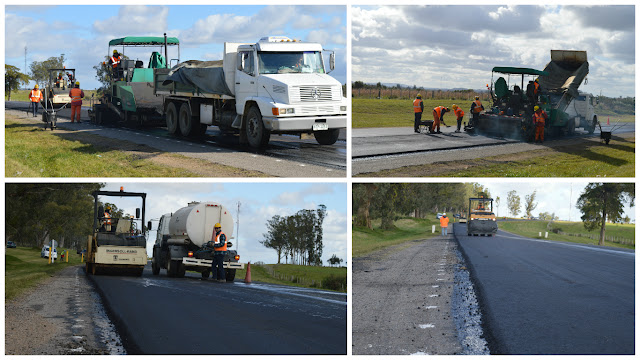
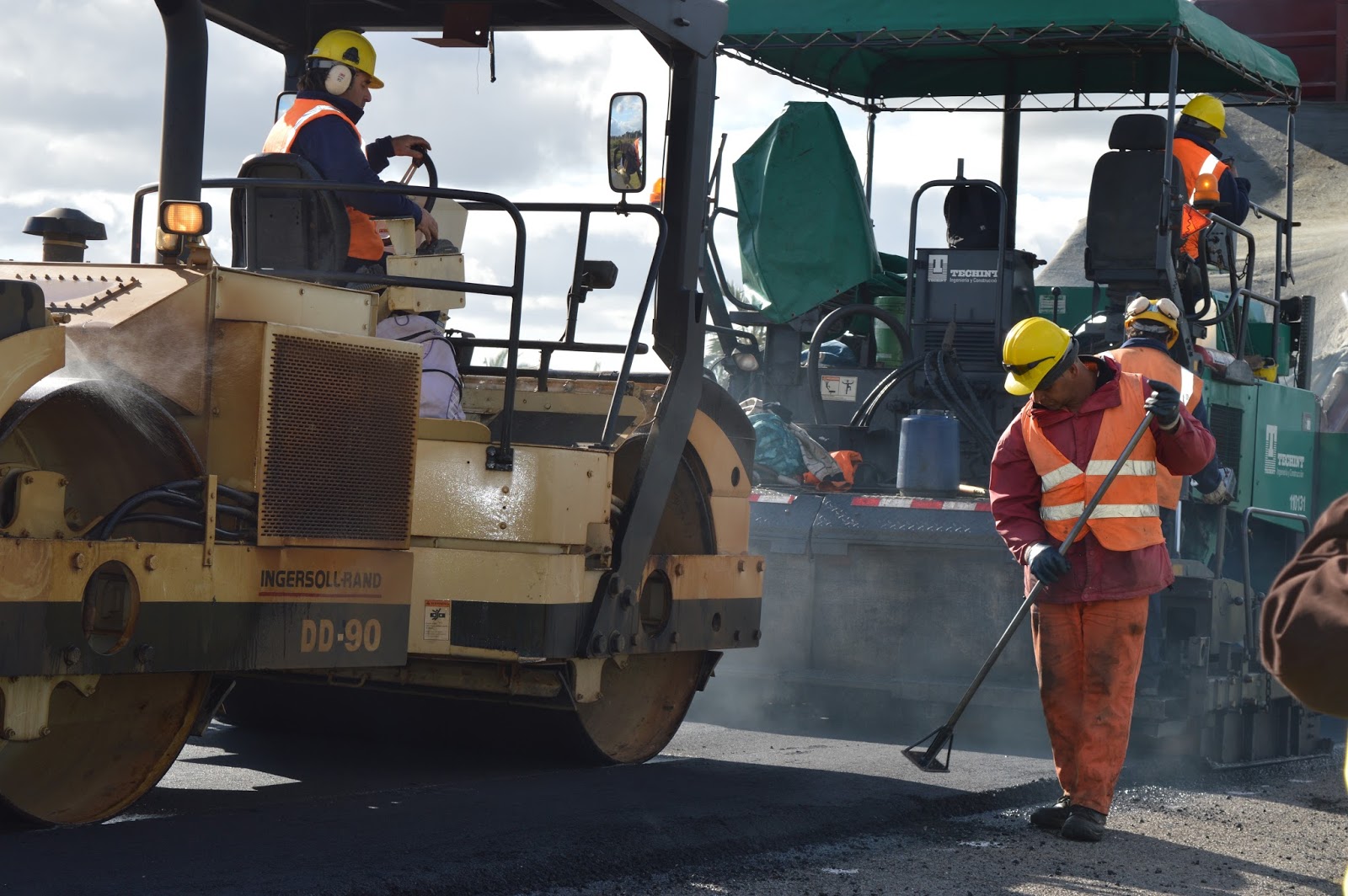
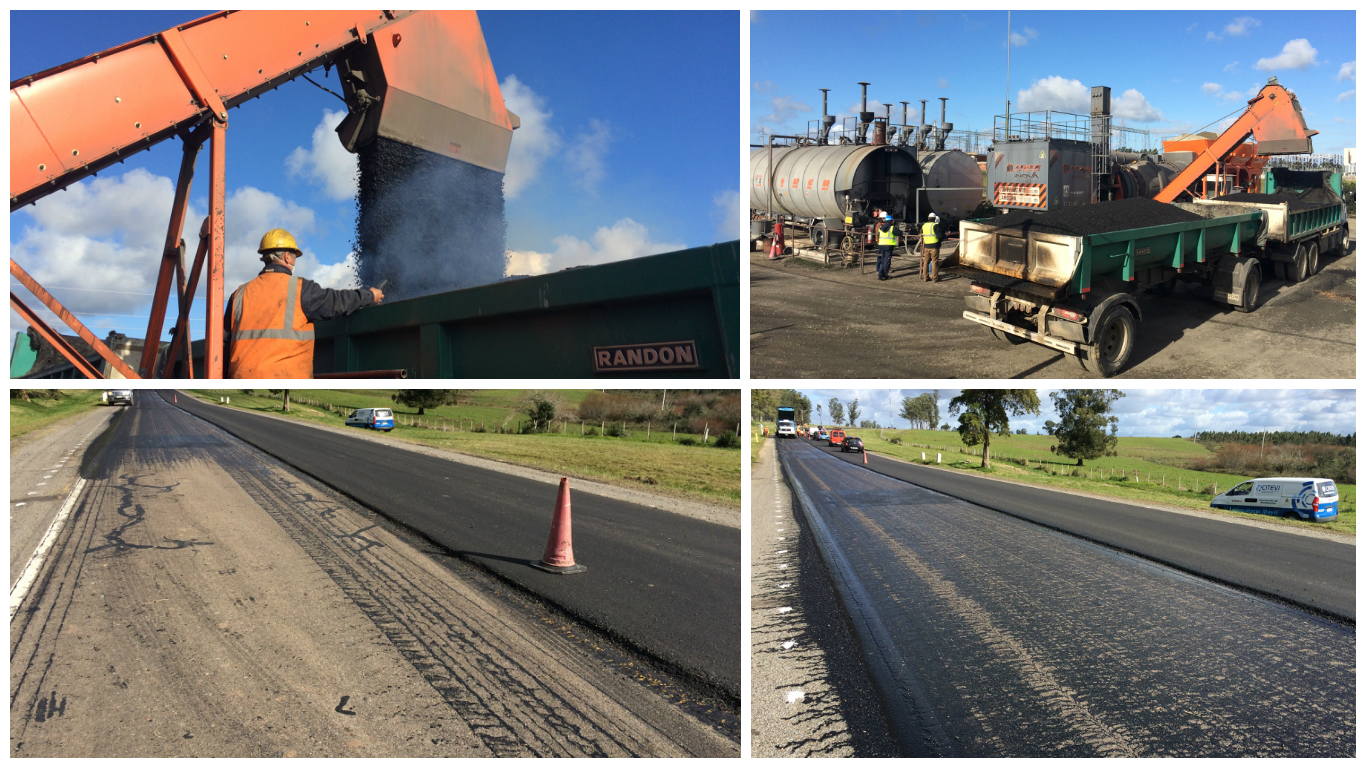
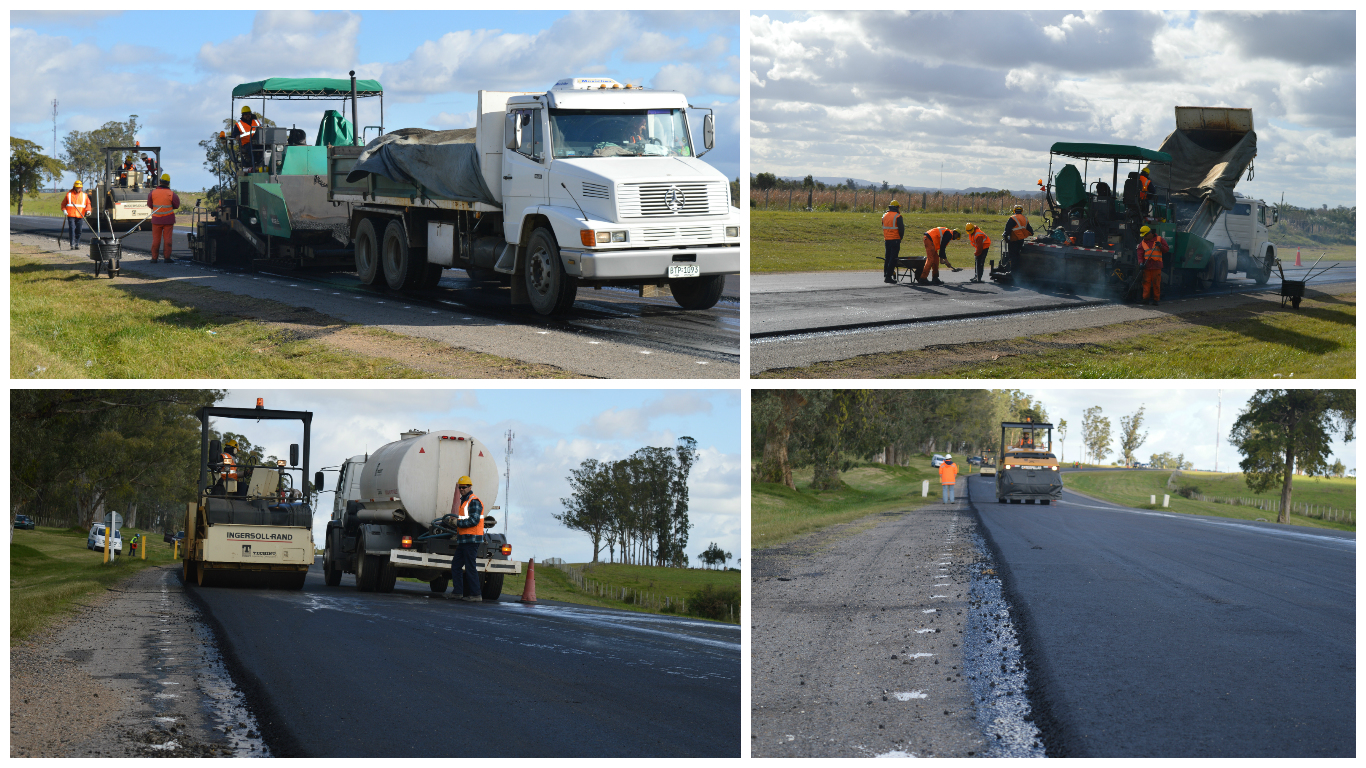
Last Friday, June 3 the first flight of recoating was performed with BITAFLEX AMC 50, modified asphalt tire dust on Route 9 along with Techint SACI. A stretch of about 1300 m on the road more was performed, near km 202 at the entrance of the city of Rocha.

This is another milestone in the development of technology in Uruguay after the success of the first stage of testing performed in 2009 at the entrance to our industrial plant.
The BITAFAL GROUP always at the forefront of new technologies, has developed a modified crumb rubber asphalt having performance characteristics similar against permanent deformation to a AM3. To ensure the quality and homogeneity of the product, we have built a specific plant for manufacturing BITAFLEX AMC 50 mixers with high power.
Since last December governing Decree 358/2015issued by the National Directorate of Environment (MVOTMA) in which tire producers and importers must take over the management of tires once their useful life. One of the most sustainable alternatives to recycle them is the modification of asphalt.
Already there have been several advances in Uruguay, as the presentation of Management Plans (El Pais, 06/13/2016), The opening of the first floor grinding used tires
(MAKING ROADS # 73 - May 2016) And performance of the first test section (REPORT CITEVI)
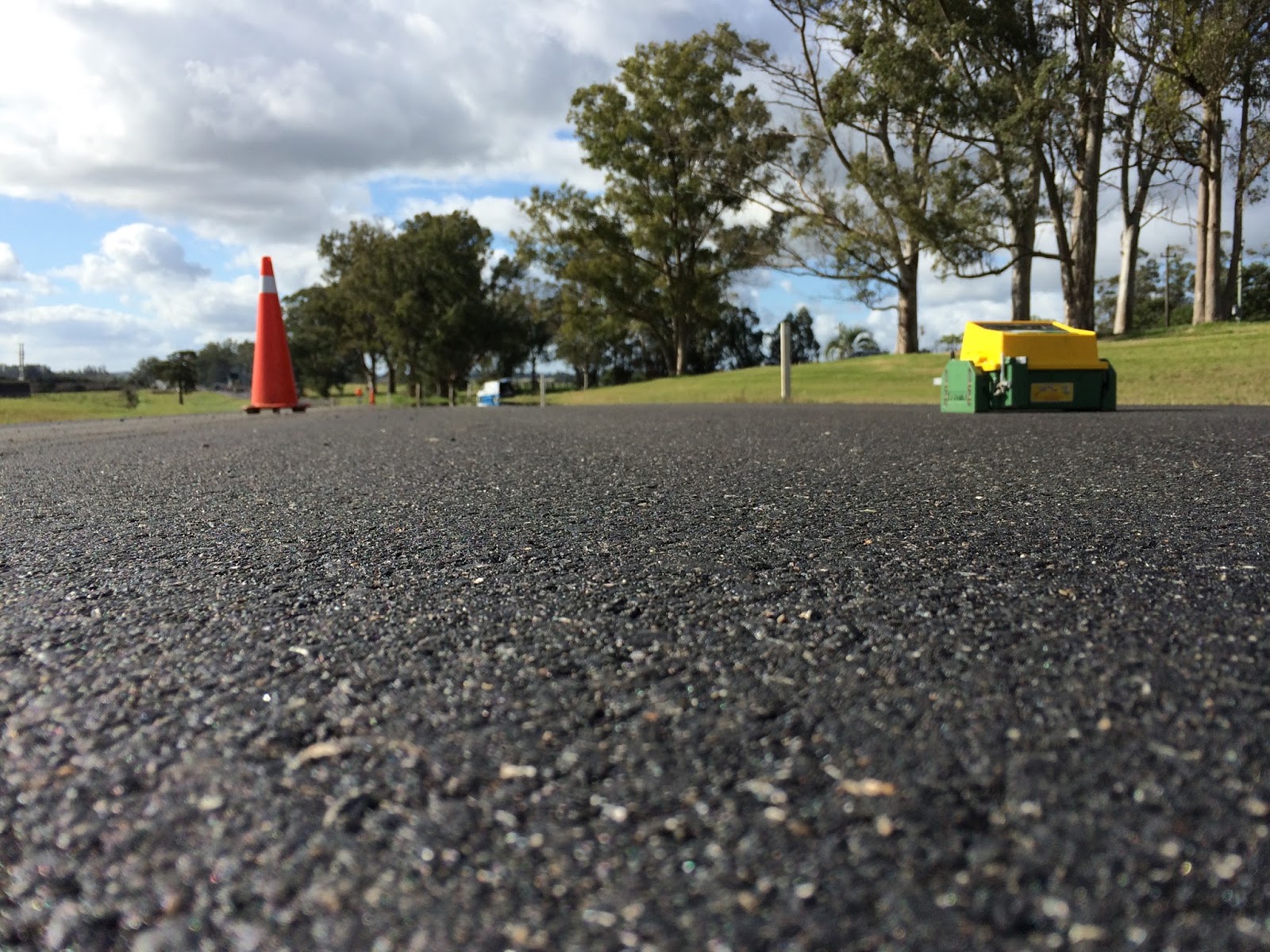
This time a semi-dense mixture was made in a thin layer to surface layer (CAC S 12), the thickness of 40 mm provided. Stability values ​​and design empty% were similar to those made with AM3.
In construction, fabrication, laying and compaction of the mixture was held at the same temperatures that were being made with AM3, with the advantage of better workability in work could be seen as technical.
We will report on the performance of this segment in future editions of the newsletter.

More pictures here

New unit mobile laboratory CITEVI

As we announced in previous editions of "Making Roads" We continue to strengthen the technical and logistical capabilities of our Technologies Research Center Vials.

The addition of a new mobile laboratory allows to transport more efficiently and safely to our technical and assessment teams and pavement samples for analysis need to be transported to our laboratory in Cologne Nicolich.

It is available to our customers for the testing of density and moisture in situ by the nuclear densitometer, determining the bearing capacity of soils, bases, subgrades, etc. deflectograph by light impact and for materials characterization tests.

More information: citevi@citevi.com.uy

We use own and third party cookies to help us optimize your visit to our website and also to improve service delivery and thus adapt to their most relevant and useful to better their experience needs. When you click OK to continue with navigation and thus confirm that you have read the information and accept the activation of cookies.

You can allow or reject use at any time can change the Configuration Options Privacy - Cookies Policy -

Privacy settings

When you visit a website, you can store or retrieve information in your browser, mainly in the form of cookies. Check your personal services cookies here.


We track anonymous user information to improve our website.
.
  • _ga
  • _gid
  • _gat

Decline all Services
Accept all Services