Author Archives: Bitafal Group Communication

BITAFAL GROUP WEBINAR CYCLE

BITAFAL GROUP WEBINAR CYCLE

Delving into various topics of interest, we begin with a new challenge to share our knowledge

This coming September we will begin to issue the first cycle of conferences that complement and deepen what has been published in our manual on "High Performance Surface Treatments".

True to our word, we have listened to your comments and concerns that you sent us from the June survey, where we asked the topics that most interest you for a Webinar. 1 out of 5 voted to delve into the topic "Life Cycle Analysis with surface treatments", and for this reason we decided to make a first Cycle called "High Performance Surface Treatments", which encompasses this topic and others that also appear in our manual. . We will have top-level guests, such as Ing. Jorge Prozzi from the University of Texas.

This Cycle consists of three modules:

MODULE 1: How to guarantee the success of gravel irrigation: materials, selection, design and good construction practices.

MODULE 2: Surface treatments: Performance tests.

MODULE 3: Life cycle analysis of surface treatments: the most efficient option for conservation.

Our goal is to extend our knowledge and share the national and international experience of surface treatments, so that they achieve maximum performance. This implies interventions where special care is taken in the evaluation of the existing surface, the materials, the selection of the appropriate treatment, the design and the construction so that our path is SAFE, RELIABLE and SUSTAINABLE.

SAFE: The type of treatment, the resistance to polishing of the aggregate, the appropriate binder, the correct dosage of materials, careful construction, etc. These are aspects that affect the final safety of the road but must be considered individually. The objective is to guarantee traffic and safety conditions, minimizing circumstances that could generate costs for users and accidents.

TRUSTWORTHY: With this approach, surface treatments are first-order interventions that require the same care and detailed study as asphalt mixtures. In these situations, it is expected that the treatments comply with higher stresses and demands and for this it is essential to evaluate the structural and surface conditions through inspections and auscultation, define specific design methods for the provision of aggregates and binder, ensure the calibration of the equipment and document best construction practices. The objective is to provide tools for those responsible to make decisions based on scientific and methodological criteria, which allow predicting what the useful life of the treatment will be and, consequently, it can be a reliable instrument within the conservation strategy.

SUSTAINABLE: It consists of doing more and better, with less. High performance treatments play an essential role in the preventive maintenance of the pavement and are the answer to a technical, economic and environmental analysis. These interventions are optimized for the traffic and climatic conditions that are expected, use materials and processes that generate a smaller environmental footprint and seek to reduce the total cost of the pavement's life cycle. The goal is to put the right treatment on the right track at the right time.

We will be sharing news about the webinars on our networks.

HIGHLY MODIFIED ASPHALTS (HIMA)

HIGHLY MODIFIED ASPHALTS (HIMA)

One of the questions that arises from the use of modified asphalts is to what extent it is possible to increase the level of polymer in the formula or degree of modification, to further increase the advantages that the modified ones present over the conventional ones.

In standard modified asphalts, the increase in the amount of polymer in the solution leads to an increase in the viscosity of the asphalt. The high viscosities make its handling in the industry impractical, since the asphalt must be heated to high temperatures so that it can be pumped and adhered to the stone aggregates when manufacturing asphalt mix. In a context where the price of fossil fuels and environmental responsibility are increasing, this does not seem to be a viable option.

There are SBS polymers with a high vinyl content (1) that have better compatibility with asphalt. This is due to the fact that it is made up of shorter chains compared to those of the SBS polymers present in the standard modified ones, which also translates into a lower viscosity of the solution (1). Short chains also make the reaction rate faster, further increasing compatibility. All this makes it possible to increase the amount of modifying agent in the asphalt binder without the aforementioned problems occurring. Also, the manufacturing methods are essentially the same with some additions that we will see in this section.

Intermolecular structure

Highly modified asphalts have some key differences that set them apart from standard asphalts, such as the aforementioned amount of polymer. Highly Modified Asphalt, HiMA, is made with 7.5% polymer by weight. From this value, a change in the intermolecular structure of the ligand is observed, which is essential to classify it as highly modified. The continuous matrix becomes formed by the SBS chains and the asphalt molecules become the dispersed phase, creating colloidal groups, as shown in Figure 1. This means that the mechanical properties of the binder are largely determined by the polymeric network, being able to show improvements with respect to standard modified asphalts, as shown by various studies (1,2). The continuous matrix change phenomenon is due to the strong interaction of the SBS polymers with the asphalt, which allows them to increase up to ten times their own volume when associated with maltenes.

Figure 1. Scheme of the transformation of the molecular structure of the binders with the increase of a modifying agent. Adapted from Field and Laboratory Study of High-Polymer Mixtures at the NCAT Test Track (2).

Bibliography

  1. Scholten, Erik J., Vonk, Willem y Korenstra, Jan. Towards green pavements with novel class of SBS polymers for enhanced effectiveness in bitumen and pavement performance . Varsovia : 2nd International Conference on Environmentally Friendly Roads, 2009.
  2. Timm, David H., and others. Field and Laboratory Study of High-Polymer Mixtures at the NCAT Test Track. Auburn : National Center for Asphalt Technology, 2012.
BITAFAL PARTICIPATED IN THE ACTION Holidays #Entretodosparatodos

BITAFAL PARTICIPATED IN THE ACTION Holidays #Entretodosparatodos

Last weekend, those of us who are part of Grupo BItafal were able to enjoy as a family the on-line theater performances of the "Vacations #entretodosparatodos" project.

This initiative aims to collaborate with five major cases in our country: Peluffo Giguens Foundation, Kangaroo Foundation, Children's Villages, Coranzoncitos Foundation, and Liceo Francisco.

We were able to choose between 5 performances that included “Opa Payasos” “Mago Daniel K” “Tía Libi's show” “Clap Clap Circo” and “Ruperto Rocanrol”.

It was an excellent opportunity to enjoy in this format that this new reality in which we are living offers us, to disseminate wonderful artists from our country, and at the same time collaborate with organizations that have been affected by the situation we are going through.

We thank the entire organization and we hope that initiatives like these will be replicated.

PERIODIC ROAD CONSERVATION TECHNIQUES COURSE

PERIODIC ROAD CONSERVATION TECHNIQUES COURSE

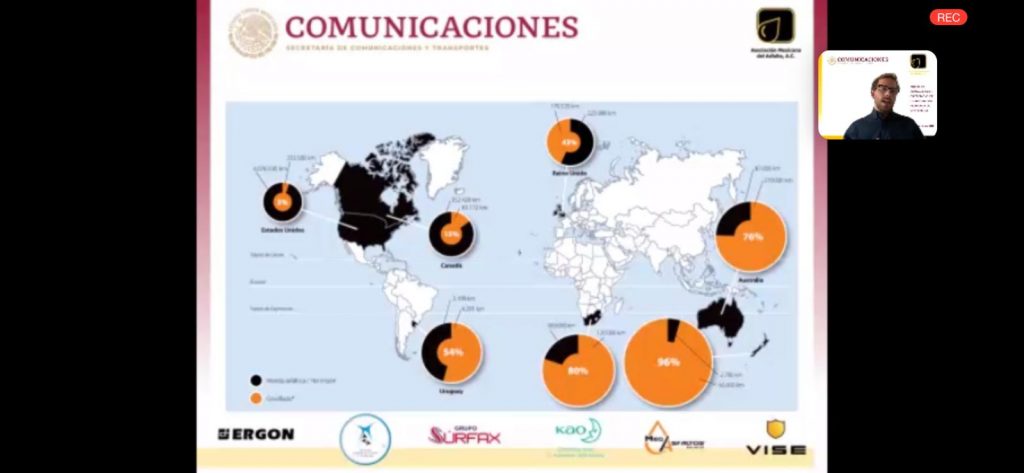
Bitafal was a keynote speaker in the virtual course of the Ministry of Communications and Transportation (SCT) of Mexico and the Mexican Asphalt Association (AMAAC).

Grupo Bitafal held the inaugural conference of the "Refresher Course in Periodic Road Maintenance Techniques", a Mexican event with more than 500 participants. Below we delve into the content of the course and a free tool for the selection of surface treatments.

Organized by the SCT of Mexico and AMAAC, the course on conservation techniques aimed to update the knowledge of Mexican administration professionals. The event took place over three days, each covering a particular theme. The first day the theme was "Periodic Conservation Techniques" and Bitafal gave the first lecture by Ing. Ignacio Kröger, who dealt with the detection of opportunities and limitations in the evaluation of pavements as well as the correct selection of surface treatments. The first day was completed by important exhibitors, such as Eng. Salvador Fernández Ayala, General Director of Highway Conservation of the SCT and Dr. Adriana Vargas, researcher of the North American National Center for Asphalt Technology (NCAT).

The session on the second day dealt with the theme of "Good practices in conservation treatments" with presentations on gravel, microagglomerates, sealing and caulking of cracks. The presentation by Ing. Jorge Alarcón on his experience in the reuse of milled material (RAP), the different recovery techniques and the configurations of asphalt plants for a greater incorporation of RAP was highlighted on that day.

On the third day, “Asphalt mixes as conservation techniques” were studied in depth, commenting on the good practices of milling, patching and discontinuous mixes. Eng. Francisco Ramos commented on the guide on "Road Conservation Procedures and Techniques" developed by the SCT and detailed the highly recommended "Conservation Treatment Selection Tool" available for free at .

We thank the SCT and AMAAC for the invitation and for having the initiative to share crucial issues for the sustainable development of Latin American roads. Follow us on social networks to find out when the videos of the course are published.

Linkedin: https://www.linkedin.com/company/grupo-bitafal/
Twitter: https://twitter.com/BITAFAL

USE OF THE RHEOMETER TO EVALUATE FOOTPRINT AND FISSURES

USE OF THE RHEOMETER TO EVALUATE FOOTPRINT AND FISSURES

We reviewed some agile tests to estimate performance of asphalt mixes with the DSR.

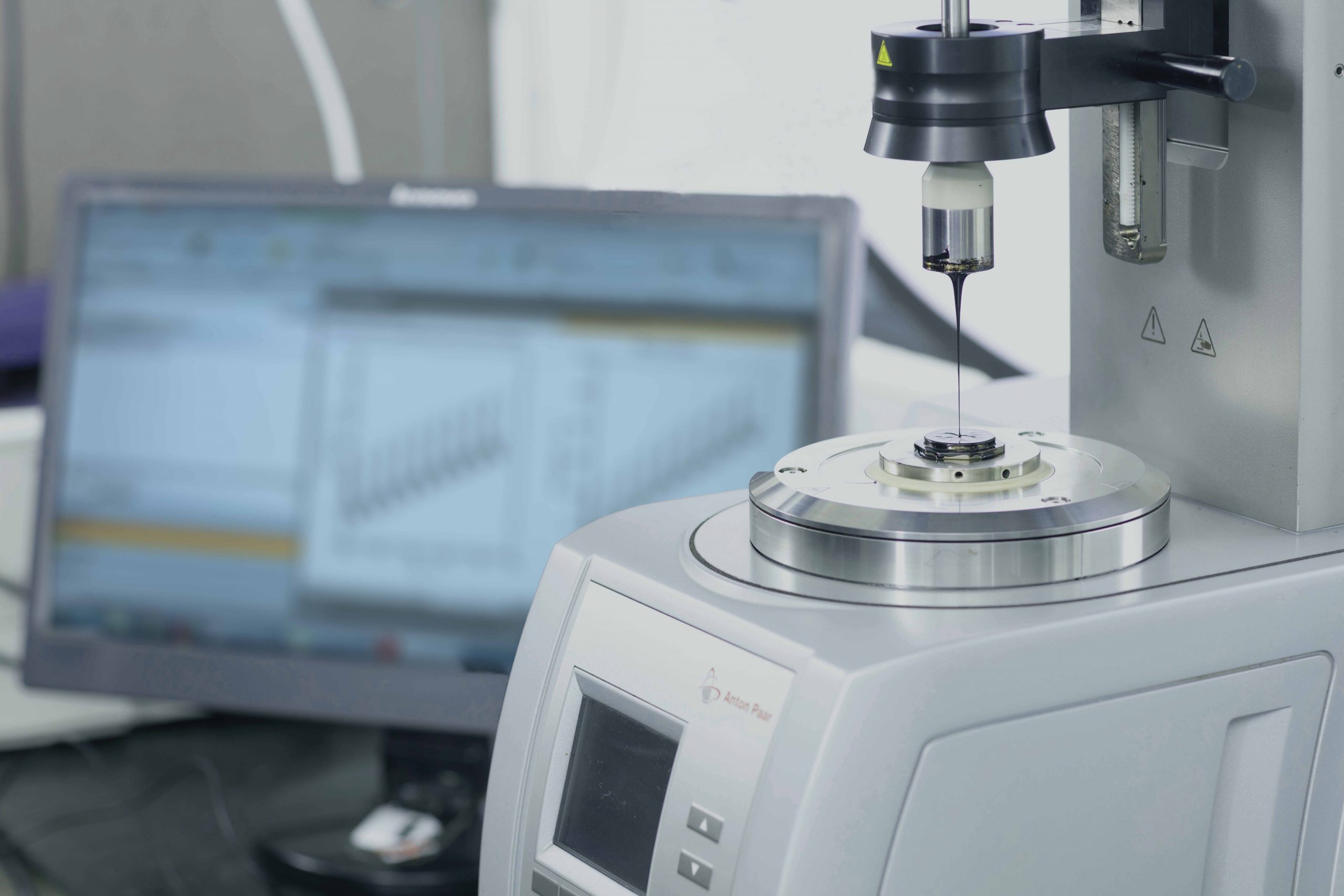
New paving technologies require modern equipment to evaluate the behavior of asphalt. The Dynamic Cut Rheometer (DSR) has positioned itself as the international reference equipment for measuring the viscoelastic properties of asphalt. In addition to amazing measurement accuracy, one of its biggest advantages is optimizing time in the laboratory.

We invite you to read the note where we summarize some of the results of the research presented at the XX CILA where we study the behavior of asphalt against rutting and cracking through agile tests in the DSR.

In 2018, one of the country's first dynamic cutting rheometers (DSR) was acquired to study the rheological behavior of asphalt. https://bitafal.com.uy/novedades/bitafal-entra-al-mundo-de-la-reologia/.

Using transient (creep, stress / strain at constant rate) and dynamic (oscillatory) methods, the team determines the viscoelastic properties of asphalts in very short times.

Globally, road researchers have made numerous efforts to correlate the behavior of the asphalt binder in the laboratory with its performance in the field, mainly to identify the causes of the most common pavement failures, such as fatigue cracking and rutting.

In recent years, the test called Multiple Stress Creep and Recovery (MSCR) has become popular, which allows evaluating the behavior of the binder against rutting. The test is carried out in a few minutes and its result, through the non-recoverable "creep compliance" parameter (Jnr), can be correlated with its resistance to permanent deformation in a rolling test. As a general rule, the lower Jnr, the better its behavior against rutting.

On the other hand, to address the problem of fatigue cracking, a variation to the LAS (Linear Amplitude Sweep) test has very recently been proposed to determine fatigue laws of binders in reduced times, which could be correlated with prolonged fatigue tests at asphalt mixtures, such as the four-point beam, to determine the influence of the binder on this behavior.

At CITEVI we use this test to compare a conventional AC-30 asphalt, an asphalt modified with 3.5% SBS and a highly modified asphalt (HIMA) with 7.5% SBS. The results were correlated with Wheel Tracking tests (EN 12697-22) and four-point beam fatigue (EN 12697-24). If the results of each of the tests are compared, it can be seen that there is a clear tendency towards greater resistance to permanent deformation for lower Jnr values. There is an acceptable correlation between the Jnr parameter and rutting depth (R=0.85) as stated by several authors At CITEVI we use this test to compare a conventional AC-30 asphalt, an asphalt modified with 3.5% SBS and a highly modified asphalt (HIMA) with 7.5% SBS. The results were correlated with Wheel Tracking tests (EN 12697-22) and four-point beam fatigue (EN 12697-24). If the results of each of the tests are compared, it can be seen that there is a clear tendency towards greater resistance to permanent deformation for lower Jnr values. There is an acceptable correlation between the Jnr parameter and rutting depth (R=0.85) as stated by several authors. However, the highest correlation was found between the rutting slope and the Jnr at 0.1kPa, as can be seen in Figure 1.

. However, the highest correlation was found between the rutting slope and the Jnr at 0.1kPa, as can be seen in Figure 1.

. However, the highest correlation was found between the rutting slope and the Jnr at 0.1kPa, as can be seen in Figure 1.

. However, the highest correlation was found between the rutting slope and the Jnr at 0.1kPa, as can be seen in Figure 1.

INTERNATIONAL SEMINAR ON ASPHALT MIXTURES

INTERNATIONAL SEMINAR ON ASPHALT MIXTURES

BITAFAL GROUP present at the International Seminar "Asphaltic mixtures and their relevance in the durability of pavements"

The seminar organized by the Peruvian company Ing. Nestor Huamán y Asociados was held last 11th of June via online, both on the Zoom platform, where about 100 people listened to us and exchanged, as well as on Facebook Live, where there were about 1,200 connected participants. The subsequent numbers of the day are more impressive since the video of it has more than 9000 reproductions at the moment.

The event began with a talk on "Asphaltic mixtures as wearing course" by Ing. Adrián Nosetti from Argentina, then Qco. Santiago Kröger presented on the "Importance of asphalt irrigation with emulsions" and at the end Eng. Nestor Huamán presented on "Asphalt rheology".
We invite you to watch the video of the seminar in the link below.
9TH TECHNICAL DAY OF ASPHALT

9TH TECHNICAL DAY OF ASPHALT

The biannual event of the Uruguayan Association of Roads was held in online format

The virtual activity co-organized with the Permanent Asphalt Commission (CPA) and the Argentine Highway Association (AAC) had a great attendance of almost 450 people from all over the world.

In this edition, emphasis was placed on modified asphalts for asphalt mixtures such as the new highly modified asphalt (HiMA), which we have already delved into in previous editions (Nota HiMA) and novel experiences with AM3 such as the recapping of Route 1 carried out by Tracoviax (Note route 1).
We hope to continue having such an active participation in person as well as virtually in future editions.
The conferences were held on the 22nd and June 23 through the AAC platform. They began with a conference of the Ings. Rafael Lopes Martins and Gary Fitts from the Kraton company doing an "Introduction to high performance modified asphalt (HiMA)", technology introduced in Uruguay by GRUPO BITAFAL with the support of the Kraton company in the development and Colier in the execution of the section test. This technology has been extensively studied at CITEVI and is part of the degree thesis of BITAFAL Engineers, Carlos Pfeiff and Ignacio Kröger (Thesis Note: https://bitafal.com.uy/novedades/desempeno-de-asfaltos-altamente-modificados/).
Then for the CPA, Eng. Alejandro Bisio, who until a few months ago was in charge of the Research and Development Quality Management of the National Highway in Argentina, made an excellent overview of the “Asphalt mix design methods”.
He Tuesday June 23 opened the day the Ings. Diego Larsen and Lisandro Daguerre with “Solutions for high performance pavements” where they detailed the 200 km project with HiMA asphalt carried out in Argentina on Route 9 (Rosario-Campana) and other sections with high modulus asphalt.
For the closing, Eng. Marcelo Borrelli detailed what the Tracoviax company had done in the "Rehabilitation in asphalt mixture of Route 1 double track between accesses to Montevideo and Santiago Vázquez" where modified asphalt was used BITAFLEX AM3 for the three layers of the overcoat, an asphalt sand to delay the reflection of cracks, a semi-dense one for leveling and an F10 for rolling. For more information about this work you can see in our BLOG (https://bitafal.com.uy/novedades/arena-asfalto-con-am3-en-ruta-1/) or in the presentation of the day.
The presentations are available on the AUC and AAC websites (http://www.aacarreteras.org.ar/noticia-jornada-asfalto.php).
WEBINARS: THE NEW WAY TO LEARN

WEBINARS: THE NEW WAY TO LEARN

Every month new educational proposals are added from different organizations, companies and independent professionals.

The COVID-19 crisis forces us to seek new ways of relating and learning. We are in the digital age and luckily enough technology exists to be able to participate in different instances of learning from home or office.
In this note we bring you a summary of the platforms to attend events and courses in an online format worldwide.

Argentine Highway Association:

The AAC has been conducting a series of webinars on various topics of road interest since May. The AAC-PIARC webinar cycle had 7 paving, road safety, transport, mobility, operation and planning of road infrastructure seminars. To see the presentations we recommend entering http://www.aacarreteras.org.ar/webinars-aac-piarc.php
Another 7 free seminars will be held in June. For reports and registrations: http://www.aacarreteras.org.ar/webinars.php
  • TUESDAY JUNE 2ND. Design and construction of joints in Concrete Pavements. Speaker: Ing. Diego Calo
  • THURSDAY JUNE 4. Asphalt paving in Argentina: two decades of progress and development. Speaker: Ing. Mario Jair
  • TUESDAY JUNE 16. Concrete pavements. Design of intersections and transitions. Speaker: Ing. Diego Calo
  • THURSDAY JUNE 18. The use of asphalt emulsions in Argentina: topicality and pending issues. Speaker: Ing. Mario Jair
  • TUESDAY JUNE 23. The Road Safety Challenge facing the 2021-2030 decade - Part 1. Speaker: Ing. Graciela Berardo
  • THURSDAY JUNE 25TH. Rural Roads: Surface solutions and stabilizations.
  • TUESDAY JUNE 30TH. The Road Safety Challenge facing the 2021-2030 decade - Part 2. Speaker: Ing. Adriana Garrido

Uruguayan Road Association:

The AUC informs its associates of various online activities of other organizations and is organizing some of its own activities such as the "9th Asphalt Technical Conference" and a course on Design and Construction of Concrete Pavements.
  • END OF JUNE. 9th Technical Conference on Asphalt. With the participation of the Permanent Asphalt Commission (CPA) and a talk on highly modified asphalts (HiMA) by Kraton technicians. The conference will be held on the AAC platform.
We recommend entering the AUC website for more information: https://www.auc.com.uy/actividades-2020/

Itafec Platform: https://www.itafec.com/

Itafec has been holding various online events such as the "X TRIAL DAY FOR BITUMINOUS MIXTURES", the "IRMD 2020", the "INTERNATIONAL SEMINAR OF FOAMED ASPHALT" among others. For the coming months, it has several events, many of them free, so we recommend subscribing to the platform and following its news on social networks.

Plataforma Eventbrite: https://www.eventbrite.com/

The platform has a wide variety of online courses and seminars. They can be searched by keywords in both English and Spanish.

Asphalt Institute: http://www.asphaltinstitute.org/training/webinars/

The Asphalt Institute has a wide variety of courses in English on its platform. The courses are live although there is a section on recorded webinars. Some are paid and others free.
  • TUESDAY JUNE 2ND. Best Practices for Specifying and Constructing Longitudinal Joints
  • THURSDAY JUNE 4. Understanding Pavement Distress
  • TUESDAY JUNE 9. Tack Coats Part I: Purposes, Research, Materials, and Specifications
  • THURSDAY 11TH OF JUNE. Tack Coats Part II: Best Practices for Preparation and Application, Bond Strength Testing, and Quality Control/Quality Assurance
  • THURSDAY JUNE 18. Causes and Cures of Segregation

NAPA: https://www.asphaltpavement.org/Webinars

NAPA also has a platform for conducting courses in English. Some are open and others exclusively for members. The courses below are free and free.
  • THURSDAY JUNE 4. Benefits of Rehabilitating Concrete Pavements with Slab Fracturing and Asphalt Overlays.
  • TUESDAY JUNE 16. How to Evaluate Pavement Alternatives Using LCCA
They also have a large library of recorded webinars to explore: https://store.asphaltpavement.org/index.php?categoryID=121

Others:

Several companies and independent professionals frequently organize online seminars and courses via zoom or gotomeet. We recommend following BITAFAL's social networks to be aware of these developments.
GROUP BITAFAL will participate this month in an International Seminar on: "Asphalt mixtures and their relevance in the durability of pavements" with a presentation on the importance of primer and bonding irrigation by the Qco. Santiago Kröger. It is a 3-hour free event with the participation of Eng. Nestor Huamán from Peru and Adrián Nosetti from Argentina.
  • THURSDAY 11TH OF JUNE. 19 hours (URU-ARG). Registrations: informes@nestorhuaman.pe
NEW EQUIPMENT TO EVALUATE QUALITY OF EMULSIONS

NEW EQUIPMENT TO EVALUATE QUALITY OF EMULSIONS

CITEVI incorporates a laser diffractograph to measure the size of the particles in emulsions.

The average size of asphalt particles and their distribution in an emulsion affect a number of properties including emulsion viscosity and rheology, as well as storage stability, shear rate, and sieve. This equipment allows us to measure both parameters in a simple way in a few seconds, so we can control the quality of the emulsions during production to guarantee that the specifications are met in advance and correct if there is any deviation.

On the other hand, it is a very useful piece of equipment for optimizing parameters in the formulation and manufacture of emulsions, improving quality according to the intended application. We invite you to learn more about the equipment and the advantages of its use, as well as the characteristics of BITAFAL emulsions.

The working principle of the particle analyzer is based on the Fraunhofer and Mie light scattering theories. To measure the size of a particle, a laser beam passes through a sample containing the recirculating particles. The partial deflection of the laser beam creates a characteristic ring-shaped intensity distribution behind the sample that can be measured with a special detector. Particle size is calculated based on the spacing of these rings: larger particles produce rings that are closer together, while smaller particles produce rings that are further apart.
The most realistic samples, however, do not show individual particle sizes, but instead consist of particles with a wide band of varying diameters. Therefore, many different ring systems overlap. With the help of a mathematical process, these superpositions are virtually unfolded and, as a result, the particle size distribution is obtained. Usually this distribution is represented in a Gaussian curve and, from there, the D values ​​(D10, D50 and D90), which are the intersection of 10%, 50% and 90% of the accumulated volume. The average particle size is obtained with the D50 and the distribution width is calculated using the equation (D90-D10) / D50.

In general, fast cationic asphalt emulsions have an average particle size (D50) between 3 and 8 micrometers (um). The distribution width should be as narrow as possible to achieve good viscosity and storage stability. In the case of the line of emulsions BITAFAL Y IRRIGATION BITAFLEX 65 the D50 is on average 3.5 um.

emulsion PRINT 50 As it is specially formulated to penetrate the interstices of granular bases, it has an average particle size of 1.5 um. In this way, the product presents good storage stability as well as a very good performance for the primer of bases.

THREE SECTIONS OF ROUTE 14 INAUGURATED

THREE SECTIONS OF ROUTE 14 INAUGURATED

The PPP of Circuit 3 is fulfilling its objectives and already has three sections of Route 14 in service.

As we have been reporting in previous editions of our newsletter, Road Circuit 3 by the Espina-Copasa consortium, is in charge of the Route 14 Public-Private Participation contract.
There are about 300 km of road rehabilitation using cold recycling technology with Portland cement and a subsequent 4 cm tread with the new modified asphalt BITAFLEX PG 70-28 provided by Grupo Bitafal.
The last friday May 22nd the Minister of Transport and Public Works, Luis Alberto Heber inaugurated the first three sections between the Maciel stream, on the border between Flores and Durazno, and Route 100 (sections 10 and 11) and from kilometer 259 to Sarandí del Yí (section 14).
The sections in question were carried out within the deadlines stipulated by both the Díaz Alvarez company and the CVC company with great care and dedication, which translates into a work of very good quality.
The works carried out were widening and recharging of granular material, then cold recycling with Portland cement in 20 cm thick, then an irrigation of curing with emulsion IRRIGATION BITAFAL 65 and gravel and finally a 4 cm thick asphalt mix with modified asphalt BITAFLEX PG 70-28. For more information about the work carried out, you can enter "ADVANCES IN ROUTE 14"O en"ASPHALT PG70-28 ROUTE 14“.
The inauguration was also attended by the Minister, the National Director of Roads, Eng. Rodolfo Long, the Mayor of Durazno, Carmelo Vidalín, and the Mayor of Sarandí del Yí, Mario Pereyra, among other departmental authorities, staff from the MTOP, the consortium and of construction companies.

We use own and third party cookies to help us optimize your visit to our website and also to improve service delivery and thus adapt to their most relevant and useful to better their experience needs. When you click OK to continue with navigation and thus confirm that you have read the information and accept the activation of cookies.

You can allow or reject use at any time can change the Configuration Options Privacy - Cookies Policy -

Privacy settings

When you visit a website, you can store or retrieve information in your browser, mainly in the form of cookies. Check your personal services cookies here.


We track anonymous user information to improve our website.
.
  • _ga
  • _gid
  • _gat

Decline all Services
Accept all Services