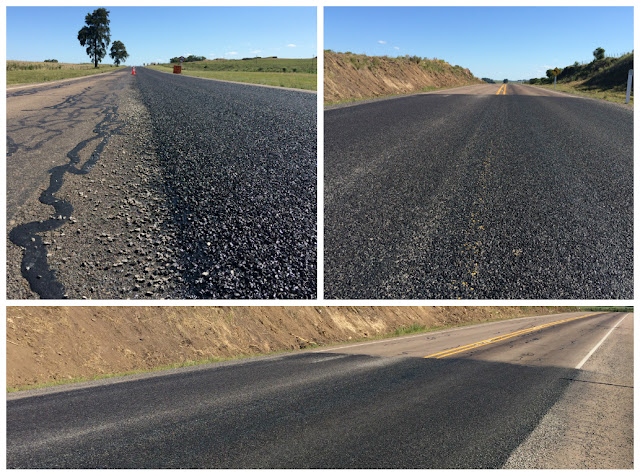
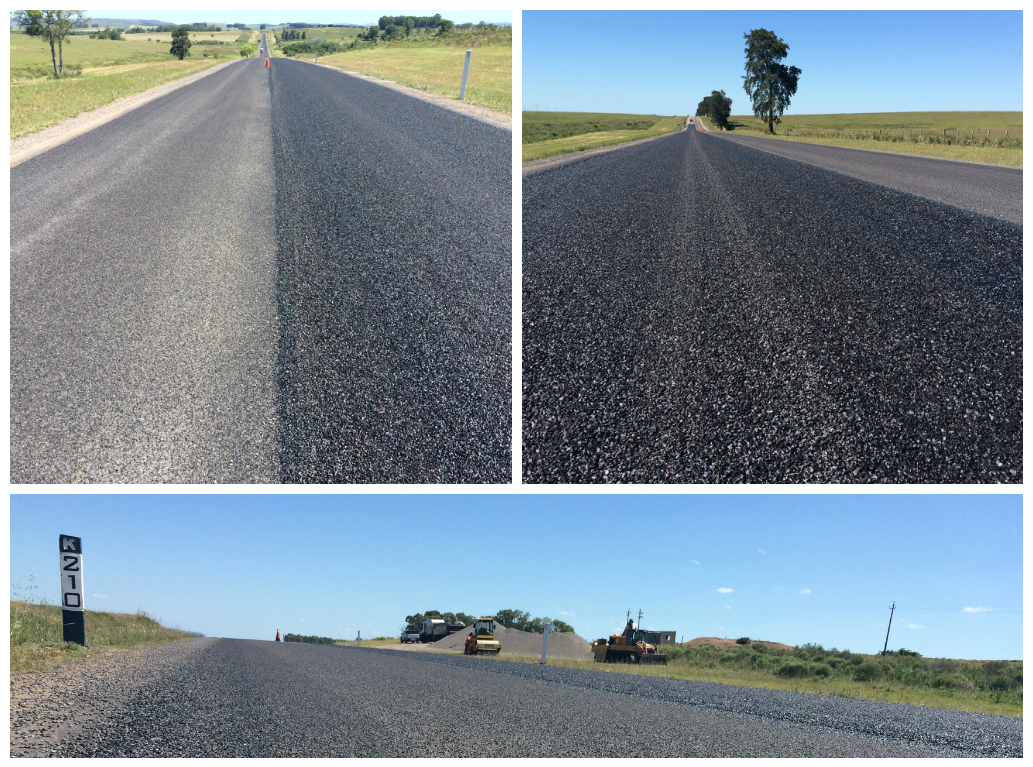
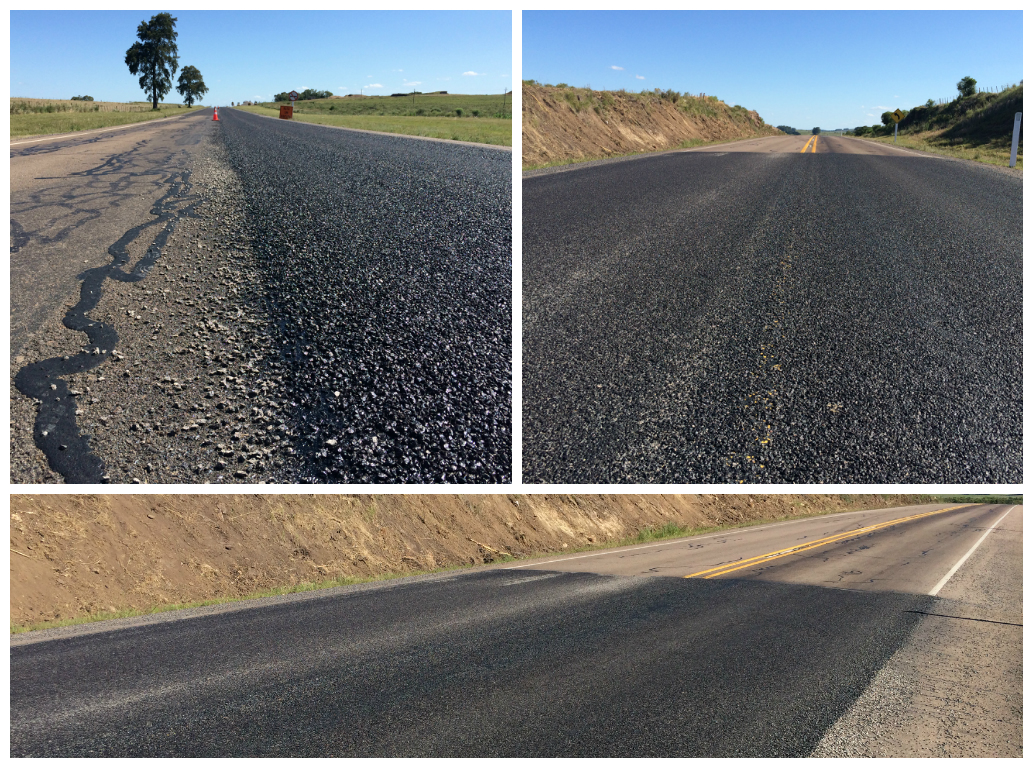
Print 50 for treatment DUST


emulsion 50 PRINT BITAFAL Hoping it will be of interest to other municipalities, we extend the invitation to participate, you can write to

Anticipating the arrival of the heat and low humidity environment to multiply the effect of fine suspended, and have been conducting several test sections in different traffic conditions to evaluate their performance and durability.
Were tested dosages of 0.6 to 1.0 L / m2, with the optimum performance for dust control is at low doses and releasable traffic almost immediately and are not accumulation zones emulsion. For all these tests has been carried out prior sweep the surface and has cared moisture in it was low for better performance of the emulsion.
In one of the test sections was used as 2-6 mm gravillín immediate release protection traffic without the gravillín interfere with curing or penetration depth since the absorption rate at the base is very fast. With this technique it is possible to urban jobs without cutting the road in no time.
After heavy rains last week some edges of the test sections were eroded by rain which allowed us to check the depth of action of the PRINT 50 and enclosed in photographs.
We estimate that the lifetime of the dust treatment performed with this emulsion, due to the depths reached, must be above 12 months.

WORKSHOPS CYCLE WITH Intendencias

This year we return to the cycles of technical workshops with departmental governments to discuss various topics paving technology. A classic workshops a few years ago on the use of emulsions, best practices for surface treatments and cold mix to add bacheo improved bases by in situ stabilization and paving new technologies.
It is a day of sharing experiences accompanied laboratory tests to better understand the management of asphalt products.
We started this month with the visit of the Municipality of Cologne. We invite you to participate in upcoming editions communicating mail: bitafal@bitafal.com.uy

TRAINING INTENDENCIA COLONIA_ MARCH 2011


SEVEN RECOMMENDATIONS FOR USE OF EMULSIONS IN WINTER

When they start to shorten the days and appear the first cold start problems with the use of emulsions. This situation is repeated year after year and often turns into a spiral of construction problems that last for months if the corresponding precautions are not taken.

Being a recurring theme which we have learned to solve these years, we bring our 7 recommendations regarding the selection of products and ways of implementation to work in cold weather conditions.

While asphaltic emulsions have minimal restrictions on use in winter, since moisture of the aggregate is not counterproductive, if it is imperative that the embodiment in winter is different from the traditional, to avoid problems of detachment during execution and prevent exudates which cause in the first warm days of spring and every year we complained.

Las emulsiones catiónicas cortan por desbalance de cargas eléctricas y no es selectivo de verano o invierno, así que SIEMPRE cortan. Luego del corte existen diversos procesos dentro de la emulsión como coalescencia y curado, en el cual el agua de la emulsión debe evaporar para lograr la cohesión necesaria del asfalto residual con la piedra y así evitar desprendimientos prematuros.

Said above it is evident that the moisture retained in the system due to the low evaporation during winter, the aggregate / asphalt affinity is less. Subject usually solved from the viewpoint of performance as long as the maximum temperatures are above 10 ° C, otherwise it is not advisable to use emulsions until maximal exceed that temperature.

1) IMPROVE THE RESISTANCE OF THE MATRIX OF ARIDAchieve the stone is held in place by mechanical locking means.

When working on granular bases, use a heavy cylinder for driving the aggregate in the base and thus prevent detachment traffic. These solutions have drawbacks because if the stone is not large enough gaps may be affected and when summer comes the binder has nowhere to expand and asphalt appears on the surface. But if you plan to make a second irrigation or sealed future.

* If simple treatment, can be made the same in two passes with half the components in each pass, making the initial half containing emulsion below and above and the second irrigation achieved get into the gaps of the first giving a stone matrix closed using a heavy compactor.

* In case of a double treatment, perform the two executions on the same day to achieve the same closed die from the outset.

2) START very early: You must run risks in the winter mornings, once that blunts the sun. Recall that the emulsions cut by decompensation loads and we need all available hours of evaporation.

3) terminate PAST PERFORMANCE NOON: Watering must be discontinued after noon for a time sufficient evaporation in the last application so that when night came, the system achieves sufficient to withstand uncontrolled traffic cohesion.

4) heat more EMULSIONS: Si el problema es el agua retenida en el sistema luego del corte, podemos ayudar al proceso de curado si calentamos la emulsión entre 80 y 95°C para que el agua evapore mas rápidamente. Con las actuales emulsiones de RIEGO de BITAFAL no hay inconvenientes de escurrimiento debido a las altas viscosidades de las mismas incluso a temperaturas de 95°C. Además al ser en base a agua no existen riegos de incendio o explosión como si existe con el uso de diluidos.

5) AVOID AGGREGATES DIRTY: This recommendation is for all types of surface treatment but when the weather is good, you can moisten a dirty arid for the emulsion works well. That is not the case in winter where we seek to reduce the amount of water in the middle. With a dirty arid the emulsion will only adhere to dust causing peeling even if it is fully cured. (Especially if it is very hot)

6) ENABLE TRAFFICKING AND CONTROLLED EARLY FORM: Controllably release traffic (maximum speed 30 km / h) once finished the compaction in the early hours of the afternoon. There if we need the air traffic for the purpose of purging the system drops of water released from the residual asphalt and aggregates collaborate to lock each watering done.

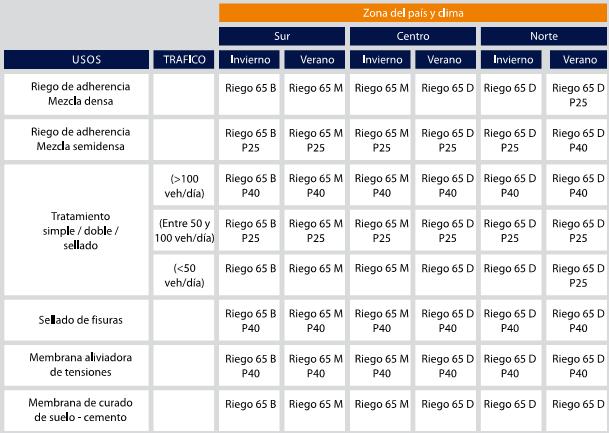
7) USE OF EMULSIONS SUITABLE TO SITUATION: SPECIAL BITAFAL ASFALTOS emulsions prepared with different hardnesses of the waste and with different degrees of modification. Please find attached our table recommendations by type of work to be done, the area of ​​the country and the time of year.

LIMITATIONS these recommendations:

Although it is possible to work during cold periods we not recommend performing work during the winter if:

1) highest temperatures all day do not exceed 10 ° C.

2) monogranular Treatments applied on hard surfaces such as concrete or asphalt layers and where traffic speed is greater than 75 km / h.

3) Surface treatments applied on very soft bases without adequate granulometry, as silts the coast, where a burial arid irrigation A occurs, reducing gaps and subsequent exudation.

TECHNICAL CONFERENCE Asphalt Mixtures - COARCO -

The BITAFAL Group was present at the R & D Technical Conference on new asphalt mixtures by the company COARCO from Argentina. It was held at the plant in Moreno, Province of Buenos Aires, on 25 April. Uruguay took part members of MTOP and LATU and Argentina participated leaders of National and Provincial Roads Authority, representatives from various dealers and other suppliers from the nearby shore.


During the conference the latest equipment were both laboratory mix design and workmanship, laying and compaction. mixtures of high RAP, colored mixtures, mixtures of batching and until a new asphalt scented low level of VOC emissions used were developed.

The sessions began with a visit to the company's state-of-the-art laboratory, where they have invested in high-level equipment for research and development. To list some of the equipment, they have an ignition oven to determine asphalt content, a gyratory compactor for mix design, a Wheel Tracking Test according to the new European regulations with a plate compactor, a unit to determine the dynamic modulus of mixes and a 4 point fatigue team.


Privacy Center


As for the laying and compaction equipment they have Vögele pavers and compactors next generation Hamm oscillatory system with GPS compaction optimization.

More photos HERE

Watch the Video HERE


FIRST TRANCHE OF ASPHALT RUBBER ON DOMESTIC ROUTES

FIRST TRANCHE OF ASPHALT RUBBER ON DOMESTIC ROUTES

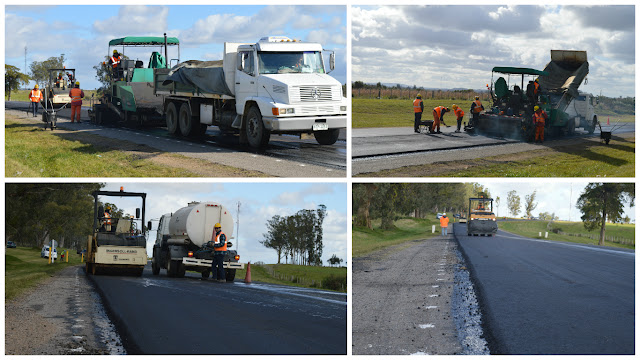
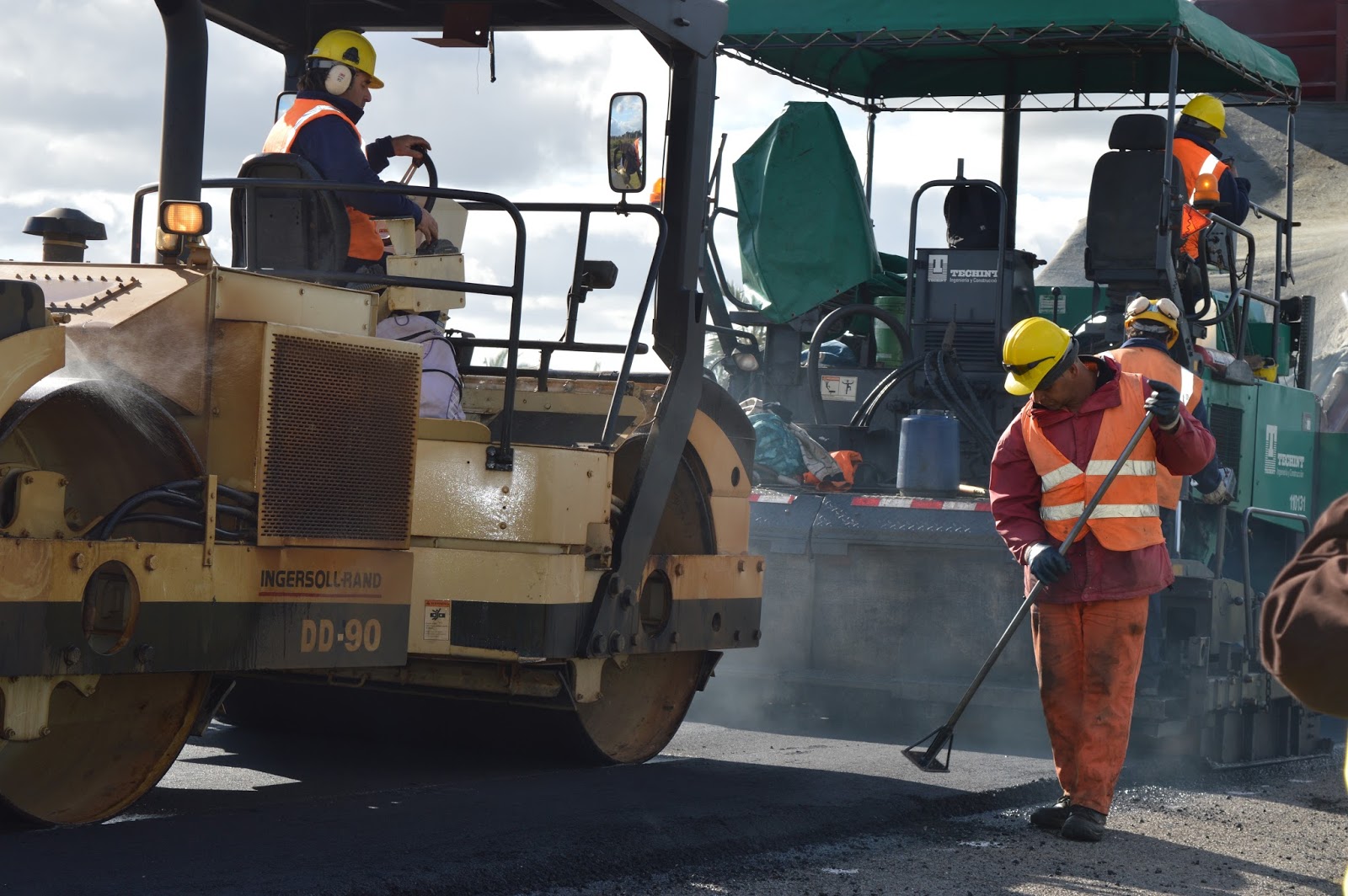
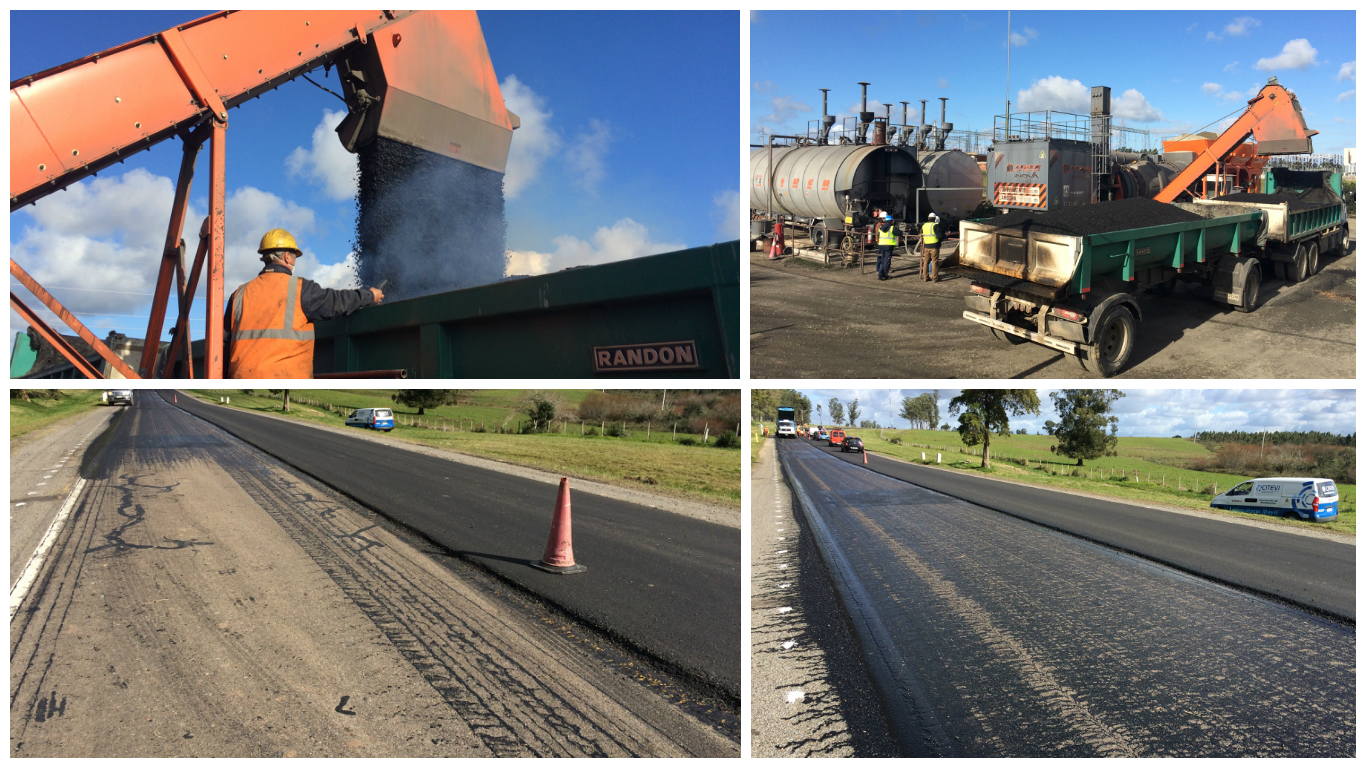
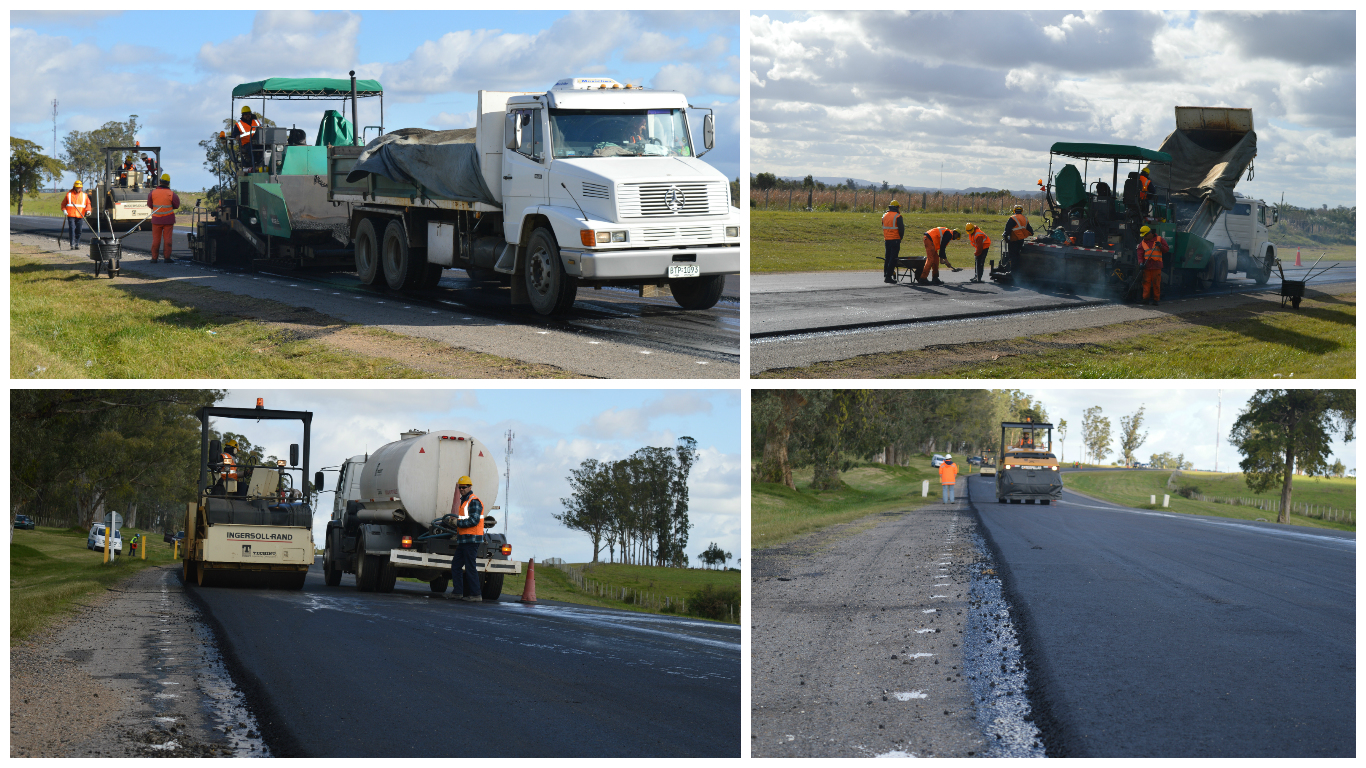
Last Friday, June 3 the first flight of recoating was performed with BITAFLEX AMC 50, modified asphalt tire dust on Route 9 along with Techint SACI. A stretch of about 1300 m on the road more was performed, near km 202 at the entrance of the city of Rocha.

This is another milestone in the development of technology in Uruguay after the success of the first stage of testing performed in 2009 at the entrance to our industrial plant.
The BITAFAL GROUP always at the forefront of new technologies, has developed a modified crumb rubber asphalt having performance characteristics similar against permanent deformation to a AM3. To ensure the quality and homogeneity of the product, we have built a specific plant for manufacturing BITAFLEX AMC 50 mixers with high power.
Since last December governing Decree 358/2015issued by the National Directorate of Environment (MVOTMA) in which tire producers and importers must take over the management of tires once their useful life. One of the most sustainable alternatives to recycle them is the modification of asphalt.
Already there have been several advances in Uruguay, as the presentation of Management Plans (El Pais, 06/13/2016), The opening of the first floor grinding used tires
(MAKING ROADS # 73 - May 2016) And performance of the first test section (REPORT CITEVI)
This time a semi-dense mixture was made in a thin layer to surface layer (CAC S 12), the thickness of 40 mm provided. Stability values ​​and design empty% were similar to those made with AM3.
In construction, fabrication, laying and compaction of the mixture was held at the same temperatures that were being made with AM3, with the advantage of better workability in work could be seen as technical.
We will report on the performance of this segment in future editions of the newsletter.

More pictures here

New unit mobile laboratory CITEVI

As we announced in previous editions of "Making Roads" We continue to strengthen the technical and logistical capabilities of our Technologies Research Center Vials.

The addition of a new mobile laboratory allows to transport more efficiently and safely to our technical and assessment teams and pavement samples for analysis need to be transported to our laboratory in Cologne Nicolich.

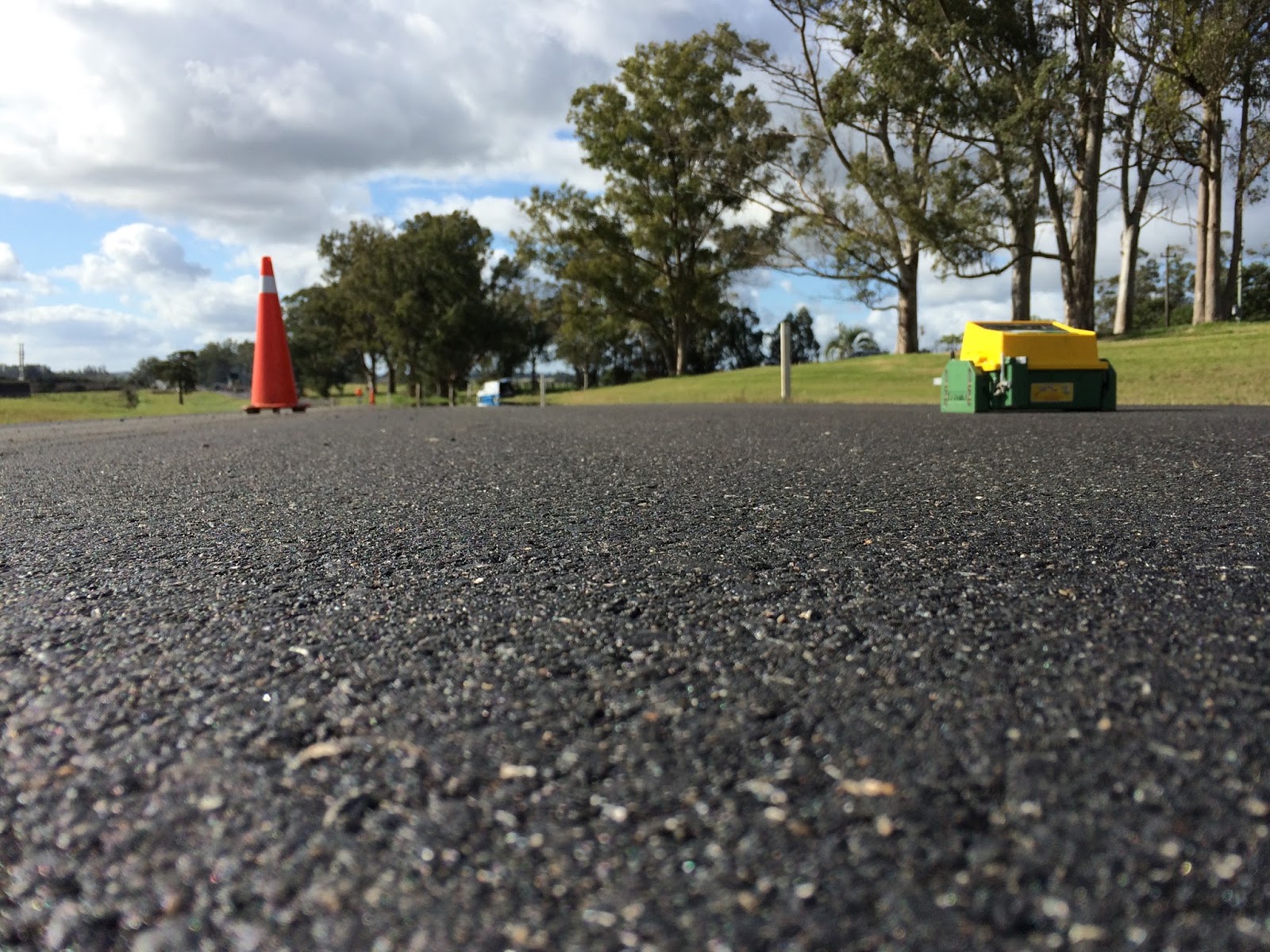
It is available to our customers for the testing of density and moisture in situ by the nuclear densitometer, determining the bearing capacity of soils, bases, subgrades, etc. deflectograph by light impact and for materials characterization tests.

More information: citevi@citevi.com.uy
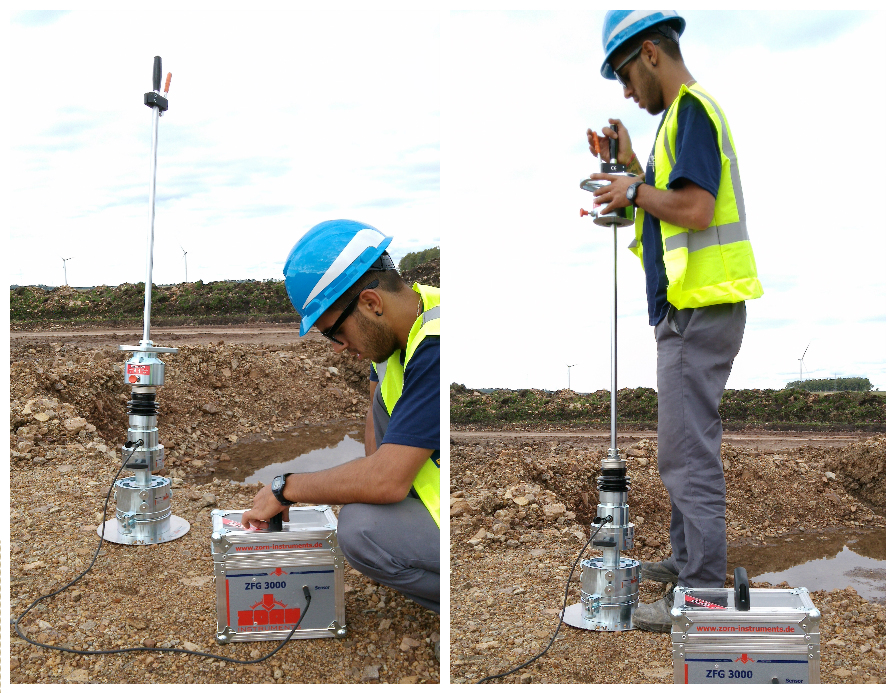
deflectograph light impact (LWD): New incorporation into CITEVI

deflectograph light impact (LWD): New incorporation into CITEVI

The new equipment strengthens the sion in pavement evaluation and esplanades.

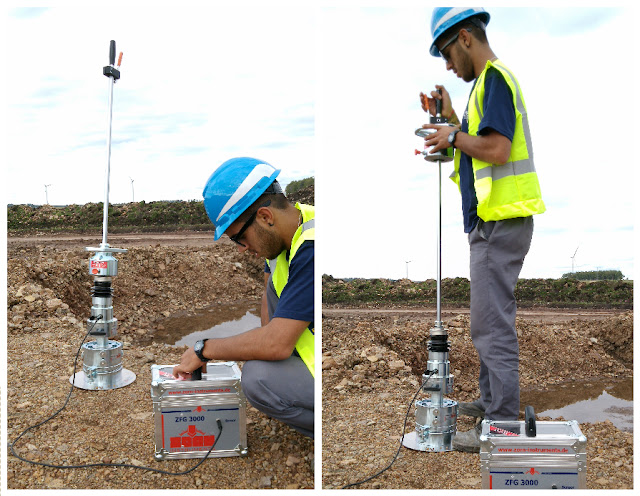
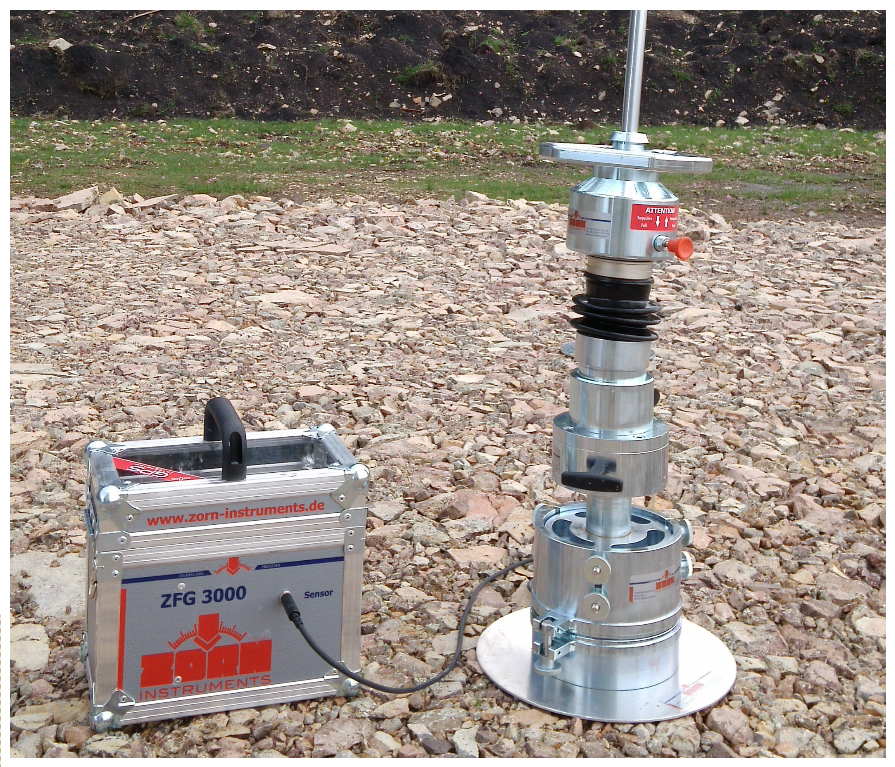
Last March was imported from Germany, a deflectograph Light Impact (LWD, its acronym in English) ZFG 3000 Zorn Instruments. The computer determines the dynamic deflection module (Evd in MN / m2) and pavement subgrade for determining the bearing capacity and compaction of the materials used quickly, economically and easily.

The LWD, can be used as alternative to the assay plate static charge as indicated by the literature and the German regulations with advantages:
· Does not require a loaded for conducting the test truck, saving on costs and expanding applications testing.
· Can be used in confined spaces due to the size and lightness of equipment.
· High yields because each measuring point takes about 3 minutes on average.
· Provides accurate tests and recording automatically the measurements with time stamp and GPS coordinates.
Equipment joined with two 10 kg weights for one allowing pulse strength 7.07 kN and another 15 kg giving a pulse of 10.6 kN with load plate 300 mm.

Moreover an accessory brought to replace the load plate, to measure the in situ CBR materials. In the coming months we will be bringing you the results of different comparative studies are underway to determine the applicability of the equipment for determining these parameters.

Emulsions for high demands (65 IRRIGATION BITAFLEX P40)

Emulsions for high demands (65 IRRIGATION BITAFLEX P40)

Since 2011, SPECIAL BITAFAL ASFALTOS, It has expanded its line emulsions seeking to adapt to climatic conditions, use and traffic which are undergoing different technologies.

The specification used in our country for modified emulsions is the IRAM 6698 standard: Modified cationic asphalt emulsions. In it, to determine the degree of modification, the minimum requirement for elastic torsional recovery is 12%, a value that we consider extremely low since a conventional asphalt cement has about 8%. That is why we have specified two ranges of elasticity for all types of modified emulsions manufactured, one with a minimum of 25% and another with 40% elastic torsional recovery and three types of asphalt penetration ranges depending on the application and thermal gradient in the area to execute the work.

Then we attach an indicative table for selection of emulsions Irrigation

The emulsion designed for the highest demands was the emulsion BITAFLEX RIEGO 65 P40 D, Which is manufactured with an asphalt hard penetration of 50 to 80 dmm (and a viscosity above 2000 cP as determined in a study of sections required not presented exudates) and add a high amount of polymer achieve greater torsional elastic recovery 40%.

Already there are several sections that have used this emulsion on domestic routes (Route 26, Route 15, Route 8, Route 5, etc.) and their use is becoming more common because of the noticeable advantages of their use. On the one hand, it ensures good performance of works even when not run in optimal temperature conditions or performance and moreover withstand high traffic demands and climatic giving high durability to sections executed.
this emuslión was recently applied in the Chipping performed by Served en Route 8 with excellent performance, withstanding high temperatures and traffic, with minimal detachments.

For inquiries please write to bitafal@bitafal.com.uy or visit our website www.bitafal.com.uy

Ways of the world: Impressions of New Zealand trip

Ways of the world: Impressions of New Zealand trip

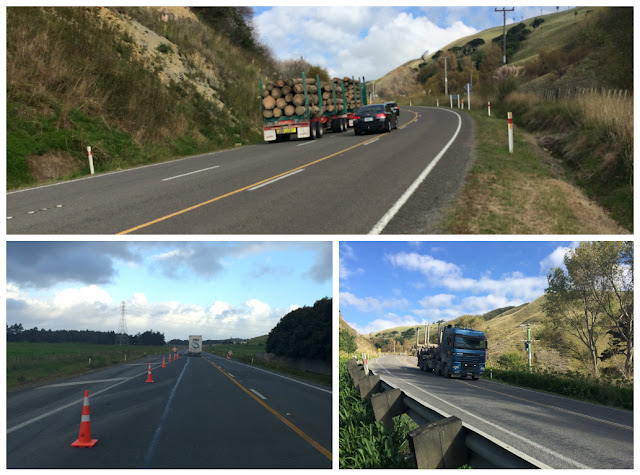
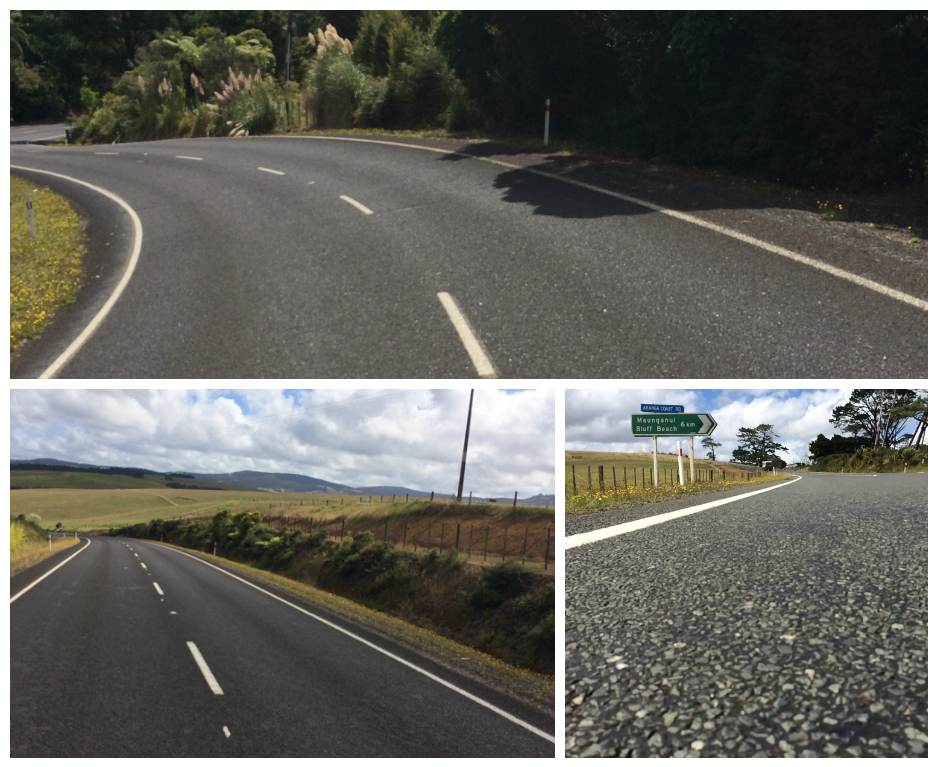
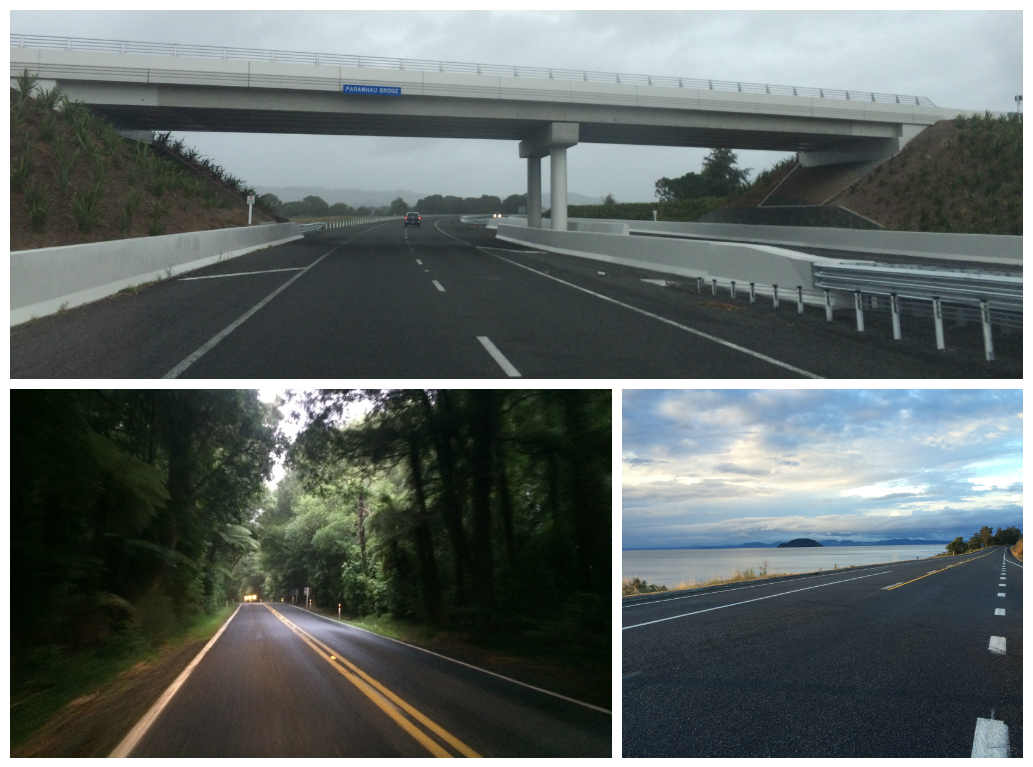
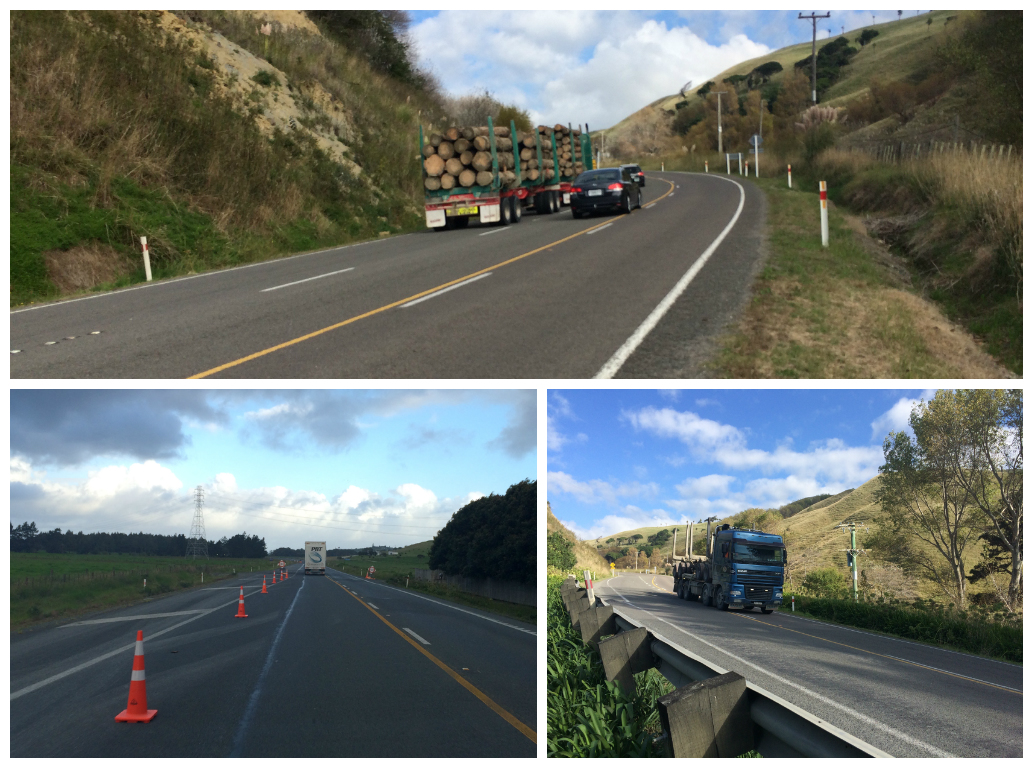
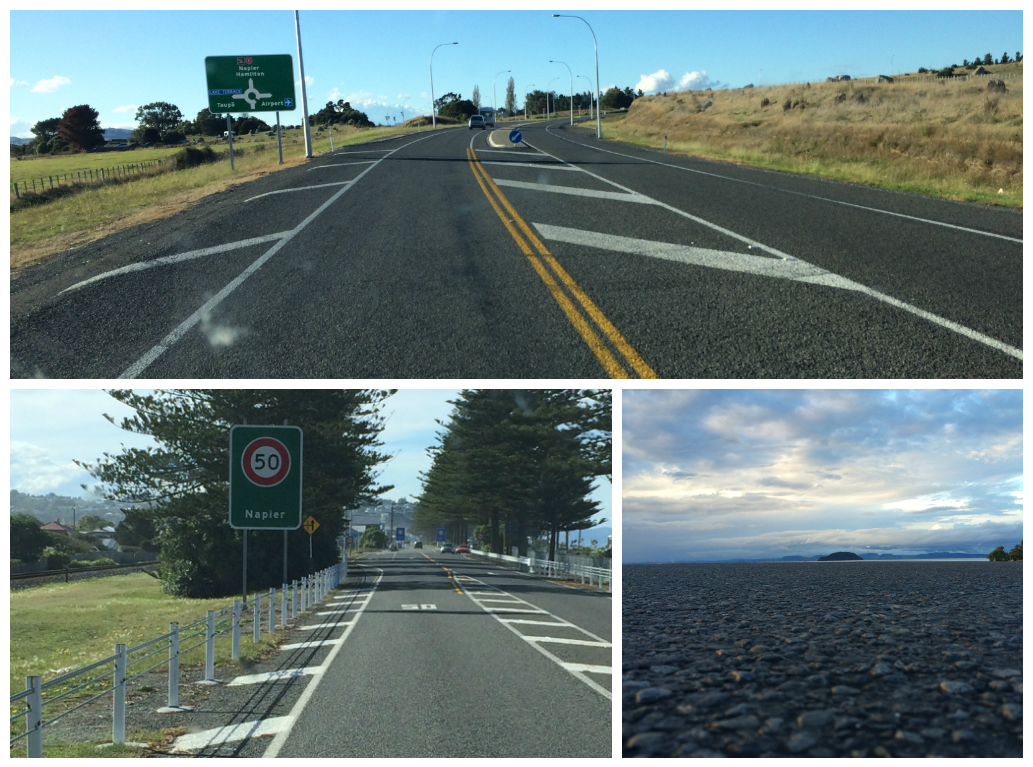
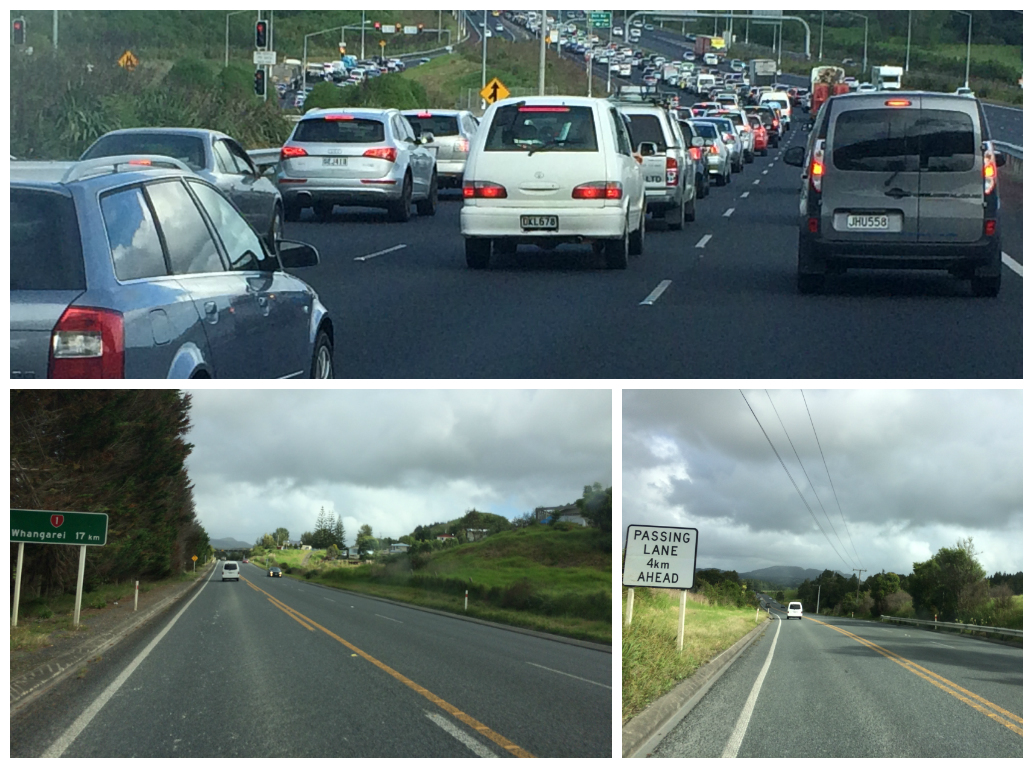
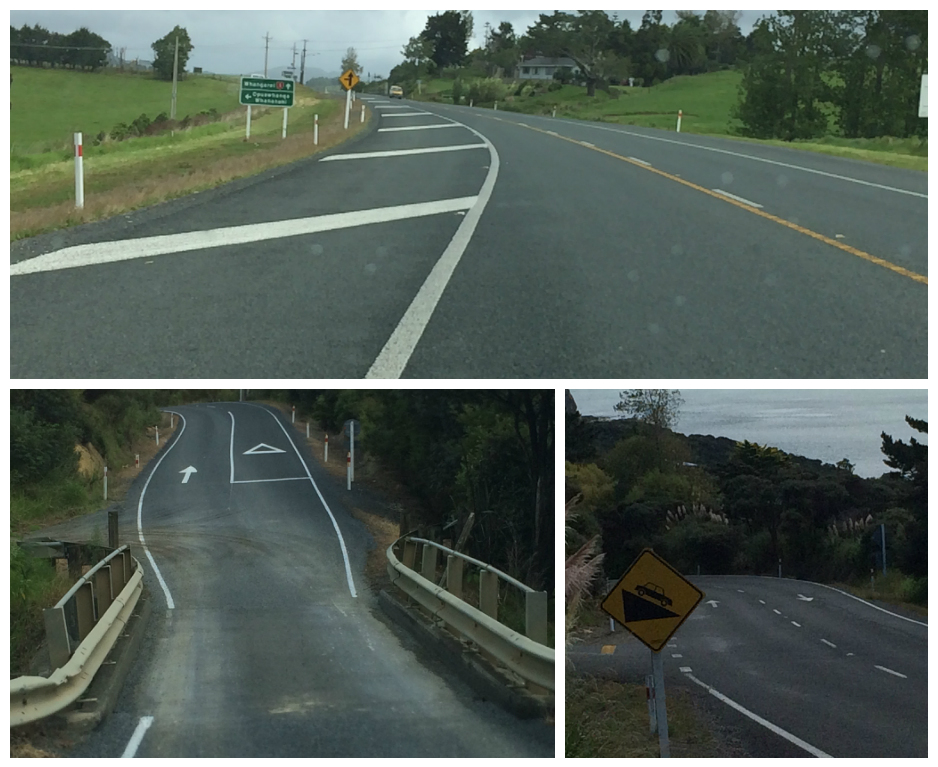
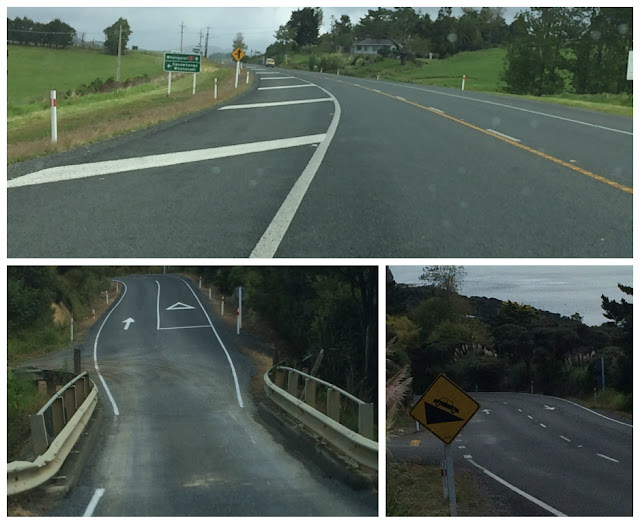
We had the pleasant opportunity to visit for 20 days, covering 2735 km of roads NEW ZEALAND and returned extremely surprised by the quality of roads in the country.
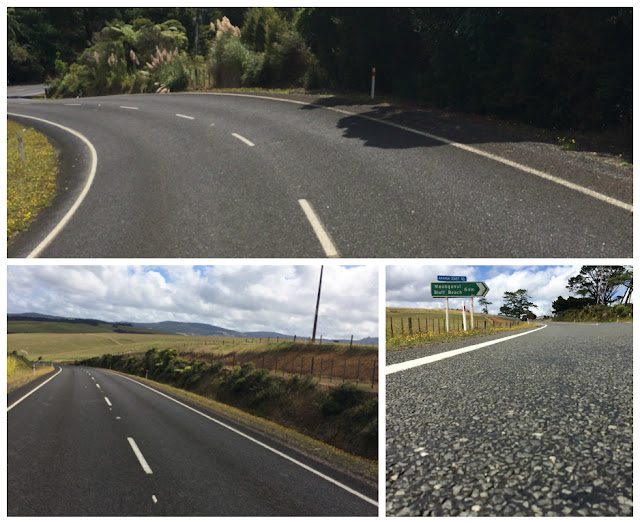
New Zealand has been successful in how to combine technologies way to get a paved road network of high quality. Let's start with comparative data with our country:
-New Zealand has 270,000 square km, 50% more than Uruguay.
-have 95,000 km of highways and roads (0.35 km / km2) of which 63,000 km are paved, 66% of the total.
-Uruguay 78,000 km road (0.44 km / km2) of which have 8000 pavings, only 10% of the total.
In other words, we have a higher density of roads per km2, but far we have long paved network as theirs.
It is that in New Zealand stabilization in situ with cement, lime or asphalt, is present decades, using as surface treatments surface layer and leaving only places high demands on the use of asphalt.
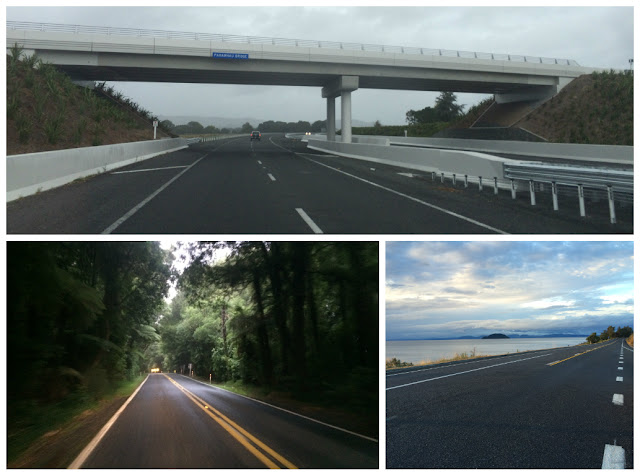
As we all know, the quality of the bases is essential, but if surface treatments are used as rolling. Conversing with them consulted engineers work, how they do it, and his answer was blunt: "It puts on a carpet and hard floor will last a lifetime, if you put on the clay have to throw very soon".
Transportation Agency's own New Zealand indicated on your website: "The surface treatment is the most common type of rolling road in New Zealand. Economic, flexible and resilient, it provides an adaptable, safe and cost efficient surface for road users. We have a regular all surfaces to ensure they will perform at maximum follow.High traffic roads resealed usually need about every seven years, while roads that carry less traffic can last 15 to 20 years before resurfacing is required. " (Source:NZ Transport Agency)

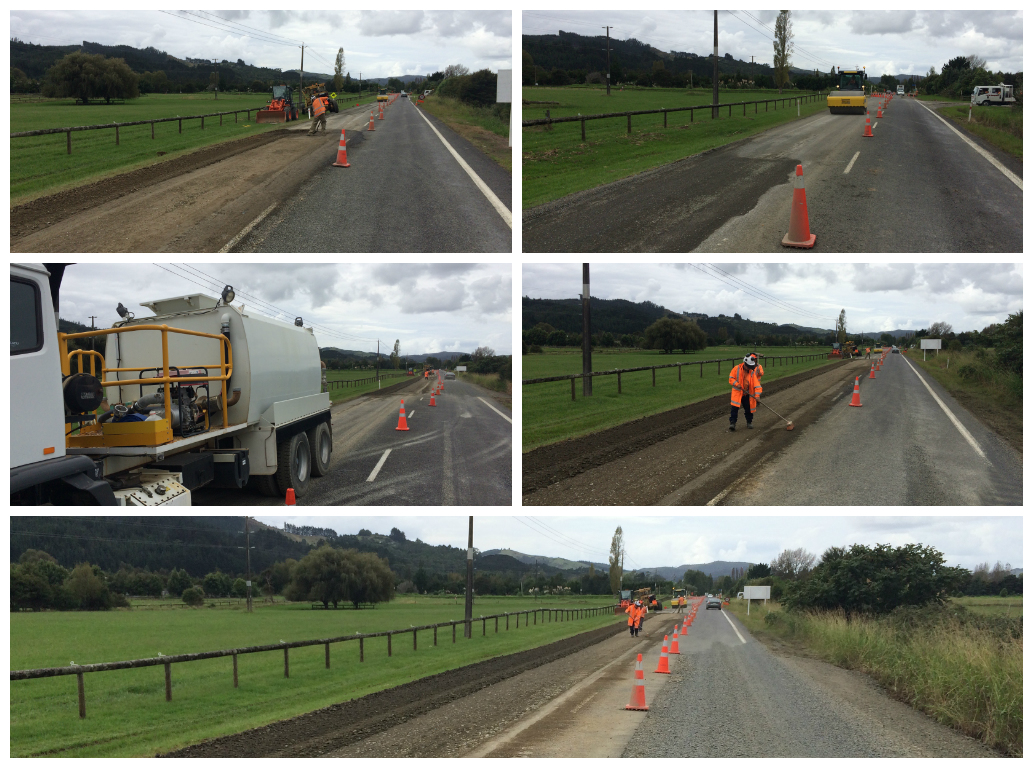
We share then as discussed with technicians work procedures used for construction of a typical road in New Zealand.
CONSTRUCTIVE PROCEDURE
The kickoff is performing test base materials, the effects deeply know what material is counted. The development laboratory formulates a stabilization project based on cement, lime or asphalt and if you have enough good granular material in the area is considered the particle size stabilization with a maximum size of 65mm and the addition of 2% of cement.
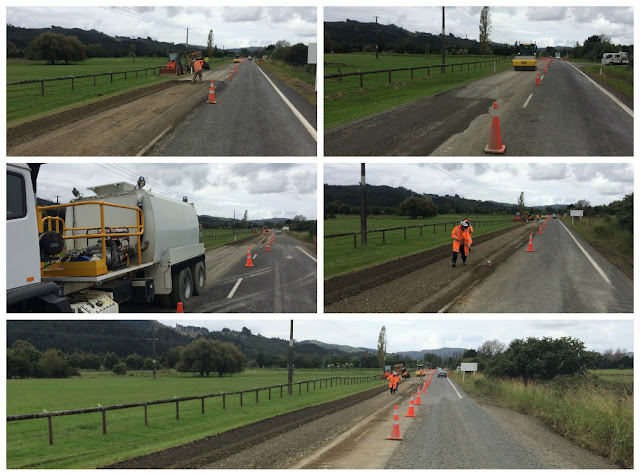
The bases are treated perfectly with suitable materials, with the necessary granulometry compacted and cleaned before waterproofing.
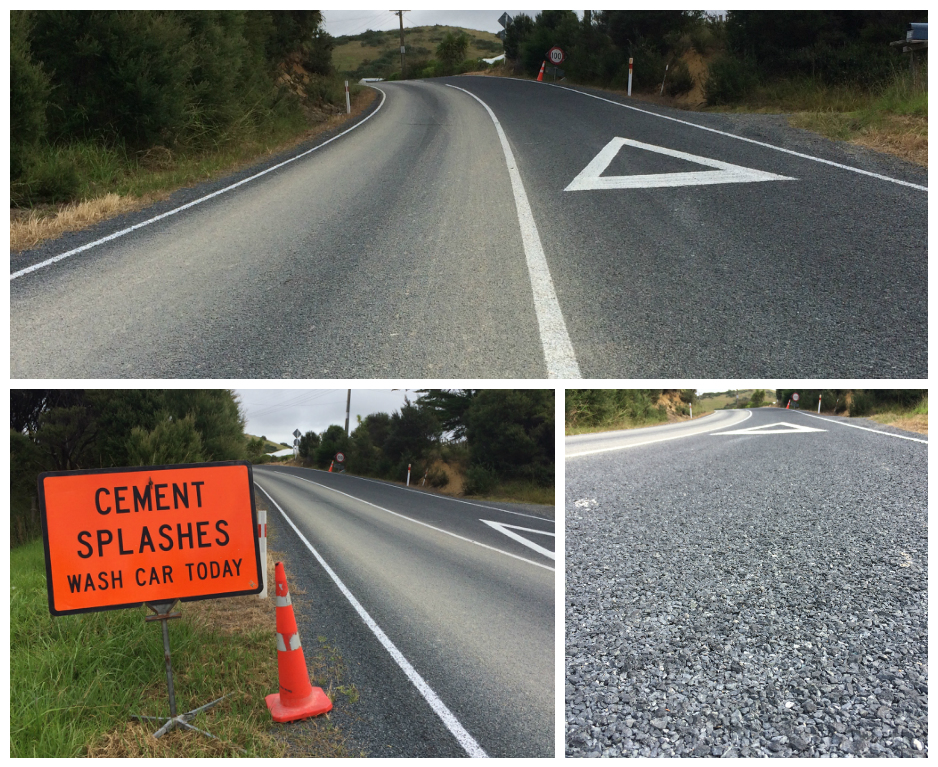
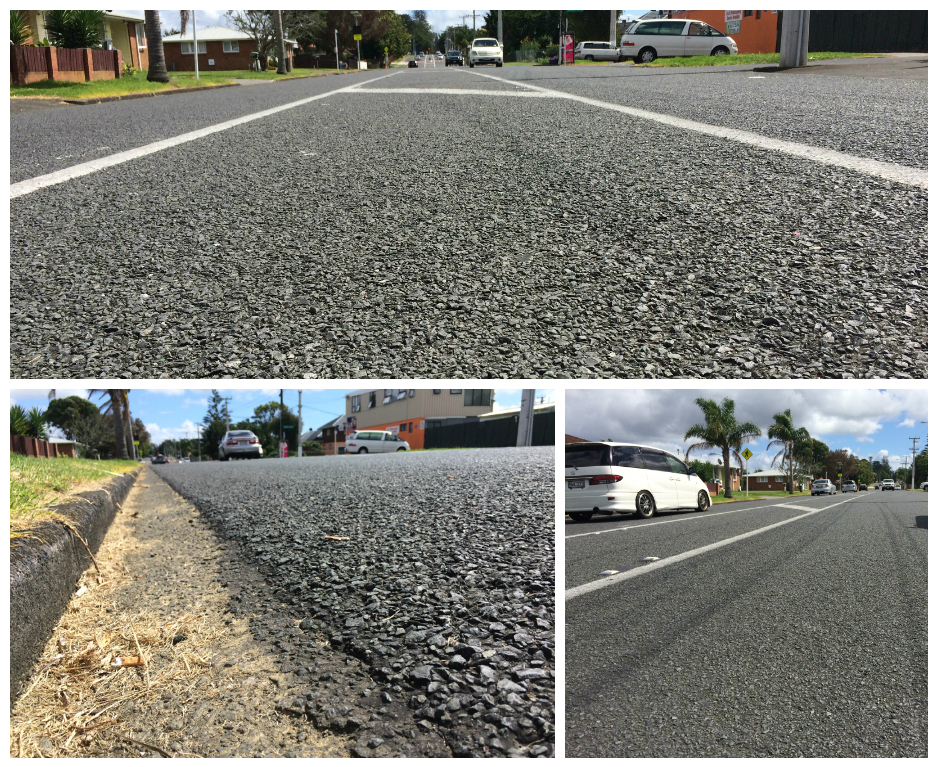
By having a very good base are limited to be as tread layer surface treatment with dry monogranular 6-12 mm and with the passage of time, when the treatment loses or shows a signal texture permeability, apply a second treatment with fraction 2-6 mm improving rolling and waterproofing structure again.
Then repeat the cycle with a large fine gravel 6/12 on and so on, always taking a road in perfect condition applying preventive maintenance at the optimum time.
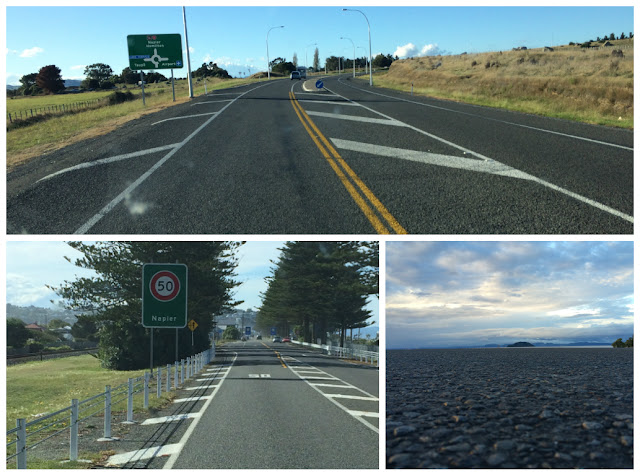
Asphaltic used folders in the inner city, joints roads, highways exit of cities and in very short stretches of mountain roads when the slopes and angles are too demanding for a surface treatment.
The guide Transportation Agency New Zealand on the selection of the suitable tread layer is in the following link: Selection Guide surface layer

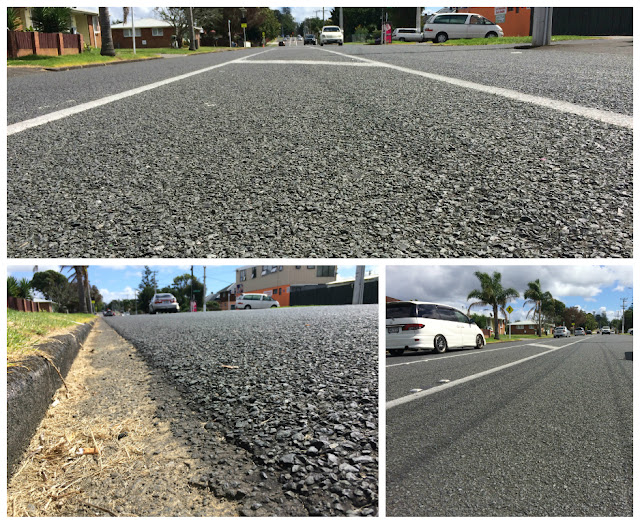
The use of surface treatments monogranular or Chiping, reaches places such as a neighborhood of the city of Auckland, and most important port in the country and the North Island as seen in the photos below city.
Our trip was not only on this visit in the month of May Bitafal group You will be participating in a two-day course on technologies Chiping in the city of Christchurch in the South Island. In addition we already have a publication of more than 500 pages of the Manual on Chipsealing in New Zealand. Interesting document available on: Chipsealing in New Zealand
To keep growing and researching, we have a long way to go.
We leave more photos in the following link
Advanced technologies: Chiping on Route 8

Advanced technologies: Chiping on Route 8

The company has relied on Serviam Bitafal Rentals to assist in the maintenance of Route 8 between Pirarajá and Aramendía through technology Chiping.
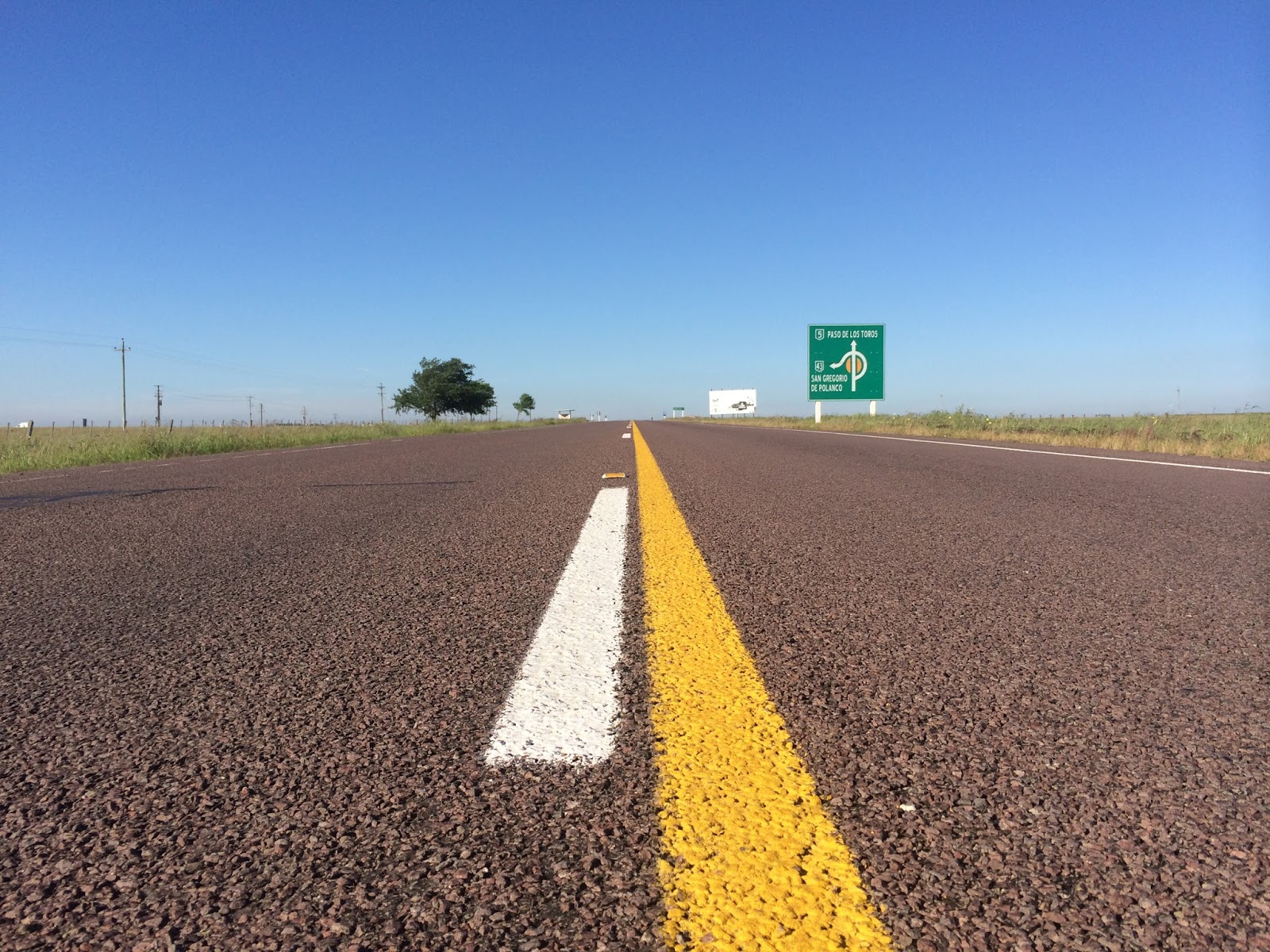
It involves the application of a simple surface treatment fog irrigation, using a highly modified with hard asphalts emulsion (Emulsion BITAFLEX IRRIGATION65 P40 D) And aggregates of excellent quality and grain size adjusted.

La condición inicial del pavimento consistía de una carpeta asfáltica fisurada pero casi sin ahuellamiento. La empresa realizó los bacheos necesarios y el sellado de fisuras y Bitafal Rentals colaboró con las modernas doble esparcidoras para lograr una buena terminación con elevados rendimientos de ejecución.
The result was a high surface macrotexture improving tire grip with the pavement and less effect "spray", combined with a total water proofing, ensuring a longer life to the pavement. Furthermore the application of a surface irrigation fog, beyond ensuring adherence of aggregates, manages to homogenize the surface to give a uniform aesthetic finish.

Combining a good job of preparing the surface, using materials of superior quality and performance with the latest equipment, we are sure it will work long service life.
Just relieve the sections of Chiping executed Ruta 5 por Necklace (San Gregorio north) in 2010, as we reported in previous editions of "Making Roads" to convince durability and excellent surface characteristics of technology.

ROADS :: :: MAKING
Bulletin No. 26 (23.11.2010)
Bulletin No. 54 (06.21.2013)

See all photos ON HERE

We use own and third party cookies to help us optimize your visit to our website and also to improve service delivery and thus adapt to their most relevant and useful to better their experience needs. When you click OK to continue with navigation and thus confirm that you have read the information and accept the activation of cookies.

You can allow or reject use at any time can change the Configuration Options Privacy - Cookies Policy -

Privacy settings

When you visit a website, you can store or retrieve information in your browser, mainly in the form of cookies. Check your personal services cookies here.


We track anonymous user information to improve our website.
.
  • _ga
  • _gid
  • _gat

Decline all Services
Accept all Services