RECYCLED CEMENT AND TMT ROUTE 15

RECYCLED CEMENT AND TMT ROUTE 15

Molinsur trust GROUP BITAFAL for the implementation of technical TMT on recycled with cement made in Route 15.

Adjusted dosing and construction conditions, has been developed excellently recycled TMD on cement. The combination of these two techniques provide a unique opportunity to build synergy routes in our country.

Recycling Portland cement is carried out very rapidly on which an emulsion is applied IRRIGATION BITAFLEX 65 P25 with sand as curing irrigation. TMD is then applied with 14 to 19 mm and gravillín stone 2-6 mm with posterior irrigation fog, all run on the same day and with the same emulsion BITAFLEX IRRIGATION 65 P25.

The surface quality of TMT shows great cohesion of the whole package, without loss of aggregates and large voids content serve several functions. For one drain water towards the shoulders reducing the "Spray" effect and leaving a proportion of feasible to be filled by binder and thus prevent any errors dose or overlap that can result in air exudates.

The results are already more than validated on Route 15 in other sections own previously executed. It is expected durability of these jobs that we hope will be adopted by more manufacturers in the short term.

NEW TECHNIQUE FOR CEMENT CRACKING CONTROL

NEW TECHNIQUE FOR CEMENT CRACKING CONTROL

Serviam has developed an interesting team to prefisurado recycled with cement.

Drawbacks consabidos generating shrinkage cracks of cemented materials are subject to attack because they can reduce the life of the pavement by water ingress. Usually in our country it has incorporated the technique with a heavy microcracking to mitigate these effects but there are other alternatives globally with specific equipment Compactor.

Serviam company developed a computer adapted to perform a Bobcat injecting the emulsion prefisurado IRRIGATION BITAFAL 65 at a depth of 20 cm each 4 m crosswise.

After initial compaction of the recycled material prefisurado this is done then continue working, leveling and final compaction. Of note is the use of technology to achieve grade project controlled by RF motoniveladora.

Subsequently curing the same emulsion BITAFAL IRRIGATION 65 is performed with quarry dust is released and traffic. By far the results are very good and it shows on the go using technology to control IRI. In the next few weeks they will be starting tasks paving asphalt hot mix in 5 cm surface layer.

We will see the behavior of this technique prefisurado in the future. For now, in every induced cracking and the asphalt it is necessary to prevent water ingress so hopefully a lifetime of work done.

The equipment developed by Serviam has a storage tank emulsion, a positive displacement pump, a wedge (shark fin type) of 25 cm which leaves a pipe 20 cm and a solenoid valve for controlling the dosage from Bobcat.

The fin makes a wedge about 2 cm wide in advancing the equipment is filled with emulsion BITAFAL IRRIGATION 65. Then the material of the side itself closes the wedge and leveling and compaction are performed normally. It can be seen watering cured, made with 1L / m2 of IRRIGATION 65 and 6 L / m2 of dust, marks prefisurado every 4 m in the photos below.

Evaluation of penetration of the aggregate in the bases for surface treatments

Evaluation of penetration of the aggregate in the bases for surface treatments

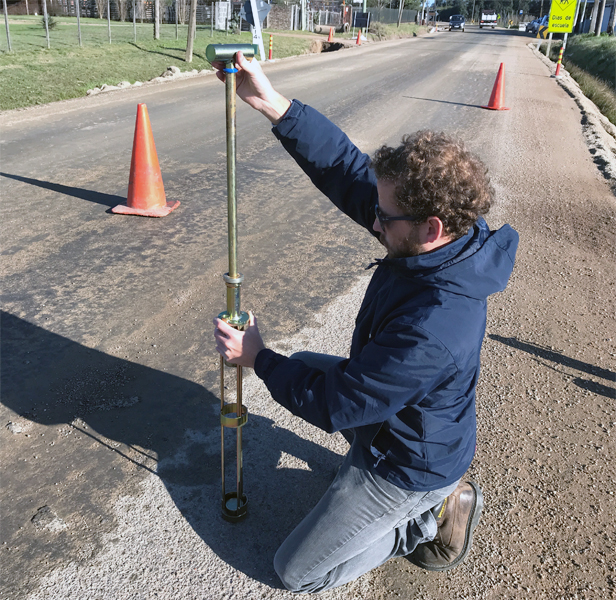
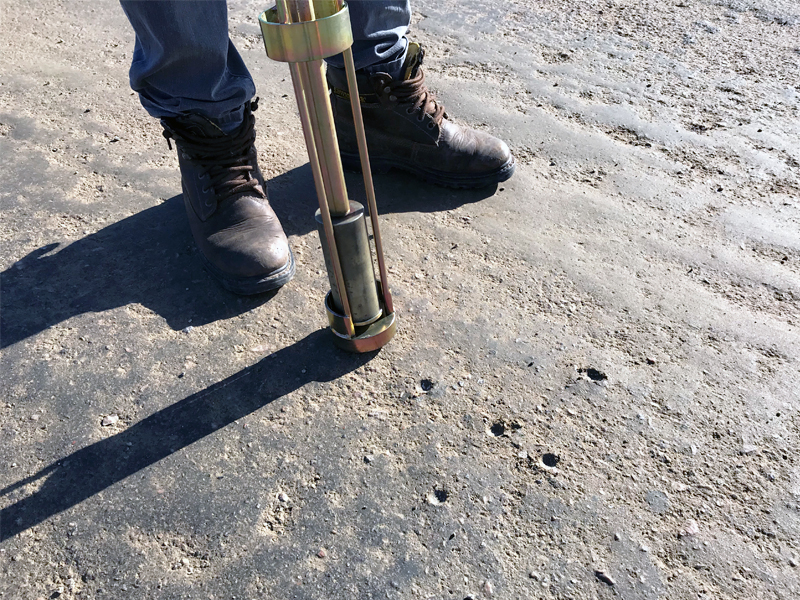
Using the penetrometer ball as quality control element base treatment.

In the path that is being traced at the national level to standardize design criteria for surface treatments, we believe the inclusion of the ball penetrometer test is of utmost importance. It determines if the base is in proper condition to receive initial treatment, or if it requires additional work. It is also an indicator of the degree of compaction that has been achieved and the moisture contained in the base. The test was originally developed by South Africans and is also used in Australia and New Zealand to quantitatively measure the penetration potential of aggregate into the base.

En este frío mes de Agosto, junto con Lucio Borelli de CVC, pusimos a prueba este equipo de medición en diversas superficies: bases granulares no ligadas, bases estabilizadas con ligantes (cemento Portland y asfalto espumado) y mezclas asfálticas. A continuación se ilustran algunas de las conclusiones, acompañadas de fotos de la experiencia.

In the initial treatments (surface treatments on bases), the subsidence of the aggregate on the surface always occurs, to a greater or lesser extent. The degree of penetration will depend on the base material, its humidity, compaction and the traffic to which it will be subjected. Not taking these parameters into account results in exudate in the short term, becoming particularly evident in the tracks. The explanation for this phenomenon is intuitive: the tire pressure sinks the stone into a base that allows it and the voids that correspond to the asphalt and the air (to achieve the macrotexture of the wearing course) are occupied by the material of base, causing the asphalt to surface through the stone, which results in exudation in the tracks.

El ensayo que se propone es muy sencillo y de fácil aplicación: consiste en la penetración de una bola de 19 mm de diámetro que es golpeada por un martillo normalizado lanzado de una altura conocida (Australian Standards: AG-PT/T251 – Ball Penetration Test). El valor de penetración queda registrado en el aparato, ya sea en un indicador electrónico o en una regla graduada (que viene incorporada).

Los resultados de este ensayo se utilizan para ajustar la cantidad de ligante a regar o para seleccionar un tratamiento correctivo previo al definitivo. Su uso más importante es quizá el de establecer el límite en el que no se pueden realizar gravillados sin antes recompactar o estabilizar la base, dado que su riesgo de falla es muy elevado.

La primera y más importante de las conclusiones es que la preparación de la base es un factor determinante en los resultados. Un problema común es que las bases presentan un exceso de finos en la parte superior que genera que la bola penetre con facilidad. Aunque parecen estar lisas y homogéneas inicialmente, tan pronto como se barren, una gran cantidad de este material fino se dispersa, dejando una superficie áspera e inconsistente que es problemática para ejecutar un tratamiento.

Another issue to consider is the humidity at the time of the test: if the surface is visibly wet, the penetration gives higher values. We could corroborate this by testing the same surface early in the morning and close to noon. In some cases, the conditions of the base at the time of the test are good, but when a primer is applied, due to capillarity and temperature differences, humidity begins to increase in the first 5 cm, affecting the penetration result.

Developing

EXPERIMENTAL SECTION: DIFFERENT BASES ON CEMENTED taxiways.

EXPERIMENTAL SECTION: DIFFERENT BASES ON CEMENTED taxiways.

An experiment carried out 18 months ago shows how the use of bituminous treatments reduce the reflection surface cracks.

C.V.C held in Route 69 in Montevideo in early 2016 an interesting experimental section of Portland cement stabilized base which they were applied different layers of rolling to see its evolution:

1. Hot asphalt layer of asphalt AC20 3cm

2.- Bituminous treatment Simple -TBS- fog irrigation (14-20mm arid emulsion IRRIGATION BITAFAL 65 )

3. Cape seal (TBS with aggregate and emulsion 14-20mm IRRIGATION BITAFAL 65 + Micro Type II TMN 5mm emulsion BITAFLEX MICRO 62 P25)

4.- microsurfacing Type III (TMN 10mm emulsion BITAFLEX MICRO 62 P25)

After 18 months in service you can determine that all taxiways are used in very good condition overall and are alternatives to consider when protecting a stabilized with cement.

As reflection of shrinkage cracks in the cemented basis substantial differences exist between each of the layers used that detail below.

STABILIZED BASE:

The cement stabilized performed looking for a simple compressive strength of between 15 and 20 Kg / cm2. He was executed in place with a cold recycler and no crazing was performed. Irrigation curing was performed with emulsion IRRIGATION BITAFAL 65 and gravillín.

Wearing courses:

After 18 months of service shows that:

1. Hot asphalt layer of asphalt AC20 3cm. The cracks in this case are transverse to the roadway between 3 and 5 m. Also it is shown in much of the length of the longitudinal crack in the shaft which corresponds to the overlapping of the execution of the cement base.

2. Treatment Bituminous Simple irrigation fog (14-20mm arid emulsion IRRIGATION BITAFAL 65 ). Fissures surface but are difficult to identify the observed are between 9 and 18 m and no longitudinal crack is identified. In some identified fissure could be seen a slight loosening of aggregate.

3. Cape seal (TBS with aggregate and emulsion 14-20mm IRRIGATION BITAFAL 65 + Micro Type II TMN 5mm emulsion BITAFLEX MICRO 62 P25). In this case the cracks are clearly visible because the smooth surface which achieves the Micro Type II. They are transverse between 5 and 12 m apart. Nor longitudinal fissure of the overlap of the base shown.

4.- microsurfacing Type III (TMN 10mm emulsion BITAFLEX MICRO 62 P25). In this section transverse cracks between 2 and 3 m apart and longitudinal cracks of overlap almost the whole section are identified.

PRIMARY CONCLUSIONS (First 18 months)

• Bituminous simple treatment is the wearing at the time shows better performance in the reflection of cracking, not so much so in the comfort of the user (and neighbors) because it is quite noisy. (Patch initial sand: 3.75 mm). Something that could easily be solved with a finer stone or a sealing treatment.

• Then follow the Cape Seal with a very good performance against the reflection of cracks which obviously is contributed by the Bituminous simple treatment. In this case the sealed surface gives quiet and safe running. (Patch initial arena: 0.95 mm)

• The folder has a good asphalt performance but still has more Cracking the Cape Seal for security and is thinner than the rest of the taxiways (Patch initial arena: 0.45 mm) Macrotexture. In turn it would have to make an economic comparison against the cold techniques, but at the same cost would be reasonable to use treatments or Cape Seal.

• The Micro Type III had the worst performance against reflection even crack your Macrotexture is suitable (Patch initial arena: 1.10 mm)

For future tranches of these features we suggest:

Perform 1_ TBS with modified emulsion BITAFLEX P25 or P40 65 IRRIGATION to further reduce the reflection of cracks and have more cohesion in the asphalt to prevent premature detachment.

2_ Test with TBS with a little fine stone (10 to 14 mm) and made in Australia and New Zealand, to have good resistance to cracks without neglecting the noise generated.

3_ Perform a double treatment Trabado (TDT) with modified emulsion BITAFLEX P25 or P40 65 IRRIGATION to contemplate the above as well as high yields of work and minimal waste of materials.

EFFECTS OF STABILIZED RESTRICTION ON LOSS OF FINES BY PUMPING

EFFECTS OF STABILIZED RESTRICTION ON LOSS OF FINES BY PUMPING

Granular basis of any type whatsoever in quality, texture or homogeneity suffer unavoidable variations in the presence of water and is the big problem with road engineering if that happens.

For this is that it gives great importance to the drainage systems in the design of routes, waterproofing the foundations built with asphaltic materials in most of the time and then expected during routine maintenance look that water does not Enter the bases.

We know that there is not a virgin granular material that is not affected by water, hinchándolo in some cases or acting as a lubricant when traffic acts, pumping it from its original location causing potholes.

Stabilizing Portland cement solves the problem of pumping fine and 100% mitigates generating bumps or wells.
Vials know the virtues of Portland cement as a major stabilizer of granular materials for over 50 years, but the actual practical results were very heterogeneous, complex to implement and low yields due to such a long time between perfect mixing cement ( in concentrations as low as 3 to 4%), wetting and final compacting.

It is for this reason that the Germans begin in the 70s to design anti-roll bars atomizing water where the time between the cement is mixed with aggregates and required additional moisture occurs in less than one hour period.

Why less than an hour? ... what happens is that the cement setting begins in contact with moisture and applied in less than an hour to achieve optimum compaction density for that project.

The setting is not another chemical process and crystallization those crystals are attached form a IRREVERSIBLE network equipment and logistics execution adequate to achieve the required times are needed.

We entered 2 very important concepts such as the Crystallization and irreversibility.

This network of crystals irreversible link system while pumpable particles move or change their structure preventing premature deterioration of the pavement.

In the photograph we can observe in sections stabilized where mixing and compaction was conducted, granular materials suffer displacement action of water and traffic.

For these observations we can say that after having done a good project stabilized and have used the best equipment available, but good logistics is achieved in the implementation, we will have surface defects which the user will be perceived and which probably made the first maintenance operations.

THE IMPORTANCE OF PORTLAND CEMENT STABILIZED.

THE IMPORTANCE OF PORTLAND CEMENT STABILIZED.

Our company in 2013 introduced the first Uruguay Wirtgen WR2000 stabilizer knowing that coming times of change in our industry due to increasingly tight budgets to meet a growing demand for road maintenance.

Moreover, the provisions of Dinama and Dinamige for quarrying are increasingly restrictive implying that these technologies, reuse of existing materials, are here to stay.

The more than 14 machines that are operating in our place to prove it. more economic and lasting foundations are achieved using existing materials and also with yields never imagined execution.

This technology allows us to think of other alternatives for pavement design, especially in the surface layers, which are not disseminated by the lean life they had in defective granular bases.

It's not new, but We are convinced that the foundations of our roads are the foundation and the life of asphalt which we place on them.

It is our vocation known surface treatments, very successful experience in new binders and search for new alternatives of implementing them prove it.

It is a technology that fits perfectly with the costs that Uruguay can pay for your roads and excellent cost / benefit based on traffic routes we have in our relationship.

We are studying sion All manual published in the roads of Australia, New Zealand and South Africa where more than 90% of the kilometers are executed surface treatments and where they used the stabilized with cement massively.

This work is being developed thoroughly and bringing it closer to the realities of this side of the southern hemisphere to transmit knowledge to the sector being adquiriendo.Prontamente be informing them about the progress of this work.

WORKS IN PROGRESS Route 8

The company CVC S.A. It is carrying out a large deployment of technologies in the two sections of work which has awarded Route 8 between Treinta y Tres and Melo.

We were able to visit the workshop and see more of the work fronts that are operating simultaneously. A coarse cement laying part 20 cm thick and on the other hand the recoating with asphalt. In the workroom have a rough cement plant of 400 ton / h, large stocks of Portland cement, crushers, sorters and asphalt plant 120 ton / h.

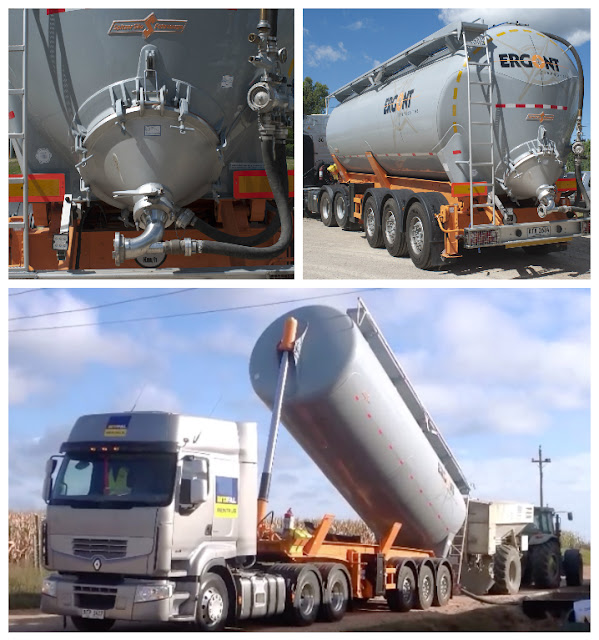
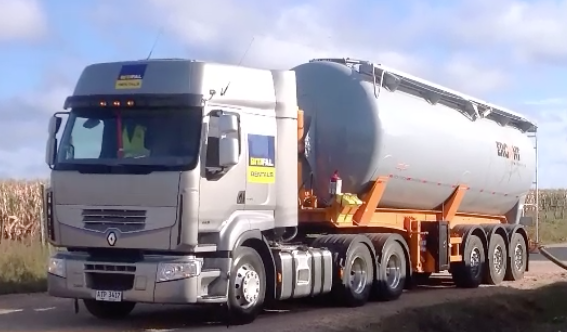
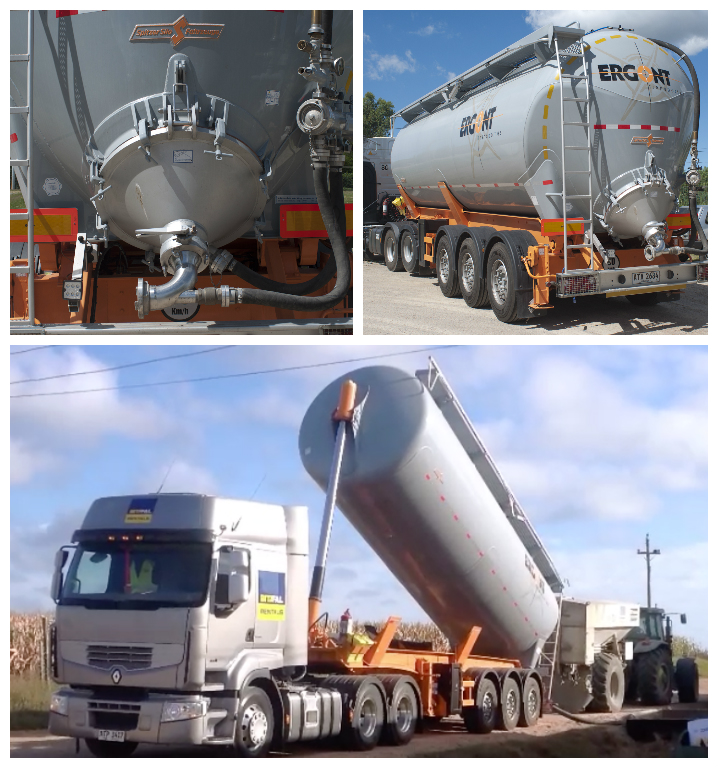
He Bitafal group is proud to collaborate with the company in logistics both asphalt cement and Portland cement with new hoppers which our carrier Transportes Ergont.

All of the photos ON HERE

Ways of the world: Impressions of New Zealand trip

Ways of the world: Impressions of New Zealand trip

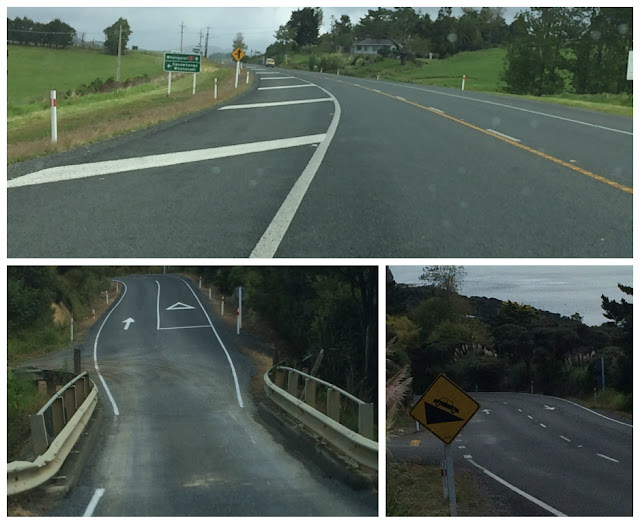
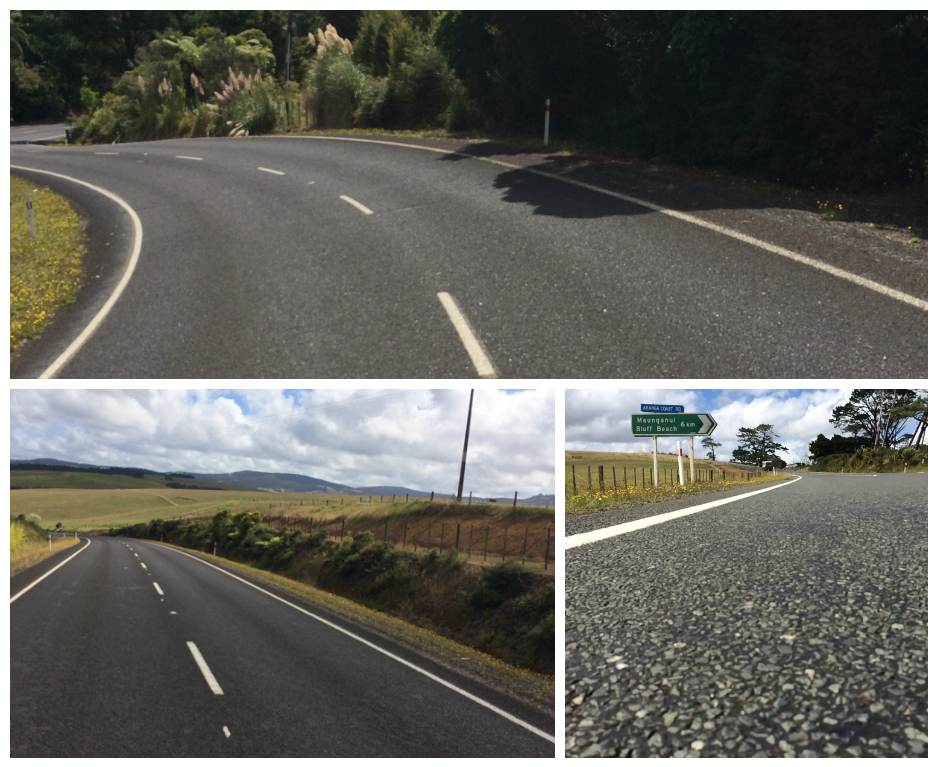
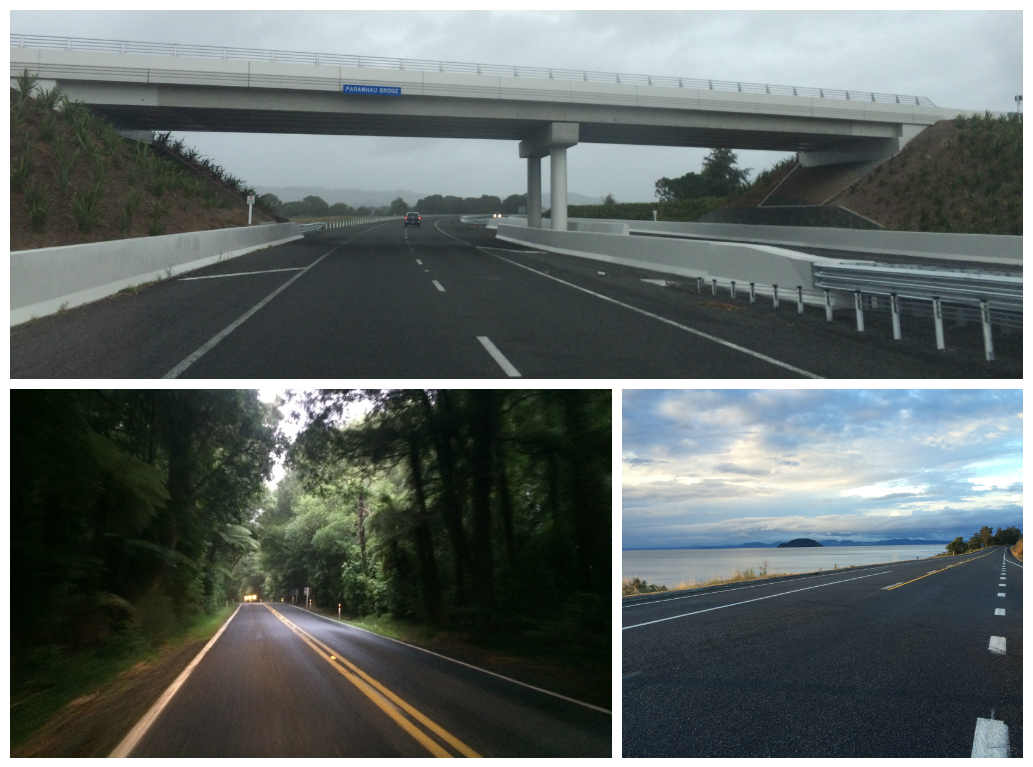
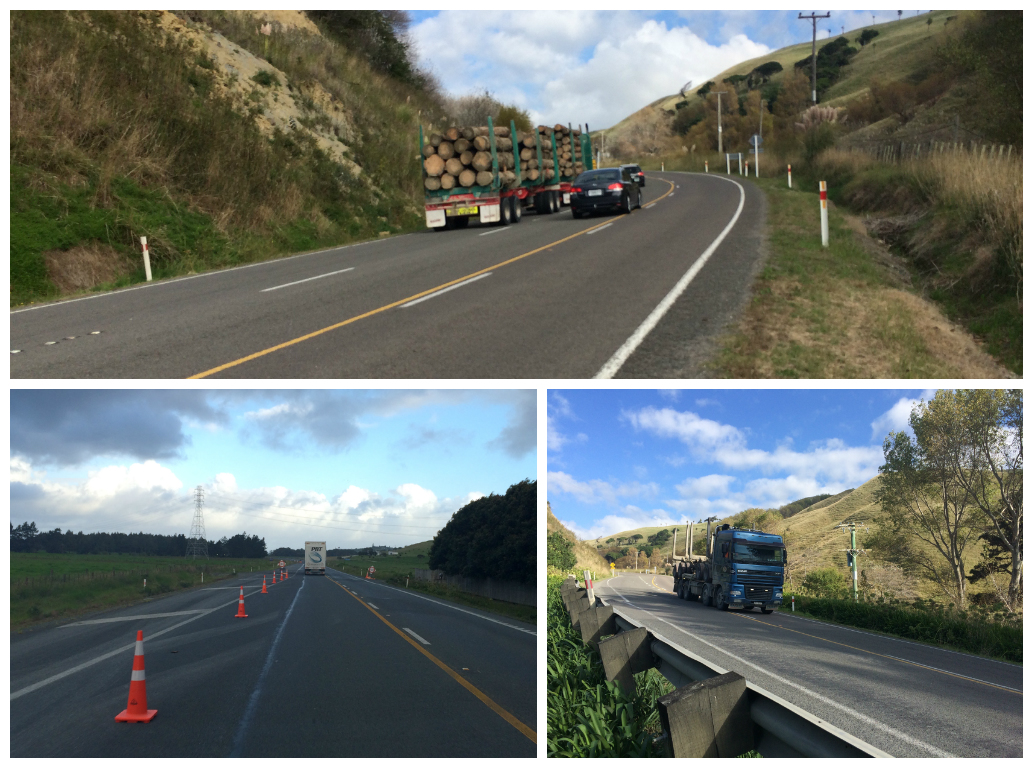
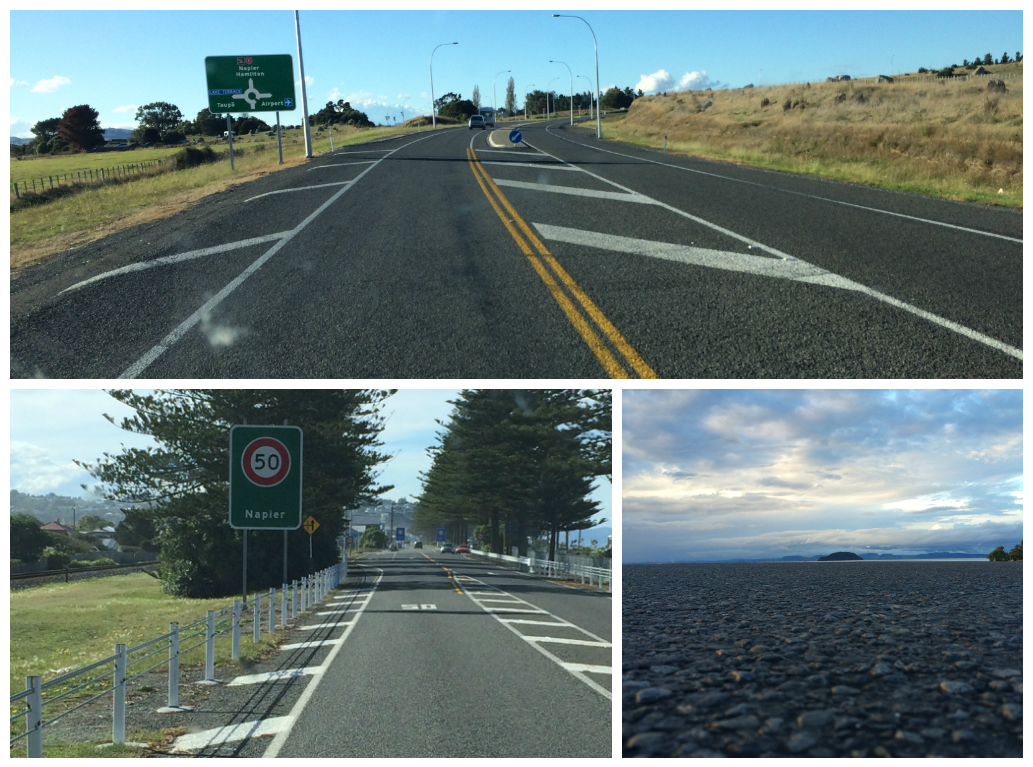
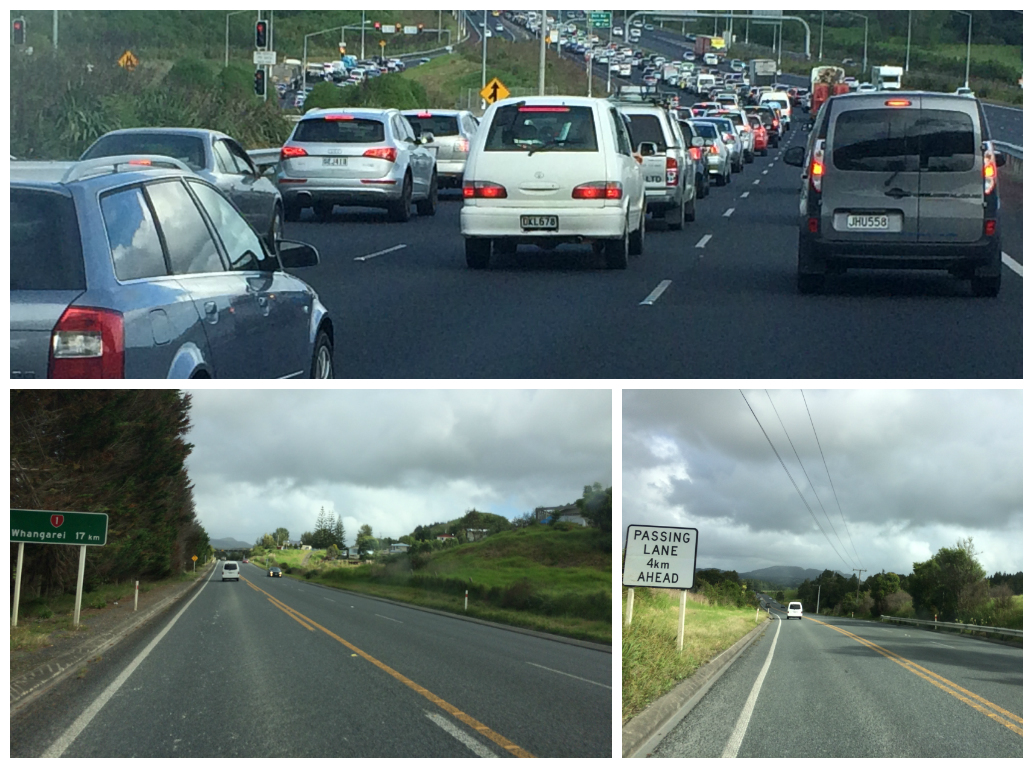
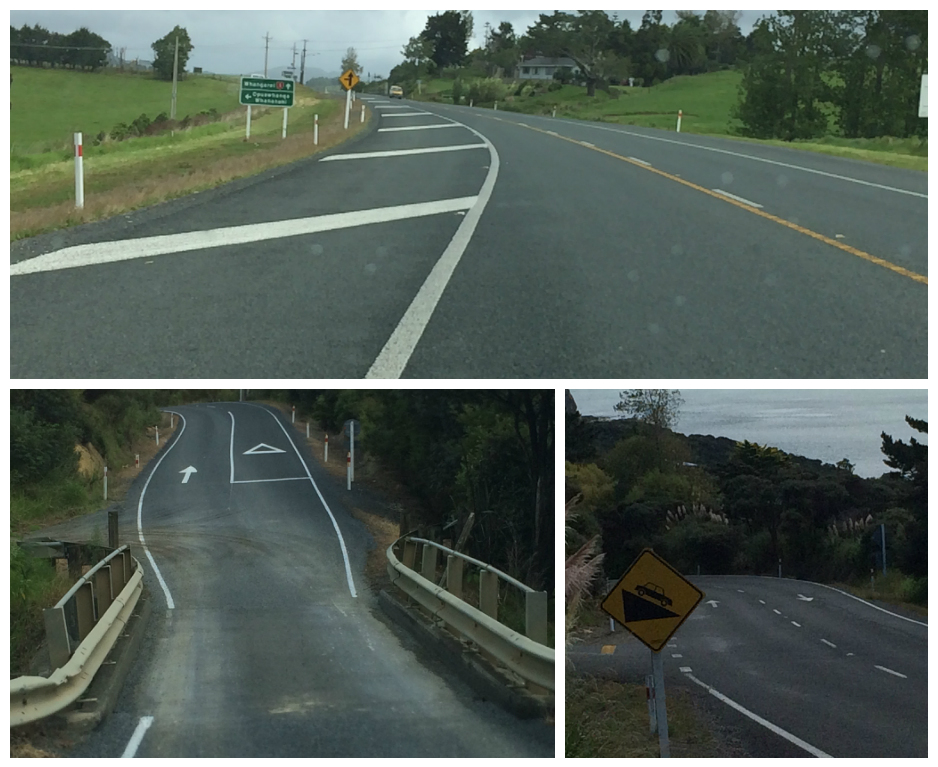
We had the pleasant opportunity to visit for 20 days, covering 2735 km of roads NEW ZEALAND and returned extremely surprised by the quality of roads in the country.

New Zealand has been successful in how to combine technologies way to get a paved road network of high quality. Let's start with comparative data with our country:
-New Zealand has 270,000 square km, 50% more than Uruguay.
-have 95,000 km of highways and roads (0.35 km / km2) of which 63,000 km are paved, 66% of the total.
-Uruguay 78,000 km road (0.44 km / km2) of which have 8000 pavings, only 10% of the total.
In other words, we have a higher density of roads per km2, but far we have long paved network as theirs.
It is that in New Zealand stabilization in situ with cement, lime or asphalt, is present decades, using as surface treatments surface layer and leaving only places high demands on the use of asphalt.

As we all know, the quality of the bases is essential, but if surface treatments are used as rolling. Conversing with them consulted engineers work, how they do it, and his answer was blunt: "It puts on a carpet and hard floor will last a lifetime, if you put on the clay have to throw very soon".
Transportation Agency's own New Zealand indicated on your website: "The surface treatment is the most common type of rolling road in New Zealand. Economic, flexible and resilient, it provides an adaptable, safe and cost efficient surface for road users. We have a regular all surfaces to ensure they will perform at maximum follow.High traffic roads resealed usually need about every seven years, while roads that carry less traffic can last 15 to 20 years before resurfacing is required. " (Source:NZ Transport Agency)

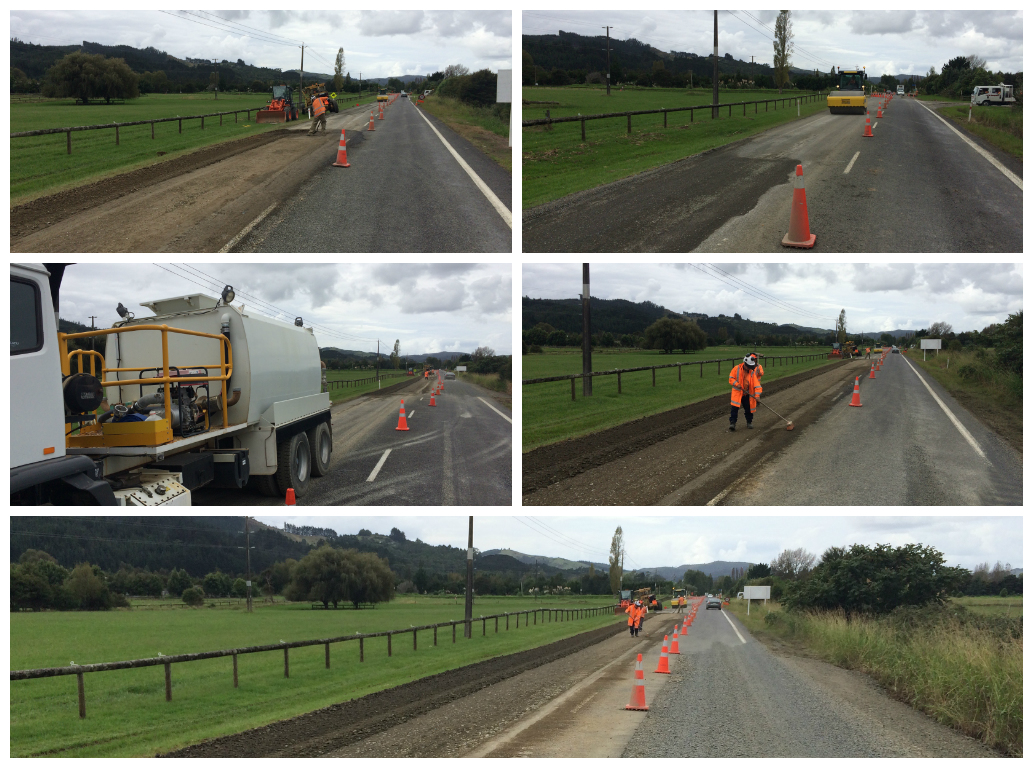
We share then as discussed with technicians work procedures used for construction of a typical road in New Zealand.
CONSTRUCTIVE PROCEDURE
The kickoff is performing test base materials, the effects deeply know what material is counted. The development laboratory formulates a stabilization project based on cement, lime or asphalt and if you have enough good granular material in the area is considered the particle size stabilization with a maximum size of 65mm and the addition of 2% of cement.

The bases are treated perfectly with suitable materials, with the necessary granulometry compacted and cleaned before waterproofing.
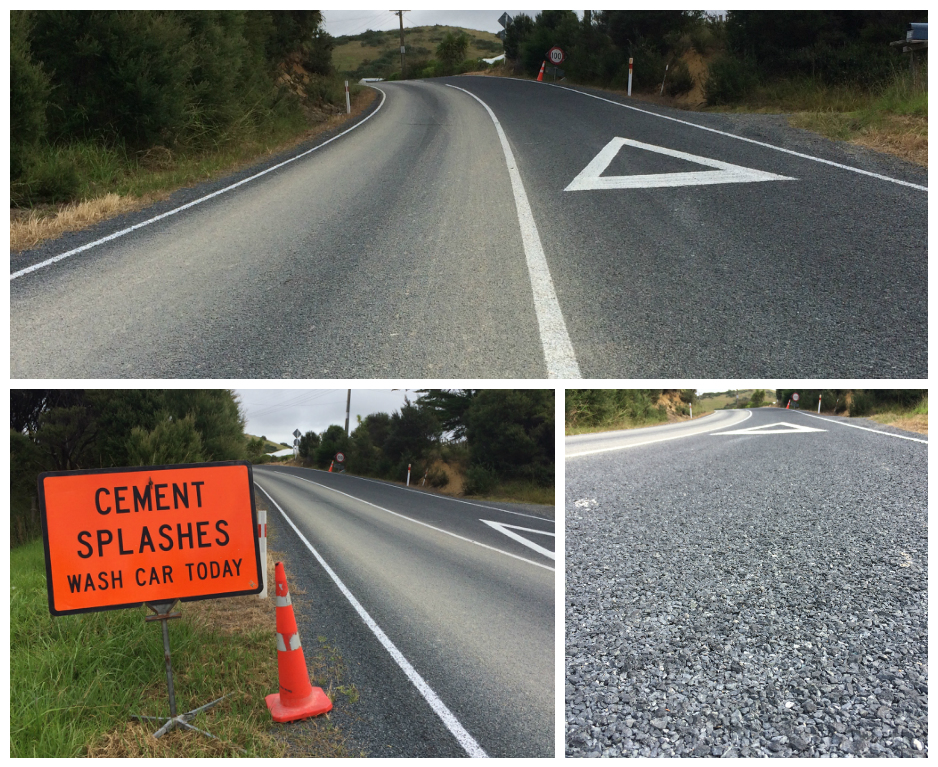
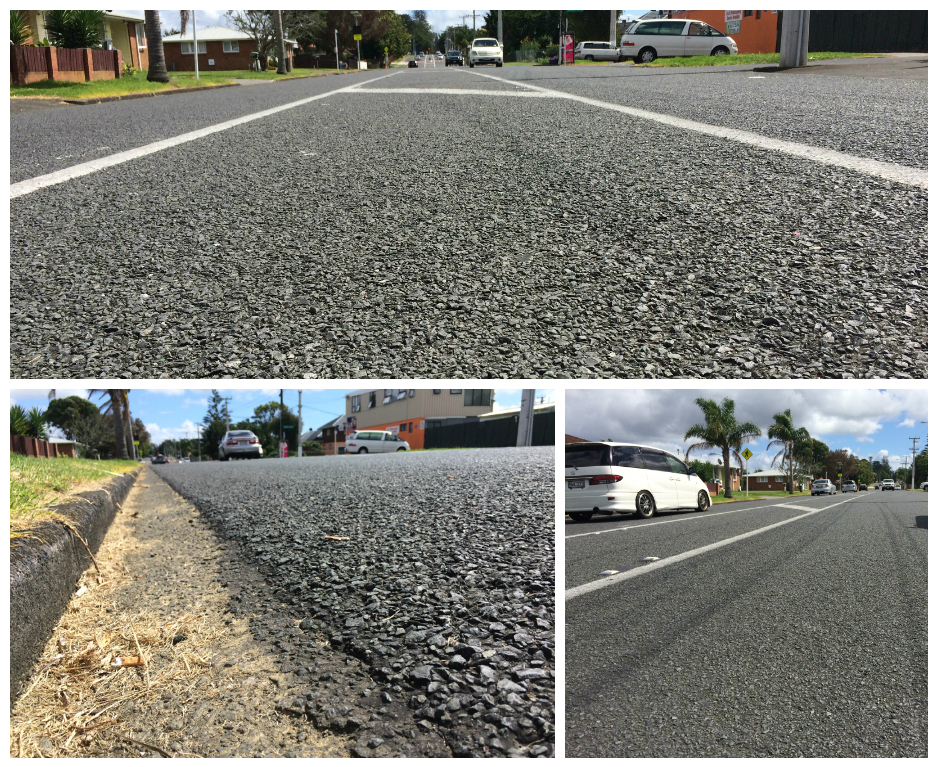
By having a very good base are limited to be as tread layer surface treatment with dry monogranular 6-12 mm and with the passage of time, when the treatment loses or shows a signal texture permeability, apply a second treatment with fraction 2-6 mm improving rolling and waterproofing structure again.
Then repeat the cycle with a large fine gravel 6/12 on and so on, always taking a road in perfect condition applying preventive maintenance at the optimum time.

Asphaltic used folders in the inner city, joints roads, highways exit of cities and in very short stretches of mountain roads when the slopes and angles are too demanding for a surface treatment.
The guide Transportation Agency New Zealand on the selection of the suitable tread layer is in the following link: Selection Guide surface layer

The use of surface treatments monogranular or Chiping, reaches places such as a neighborhood of the city of Auckland, and most important port in the country and the North Island as seen in the photos below city.

Our trip was not only on this visit in the month of May Bitafal group You will be participating in a two-day course on technologies Chiping in the city of Christchurch in the South Island. In addition we already have a publication of more than 500 pages of the Manual on Chipsealing in New Zealand. Interesting document available on: Chipsealing in New Zealand
To keep growing and researching, we have a long way to go.
We leave more photos in the following link

Portland cement transport in special tanks | Strengthening the fleet.

Portland cement transport in special tanks | Strengthening the fleet.

In the search for better solutions, it is that ERGONT TRANSPORT to its fleet included eight new multipurpose hoppers for portland cement carrying and lime for use vial. This incorporation is carried out accompanying the development in technologies URUGUAY stabilized roads and cold recycling in situ.

These hoppers Spitzer brand, imported from Germany, are specialized units in transporting high capacity powders; devices have automatic loading and unloading for safety and prevention of contamination of the products to be transported.

::TECHNICAL CHARACTERISTICS::
  • Wineries resistant aluminum 45 m3.
  • Carrying capacity of 31 tons.
  • Units equipped with air suspension, brakes ABS & EBS and localized GPS.
Committed to the development and evolution of the national road construction, it is that these units are available that provide transportation services, logistics and operations of hydraulic binders.

We use own and third party cookies to help us optimize your visit to our website and also to improve service delivery and thus adapt to their most relevant and useful to better their experience needs. When you click OK to continue with navigation and thus confirm that you have read the information and accept the activation of cookies.

You can allow or reject use at any time can change the Configuration Options Privacy - Cookies Policy -

Privacy settings

When you visit a website, you can store or retrieve information in your browser, mainly in the form of cookies. Check your personal services cookies here.


We track anonymous user information to improve our website.
.
  • _ga
  • _gid
  • _gat

Decline all Services
Accept all Services