WITH THE ENTRY OF SPRING, SURFACE TREATMENTS ARE BACK

WITH THE ENTRY OF SPRING, SURFACE TREATMENTS ARE BACK

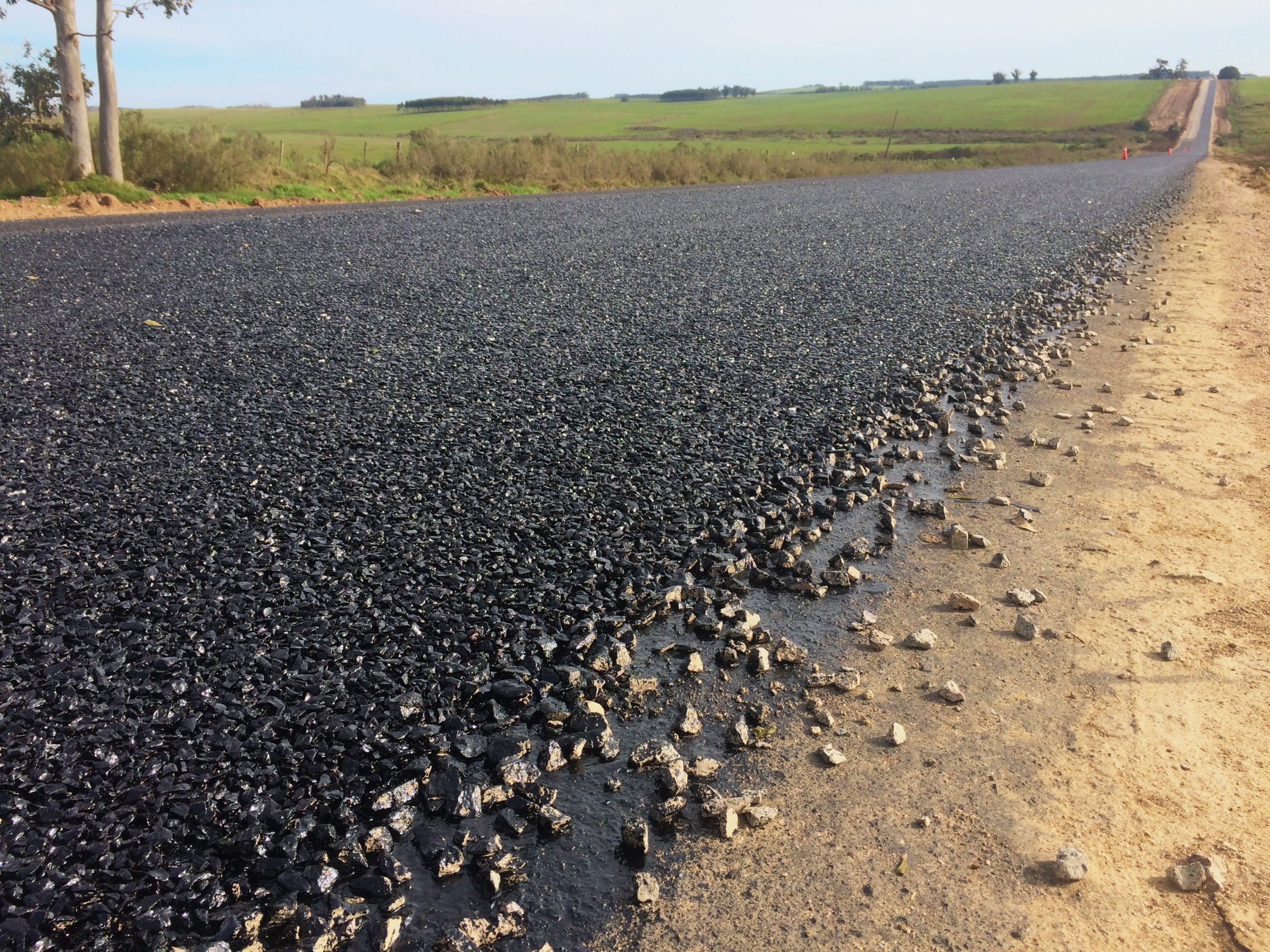
The closure ends on September 1 and surface treatments begin to be seen again in the works.

The use of emulsions, which in winter involves special care, becomes common from September with various work fronts that will use the technology both on the road and on shoulders. In the following note we reinforce the main concepts to avoid premature defects in surface treatments with emulsions, especially when the first summer heats come.

An adequate application of the surface treatment implies a combination of factors to ensure success, as indicated in the Figure below the book "High Performance Surface Treatments"

https://bitafal.com.uy/libro-tratamientos-superficiales/

From this extensive list, we can highlight some points and make recommendations for a good execution in the months to come.

  • Weather condition in the application: The days are longer and the temperatures are starting to rise but we may still find ourselves in the months to come with wet and cold weeks. Special attention must be paid to days with maximum temperatures of 10°C and days with high relative humidity and little wind even in mild temperatures. The water of the emulsion must evaporate to achieve the total cohesion of the binder and if not, premature detachment of aggregates will occur, with the risk of having to re-execute and over-dosage. Another problem with cold is the formation of skin in the applied emulsion that retains the emulsion between the treatment and the base. This effect can seriously affect the treatment in the first days of heat, since the vapor pressure of the retained water pierces the membrane and begins to come to the surface, causing punctual exudations that can affect the rest of the treatment. To avoid these problems, see in the Book the "7.4.10 Execution in winter" that are used for those complicated days as well.

  • Aggregate penetration potential: The driving of the stone in a granular base can seriously affect the necessary voids of the system leading to exudation mainly in the tracks where the tires make an extra compaction effort. It is first necessary to evaluate this effect by means of the Ball Penetration Test (Annex D of the Book) and then take measures such as reprofiling and compacting or stabilizing with cement.

  • Component dosage: An excess of residual binder in the system is not perceived in the winter but as temperatures increase and its viscosity decreases, the voids are reduced both by expansion of the asphalt and by the accommodation of the aggregate that the binder allows. Here the variables to control are several, such as the theoretical design itself regarding what is found in the field, the calibration and periodic maintenance of the used equipment, the use of binders suitable for traffic and climate. For each of these variables you can find a detail in the Book of good practices.

  • Execution method: For double irrigations, it is necessary to evaluate if it is possible to do both irrigations on the same day and thus ensure that all the aggregate used is locked prior to the release of traffic. When irrigation A is carried out and much later B, it happens that the initial simple treatment settles down and becomes clogged, reducing its macrotexture as well as losing some aggregate and therefore the potential for exudation increases. When B is executed, the dosage should be adjusted to the new existing macrotexture, which does not happen, ending in exudations. The use of TMT technology allows double irrigations to be carried out on the same day, ensuring the success of the treatment. We have technology transfer licenses that include
    know-how and technical assistance through a training course. For more information enter Licenses. https://bitafal.com.uy/licencias/

  • Used materials: Aggregates of the same size generate interlocked surfaces that better distribute traffic efforts, are more resistant to detachment and have less potential for exudate, for this reason we must adjust the sizes to consecutive sieves. Using 5-14 mm aggregates for example implies that physically first the 5 mm falls and then the 14 mm, leaving the latter not adhered to the surface and changing the aggregate / asphalt balance.

On the other hand, the emulsions must have an adequate residual binder, with sufficient viscoelasticity to prevent bleeding in the summer. In addition, it must be of the appropriate degree of modification for the traffic and climate of each particular work. line emulsions On the other hand, the emulsions must have an adequate residual binder, with sufficient viscoelasticity to prevent bleeding in the summer. In addition, it must be of the appropriate degree of modification for the traffic and climate of each particular work. line emulsions On the other hand, the emulsions must have an adequate residual binder, with sufficient viscoelasticity to prevent bleeding in the summer. In addition, it must be of the appropriate degree of modification for the traffic and climate of each particular work. line emulsions

BITAFAL GROUP WEBINAR CYCLE

BITAFAL GROUP WEBINAR CYCLE

Delving into various topics of interest, we begin with a new challenge to share our knowledge

This coming September we will begin to issue the first cycle of conferences that complement and deepen what has been published in our manual on "High Performance Surface Treatments".

True to our word, we have listened to your comments and concerns that you sent us from the June survey, where we asked the topics that most interest you for a Webinar. 1 out of 5 voted to delve into the topic "Life Cycle Analysis with surface treatments", and for this reason we decided to make a first Cycle called "High Performance Surface Treatments", which encompasses this topic and others that also appear in our manual. . We will have top-level guests, such as Ing. Jorge Prozzi from the University of Texas.

This Cycle consists of three modules:

MODULE 1: How to guarantee the success of gravel irrigation: materials, selection, design and good construction practices.

MODULE 2: Surface treatments: Performance tests.

MODULE 3: Life cycle analysis of surface treatments: the most efficient option for conservation.

Our goal is to extend our knowledge and share the national and international experience of surface treatments, so that they achieve maximum performance. This implies interventions where special care is taken in the evaluation of the existing surface, the materials, the selection of the appropriate treatment, the design and the construction so that our path is SAFE, RELIABLE and SUSTAINABLE.

SAFE: The type of treatment, the resistance to polishing of the aggregate, the appropriate binder, the correct dosage of materials, careful construction, etc. These are aspects that affect the final safety of the road but must be considered individually. The objective is to guarantee traffic and safety conditions, minimizing circumstances that could generate costs for users and accidents.

TRUSTWORTHY: With this approach, surface treatments are first-order interventions that require the same care and detailed study as asphalt mixtures. In these situations, it is expected that the treatments comply with higher stresses and demands and for this it is essential to evaluate the structural and surface conditions through inspections and auscultation, define specific design methods for the provision of aggregates and binder, ensure the calibration of the equipment and document best construction practices. The objective is to provide tools for those responsible to make decisions based on scientific and methodological criteria, which allow predicting what the useful life of the treatment will be and, consequently, it can be a reliable instrument within the conservation strategy.

SUSTAINABLE: It consists of doing more and better, with less. High performance treatments play an essential role in the preventive maintenance of the pavement and are the answer to a technical, economic and environmental analysis. These interventions are optimized for the traffic and climatic conditions that are expected, use materials and processes that generate a smaller environmental footprint and seek to reduce the total cost of the pavement's life cycle. The goal is to put the right treatment on the right track at the right time.

We will be sharing news about the webinars on our networks.

PERIODIC ROAD CONSERVATION TECHNIQUES COURSE

PERIODIC ROAD CONSERVATION TECHNIQUES COURSE

Bitafal was a keynote speaker in the virtual course of the Ministry of Communications and Transportation (SCT) of Mexico and the Mexican Asphalt Association (AMAAC).

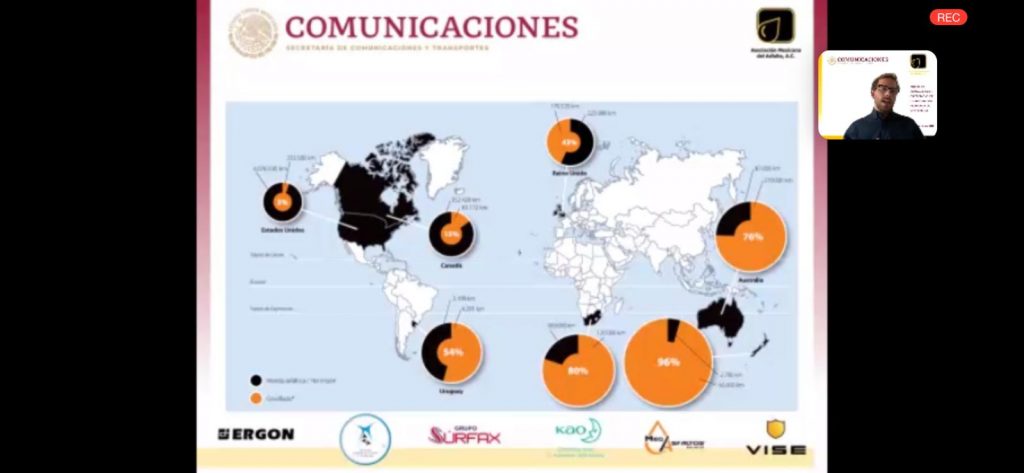
Grupo Bitafal held the inaugural conference of the "Refresher Course in Periodic Road Maintenance Techniques", a Mexican event with more than 500 participants. Below we delve into the content of the course and a free tool for the selection of surface treatments.

Organized by the SCT of Mexico and AMAAC, the course on conservation techniques aimed to update the knowledge of Mexican administration professionals. The event took place over three days, each covering a particular theme. The first day the theme was "Periodic Conservation Techniques" and Bitafal gave the first lecture by Ing. Ignacio Kröger, who dealt with the detection of opportunities and limitations in the evaluation of pavements as well as the correct selection of surface treatments. The first day was completed by important exhibitors, such as Eng. Salvador Fernández Ayala, General Director of Highway Conservation of the SCT and Dr. Adriana Vargas, researcher of the North American National Center for Asphalt Technology (NCAT).

The session on the second day dealt with the theme of "Good practices in conservation treatments" with presentations on gravel, microagglomerates, sealing and caulking of cracks. The presentation by Ing. Jorge Alarcón on his experience in the reuse of milled material (RAP), the different recovery techniques and the configurations of asphalt plants for a greater incorporation of RAP was highlighted on that day.

On the third day, “Asphalt mixes as conservation techniques” were studied in depth, commenting on the good practices of milling, patching and discontinuous mixes. Eng. Francisco Ramos commented on the guide on "Road Conservation Procedures and Techniques" developed by the SCT and detailed the highly recommended "Conservation Treatment Selection Tool" available for free at .

We thank the SCT and AMAAC for the invitation and for having the initiative to share crucial issues for the sustainable development of Latin American roads. Follow us on social networks to find out when the videos of the course are published.

Linkedin: https://www.linkedin.com/company/grupo-bitafal/
Twitter: https://twitter.com/BITAFAL

VIRTUAL COURSE “Surface treatments and asphalt primer”

VIRTUAL COURSE “Surface treatments and asphalt primer”

On Thursday, May 20 and Friday, May 21, we had the pleasure of attending the virtual course on "Surface treatments and asphalt primer" organized by the Bolivian company Quimitec Asfaltos. The webinar, by Prof. Edson Andrade and Ing. Daniel Zenteno, discussed important aspects on the execution of asphalt primer and surface treatments, developing the concepts and manufacturing procedures for emulsions and construction procedures for these techniques.

On Friday, Ing. Ignacio Kröger spoke about the importance of a good penetration in the primer. For this, the porosity and humidity conditions of the base, and the viscosity and strength of the binder were detailed. Likewise, the need to progressively eliminate the use of asphalt dilutes in paving in general and in priming specifically was discussed.

To summarize, the four main disadvantages presented by the dilutes are detailed below:

1) Contains volatile gases that are toxic to workers.

2) Impact on the greenhouse effect and reduction of the ozone layer.

3) It requires energy for heating, which in addition to being expensive, requires valuable time. It can also create a risk of overheating and explosion of tanks, like the two accidents we had in our country last year.

4) After 72 hours of applying a dilute type MC1, it still has between 55 and 85% of the solvent. Risk of softening binder of future treatment and oozing in summer.

The IMPRIMA 50 emulsion for its part is a mixture of asphalt and water, and this brings great technical and environmental advantages:
1) Quick release to traffic, without the need to prime with sand. This allows paving tasks to be carried out in the following 12 and 24 hours.

2) Low viscosity at room temperature (at 25 degrees it has the same fluidity as at 60 of the diluted). Quick loading of a sprinkler truck and without the need for heating.

3) Releases water to the environment instead of volatile organic compounds (less dangerous for workers and the environment).

4) It is compatible with other emulsions, therefore it does not generate inconveniences in its manipulation.

For more information about the performance comparison between the emulsion and the diluted primer, you can consult the technical work presented by Quim. Santiago Kröger at the IX Uruguayan Road Congress "Primer with emulsions: technical and environmental improvements."

https://bitafal.com.uy/wp-content/uploads/2017/10/9%c2%ba-CVU-Trabajo-Imprimaci%c3%b3n-con-emulsiones-mejoras-t%c3%a9cnicas-y-ambientales.pdf

We thank Quimitec Asfaltos for the invitation, and hopefully it will be the first of several collaborations between the two companies.

HIGH PERFORMANCE SURFACE TREATMENTS - NEW EDITION IN DIGITAL VERSION

HIGH PERFORMANCE SURFACE TREATMENTS - NEW EDITION IN DIGITAL VERSION

The book edited by Grupo Bitafal has already been distributed to almost 2000 technicians around the world

Since its launch in November 2018 in Uruguay, nearly 500 copies have been delivered in our country, then in the second edition held in Mexico, almost 600 books were delivered to professionals throughout Latin America, Europe and the US.
With the recent revision and edition of the digital version of the book, almost 800 professionals from 22 countries have already downloaded it.

We recommend that all those who have the paper editions, enter the on our website where will find the history of the revisions and changes we make in each edition. There You can download the latest Edition 2.1 in PDF format.

At the same time we want to ask our readers that if they have contributions and comments about the book, send us an email to bitafal@bitafal.com.uy to continue improving and updating the manual.
BITAFAL GROUP AT IRMD 2020

BITAFAL GROUP AT IRMD 2020

Each first Thursday of April the International Road Maintenance Day (“International Road Maintenance Day” - IRMD) is celebrated, a proposal that this year was showcased by a huge digital presence.

With a presentation on some "Tips to improve the quality of surface treatments", Ing. Ignacio Kröger was part of the 19 speakers from 10 countries: Germany, Slovenia, United States, Uruguay, Chile, Costa Rica, Guatemala, Colombia, Mexico and Spain than the past April 2 They discussed the importance of road maintenance, the influence of the state of the pavement on CO2 emissions, the need to incorporate innovation into road maintenance objectives and the social importance of road infrastructure.
The conference was broadcast through the platform Itafec and had more than 1,400 users from all over the world who, through Twitter and the hashtag #IRMD2020, reached nearly 8,000 messages, becoming a trend in Spain, Mexico, and Guatemala, surpassing an estimated audience of 2,000,000 users. We invite you to see the presentation of Grupo Bitafal and what was discussed during the day.
Taking up the motto "preserving roads is preserving the environment", the main topics discussed during the day were how greenhouse gas emissions can be significantly reduced both with a good condition of the pavement as well as in the use of reuse and recycling techniques. . Some of the most relevant papers highlighted that "the reuse of a pavement using dry aggregates and biomass can reduce emissions from the entire manufacturing process by up to 38%".
Likewise, it was highlighted that the carbon footprint associated with the vehicles that circulate on the highway is much greater than that related to the process of construction and maintenance of the infrastructure, especially in the use of asphalt pavements. For its part, the Spanish Road Association (AEC) presented a report that explains the relationship between the state of conservation of the pavement, fuel consumption and vehicle emissions. “The tests, carried out on a 46-kilometre-long section, confirm that, in the case of light vehicles, CO2 emissions decrease by an average of 3.5% when driving on well-preserved asphalt, reaching 4% of reduction for the heavy vehicle”, they explain from the AEC.
On the other hand, topics of interest were discussed, such as the life cycle of asphalt pavements, the use of new maintenance technologies and their environmental impact both in the use of cold techniques, such as surface treatments, as well as in the recycling of materials. .
The presentation of Grupo Bitafal can be seen below the note.
To learn about International Road Maintenance Day: http://roadmaintenanceday.org
MEMORIES OF THE TWENTIETH CILA

MEMORIES OF THE TWENTIETH CILA

And videos and the works are available in pdf

As reported in the "Making Roads" # 108, the XX IBWC past in Mexico was a success and with great presence of Uruguay, who is responsible for organizing the XXI IBWC to be held in Punta of the East in 2021. The level the IBWC past technician was excellent and there were more than 150 oral presentations plus other approved amount of work that could not be presented for reasons of time.
As for the presentations you can access the videos through the Itafec platform: https://www.itafec.com/video
Regarding the document containing the 224 full papers, reviewed and accepted by the Technical Committee of the Congress they can be accessed for free on the link below courtesy of the Permanent Commission of Asphalt Argentina: http://cpasfalto.com.ar/2019/12/19/memorias-del-xxo-cila/
We invite you to explore both links containing valuable information about the latest trends in bituminous binders of the world.
Some video presentations BITAFAL equipment Group:
XX IBWC IN MEXICO

XX IBWC IN MEXICO

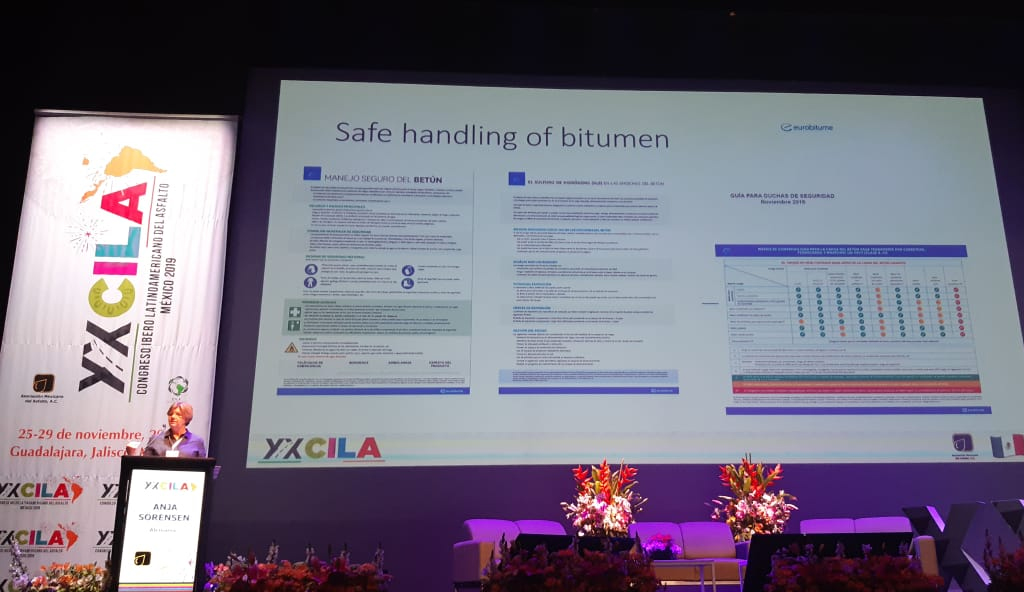
A large contingent of Uruguayan at the XX Congress of the Asphalt Iberolatinoamericano held in Guadalajara, Mexico

From the 25 to the November 29th He was held at the Performing Arts Center of Guadalajara a new edition of the most important congress in the world of asphalt. This time more than 800 technicians from 27 countries were present to show progress in binders and asphalt paving technology.

The strong presence of Uruguay was to ratify the realization of the XXI IBWC in the city of Punta of the East in November 2021. The launch was performed by a campaign of expectation during the Congress with a stand of Uruguay, an information campaign through leaflets and finally the announcement at the closing ceremony along with a video prepared for the occasion.

Organized by the AMAAC (Mexican Association of Asphalt), the WHAT XX It was held in conjunction with the Expo Asphalt Mexico and consisted of 5 days of intense knowledge sharing and closer ties between the different actors in the world of asphalt.

They presented more than 150 technical papers in various forms such as plenary lectures 2 auditoriums and simultaneous presentations in the same room with multiple screens and in which participants approached according to topics of interest.

There were also six lectures by prominent experts who spoke on asphalt mixes, infrastructure, design methods and auscultation of pavements.

Uruguay was present with 10 technical papers presented of which 7 were performed oral presentation format. Bitafal group He presented on emulsions degree of performance on mixtures with highly modified asphalts and on agile trials DSR (rheometer) to determine characteristics of asphalt mixtures. Serviam presented a paper on the design and implementation of a foamed bitumen recycling by Ing. Faustina Keuliyan and also on the rehabilitation of Route 60 with the Capeseal technology by Ing. Rodrigo Tejería and Pablo Carranza.

Furthermore Eng. Oscar Giovannon (Arg.) Presented the thesis of Ing. José Luis Martucci on recycled foamed performed in Route 3 and James Kröger presented thesis Ing. Gerardo Fernandez on primer emulsions.

He Tuesday in the afternoon, in a special session, Bitafal Group presented his book "High Performance Surface Treatment" of which were delivering copies of the same to all participants and which had an excellent reception.

The week was full of hard work broadcast next IBWC to be held in Punta of the East, first with the dissemination of material on Uruguay and customs, then on our natural beauty and closing Tipped East and an express invitation to participate in the XXI IBWC to be held in 2021 with a promotional video. We're on track and we will fulfill the expectations of all "cileros".

Nuevamente "one more!"

RECYCLED CEMENT AND TMT ROUTE 15

RECYCLED CEMENT AND TMT ROUTE 15

Molinsur trust GROUP BITAFAL for the implementation of technical TMT on recycled with cement made in Route 15.

Adjusted dosing and construction conditions, has been developed excellently recycled TMD on cement. The combination of these two techniques provide a unique opportunity to build synergy routes in our country.

Recycling Portland cement is carried out very rapidly on which an emulsion is applied IRRIGATION BITAFLEX 65 P25 with sand as curing irrigation. TMD is then applied with 14 to 19 mm and gravillín stone 2-6 mm with posterior irrigation fog, all run on the same day and with the same emulsion BITAFLEX IRRIGATION 65 P25.

The surface quality of TMT shows great cohesion of the whole package, without loss of aggregates and large voids content serve several functions. For one drain water towards the shoulders reducing the "Spray" effect and leaving a proportion of feasible to be filled by binder and thus prevent any errors dose or overlap that can result in air exudates.

The results are already more than validated on Route 15 in other sections own previously executed. It is expected durability of these jobs that we hope will be adopted by more manufacturers in the short term.

RECYCLING AND CAPESEAL ROUTE 60

RECYCLING AND CAPESEAL ROUTE 60

The works mentioned in previous bulletins (Bulletin # 98 NOTE: Capeseal on Route 60) Have come to an end and the result is really very good.

The recycling works Portland cement and the Capeseal provided as wearing course have culminated in this work quality that carried out Serviam. Aesthetic and functional completion of the section is excellent and we recommend those not familiar with the technique of Capeseal visit the section from Sugarloaf to the city of Minas.

It is for the group BITAFAL proud to have been involved in the whole process, from the dissemination of the aforementioned techniques in lectures, conferences and in our book "High Performance Surface treatments"To see it come true with the quality achieved. Thank provided Serviam confidence in our products and services in each of the construction phases of the stretch.

We use own and third party cookies to help us optimize your visit to our website and also to improve service delivery and thus adapt to their most relevant and useful to better their experience needs. When you click OK to continue with navigation and thus confirm that you have read the information and accept the activation of cookies.

You can allow or reject use at any time can change the Configuration Options Privacy - Cookies Policy -

Privacy settings

When you visit a website, you can store or retrieve information in your browser, mainly in the form of cookies. Check your personal services cookies here.


We track anonymous user information to improve our website.
.
  • _ga
  • _gid
  • _gat

Decline all Services
Accept all Services