PRINT 50 AN ALLY FOR THE ENVIRONMENT

PRINT 50 AN ALLY FOR THE ENVIRONMENT

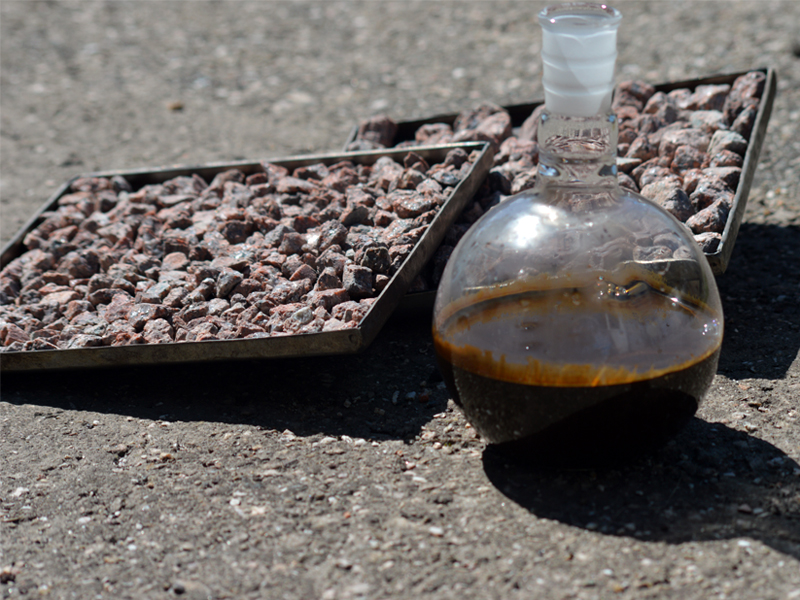
Since the introduction of the emulsion 50 in Uruguay PRINT form base priming it has changed considerably because of the technical and economic advantages

We have made little emphasis on the environmental benefits of its use to the detriment of asphalt diluted for priming as in the case of the MC1. Diluted contains 30% volatile solvents evaporating end to the atmosphere photochemical smog impact on the greenhouse effect and the reduction of the ozone layer while PRINT 50 only emits water in curing.
Also, temperatures of handling and application of different types of primers lead to significant fuel economy as the PRINT 50 It is fully liquid at room temperature and water it is possible at temperatures as low as 40 to 50 ° C while the MC1 must be heated to 90 ° C or 80 to be applied correctly.
In recent years the use of PRINT 50 in Uruguay achieved:
- Reduce by 3000 tons of solvents emitted into the atmosphere
- Reducing CO2 emitted to the atmosphere because of its lower temperature manufacturing, handling and application
- Improving safety and health of workers by lower operating temperatures and avoid inhaling solvents
- Eliminate the risk of explosion in regadores trucks.
As for flammability and explosion hazard we should worry seriously and only in 2019 there were 2 accidents which fortunately had no fatal casualties but substantial material losses.
March 14 2019: Explosion of a tank RC2 in Maldonado http://www.maldonado.gub.uy/?n=38251&mm=Obras
In many countries of the world the use of diluted asphalt is prohibited, as is the case of Argentina and Spain, or at the least there are state policies that tend to reduce these products. In the US and Canada have guidelines for not using dilute solvent regulate their content or used out only from the time of ozone generation (usually summer).
It has recently been proposed that can not manufacture or market any diluted containing more than 0.5% by volume of volatile solvents evaporated at 260 ° C or less as determined by ASTM D402.
Uruguay should consider this path if we want to be an environmentally responsible country and protect the lives of workers.
For further information on the technical advantages we approached them a paper presented at the 9th Congress of the Road Uruguaya: https://bitafal.com.uy/wp-content/uploads/2017/10/9%c2%ba-CVU-Trabajo-Imprimaci%c3%b3n-con-emulsiones-mejoras-t%c3%a9cnicas-y-ambientales.pdf
VEDA IN Surface treatments

VEDA IN Surface treatments

With the imminent entry of autumn, we should take the necessary precautions in the execution of surface treatments.

The ban begins in a few days and the most suitable for our summer climate emulsions begin to generate low yields in the execution by the cold and the few hours of insolation that we are already living.

Asphalts specifications based emulsions remain unchanged throughout the year. If the manufacturer wants a change in specifications to continue the work, we do get an email with the desired specification.

We recall that in remitos load the batch number corresponding detailed, and which can enter our website to have the Quality report and to corroborate with the requested specifications.

To maintain the quality of the works must run less meters per day before releasing traffic with some specific recommendations always looking to reduce the amount of water in the system.

We invite you to know in detail the recommendations on the following link "SEVEN RECOMMENDATIONS FOR USE OF EMULSIONS IN WINTER"

surface treatments:

1) heating the emulsion to be used above 70 ° C to promote evaporation of water from the emulsion itself.

2) Do not wet aggregates and try to use the top in the collection that are drier and drained, not load the gathering at the bottom.

3) Start the task early in the morning, regardless of the prevailing temperature, for that tranche has executed the most hours of exposure to air, wind and sun.

4) Apply TMT technologiesThat favor locking of aggregates applied, achieving superior quality and finish.

5) Have properly calibrated equipment graveled and irrigation to the quality objective is sought to be achieved.

Irrigations primer:

In these autumn and winter periods irrigation primer they are affected by the high rate of humidity in the foundations.

It must be respected as well as primers with dilute MC 1, optimum moisture application for the purpose of achieving a successful work.

By the above, it is normal for a primer in summer takes less than 1 hour in winter takes more than 24 hours to get to be acceptable.

Soil stabilization:

It is best suited to perform soil stabilization with cement or lime period.

Water needs hydration are very basic and profiling work, compaction and sealing are unmatched.

Here the sealing emulsion IRRIGATION BITAFAL 65 at 1 per square meter lt should be complemented with a sealed with quarry dust good quality.

These bases have such successful results supporting several months before recommencing graveled tasks in appropriate months.

What are the treatments Multiple Trabados®?

What are the treatments Multiple Trabados®?

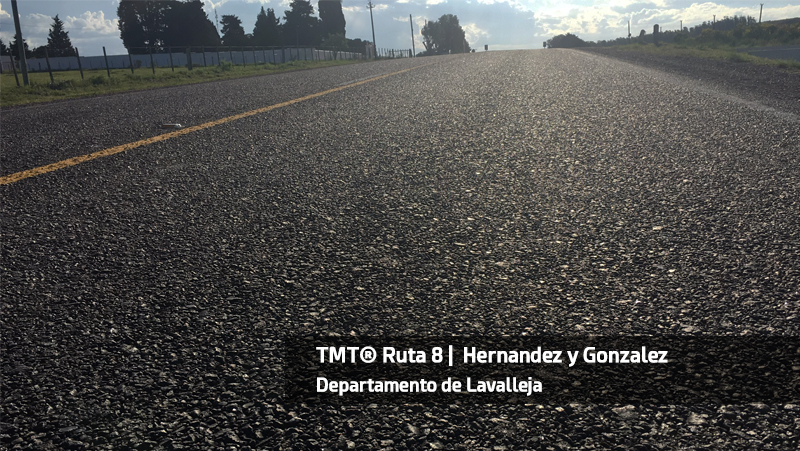
The TMT® are an innovative way to run single and double treatments, which improves the mechanical interlocking of aggregates and minimizes risks of landslides.

Its development is linked to the use of emulsions it allows full coverage of aggregates and which differs from the conventional methods as applicable.

They can be run at any time of the year and on any surface, allowing traffic early release with conventional methods than aesthetics. Success depends on the type and quality of materials in conjunction with the proper technique. It is ideal for initial treatment of stabilized bases technique.

The TMT® They are the product of several years of observation and continuous improvement of construction procedures with laboratory research, new product development, development plan and implementation on site.

HOW DOES IT WORK?

  • It involves placing the right amount of binder and aggregate at the appropriate time and place, saving up to 20% of materials.
  • optimum mechanical and chemical resistance is achieved by the way it is run, accelerating the curing process and accommodating the stone to ensure detachment almost zero.
  • The method includes a number of key intermediate steps substantially increase the adhesion between the aggregates.
  • aeration of the emulsion is favored, allowing further exposure to external agents which accelerate curing.
  • Find your best performance with the use of modified emulsions.

SOLVE WHAT?

  • Gravillados building permits at any time of year.
  • Accelerates the speed of work, allowing progress without risks.
  • Minimizes landslides and prevents excess aggregate causing damage to the windshield and risks to users.
  • It requires fewer passes fracture mitigating Compactor aggregates and prevents its removal from the use of this equipment.
  • It does not require subsequent scan, nor tire compactors to settle the stone.
  • It allows controlled traffic before the system has completely healed rating.
  • The final quality of the surface obtained is smooth and silent, with better contrast for roadway marking.
  • All jobs are completed in a single workday, allowing high yields.
BITAFAL GROUP SAYS PRESENT AT THE 2020 SLURRY SYSTEMS WORKSHOP (# 2020SSWS)

BITAFAL GROUP SAYS PRESENT AT THE 2020 SLURRY SYSTEMS WORKSHOP (# 2020SSWS)

From January 20 to 23, 2020, the largest annual grout and micro-pavement workshop in the United States was held in Las Vegas, organized by the International Slurry Surfacing Association (ISSA). More than 450 professionals and experts from the road sector discussed the importance of surface treatments, their laboratory design, and the best practices for execution and control of works.

Surface treatments in the United States represent only 5% of its road network, but that small number in a country of enormous dimensions allows it to become one of the world leaders in this technology. The # 2020SSWS delves into the use of gravel, micro agglomerates, grouts, crack sealing, Capeseals, ultra fine mixes, etc. and the combination of these to extend the life cycle of the pavements.

The workshop presents the technical knowledge of experts who comment on the details that must be taken into account in the laboratory and on site, with tips for correctly applying the guidelines developed by ISSA (A105 and A143). Among the topics discussed could be highlighted:

- Care and controls in the laboratory to improve the design of micro-agglomerates.

- The physical and chemical foundations of the breaking and curing of special micro emulsions.

- The importance of fissure sealing to extend future treatments.

- Best construction practices for high-quality grouts and micro-agglomerates.

- Use of RAP in preservation techniques, among others.

In addition, the practical application of these foundations was carried out, carrying out small material testing sessions to determine the optimal mixing time in the laboratory and later real test sections with machines and complete work equipment.

Finally the online tool was presented to www.roadresource.org for the correct selection of the type of treatment with calculators to determine life cycle costs, annualized equivalent costs, remaining life and cost benefit. The goal of ISSA with this excellent website is to promote the selection of the right treatment, on the right path, at the right time ("The Right Treatment on the Right Road at the Right Time").

ADVANCES IN ROUTE 14

ADVANCES IN ROUTE 14

Road Circuit 3 advances according to the schedule foreseen in the rehabilitation of Route 14.

The “Circuit 3” Public-Private Participation project in charge of the COPASA and ESPINA consortium comprises the sections of Route 14 that go from the city of Mercedes to Sarandí del Yí. There are about 300 km of road rehabilitation using cold recycling technology with Portland cement and a subsequent 4 cm tread with the new modified asphalt BITAFLEX PG 70-28 provided by Grupo Bitafal.
In addition, the construction of a bypass to the city of Sarandí del Yí, the construction of two new traffic lanes in the city of Trinidad and the construction of a new section that connects Route 14 with Route 3 is planned.
This Route that crosses our country practically in the center has an important weight for the productive activity, foreign trade and the productivity of the companies that export through the port of Nuevo Palmira and especially for the pulp production plants of UPM and Montes del Plata. The situation of the same was diverse, sections in bituminous treatment and sections in asphalt layer with variable widths in all their extension.
The new project involves a widening in several sections together with their respective bridges, correction of the layout, planimetric improvements to increase the average speed as well as reinforcement of the structure and a smooth and safe running surface.
Currently there is a large deployment of teams and work fronts throughout the route. Many national companies are doing a great job in the construction of their respective sections or bridges. Idalar, Cujó, Incoci, Díaz Alvarez, Molinsur, CVC, Frivial, Saceem, Espina and other subcontractors are working at the same Impact.
All sections have a widening and recharging front for granular material, then a 20 cm cold recycling front with Portland, then an emulsion curing irrigation IRRIGATION BITAFAL 65 and gravel and finally a paving front applying a 4 cm thick asphalt mix with modified asphalt BITAFLEX PG 70-28.
In Bulletin # 108 of last November we anticipated some aspects of the work such as the incorporation of technology for example: 4 m rules for pavers, automatic control systems for motor graders, oscillating compactor rollers, among others, as well as safety and neatness of the works.
In addition to this, the works are being carried out at a very good pace and it is expected that by the middle of this year a large part of the sections will be completed.
Once again, we thank the Consortium and the contracting companies for the trust they have given to supply such an important input as modified asphalt and emulsions for a road work of such magnitude.
EFFICIENCY IN TREATMENTS BITUMINOSOS

EFFICIENCY IN TREATMENTS BITUMINOSOS

Once again, the Colier company entrusted us to collaborate in the surface treatments that are being carried out on Route 7 at the height of Santa Clara de Olimar

Bitafal Rentals made available to the company a double ACMAR spreader of French origin that has the characteristic of being a graveller with telescopic rollers, which allows a perfect dosage of the calibrated aggregates as well as the necessary emulsion in a fair and precise way.
Through this technology, the company went from having a crew for the execution of the treatment of about 8 people to only 3. In addition, the advantage that the same equipment doses emulsion and aggregate allows greater control of the dosage and better results in the treatment built.
We present ourselves on site and agree, using a calibrating drawer, the appropriate dose of aggregate and after defining this characteristic, the necessary emulsion. The results are eloquent and the doses and emulsion / aggregate ratio are behaving in a superior way without the risks of overdosing so harmful for subsequent exudations.

Bitafal is already in the operational phase of track tests of a series of new asphalts for winter use that are applied hot and with automatic release to traffic. This project is linked to a new generation of developments that we have been working on for 3 years in order to ensure that our market does not see its productivity altered during closed seasons.

Our companies are going through a very difficult time economically linked to the low productivity of execution of works. When Bitafal incorporated the first recycling train, it achieved a great leap in productivity on the road and now we are preparing for this new generation of very high performance elastomeric asphalts that will complement this innovation.

BITAFAL GROUP RESPONSIBLE CARE AND ENVIRONMENT

BITAFAL GROUP RESPONSIBLE CARE AND ENVIRONMENT

He December 3 We welcome the representative of the Responsible Care Program Environment and an external auditor of the LSQA, to conduct the audit on compliance with the requirements of this program, which the company is attached.

Was one more instance verification and enrichment of management, the positive result of it, stimulates continue working in this direction.

The purpose of the Program of Responsible Care Environment, is to manage the risks they are exposed the different actors involved in the management of chemicals, looking for continuous improvement and excellence in their interaction with the environment, occupational health and safety of employees and the community.

PRINT 50 AN ALLY FOR THE ENVIRONMENT

PRINT 50 AN ALLY FOR THE ENVIRONMENT

Since the introduction of the emulsion 50 in Uruguay PRINT form base priming it has changed considerably because of the technical and economic advantages

We have made little emphasis on the environmental benefits of its use to the detriment of asphalt diluted for priming as in the case of the MC1. Diluted contains 30% volatile solvents evaporating end to the atmosphere photochemical smog impact on the greenhouse effect and the reduction of the ozone layer while PRINT 50 only emits water in curing.
Also, temperatures of handling and application of different types of primers lead to significant fuel economy as the PRINT 50 It is fully liquid at room temperature and water it is possible at temperatures as low as 40 to 50 ° C while the MC1 must be heated to 90 ° C or 80 to be applied correctly.
In recent years the use of PRINT 50 in Uruguay achieved:
- Reduce by 3000 tons of solvents emitted into the atmosphere
- Reducing CO2 emitted to the atmosphere because of its lower temperature manufacturing, handling and application
- Improving safety and health of workers by lower operating temperatures and avoid inhaling solvents
- Eliminate the risk of explosion in regadores trucks.
As for flammability and explosion hazard we should worry seriously and only in 2019 there were 2 accidents which fortunately had no fatal casualties but substantial material losses.
March 14 2019: Explosion of a tank RC2 in Maldonado http://www.maldonado.gub.uy/?n=38251&mm=Obras
In many countries of the world the use of diluted asphalt is prohibited, as is the case of Argentina and Spain, or at the least there are state policies that tend to reduce these products. In the US and Canada have guidelines for not using dilute solvent regulate their content or used out only from the time of ozone generation (usually summer).
It has recently been proposed that can not manufacture or market any diluted containing more than 0.5% by volume of volatile solvents evaporated at 260 ° C or less as determined by ASTM D402.
Uruguay should consider this path if we want to be an environmentally responsible country and protect the lives of workers.
For further information on the technical advantages we approached them a paper presented at the 9th Congress of the Road Uruguaya: https://bitafal.com.uy/wp-content/uploads/2017/10/9%c2%ba-CVU-Trabajo-Imprimaci%c3%b3n-con-emulsiones-mejoras-t%c3%a9cnicas-y-ambientales.pdf
Crossed by Route 7

Crossed by Route 7

The general state of the route is good and has done good work that will have long life.

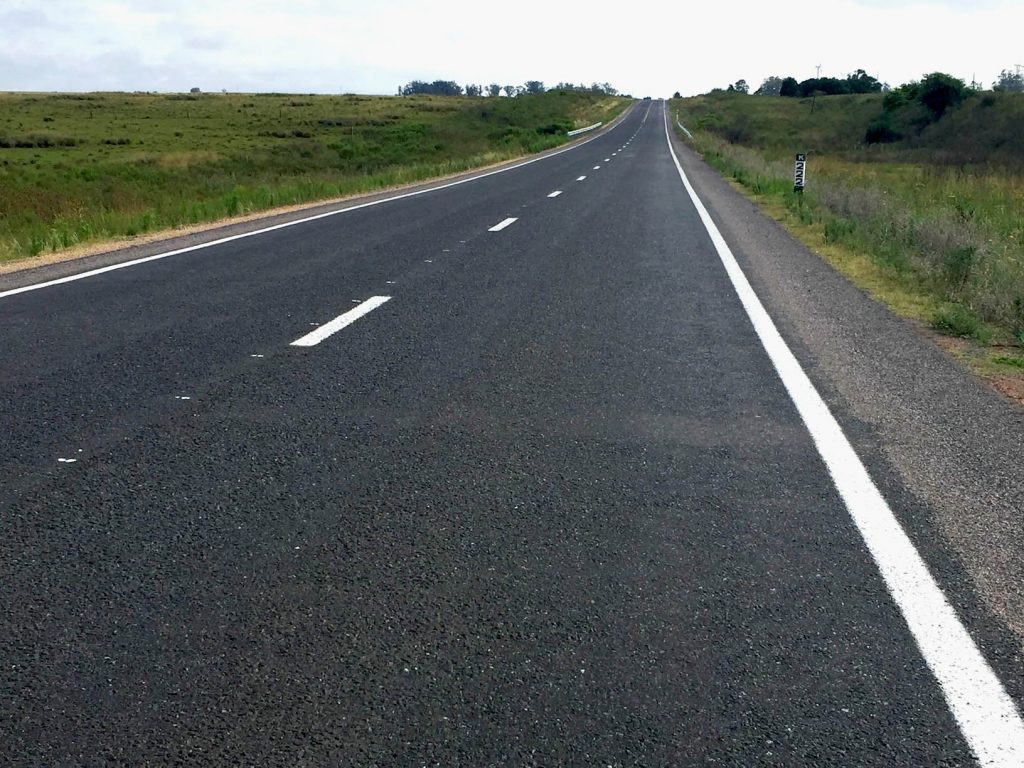
In recent years, a great effort has been made on Route 7 to improve its structural capacity and bring it to a primary route standard. To this end, a widening of the road has been carried out in almost its entire extension to reach a total width of 11 m and double bituminous treatments have been carried out on the 7.2 m road and simple treatments on the shoulders. Cement has been recycled over more than 100 km and granulometric stabilized sections have been carried out to increase the bearing capacity of the pavement.
Structural results speak for themselves, there are no potholes or sinkholes despite the tremendous growth that had heavy route, but we still have way to go to achieve double bituminous treatment resistant and durable from day one.
Exudation treatments presented in several sections of the works recently opened but have been remedied by the construction companies time and no risk for rising or severe bleeding now. It is clear that the sections carried out during the winter are most affected but there are still sections executed in good time they had exudation.
On the other hand those made from October 2019 to date show a very good performance and have not submitted exudates and has been achieved adequate dosing and has been made in good time.
Irrigations A are always in very good condition and this is because the appropriate proportions of aggregate and asphalt are used (because if there are landslides, the base is visible and it is necessary to redo the section), which allows having the necessary voids in the system to prevent exudation. On the other hand, when there are landslides in aggregate B, not much attention is paid to it, since aggregate A “hides” the problem, but that is where the necessary voids are lost, since the asphalt of both irrigations is there, but only to adhere the aggregate. A. This is verifiable in the field since the most compromised sections have a cushion of aggregate B in the ditch and the sections in better condition do not.
In this regard we insist on the following points to prevent premature exudates:
1) Respect the ban
2) Incorporating ball penetration test for the ramming potential at the base arid
3) Make dosing based on rational method Austroads where in addition to the characteristics of the aggregates are incorporated concepts based and traffic
4) In the selection of aggregates, narrow strips search granulometric aridos for irrigation A and B that do not overlap in their belts or are contiguous
5) Executing processing B should be next to or immediately after the A cure system for simultaneously minimizing loss arid B as proposed in multiple treatments locked
6) Use highly modified emulsions (P40 or P60) for those sections which have a high traffic and are in thermal Mediterranean area
7) Making only the risks A
We need to rethink the usefulness of double treatments as new work. Today Today we are making almost all stabilized bases, so a simple treatment that provides impermeability and an adequate macrotexture is more than enough. Irrigation A already cured and in service have a very good mechanical resistance and are capable of withstanding high traffic without problems, there are plenty of examples in Uruguay and in the world. In New Zealand and Australia, only simple irrigation is done in new construction and they are maintained frequently to maintain the necessary safety and functionality characteristics.
January 2020 - Bitafal Group
MEMORIES OF THE TWENTIETH CILA

MEMORIES OF THE TWENTIETH CILA

And videos and the works are available in pdf

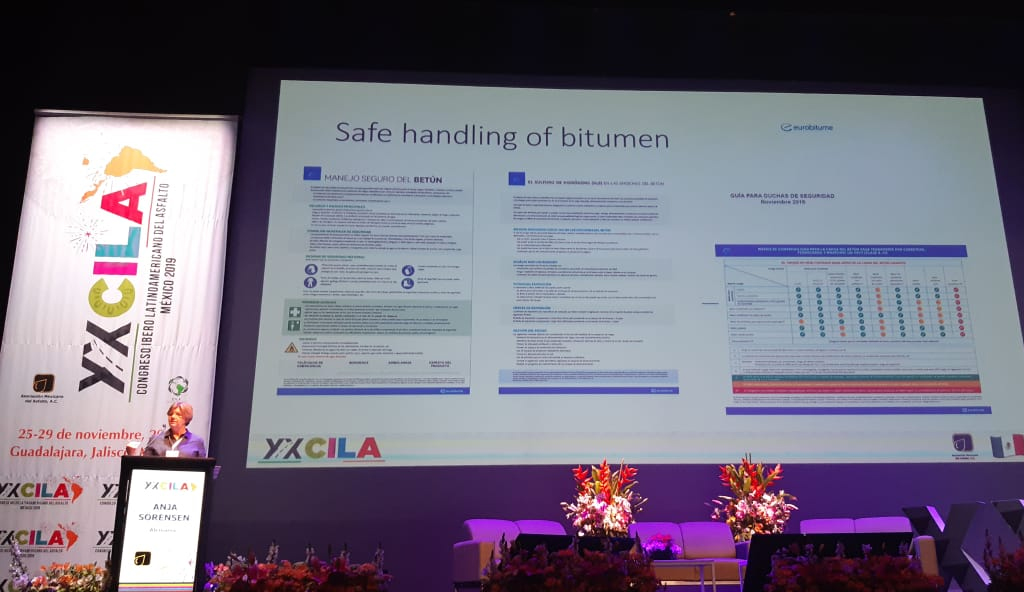
As reported in the "Making Roads" # 108, the XX IBWC past in Mexico was a success and with great presence of Uruguay, who is responsible for organizing the XXI IBWC to be held in Punta of the East in 2021. The level the IBWC past technician was excellent and there were more than 150 oral presentations plus other approved amount of work that could not be presented for reasons of time.
As for the presentations you can access the videos through the Itafec platform: https://www.itafec.com/video
Regarding the document containing the 224 full papers, reviewed and accepted by the Technical Committee of the Congress they can be accessed for free on the link below courtesy of the Permanent Commission of Asphalt Argentina: http://cpasfalto.com.ar/2019/12/19/memorias-del-xxo-cila/
We invite you to explore both links containing valuable information about the latest trends in bituminous binders of the world.
Some video presentations BITAFAL equipment Group:

We use own and third party cookies to help us optimize your visit to our website and also to improve service delivery and thus adapt to their most relevant and useful to better their experience needs. When you click OK to continue with navigation and thus confirm that you have read the information and accept the activation of cookies.

You can allow or reject use at any time can change the Configuration Options Privacy - Cookies Policy -

Privacy settings

When you visit a website, you can store or retrieve information in your browser, mainly in the form of cookies. Check your personal services cookies here.


We track anonymous user information to improve our website.
.
  • _ga
  • _gid
  • _gat

Decline all Services
Accept all Services